
How Air Quality Monitoring Sensors Improve Indoor Air Quality and Safety
Introduction
Air pollution has emerged as a major global environmental and health concern, affecting millions of people worldwide. Rapid urbanization, industrial growth, vehicle emissions, power generation, and indoor pollution sources have significantly contributed to declining air quality in both urban and rural areas. As public awareness of environmental health and sustainability continues to rise, governments, industries, and consumers are increasingly focusing on effective air quality management and pollution control.
Air quality monitoring sensors have become essential tools for detecting and analyzing airborne pollutants in real time. These advanced devices measure particulate matter, harmful gases, volatile organic compounds (VOCs), temperature, humidity, and other environmental parameters that directly impact human health and safety. By providing accurate and continuous environmental data, air quality sensors help individuals and organizations make informed decisions to improve indoor and outdoor air conditions.
With the rapid development of smart sensor technology, Internet of Things (IoT) connectivity, cloud computing, and artificial intelligence, modern air quality monitoring systems are becoming more intelligent, efficient, and widely accessible. From smart homes and commercial buildings to industrial plants and smart cities, these systems play a vital role in environmental protection, workplace safety, energy management, and public health improvement worldwide.
What Is Air Quality Monitoring?
Air quality monitoring refers to the process of measuring pollutants and environmental conditions in the atmosphere to evaluate the cleanliness and safety of the air. Monitoring can occur indoors or outdoors and may involve fixed stations, portable devices, wearable sensors, or integrated smart systems.
Air quality monitoring provides valuable information regarding pollutant concentrations, environmental trends, emission sources, and exposure risks. These insights help governments develop environmental regulations, assist industries in maintaining compliance, and enable individuals to improve indoor living conditions.
The primary objectives of air quality monitoring include:
- Detecting harmful pollutants
- Protecting human health
- Supporting environmental research
- Improving workplace safety
- Managing industrial emissions
- Enhancing smart city infrastructure
- Optimizing building ventilation systems
- Reducing energy consumption
- Supporting climate and sustainability initiatives
Air quality monitoring systems are used in residential, commercial, industrial, medical, transportation, and environmental applications worldwide.

Importance of Air Quality Monitoring
Protecting Human Health
Poor air quality is associated with numerous health issues, including:
- Asthma
- Bronchitis
- Lung cancer
- Cardiovascular diseases
- Allergic reactions
- Respiratory infections
- Headaches and fatigue
- Eye and throat irritation
Continuous monitoring helps identify dangerous pollutant levels before they become harmful to occupants or workers.
Improving Indoor Air Quality
People spend most of their time indoors, where pollutant concentrations may sometimes exceed outdoor levels. Air quality sensors help improve indoor environments by controlling ventilation, filtration, and air purification systems.
Environmental Protection
Governments and environmental agencies use monitoring networks to track pollution levels, identify emission sources, and evaluate the effectiveness of environmental policies.
Industrial Safety
Industrial plants often handle hazardous chemicals and gases. Air quality monitoring systems help detect leaks, prevent accidents, and ensure worker safety.
Smart Building Optimization
Modern smart buildings use air quality sensors to automatically regulate HVAC systems, reducing energy consumption while maintaining healthy indoor conditions.
What Do Air Quality Sensors Measure?
Air quality monitoring sensors can detect a wide range of airborne pollutants and environmental conditions.
Particulate Matter (PM)
Particulate matter consists of tiny solid particles and liquid droplets suspended in the air.
PM1
PM1 particles are extremely fine particles smaller than 1 micrometer. These particles can penetrate deeply into the lungs and bloodstream.
PM2.5
PM2.5 particles are smaller than 2.5 micrometers and are considered highly dangerous because they can enter the respiratory system and cause serious health effects.
Common PM2.5 sources include:
- Vehicle exhaust
- Industrial emissions
- Wildfires
- Cooking smoke
- Tobacco smoke
PM10
PM10 particles are larger airborne particles up to 10 micrometers in diameter. These particles often originate from dust, construction activities, and industrial processes.
Gas Pollutants Monitored by Sensors
Carbon Dioxide (CO2)
Carbon dioxide sensors measure indoor ventilation efficiency and occupancy levels. Elevated CO2 levels can cause:
- Drowsiness
- Reduced concentration
- Fatigue
- Poor cognitive performance
CO2 monitoring is widely used in schools, offices, hospitals, and commercial buildings.
Carbon Monoxide (CO)
Carbon monoxide is a dangerous colorless and odorless gas produced by incomplete combustion.
Sources include:
- Gas heaters
- Furnaces
- Vehicles
- Industrial combustion equipment
High concentrations can be fatal, making CO monitoring critical for safety applications.
Nitrogen Dioxide (NO2)
NO2 is commonly generated by vehicle emissions, power plants, and industrial combustion.
Exposure may cause:
- Lung irritation
- Asthma aggravation
- Reduced respiratory function
Sulfur Dioxide (SO2)
SO2 is mainly produced by fossil fuel combustion and industrial processes.
This gas contributes to:
- Acid rain
- Respiratory problems
- Environmental degradation
Ozone (O3)
Ground-level ozone forms when sunlight reacts with pollutants emitted by vehicles and industrial activities.
Ozone exposure may cause:
- Breathing difficulties
- Chest pain
- Throat irritation
- Lung inflammation
Volatile Organic Compounds (VOCs)
VOCs are chemicals that evaporate easily into the air at room temperature. These compounds are commonly released from:
- Paints
- Cleaning products
- Furniture
- Adhesives
- Building materials
- Air fresheners
Long-term exposure to VOCs may result in:
- Headaches
- Respiratory irritation
- Allergic reactions
- Liver and kidney damage
VOC monitoring has become increasingly important in residential and commercial indoor environments.
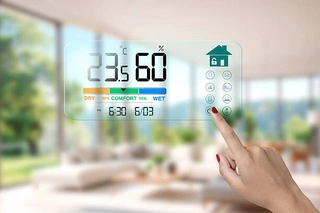
Temperature and Humidity Monitoring
Although temperature and humidity are not pollutants themselves, they strongly influence air quality and human comfort.
High humidity may encourage:
- Mold growth
- Bacteria development
- Dust mites
Low humidity can cause:
- Dry skin
- Respiratory irritation
- Static electricity
Temperature and humidity sensors provide essential contextual information that helps optimize indoor air management systems.
Types of Air Quality Monitoring Sensors
Particulate Matter Sensors
Particulate matter sensors commonly use laser scattering technology to measure particle concentrations.
How They Work
A laser beam passes through the air sample, and airborne particles scatter the light. The sensor analyzes the scattered light to estimate particle size and concentration.
Advantages
- High sensitivity
- Real-time monitoring
- Compact design
- Fast response time
Applications
- Indoor air purifiers
- HVAC systems
- Environmental monitoring stations
- Smart home devices
Electrochemical Gas Sensors
Electrochemical sensors detect gases through chemical reactions that generate electrical signals.
Features
- High accuracy
- Low power consumption
- Good selectivity
- Compact size
Commonly Detected Gases
- CO
- NO2
- SO2
- H2S
Applications
- Industrial safety
- Portable gas detectors
- Environmental monitoring
Metal Oxide Semiconductor (MOS) Sensors
MOS sensors detect gases by measuring changes in electrical resistance when gases interact with a heated semiconductor surface.
Advantages
- Low cost
- Long lifespan
- Wide gas detection capability
Limitations
- Cross-sensitivity
- Higher power consumption
Common Applications
- VOC detection
- Consumer electronics
- Smart home systems
Non-Dispersive Infrared (NDIR) Sensors
NDIR sensors are widely used for carbon dioxide detection.
Working Principle
These sensors measure the absorption of infrared light by gas molecules at specific wavelengths.
Benefits
- High accuracy
- Long-term stability
- Minimal interference
Applications
- Building automation
- HVAC systems
- Greenhouses
- Indoor air quality monitors
Photoionization Detectors (PID)
PID sensors use ultraviolet light to ionize gas molecules and measure VOC concentrations.
Advantages
- High sensitivity
- Rapid response
- Detection of low VOC concentrations
Applications
- Hazardous material monitoring
- Industrial safety
- Environmental inspection
Optical Air Quality Sensors
Optical sensors use light-based technologies to analyze pollutants.
These systems may employ:
- Laser scattering
- Infrared absorption
- Ultraviolet spectroscopy
Optical technologies provide highly accurate measurements for advanced environmental monitoring systems.
Indoor Air Quality Monitoring
Indoor air quality (IAQ) monitoring has become increasingly important due to modern building designs that emphasize energy efficiency and airtight construction.
Common Indoor Pollution Sources
- Cooking
- Tobacco smoke
- Cleaning chemicals
- Building materials
- Office equipment
- Poor ventilation
- Mold growth
Benefits of IAQ Monitoring
Health Improvement
Monitoring helps reduce exposure to harmful pollutants.
HVAC Optimization
Smart ventilation systems adjust airflow automatically based on sensor data.
Energy Savings
Demand-controlled ventilation reduces unnecessary energy consumption.
Workplace Productivity
Good indoor air quality improves concentration and employee performance.
Outdoor Air Quality Monitoring
Outdoor monitoring networks help governments and environmental organizations track pollution trends and issue public health warnings.
Major Outdoor Pollution Sources
- Traffic emissions
- Industrial plants
- Power stations
- Construction activities
- Wildfires
- Agricultural activities
Urban Monitoring Systems
Smart cities increasingly deploy distributed sensor networks to provide real-time pollution data across metropolitan areas.
Smart Air Quality Monitoring Systems
Modern monitoring systems integrate multiple technologies to provide intelligent environmental analysis.
Internet of Things (IoT) Integration
IoT-enabled sensors transmit real-time data to cloud platforms for analysis and remote monitoring.
Benefits
- Real-time alerts
- Remote accessibility
- Centralized management
- Data analytics
- Predictive maintenance
Artificial Intelligence and Data Analytics
AI and machine learning technologies are transforming air quality monitoring.
AI Capabilities
Pollution Prediction
AI algorithms forecast pollution levels based on historical and environmental data.
Pattern Recognition
Machine learning identifies trends and abnormal conditions.
Smart Ventilation Control
AI optimizes HVAC operation for better air quality and energy efficiency.
Wireless Connectivity in Air Quality Sensors
Modern sensors support multiple wireless communication technologies, including:
- Wi-Fi
- Bluetooth
- Zigbee
- LoRaWAN
- NB-IoT
- Cellular communication
Wireless connectivity enables flexible deployment and remote monitoring capabilities.
Portable and Wearable Air Quality Sensors
Portable monitoring devices allow individuals to measure personal exposure to pollutants in real time.
Applications
- Occupational safety
- Personal health monitoring
- Environmental research
- Fitness tracking
- Urban mobility studies
Wearable air quality sensors are becoming increasingly popular among health-conscious consumers and environmental researchers.
Industrial Applications of Air Quality Monitoring Sensors
Manufacturing Facilities
Factories use air quality sensors to monitor emissions, dust levels, and hazardous gases.
Oil and Gas Industry
Monitoring systems detect toxic gases and combustible vapors to improve operational safety.
Chemical Processing Plants
Air quality sensors help prevent dangerous chemical exposure and ensure regulatory compliance.
Mining Operations
Dust monitoring systems protect workers from respiratory hazards.
Pharmaceutical Manufacturing
Cleanroom environments require strict air quality control to maintain product purity.
Air Quality Monitoring in Smart Buildings
Smart buildings integrate environmental sensors into centralized building management systems.
Key Functions
- Automatic ventilation adjustment
- Occupancy-based airflow control
- Energy optimization
- Indoor comfort management
- Air purification activation
These technologies help create healthier and more sustainable indoor environments.
Air Quality Monitoring in Healthcare Facilities
Hospitals and healthcare facilities require highly controlled indoor environments.
Critical Applications
- Operating rooms
- Isolation wards
- Laboratories
- Pharmaceutical storage
- Patient recovery areas
Air quality monitoring helps reduce infection risks and maintain safe conditions for patients and staff.
Environmental Regulations and Standards
Governments worldwide have introduced regulations governing air quality and pollutant emissions.
Common Standards
WHO Air Quality Guidelines
The World Health Organization provides recommended exposure limits for major pollutants.
EPA Standards
The United States Environmental Protection Agency establishes National Ambient Air Quality Standards (NAAQS).
ISO Standards
International standards support consistent air quality measurement and sensor performance.
Compliance with these standards drives demand for accurate and reliable monitoring technologies.
Challenges in Air Quality Monitoring
Despite technological advancements, air quality monitoring still faces several challenges.
Sensor Accuracy
Low-cost sensors may experience calibration drift and reduced precision over time.
Environmental Interference
Temperature, humidity, and cross-sensitivity can affect measurement accuracy.
Maintenance Requirements
Sensors require regular calibration and maintenance to ensure reliable operation.
Data Interpretation
Large amounts of environmental data require advanced analytics for meaningful interpretation.
Sensor Lifespan
Some sensing technologies degrade over time when exposed to harsh environments.
Advances in Sensor Technology
Continuous innovation is improving sensor performance, reliability, and affordability.
Miniaturization
Modern sensors are becoming smaller, lighter, and more energy efficient.
Multi-Parameter Monitoring
Integrated sensors can simultaneously measure multiple pollutants and environmental variables.
Edge Computing
Edge processing allows sensors to analyze data locally without relying entirely on cloud systems.
Low-Power Design
Battery-powered wireless sensors now support long-term deployment in remote locations.
Role of Air Quality Monitoring in Climate Change Initiatives
Air quality monitoring contributes to broader climate and sustainability goals.
Emission Reduction
Monitoring systems help industries identify emission sources and reduce pollution.
Urban Sustainability
Smart city projects use environmental monitoring to improve urban planning and transportation policies.
Renewable Energy Integration
Environmental sensors help optimize energy-efficient building systems and renewable energy applications.
Benefits of Air Quality Monitoring Sensors
Real-Time Environmental Awareness
Continuous monitoring provides instant visibility into changing air conditions.
Improved Public Health
Early detection of harmful pollutants helps reduce health risks.
Enhanced Energy Efficiency
Smart environmental control systems optimize ventilation and HVAC operation.
Regulatory Compliance
Industries can maintain compliance with environmental and occupational safety regulations.
Better Decision-Making
Accurate environmental data supports smarter operational and policy decisions.
Conclusion
Air quality monitoring sensors have become essential tools for protecting public health, improving indoor comfort, supporting industrial safety, and advancing environmental sustainability. As air pollution concerns continue to grow worldwide, the demand for accurate, intelligent, and connected monitoring solutions is increasing rapidly across residential, commercial, industrial, and governmental sectors.
Modern air quality monitoring technologies can detect a wide range of pollutants, including particulate matter, harmful gases, volatile organic compounds, temperature, and humidity. Advanced sensing technologies such as laser-based particle detection, electrochemical sensing, NDIR technology, IoT connectivity, and artificial intelligence are transforming traditional monitoring systems into highly intelligent environmental management platforms.
From smart homes and healthcare facilities to industrial plants and smart cities, air quality monitoring sensors play a vital role in creating safer, healthier, and more sustainable environments. As sensor technologies continue to evolve, future systems will become more accurate, affordable, compact, and integrated, enabling broader adoption and more effective environmental protection worldwide.
Send your message to this supplier
Related Articles from the Supplier


How Do Air Quality Sensors Work?
- Dec 20, 2024

How CO₂ Influences Indoor Air Quality (IAQ)
- Jun 27, 2025
Related Articles from China Manufacturers

How does an air cooled condenser work?
- Oct 28, 2017

How to Deal With Mildew
- Jul 07, 2016

How to select Kids backpacks
- Jul 29, 2016

How to Use Trolley Bag Correctly
- Dec 29, 2015

How to Maintain the Backpack
- Dec 29, 2015

How to Select a Bag
- Dec 29, 2015
Related Products Mentioned in the Article

Supplier Website
Source: https://www.pulse-sensors.com/news/how-air-quality-monitoring-sensors-improve-indoor-air-quality-and-safety.html