
How Cryogenic Check Valves Ensure Safe One-Way Flow Control
Introduction
Cryogenic check valves are essential safety and flow-control components used in systems handling ultra-low-temperature fluids such as liquefied natural gas (LNG), liquid oxygen, liquid nitrogen, liquid hydrogen, and other cryogenic media. These specialized valves ensure that cryogenic fluids flow in only one direction, automatically preventing dangerous reverse flow conditions that could damage equipment, contaminate systems, or create hazardous pressure buildups.
In modern cryogenic industries, safety and reliability are critical. Cryogenic systems operate under extremely challenging conditions involving severe temperature fluctuations, high pressure variations, thermal contraction, and demanding operational cycles. Under these harsh environments, standard industrial valves are unable to maintain reliable sealing and structural integrity. Cryogenic check valves are therefore specifically engineered using specialized materials, extended bonnets, precision machining, and advanced sealing technologies to ensure dependable performance at temperatures below -150°C.
As global demand for LNG, industrial gases, clean energy technologies, and cryogenic transportation continues rising, the cryogenic valve market is experiencing rapid expansion. Cryogenic check valves play a crucial role in protecting pipelines, pumps, storage tanks, compressors, and process equipment across numerous industries. Their autonomous operation provides an additional layer of protection in critical systems where reverse flow could lead to operational failure or serious safety risks.
This article explores the working principles, design features, materials, manufacturing technologies, applications, quality standards, maintenance practices, market trends, and future developments shaping the global cryogenic check valve industry.
Understanding Cryogenic Temperatures
To understand the importance of cryogenic check valves, it is necessary to first understand cryogenic conditions and their impact on industrial systems.
Cryogenics is the field of science and engineering focused on materials and equipment operating at extremely low temperatures, generally below -150°C (-238°F). At these temperatures, gases such as methane, nitrogen, oxygen, argon, and hydrogen condense into liquid form.
Liquefaction dramatically reduces gas volume, allowing efficient transportation and storage. For example, liquefied natural gas occupies approximately 1/600 of the volume of natural gas in gaseous form. This efficiency has made LNG one of the most important global energy transportation solutions.
However, cryogenic fluids create significant engineering challenges, including:
- Material brittleness
- Thermal contraction
- Seal shrinkage
- Ice formation
- Pressure instability
- Rapid temperature cycling
These conditions require highly specialized valves capable of maintaining tight shutoff and structural reliability under extreme operating environments.
Cryogenic check valves are specifically designed to address these challenges while ensuring automatic one-way flow protection.
What Is a Cryogenic Check Valve?
A cryogenic check valve is a self-acting valve designed to prevent reverse flow in cryogenic systems. Unlike manually operated valves, check valves function automatically based on pressure differentials within the pipeline.
When fluid flows in the intended direction, the valve opens. If flow reverses or pressure drops, the valve automatically closes to stop backflow.
Cryogenic check valves are commonly used in:
- LNG terminals
- Air separation plants
- Cryogenic storage systems
- Industrial gas processing
- Aerospace fueling systems
- Medical gas systems
- Hydrogen energy infrastructure
These valves provide essential protection for pumps, compressors, tanks, and sensitive process equipment.
How Cryogenic Check Valves Work
Cryogenic check valves operate using a simple but highly effective mechanical principle.
The valve contains an internal disc, piston, ball, or swing mechanism that responds automatically to fluid flow direction.
Forward Flow Operation
When cryogenic fluid flows in the correct direction:
- Upstream pressure exceeds downstream pressure.
- The disc or closure element lifts from the seat.
- Fluid passes through the valve.
Reverse Flow Prevention
When flow reverses:
- Downstream pressure becomes higher than upstream pressure.
- The disc returns to the seat.
- Reverse flow is blocked automatically.
This operation occurs without external power or manual intervention.
The automatic response is critical in cryogenic systems where sudden backflow could damage pumps, contaminate media, or create hazardous overpressure conditions.
Types of Cryogenic Check Valves
Several cryogenic check valve designs are used depending on system requirements.
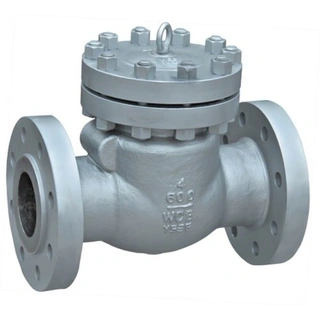
Swing Check Valves
Swing check valves use a hinged disc that swings open during forward flow and closes when flow reverses.
Advantages include:
- Low pressure drop
- Simple construction
- Reliable operation
- Suitable for large pipelines
Swing check valves are widely used in LNG pipelines and storage systems.
Lift Check Valves
Lift check valves use a vertically moving disc or piston guided within the valve body.
These valves provide:
- Excellent sealing performance
- Fast closing response
- High-pressure capability
They are commonly used in high-pressure cryogenic gas systems.
Ball Check Valves
Ball check valves utilize a spherical ball that moves in response to fluid flow.
Benefits include:
- Compact design
- Simple maintenance
- Good sealing performance
- Resistance to contamination
Ball check valves are suitable for smaller cryogenic systems.
Dual Plate Check Valves
Dual plate designs use two spring-loaded plates that open and close rapidly.
Advantages include:
- Lightweight construction
- Reduced water hammer
- Fast response
- Compact face-to-face dimensions
These valves are increasingly used in modern cryogenic process facilities.
Key Design Features of Cryogenic Check Valves
Cryogenic service requires highly specialized valve designs.
Extended Bonnet Construction
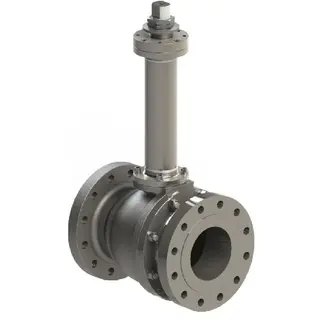
One of the most important features is the extended bonnet.
The extended bonnet:
- Protects stem seals from extreme cold
- Reduces frost buildup
- Maintains packing integrity
- Improves operational safety
By distancing critical sealing components from the cryogenic fluid, the bonnet helps maintain stable temperature conditions around the stem area.
Low-Temperature Materials
Cryogenic valves require materials capable of retaining toughness at ultra-low temperatures.
Common materials include:
- Stainless steel ASTM A351 CF8M
- ASTM A182 F316
- Duplex stainless steel
- Monel alloys
- Inconel alloys
- Aluminum bronze
These materials resist brittle fracture while maintaining mechanical strength under cryogenic conditions.
Precision Machining
Cryogenic valves require extremely tight tolerances to maintain sealing performance during thermal contraction.
Advanced machining processes help ensure:
- Smooth seating surfaces
- Dimensional accuracy
- Proper alignment
- Reliable shutoff performance
Specialized Sealing Systems
Cryogenic sealing systems must remain effective despite extreme temperature variations.
Common sealing materials include:
- PTFE
- PCTFE
- Graphite
- Reinforced polymer seals
- Metal-to-metal sealing surfaces
Seal selection depends on media type, temperature, and operating pressure.
Why Cryogenic Valve Quality Matters
Cryogenic systems handle hazardous ultra-cold fluids under high pressure and demanding operating conditions. Valve failure can lead to:
- Product leakage
- Fire hazards
- Equipment damage
- Process shutdowns
- Environmental risks
- Personnel injury
As a result, cryogenic valve quality is critically important.
Reliable manufacturers implement rigorous quality-control systems throughout production.
Raw Material Verification
All materials must be verified to ensure compliance with cryogenic service requirements.
Testing includes:
- Chemical composition analysis
- Mechanical property testing
- Impact testing
- Traceability documentation
Precision Manufacturing
Cryogenic valve manufacturing requires highly trained technicians and advanced production equipment.
Processes include:
- CNC machining
- Precision grinding
- Controlled welding
- Surface finishing
- Clean-room assembly
Inspection and Testing
Cryogenic valves undergo extensive inspection procedures, including:
- Dimensional inspection
- Pressure testing
- Leak testing
- Cryogenic testing
- Functional operation testing
Final Validation
Before shipment, valves are validated for:
- Leak-tight sealing
- Pressure integrity
- Thermal performance
- Endurance cycling
- Operational reliability
These procedures ensure safe performance in demanding cryogenic environments.
Applications of Cryogenic Check Valves
Cryogenic check valves are used across numerous industries worldwide.
LNG Industry
The LNG industry is one of the largest users of cryogenic valves.
Applications include:
- LNG liquefaction plants
- LNG storage tanks
- LNG shipping terminals
- Regasification facilities
- LNG fueling stations
Check valves prevent dangerous backflow during LNG transfer operations.
Industrial Gas Production
Air separation plants produce:
- Liquid oxygen
- Liquid nitrogen
- Liquid argon
Cryogenic check valves help maintain directional flow and protect compressors and pumps.
Hydrogen Energy Systems
Hydrogen infrastructure is expanding rapidly due to global clean-energy initiatives.
Cryogenic check valves are used in:
- Liquid hydrogen storage
- Hydrogen fueling stations
- Aerospace fuel systems
- Hydrogen transportation systems
Hydrogen service requires extremely high leak-tightness due to hydrogen’s small molecular size.
Aerospace Industry
Rocket propulsion systems rely heavily on cryogenic fluids such as liquid oxygen and liquid hydrogen.
Cryogenic check valves ensure reliable flow control in:
- Fuel loading systems
- Propellant storage
- Ground support equipment
Reliability is essential in aerospace applications where failure is unacceptable.
Medical and Pharmaceutical Industries
Hospitals and pharmaceutical facilities use cryogenic gases for:
- Medical oxygen systems
- MRI cooling
- Laboratory applications
- Vaccine storage
Cryogenic check valves ensure stable and safe gas handling.
Challenges in Cryogenic Valve Engineering
Cryogenic valve design involves overcoming several technical challenges.
Thermal Contraction
Extreme cold causes metals and sealing materials to contract.
Poorly designed valves may experience:
- Leakage
- Misalignment
- Seal failure
- Mechanical stress
Engineers must carefully account for thermal expansion coefficients during design.
Ice Formation
Moisture exposure can cause frost and ice buildup around external valve components.
This may interfere with operation or damage seals.
Proper insulation and bonnet design help minimize icing.
Pressure Shock and Water Hammer
Rapid valve closure can generate severe pressure surges.
Advanced valve designs help reduce hydraulic shock and vibration.
Material Brittleness
Some metals become brittle at low temperatures.
Cryogenic-grade alloys are selected specifically to maintain toughness and impact resistance.
International Standards and Certifications
Cryogenic valves must comply with strict international standards.
Common standards include:
- API 6D
- BS 6364
- MSS SP-134
- ASME B16.34
- ISO 28921
- EN 12567
These standards define requirements for:
- Design
- Materials
- Testing
- Inspection
- Fire safety
- Cryogenic performance
Certification helps ensure safe and reliable operation.
Testing Procedures for Cryogenic Check Valves
Cryogenic valve testing is more demanding than standard industrial valve testing.
Cryogenic Temperature Testing
Valves are exposed to actual cryogenic temperatures while monitoring:
- Leakage
- Structural integrity
- Operating torque
- Seat performance
Helium Leak Testing
Helium molecules are extremely small, making helium leak testing highly sensitive.
This method detects microscopic leakage paths.
Pressure Testing
Valves undergo hydrostatic and pneumatic pressure testing to verify structural strength.
Endurance Cycle Testing
Repeated opening and closing cycles evaluate long-term durability.
Maintenance of Cryogenic Check Valves
Proper maintenance is essential for safe long-term performance.
Recommended maintenance practices include:
- Periodic leak inspection
- Frost monitoring
- Seal replacement
- Cleaning debris
- Functional testing
- Insulation inspection
Operators must follow strict safety procedures due to the hazards associated with cryogenic fluids.
Market Trends in the Cryogenic Valve Industry
The global cryogenic valve market is expanding rapidly.
Several factors are driving growth.
Increasing LNG Demand
Global LNG trade continues rising due to cleaner energy initiatives and growing natural gas consumption.
Expansion of Hydrogen Infrastructure
Hydrogen is emerging as a major clean-energy solution, increasing demand for specialized cryogenic equipment.
Growth of Industrial Gas Production
Electronics, healthcare, metallurgy, and chemical industries continue increasing consumption of industrial gases.
Rising Investment in Aerospace
Space exploration and satellite launch programs are driving demand for high-performance cryogenic systems.
Smart Technologies in Cryogenic Valves
Digital monitoring and automation technologies are entering the cryogenic valve sector.
Modern systems may include:
- Position sensors
- Temperature monitoring
- Remote diagnostics
- Predictive maintenance systems
- IoT integration
Smart monitoring improves reliability and reduces maintenance costs.
Sustainability and Energy Efficiency
Cryogenic industries are focusing heavily on sustainability.
Advanced cryogenic valve technologies help reduce:
- Product loss
- Fugitive emissions
- Energy consumption
- Maintenance waste
Improved sealing performance contributes to environmental protection and operational efficiency.
Future Development Trends
Future cryogenic check valve development will focus on:
- Improved low-temperature alloys
- Enhanced sealing technologies
- Lightweight valve designs
- Smart monitoring systems
- Hydrogen-ready infrastructure
- Greater automation compatibility
Manufacturers are also investing in advanced testing methods and precision manufacturing technologies to improve safety and reliability.
Conclusion
Cryogenic check valves are indispensable components in modern ultra-low-temperature systems. Their ability to automatically prevent reverse flow helps protect critical equipment, maintain operational safety, and ensure reliable cryogenic fluid handling across numerous industries.
As global demand for LNG, hydrogen energy, industrial gases, and aerospace technologies continues growing, cryogenic check valves are becoming increasingly important in modern infrastructure. Their specialized materials, precision engineering, advanced sealing systems, and rigorous testing standards allow them to operate safely under some of the harshest industrial conditions.
With ongoing innovation in materials science, manufacturing technology, automation, and smart monitoring systems, the cryogenic check valve industry is expected to continue evolving rapidly. In the future, these valves will remain essential for supporting safe, efficient, and sustainable cryogenic operations worldwide.
Send your message to this supplier
Related Articles from the Supplier

How to Install and Maintain Ball Valves?
- Sep 02, 2020
How to Choose Electric Ball Valves? - Part One
- Oct 28, 2020
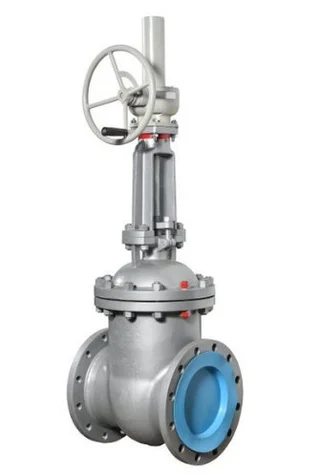
How to Select Flange Gate Valves?
- Nov 03, 2020
How to Choose Electric Ball Valves? - Part Two
- Nov 11, 2020

How to Deal with the Valve's Corrosion?
- Apr 19, 2021
Related Articles from China Manufacturers
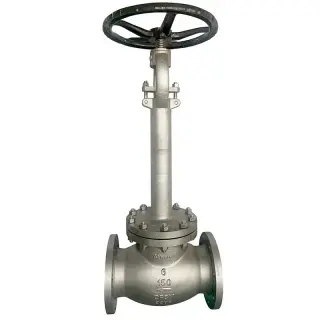

How do cryogenic valves work?
- Nov 01, 2019
How do cryogenic valves work?
- Nov 01, 2019
How Do Cryogenic Valves Work?
- Apr 10, 2021
How to Use Cryogenic Valves
- Oct 09, 2016
Related Products Mentioned in the Article

Supplier Website
Source: https://www.mfrsvalve.com/news/how-cryogenic-check-valves-ensure-safe-one-way-flow-control.html