
Cryogenic Ball Valves Explained: Materials, Features, and Industrial Applications
Introduction
The rapid global expansion of the liquefied gas industry—driven by LNG, hydrogen energy, aerospace applications, and advanced chemical processing—has dramatically increased the demand for cryogenic flow control technologies. Among these technologies, cryogenic ball valves play a critical role in ensuring safe, stable, and efficient handling of fluids at ultra-low temperatures. Designed to withstand temperatures as low as –425°F (–253°C), these valves are engineered for some of the harshest and most demanding environments in modern industry.
This industry news report provides a comprehensive look at cryogenic ball valves, examining their design principles, materials, performance characteristics, and diverse industrial applications. As the world moves toward cleaner energy and more advanced cryogenic processing systems, these valves continue to play a pivotal role in ensuring operational reliability and long-term safety.
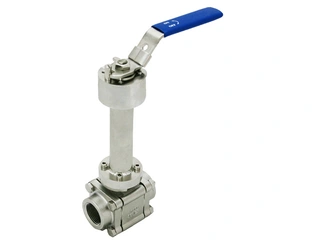
Understanding Cryogenic Ball Valves
Cryogenic ball valves are specialized shutoff and control valves engineered to maintain reliable performance during both intermittent and continuous flow at extremely low temperatures. They are commonly used with a wide variety of cryogens, including:
- Liquid Natural Gas (LNG)
- Liquid Hydrogen (LH₂)
- Liquid Oxygen (LOX)
- Liquid Nitrogen (LN₂)
- Liquid Ammonia
- Liquid Methane
- Fluorine and Deuterium
Handling these materials requires precise engineering due to their unique characteristics, such as rapid boil-off, high expansion ratios, and potential combustion or chemical reactivity. Cryogenic ball valves deliver the tight shutoff, low torque operation, and high safety performance required to manage these hazards effectively.
Key Design Features that Set Cryogenic Ball Valves Apart
At first glance, cryogenic ball valves may resemble standard valves, but their internal architecture is completely different. They are crafted specifically to handle ultra-low temperatures and prevent issues associated with thermal contraction, material embrittlement, and rapid phase change.
1. Extended Bonnet Design
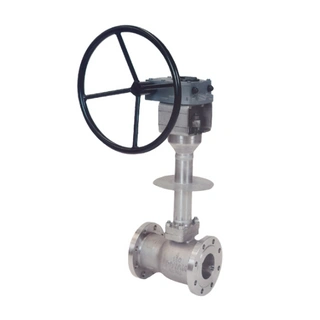
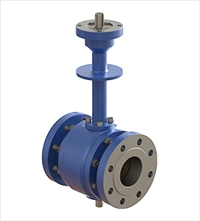
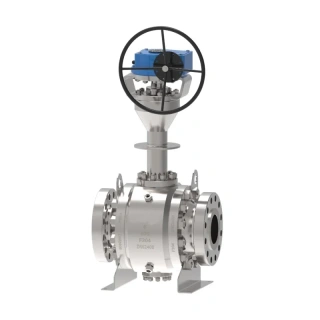
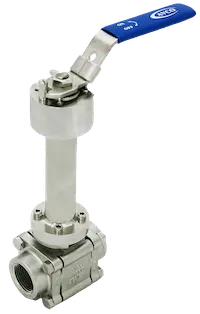
One of the most distinguishing features of a cryogenic ball valve is its extended bonnet, a long neck that separates the valve stem and packing from the cryogenic fluid. This design ensures:
- Stem seals do not freeze, preventing leakage and operational difficulty.
- Safer manual or automated actuation, even in severe cold.
- Reduced heat transfer, lowering ice formation on valve components.
- Space for insulation, which is critical in LNG and hydrogen systems.
The extended bonnet creates a thermal buffer zone, allowing the packing to operate at a significantly warmer temperature compared to the cryogenic fluid inside the valve body.
2. One-Piece, Pressure-Safe Stem
Cryogenic ball valves are commonly built with a rugged, one-piece stem designed to withstand sudden pressure fluctuations and avoid blowout. This is combined with:
- Polyfill thrust bearings for smooth low-torque operation
- Stainless steel split rings to secure the stem
- Enhanced operator safety in high-pressure cryogenic conditions
This robust stem construction contributes to the valve’s stability during thermal cycling and rapid cooldown.
3. Specialized Seat and Seal Materials
Standard elastomers fail at cryogenic temperatures, becoming brittle and losing sealing ability. Cryogenic ball valves instead rely on advanced seat materials such as:
- PTFE (Polytetrafluoroethylene)
- PCTFE (Polychlorotrifluoroethylene)
- Reinforced Polyfill compositions
These materials offer:
- Exceptional resistance to embrittlement
- Tight shutoff performance
- Superior chemical compatibility
- Long-term stability across a wide temperature range
Their rigidity and dimensional stability ensure consistent sealing, even as the valve body undergoes thermal contraction.
4. Anti-Static Devices and Blowout Prevention
Due to the properties of cryogens—especially oxygen and hydrogen—static discharge and pressure buildup pose significant risks. Cryogenic ball valves integrate:
- Anti-static grounding systems
- Blowout-proof stem designs
- Fire-safe construction (in some models)
These safety mechanisms help prevent ignition, valve failure, or fugitive emissions.
Why Cryogenic Valve Design Must Be Different
Conventional valve designs fail to address challenges presented by cryogenic fluids. Three major factors differentiate cryogenic ball valves:
A. Thermal Contraction and Material Stress
Cryogenic conditions cause significant material shrinkage. If not accounted for:
- The ball may seize inside the seat
- Seals may crack or deform
- The valve stem could freeze or leak
Cryogenic ball valves are engineered with specialized tolerances and materials that maintain functionality despite extreme contraction forces.
B. Heat Transfer Challenges
Ultra-low temperature fluids rapidly absorb heat from the surroundings, causing:
- Frost and ice buildup
- Seal damage
- Valve packing failure
Extended bonnets and insulated body designs minimize heat transfer and improve long-term reliability.
C. Gas Expansion Risks
Many cryogens have extreme expansion ratios—for example, converting liquid oxygen to gas results in a 860:1 volume increase. Improper valve performance can lead to:
- Overpressurization
- Equipment failure
- Explosion risks
Cryogenic valves ensure stable flow control to handle these pressures safely.
Materials Used in Cryogenic Ball Valves
Cryogenic ball valves must be constructed from materials capable of maintaining strength and ductility at ultra-low temperatures. Common materials include:
1. Stainless Steels (304, 316)
The most widely used materials for cryogenic valves due to:
- Excellent low-temperature toughness
- Strong resistance to corrosion
- Low brittleness at –425°F
- High structural stability
Stainless steel is ideal for LNG, hydrogen, nitrogen, methane, and oxygen service.
2. Nickel Alloys
Nickel-based alloys (such as Inconel or Monel) are used for:
- Highly corrosive cryogenic environments
- Applications requiring extreme toughness and durability
- Aerospace, defense, and advanced chemical processing
These alloys maintain superior strength even under aggressive thermal cycling.
3. Bronze and Brass
Used in certain marine, industrial, and commercial cryogenic systems, these materials:
- Offer good corrosion resistance
- Provide durability at moderate cryogenic temperatures
- Are suitable for specific oxygen and nitrogen systems
Choosing the correct material minimizes cracking, leakage, and embrittlement.
4. Seat and Seal Materials
Cryogenic seat materials must retain flexibility without deterioration:
|
Material |
Benefits |
Applications |
|
PTFE |
Universal chemical resistance, low friction |
LNG, LOX, LN₂ |
|
PCTFE |
High rigidity, minimal thermal expansion |
Hydrogen, oxygen |
|
Polyfill |
Low torque, broad temperature range |
General cryogenic service |
The wrong material selection may lead to unsafe operation or premature valve failure.
How Cryogenic Ball Valves Work
Although structurally specialized, cryogenic ball valves follow fundamental ball valve operation principles:
- A rotary ball with a central bore controls fluid flow.
- Turning the handle or actuator aligns the bore with the pipeline.
- In the closed position, the ball seals tightly against the seat.
- Extended bonnets isolate stem components from the cryogen.
- Seats compress to maintain seal integrity during contraction.
This simple yet robust mechanism makes ball valves ideal for cryogenic processes requiring fast shutoff and minimal leakage.
Typical Applications of Cryogenic Ball Valves
Cryogenic ball valves are used across a wide range of industries where ultra-low temperatures and strict safety standards are the norm.
1. Liquefied Natural Gas (LNG) Industry
From liquefaction plants to transportation vessels, cryogenic ball valves regulate:
- Loading and unloading transfers
- Storage tank systems
- Re-gasification units
- LNG fuel supply lines
LNG’s global demand continues to grow, increasing the need for reliable cryogenic isolation valves.
2. Hydrogen Energy and Fueling Systems
Hydrogen at cryogenic temperatures is essential for:
- Hydrogen refueling stations
- Fuel cell vehicles
- Aerospace propulsion
- Long-term energy storage
Cryogenic ball valves provide controlled flow and safe containment of liquid hydrogen.
3. Aerospace and Defense
Cryogenic fluids such as oxygen, hydrogen, and fluorine are used in:
- Rocket propulsion
- Satellite cooling systems
- High-altitude research
Valves in these applications must withstand the most severe thermal stresses.
4. Industrial Gas Production
Cryogenic ball valves are vital for:
- Liquid nitrogen plants
- Oxygen production facilities
- Ammonia processing
- Cryogenic distillation towers
These gases support hospitals, manufacturing plants, laboratories, and food processing.
5. Chemical and Petrochemical Processing
Cryogenic systems are involved in:
- Polymer production
- Gas separation
- Refrigeration cycles
- Catalytic processes
Valves must maintain stability in systems involving corrosive cryogens like fluorine.
6. Food and Pharmaceutical Industries
Cryogens are widely used for:
- Flash-freezing
- Cryogenic grinding
- Laboratory storage
- Biological sample preservation
Cryogenic valves ensure safe, hygienic flow control.
Advances in Cryogenic Valve Technology
The cryogenic valve industry has evolved significantly in recent years. Key innovations include:
A. Low-Emission (Fugitive Emission) Designs
Modern valves incorporate:
- High-integrity packing
- Stem sealing technologies
- Emission-certified components
These reduce environmental impact and improve workplace safety.
B. Smart Valve Integration
With digitalization transforming plant operations, cryogenic ball valves increasingly support:
- Position sensors
- Automated control systems
- Valve condition monitoring
- Data tracking for predictive maintenance
Smart valves enhance efficiency and reduce downtime.
C. Fire-Safe and Explosion-Proof Designs
Advanced designs address hazards associated with flammable cryogens such as methane or hydrogen.
D. High-Performance Alloys
New materials and heat treatments allow valves to operate longer in aggressive conditions with minimal maintenance.
Benefits of Using Cryogenic Ball Valves
Cryogenic ball valves offer multiple advantages:
- Reliable tight shutoff across extreme temperature ranges
- Low operational torque for easier manual or automated actuation
- Superior material strength at cryogenic temperatures
- Enhanced operator safety through rugged stems and extended bonnets
- Reduced downtime thanks to long-lasting seat materials
- Versatility for multiple cryogens and industrial sectors
These attributes make them indispensable to modern cryogenic engineering.
Installation, Operation, and Maintenance Best Practices
To maximize safety and valve lifespan, technicians should follow industry best practices:
Installation
- Ensure proper alignment with pipeline systems
- Allow space for bonnet extension and insulation
- Prevent moisture ingress during installation
Operation
- Avoid rapid cycling that may induce thermal shock
- Use compatible actuators for automated systems
- Monitor valve temperature during startup
Maintenance
- Inspect seals, seats, and stem packing regularly
- Check for ice accumulation or excessive wear
- Perform periodic torque verification
Proper maintenance minimizes failure risks and extends service life.
Global Market Outlook for Cryogenic Ball Valves
With increasing global investments in:
- LNG infrastructure
- Hydrogen energy
- Cryogenic medical technologies
- Aerospace programs
the demand for cryogenic ball valves is expected to grow steadily. Key market drivers include:
- Shift toward cleaner fuels
- Expansion of LNG-fueled vessels
- Government support for hydrogen economy
- Rising industrial gas consumption
- Technological advances in ultra-low temperature engineering
Manufacturers with strong engineering capabilities and advanced production systems are well-positioned to capitalize on this expanding market.
Conclusion
Cryogenic ball valves are vital components in industries that rely on the safe handling of ultra-low temperature liquids and gases. Their specialized design—including extended bonnets, rugged stems, precision-engineered seats, and resilient materials—ensures reliable performance in environments where ordinary valves would fail. As industries such as LNG, hydrogen energy, aerospace, and advanced manufacturing continue to expand, the role of cryogenic ball valves becomes even more essential.
With ongoing innovation in materials science, smart valve integration, and emission-control technologies, cryogenic ball valves will remain a cornerstone of cryogenic engineering for decades to come. They not only enhance operational safety but also support the global transition to cleaner energy and advanced cryogenic applications.
Send your message to this supplier
Related Articles from the Supplier
Sealing Elements of Cryogenic Ball Valves (Part One)
- Feb 17, 2021
Sealing Elements of Cryogenic Ball Valves (Part Two)
- Feb 25, 2021
The Installation Requirements for Cryogenic Valves
- Jul 23, 2021
Related Articles from China Manufacturers
Cryogenic Ball Valves
- Feb 03, 2024

Introduction to Forged Steel Cryogenic Ball Valves
- Jun 21, 2024
Sealing of Cryogenic Ball Valves
- Feb 23, 2024
Related Products Mentioned in the Article

Supplier Website
Source: https://www.mfrsvalve.com/news/cryogenic-ball-valves-explained-materials-features-and-industrial-applications.html