
V-Port Ball Valve vs. Knife Gate Valve
In industrial production, fluid control within pipeline systems plays a critical role in ensuring both operational safety and efficiency. With the wide variety of media types and operating conditions encountered in modern industries, selecting the appropriate valve is essential. Among the many types of industrial valves, V-port ball valves and knife gate valves are two commonly used options, each with unique structural characteristics and application scopes. This article provides a comprehensive comparison of these two valve types from the perspectives of structural principles, functional characteristics, application scenarios, and selection recommendations, helping engineers and procurement specialists make informed decisions in practical engineering projects.
Basics of V-Port Ball Valve
In industrial processes, the selection of pipeline valves directly affects the precision and stability of fluid control. The V-port ball valve integrates both flow regulation and shut-off functions, and thanks to its distinctive structural design, it demonstrates excellent performance in demanding media conditions.
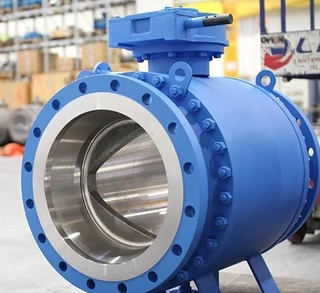
1. What Is a V-Port Ball Valve?
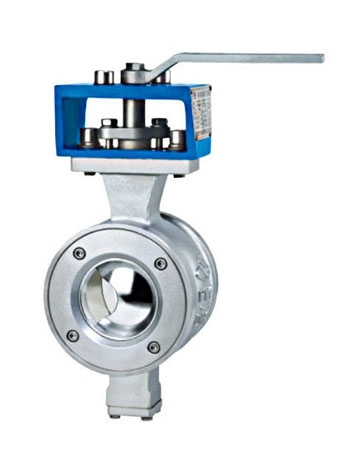
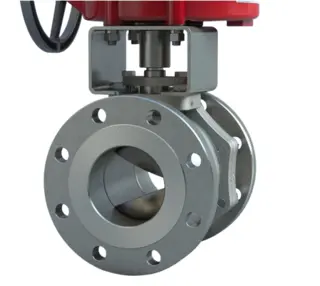
A V-port ball valve is a specialized type within the ball valve family. Its defining feature lies in the design of the valve core.
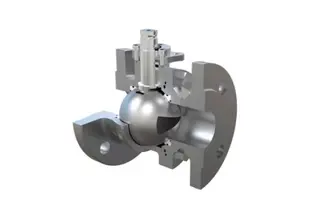
Unlike conventional ball valves that use a fully spherical ball, a V-port ball valve utilizes a hemispherical ball with a V-shaped notch machined into the surface. This V-shaped opening has a sharp cutting edge capable of generating significant shearing force during ball rotation.
When the valve opens, the V-shaped notch forms a fan-shaped flow area with the valve seat. By rotating the ball and adjusting the angle of the V-shaped opening, the cross-sectional flow area can be precisely controlled. This enables continuous regulation of the medium flow rate.
Because of this design, V-port ball valves combine modulating control and on/off shutoff functions, making them important components in industrial process automation systems.
2. Structure and Principle of V-Port Ball Valve
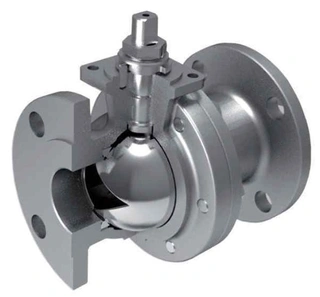
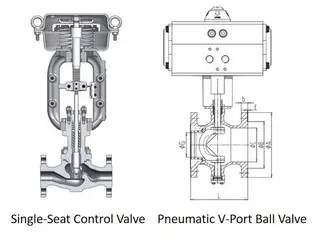
V-port ball valves belong to the trunnion-mounted ball valve category and typically employ a single-seat sealing structure. The valve body is usually designed as a one-piece side-entry structure, offering strong rigidity and minimizing the risk of deformation or external leakage.
Inside the valve body, upper and lower self-lubricating bearings provide large contact areas with the stem. This configuration offers high load capacity, low friction coefficients, and reduced operating torque.
The valve operates through 90-degree rotary motion. When flow regulation is required, the ball rotates to a specific angle, altering the flow area between the V-shaped notch and the seat.
Due to the geometric characteristics of the V-shaped port, the valve typically exhibits an equal-percentage flow characteristic, with a turndown ratio of up to 100:1. This means the valve can provide precise flow control across a wide operating range.
Another advantage is the shearing action between the V-shaped edge and the metal seat during closing. This action can cut fibers and small solid particles contained in the medium. The self-cleaning function helps prevent accumulation inside the valve cavity, making the valve especially suitable for media containing impurities.
3. Sealing and Material of V-Port Ball Valve
The valve seat of a V-port ball valve can be selected according to the medium and operating conditions.
Metal-seated valves often use sealing surfaces overlaid with hard alloys. The ball surface may undergo treatments such as hard chrome plating, spray welding, or ion nitriding, which significantly improve wear resistance, service life, and high-temperature performance. These valves are suitable for high-temperature and high-pressure applications.
PTFE soft seats or reinforced PTFE seats provide excellent sealing performance and corrosion resistance. However, their temperature resistance is relatively lower. These seats are commonly used in industries requiring high sealing integrity but moderate temperatures, such as chemical and pharmaceutical processes.
4. Main Applications of V-Port Ball Valve
V-port ball valves are widely used in various industries, including:
Pulp and paper and chemical industries: Suitable for slurry media containing fibers or suspended solids, such as pulp, white water, and black liquor. The shear action of the V-notch cuts fibrous impurities and prevents valve blockage, ensuring continuous operation.
Petrochemical and energy sectors: Used for transporting crude oil, heavy oil, and media containing waxes, gums, or solid particles. They are also used for catalyst injection flow regulation. In thermal power plants, V-port ball valves perform well in ash handling pipelines and flue gas desulfurization systems.
Water treatment and environmental engineering: Used in industrial wastewater treatment for fiber cutting and chemical dosing control. In sludge dewatering systems, they regulate polyacrylamide solution flow for accurate dosing.
Food and pharmaceutical industries: Suitable for high-viscosity media such as syrups and dairy products. Hygienic designs meeting GMP requirements ensure precise additive control and product quality.
Metallurgy and mining: Used for handling mineral slurry and metallurgical waste containing high concentrations of abrasive particles. Metal-seated designs resist particle erosion and extend service life.
What is Knife Gate Valve?
The knife gate valve, also known as a knife slide valve or slurry valve, is a shutoff valve that uses a gate plate as its closing element.
Its most distinctive feature is the knife-like gate edge, which can cut directly through the medium during closing. This makes the valve particularly suitable for handling fluids containing solid particles, fibers, sludge, or other impurities.
Compared with conventional gate valves, knife gate valves feature a simpler and more compact structure. The valve body essentially lacks a cavity where media can accumulate. The gate moves vertically within side guide slots and is pressed tightly against the seat by bottom lugs. This design minimizes sediment buildup and reduces the risk of blockage.
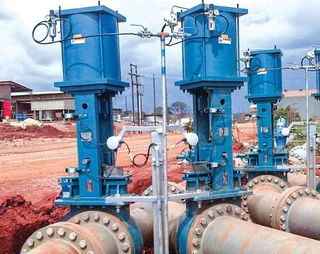
1. Structure and Principle of Knife Gate Valve
Knife gate valves mainly consist of three components:
- the operating handwheel or actuator
- the valve body
- the internal control mechanism
During operation, rotating the handwheel or activating the actuator drives internal levers and gear mechanisms, causing the gate plate to move vertically within the guide slots.
The motion of the gate is perpendicular to the flow direction, and the medium is cut off by the knife-edged gate plate.
The gate typically has two sealing surfaces forming a wedge configuration. The wedge angle varies according to valve parameters but is generally around 5 degrees.
The gate can be either:
a rigid solid gate, or
an elastic gate capable of slight deformation to compensate for machining deviations and improve sealing.
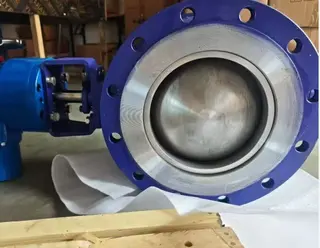
Knife gate valves commonly use a wafer-type structure, resulting in compact size, light weight, and minimal installation space requirements.
The full-bore straight-through passage allows media to flow smoothly with minimal resistance and reduced risk of debris accumulation. This design is especially suitable for high-flow transport systems.
2. Sealing Types and Actuation Options
Knife gate valves offer two main sealing types:
Soft sealing: Typically uses rubber or PTFE materials. These provide excellent sealing performance for gases and liquids but have relatively limited temperature resistance.
Metal sealing: Employs metal surfaces or hard alloy overlays. These seals offer superior wear resistance and high-temperature performance but slightly lower sealing tightness than soft seals.
To accommodate various operating conditions, knife gate valves support multiple actuation methods:
Manual operation for small sizes or low-frequency use
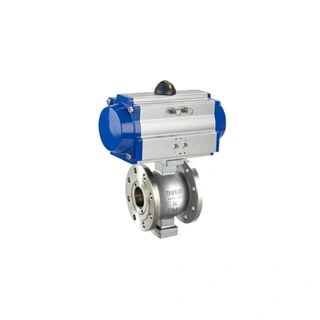
Pneumatic actuation for fast response and frequent operation
Electric actuation for remote control and precise positioning
Hydraulic actuation for large-diameter or high-pressure applications
This flexibility enables knife gate valves to be integrated into both simple manual systems and advanced automated control systems.
3. Typical Applications of Knife Gate Valve
Knife gate valves are widely used in the following industries:
Mining and metallurgy: Used in coal washing pipelines, slag slurry pipelines, and ash discharge systems. They handle abrasive media such as tailings slurry, ore slurry, and concentrated pulp.
Wastewater treatment and environmental protection: Commonly used in pipelines carrying raw sewage, primary sludge, and concentrated activated sludge. They are also used in landfill leachate systems and power plant desulfurization slurry pipelines.
Pulp and paper industry: Installed in pulp transport pipelines during pulping and papermaking processes. The knife edge effectively cuts fibers and prevents clogging.
Power plant ash handling systems: Used for transporting and discharging ash slurry, which is often abrasive and prone to solidification.
Chemical and petrochemical industries: Suitable for handling process media containing particles, powders, or crystallization tendencies, such as catalyst slurry and fly ash suspensions.
Differences Between V-Port Ball Valves and Knife Gate Valves
Although both valve types can handle media containing solids, they differ significantly in functional focus, structural principle, and typical applications.
1. Functional Positioning
V-port ball valves are primarily designed for flow regulation, with secondary shutoff capability. Their equal-percentage flow characteristic allows accurate control across the full opening range.
Knife gate valves, on the other hand, are designed mainly for reliable shutoff, especially in media containing solids or fibers. While some knife gate valves can provide rough throttling, precise flow control is not their primary function.
2. Structural Principle
V-port ball valves operate using a quarter-turn rotary mechanism, providing quick response and low fluid resistance.
Knife gate valves rely on linear vertical movement of the gate. When fully open, the gate completely withdraws from the flow path, creating an unobstructed passage with extremely low resistance.
However, the opening and closing process is generally slower than that of ball valves.
3. Media Compatibility
Fiber-containing media: Both valves can handle fibrous media. V-port valves cut fibers with the V-notch shear edge, while knife gate valves use the blade-like gate.
Solid particle media: V-port valves typically handle smaller particles (usually below 5 mm), whereas knife gate valves can accommodate larger particles and heavier slurry.
High-viscosity media: Both valves are suitable, but V-port valves provide better flow control.
Corrosive media: Both valve types can be manufactured from corrosion-resistant materials such as stainless steel, fluorine-lined alloys, or Hastelloy, depending on the chemical environment.
Practical Valve Selection Recommendations
When selecting between V-port ball valves and knife gate valves, engineers should evaluate process requirements, media characteristics, operating conditions, and economic factors.
1. Based on Process Requirements
Choose V-port ball valves when precise flow control is required.
Choose knife gate valves when reliable shutoff of solid-laden media is needed.
2. Based on Media Characteristics
Fiber media: either valve type depending on control needs
Large particles or abrasive slurry: knife gate valves
Small particles or dosing control: V-port ball valves
3. Based on Operating Conditions
High temperature: metal-seated valves are recommended
High pressure: V-port ball valves generally offer higher pressure ratings
Frequent operation: V-port ball valves respond faster
4. Economic Considerations
V-port ball valves have more complex structures and therefore higher manufacturing costs, but they combine regulation and shutoff functions.
Knife gate valves feature simple design, lower cost, lighter weight, and easier maintenance, making them ideal for applications requiring only shutoff capability.
Conclusion
Both V-port ball valves and knife gate valves play vital roles in industrial fluid control systems.
V-port ball valves stand out for their precise flow control, strong shearing ability, and self-cleaning characteristics, making them indispensable in continuous process regulation.
Knife gate valves, with their simple structure and powerful cutting capability, are the preferred choice for handling media containing solids, fibers, or slurry.
In practical engineering applications, selecting the appropriate valve requires careful consideration of process requirements, media properties, operating conditions, and economic factors. Proper valve selection not only ensures safe and stable operation of industrial systems but also reduces maintenance costs and improves overall operational efficiency. This guide aims to provide valuable insights to support more effective valve selection in industrial projects.
Send your message to this supplier
Related Articles from the Supplier
V-Port Ball Valve vs. Knife Gate Valve
- Mar 13, 2026
Features and Installation of V-type ball valve
- Dec 14, 2024

V-Type Ball Valve Selection Guide
- Dec 01, 2025
Related Articles from China Manufacturers

Related Products Mentioned in the Article

Zhejiang Kosen Valve Co., Ltd.
- https://www.kosenvalve.com/
- Business Type: Industry & Trading, Manufacturer,
Supplier Website
Source: https://www.kosenvalve.com/media-hub/v-port-ball-valve-vs-knife-gate-valve.html