
Metal Seated Ball Valve Selection and Application Guide
Metal seated ball valves are critical components in industrial pipeline systems designed to withstand extreme operating conditions. Compared with soft seated ball valves, metal seated ball valves are exposed to much harsher working environments. High temperature, strong corrosion, dust, solid particles, slurry media, and other complex substances pose serious challenges to their long-term stable operation.
In practical applications, many users fall into two common selection misconceptions when choosing valve models. First, they lack a deep understanding of the operating conditions. Second, they focus excessively on procurement cost while neglecting product performance. Improper valve selection often leads to rapid failure after commissioning, which not only causes production interruptions but may also trigger safety incidents, ultimately resulting in greater economic loss. Therefore, reliability must be prioritized during metal seated ball valve selection, as it is the foundation for ensuring long-term system stability.
Selection of Hard Alloy Coating Layers
The key to the performance of metal seated ball valves lies in the surface hardening treatment of the ball and valve seat. Since metal-to-metal sealing requires much higher sealing specific pressure than conventional ball valves, adhesion or galling may occur between metal surfaces, directly determining whether the valve can function properly.
Currently, the most widely used and most effective surface hardening method is hard alloy thermal spraying technology, mainly including nickel-based and chromium-based alloy coatings. The quality of the sprayed coating on both the ball and the seat directly determines the service performance and lifespan of the sealing surface. Therefore, selecting the appropriate hard alloy coating based on actual operating conditions is crucial.
- Pursuing High Hardness: High-hardness alloy coatings provide excellent wear resistance and erosion resistance, especially suitable for working conditions involving fine and hard solid particles, such as in coal chemical processing and polysilicon production industries. In such environments, hard particles in the medium exert strong mechanical erosion on the sealing surface, and high-hardness coatings can effectively resist this type of wear.
- Pursuing Corrosion Resistance: In strongly corrosive media environments, corrosion-resistant alloy coatings can effectively protect the internal base material of the valve seat and significantly extend service life. Such coatings are mainly used in petrochemical and paper industries, where media often exhibit strong acidic, alkaline, or oxidative characteristics.
The selection of hard alloy coating materials must strictly match the operating conditions and media characteristics. Any mismatch may lead to premature valve failure.
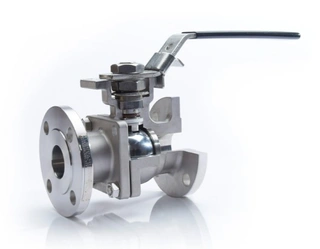
Influence of Temperature on Internal Component Selection
The material selection of internal components in metal seated ball valves is closely related to the operating temperature or medium temperature, including packing materials, sealing gaskets, and stem bushings.
It should be noted that metal seated ball valves are usually selected for two main reasons: first, the operating temperature is too high for soft seated valve seats; second, the medium has strong abrasion or erosion capacity that exceeds the hardness of soft sealing materials. Therefore, metal seated ball valves are not necessarily high-temperature ball valves, and in some cases, their operating temperature may not be very high.
1. Configuration for Low-Temperature Conditions (Below 200°C)
When the medium temperature is below 200°C, the following components may be made of synthetic polymer materials:
- Packing: synthetic polymer materials
- Sealing gaskets: including body-cover gasket, lower stem gasket, and middle flange gasket
- Stem bushings: synthetic polymer materials
This configuration is similar to that of soft seated ball valves, offering relatively low cost and convenient maintenance.
2. Configuration for High-Temperature Conditions (Above 200°C)
When the medium temperature exceeds 200°C, high-temperature resistant materials must be used:
Packing: graphite material is recommended. Graphite has extremely strong thermal resistance, and its performance remains stable under high-temperature conditions, ensuring sealing reliability.
Sealing gaskets: metal wire–wrapped graphite ring structures should be used, where graphite provides the sealing function while the metal wire provides structural reinforcement.
Stem bushings: metal materials must be adopted to withstand mechanical stress under high-temperature environments.
Selection Key Point: Medium temperature is one of the decisive factors in metal seated ball valve selection. Incorrect internal component selection may lead to cost waste in mild cases or complete valve failure in severe cases.
Precise Matching of Drive Devices and Auxiliary Accessories
The drive mechanism of metal seated ball valves can be divided into several categories according to power source. Selection should comprehensively consider operating torque, response speed, and control accuracy.
1. Manual Drive Device Selection
For manual operation devices such as lever handles, steel pipe handles, and gear mechanisms, the selection process should follow these steps:
Calculate torque requirements based on the valve operating torque value
Select appropriate handle length or gear specification
Verify whether material torsional and tensile strength meet operational requirements
Manual devices have simple structures and low cost, making them suitable for applications with low operating frequency and relatively small torque requirements.
2. Automatic Actuator Selection
Automatic actuator selection is more complex. Taking pneumatic actuators as an example:
Single-Acting vs. Double-Acting
Double-acting type: Both opening and closing actions are driven by spring force, providing consistent output torque and relatively simple selection calculations.
Single-acting type: Opening requires overcoming spring force, while closing relies on spring force. The output torque is a variable range rather than a fixed value, increasing selection difficulty.
Safety Factor Setting
When installing pneumatic actuators, a safety factor should be multiplied based on the valve operating torque to prevent insufficient driving torque caused by actuator output fluctuations. For metal seated ball valves used in particle-laden, dusty, or slurry media, the medium coefficient should generally be selected within the range of 1.5–2 to ensure sufficient driving torque.
Operating Torque Estimation
Since actual operating torque cannot be accurately measured under factory conditions, estimation is usually performed by multiplying the no-load torque by a medium coefficient. The more complex the medium and the higher the particle content, the larger the coefficient should be.
3. Coordination of Auxiliary Components
Auxiliary components of actuators include solenoid valves, pressure reducing valves, and valve position switches, which must be matched with actuator performance.
- Flow Matching: Large air intake actuators should be equipped with large-orifice solenoid valves to avoid delayed valve closure caused by slow air intake, thereby reducing erosion time on the sealing surface.
- Response Speed: The advantage of automatic devices lies in fast opening and closing speed. Many operating conditions require completion of switching actions within several seconds, placing higher demands on accessory configuration.
Sealing Mechanism and Structural Optimization Design
Although proper actuator configuration ensures sufficient operating torque, achieving true zero leakage depends mainly on understanding the unique sealing mechanism of metal seated ball valves.
1. Fundamental Differences Between Metal and Soft Sealing
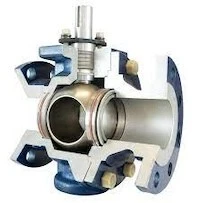
The sealing surface is the most important working part of a ball valve and directly affects overall performance and service life. During operation, the ball rotates to open or close against the seat. Any damage to the sealing surface may cause internal leakage and valve failure.
- Soft Seated Ball Valve Sealing Mechanism: The sealing force between the ball and seat causes the non-metallic seat material to deform elastically, transforming line contact into surface contact. After deformation, the seat conforms more closely to the ball surface, compensating for surface irregularities. This mechanism allows certain tolerance to changes in compression force, and minor deviations have limited influence on sealing performance.
- Metal Seated Ball Valve Sealing Mechanism: Since both the ball and seat are metallic, the sealing force cannot cause obvious deformation of the seat. Therefore, a much larger sealing force is required to produce micro-deformation on the sealing surface to achieve tight sealing between the ball and seat. However, this micro-deformation is extremely sensitive to compression force variations, and even slight deviations may cause sealing failure.
The compression force between the ball and seat of metal seated ball valves is much greater than that of soft seated ball valves.
The sealing adjustment capability of metal seated ball valves is weaker than that of soft seated ball valves.
2. Sealing Specific Pressure Adjustment Mechanism
Due to the higher compression pressure in metal seated ball valves, sliding friction occurs between metal surfaces during switching operations. When metals with similar hardness slide against each other, sealing surfaces may be scratched.
To solve this problem, springs (disc springs or coil springs) are usually installed behind the valve seat to allow micro-adjustment of sealing specific pressure so that sealing performance can be maintained within an acceptable range.
Adjustment Limitations: The elasticity of springs has a linear or quadratic relationship with compression displacement, and the effective adjustment range is very limited. When leakage occurs and the specific pressure deviates significantly from the standard value, the thickness of the seat compression ring must be adjusted to achieve larger regulation.
3. Double-Scraper Structure for Solid Particle Erosion
In industries such as coal chemical processing and polysilicon production, the medium often contains large amounts of solid particles. These particles can severely erode the flow channel at the ball and seat interface or even enter the sealing surface, causing catastrophic damage. Statistics show that such problems account for more than 20% of valve repair cases.
Two stepped surfaces are machined on both sides of the seat sealing surface, forming a "double scraper" structure. The stepped structures act like two scrapers, effectively removing solid particles adhering to the ball surface during valve operation and preventing particles from entering the sealing interface.
The double scraper structure is mainly suitable for media with high solid particle content. For clean media such as water and steam, scraper structures may reduce seat strength and increase manufacturing cost, making them unnecessary.
Summary
The correct selection and application of metal seated ball valves is a systematic engineering task that requires comprehensive consideration of operating condition analysis, material selection, structural design, drive configuration, installation, and maintenance.
Key points include:
- Reliability first: Under severe operating conditions, product reliability should be prioritized over cost considerations.
- Material matching: The selection of hard alloy coatings must strictly match actual operating conditions and media characteristics.
- Temperature adaptation: Internal component materials should be selected according to medium temperature to avoid high-temperature failure or over-specification.
- Structural optimization: Double scraper structures should be adopted for particle-laden media to reduce sealing surface damage.
- Drive matching: Properly select driving devices and auxiliary accessories to ensure torque and response speed requirements are met.
- Standardized operation: Install and use the valve according to specifications and establish preventive maintenance mechanisms.
Only by fully understanding these key factors can the performance advantages of metal seated ball valves be fully realized, service life extended, lifecycle cost reduced, and the safe, stable, and efficient operation of industrial pipeline systems ensured.
Send your message to this supplier
Related Articles from the Supplier
An Introduction to Metal-Seated Butterfly Valves
- Jan 07, 2026
A Complete Guide to Metal Seated Plug Valves
- Jun 03, 2026
Metal to Metal Ball Valves Characteristics
- Dec 14, 2024
Related Articles from China Manufacturers
Selection and Use of Metal-Seated Ball Valves
- Jan 20, 2026
Selection of Metal-seated Ball Valve Accessories
- Nov 28, 2023
Metal-Seated Ball Valve: Common Faults and Solutions
- Mar 19, 2024
Metal Seated Ball Valve vs. Soft Seated Ball Valves
- Dec 05, 2024
Metal Seated Ball Valve: A Comprehensive Overview
- Dec 13, 2024
Related Products Mentioned in the Article

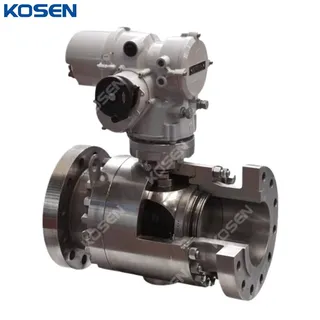


Zhejiang Kosen Valve Co., Ltd.
- https://www.kosenvalve.com/
- Business Type: Industry & Trading, Manufacturer,
Supplier Website
Source: https://www.kosenvalve.com/media-hub/metal-seated-ball-valve-selection-and-application-guide.html