
Industrial Safety Valve Blowdown Control Guide
In industrial production processes, the pressure inside boilers, pressure vessels, and piping systems must always be maintained within a safe range. Once the pressure exceeds the design limits of the equipment, it may lead to serious accidents such as leakage or explosions, resulting in equipment damage, production interruptions, and even casualties. Safety valves are the key devices that prevent such incidents. As practitioners engaged in the supply and technical service of industrial safety valves for many years, we have found in practice that many users, when selecting and using safety valves, tend to focus only on one parameter, the set pressure, while overlooking another equally important indicator: blowdown. Improper control of blowdown can lead to frequent valve cycling, damage to sealing surfaces, and excessive medium leakage, directly affecting production safety and operating costs. This article starts from the basic concept of blowdown, combines relevant standard requirements, and provides a detailed explanation of the main factors influencing blowdown, control methods, and common mistakes, helping industrial users correctly manage and use safety valves to improve system safety and economic efficiency.
What Is Blowdown in Safety Valves?
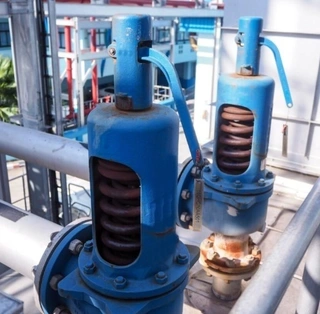
A safety valve is an essential protective device in industrial systems. When the pressure inside a boiler, pressure vessel, or pipeline exceeds the safe limit, the safety valve automatically opens to release excess pressure, preventing equipment damage or explosion. Once the pressure drops back to a safe level, the valve automatically closes, restoring normal system operation.
In this process, two key pressure points must be considered. The first is the set pressure, which is the pressure at which the safety valve begins to open. The second is the reseating pressure, which is the pressure at which the valve closes again. The difference between these two pressures is called blowdown.
For example, suppose a safety valve has a set pressure of 100 psi. When the system pressure reaches 100 psi, the valve opens to release pressure. As the medium is discharged, the system pressure gradually decreases. When the pressure drops to 90 psi, the valve closes again. In this case, the blowdown is 10 psi. In practice, blowdown is usually expressed as a percentage of the set pressure. In this example, 10 psi divided by 100 psi, multiplied by 100%, results in a blowdown of 10%.
The formula for blowdown is as follows:
Blowdown (%) = (Set Pressure − Reseating Pressure) ÷ Set Pressure × 100%
Understanding this basic concept is the first step toward properly selecting and adjusting safety valves.
Why Blowdown Control Is Important?
The magnitude of blowdown directly affects the operating condition of the safety valve and the overall efficiency of the system. Proper control of this parameter brings several benefits.
- First, it prevents frequent valve cycling. If the blowdown is set too small, the valve may close before the system pressure has sufficiently decreased. However, the pressure may still be close to the set pressure, causing the valve to reopen shortly after closing. This repeated opening and closing is known as chatter or flutter, which can severely damage the sealing surfaces of the disc and seat, reduce valve life, and cause repeated medium leakage.
- Second, it avoids excessive pressure drop. If the blowdown is too large, the valve will remain open until the system pressure drops to a very low level. This results in excessive discharge of process media, leading to material waste. For expensive or hazardous media, such losses are even more significant. Additionally, excessively low system pressure may affect downstream equipment and disrupt process stability.
- Third, it reduces equipment wear and maintenance costs. A properly controlled blowdown allows the valve to operate within its designed cycle, ensuring each opening and closing occurs within a controlled range. This extends the service life of the valve, reduces the frequency of component replacement, and lowers maintenance costs.
- Fourth, it ensures personnel safety. The fundamental function of a safety valve is to prevent overpressure accidents. If blowdown is not properly controlled, the valve may fail to reseat correctly or open in time, leading to loss of pressure control and increasing the risk of explosions or leaks, thereby endangering personnel.
Main Factors Affecting Blowdown in Safety Valves
Blowdown is not a fixed value; it is influenced by multiple factors. Understanding these factors helps achieve better control of valve performance in practice.
1. Valve Design Structure
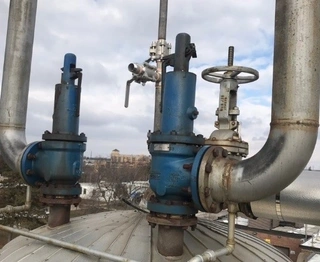
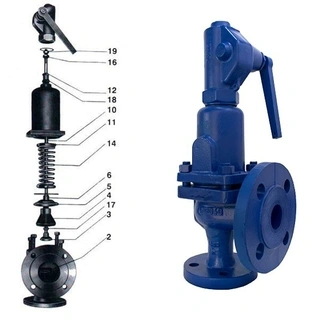
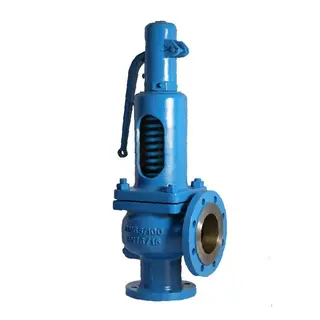
Different types of safety valves exhibit different blowdown characteristics. Spring-loaded safety valves are the most common type. They rely on the preload force of a spring to hold the disc closed. When the system pressure force exceeds the spring force, the valve opens. The blowdown of spring-loaded valves is typically related to spring stiffness, disc design, and seat angle.
Pilot-operated safety valves use a pilot valve to control the opening and closing of the main valve. This design allows for smaller and more stable blowdown. However, in applications requiring larger blowdown, pilot-operated valves may not be as suitable as spring-loaded types.
Additionally, the design of the disc and seat also affects blowdown. For example, valves with adjusting rings allow blowdown to be modified by changing the ring position. Valves without adjusting rings usually have fixed blowdown and cannot be adjusted on site.
2. Medium Characteristics
Whether the medium is compressible or incompressible has a significant impact on blowdown. Gases are compressible. When the valve opens, the gas expands rapidly and discharges, causing a quick pressure drop. The reaction force generated by the flowing gas helps keep the disc open, so gas applications typically have larger blowdown.
Liquids are incompressible. When the valve opens, the pressure change is more direct and immediate. The reaction force on the disc is smaller, making it easier for the valve to close, resulting in smaller blowdown. In addition, liquid viscosity affects flow characteristics; high-viscosity media may require larger blowdown to ensure proper reseating.
3. Temperature and Pressure Fluctuations
High temperatures cause thermal expansion of metal materials. The stiffness of the spring may change at elevated temperatures, and the dimensions of the disc and seat may also vary, affecting opening and reseating pressures and thus blowdown.
The rate of pressure fluctuation also plays a role. If pressure rises very quickly, the valve may not open smoothly and may “pop” open suddenly. Similarly, rapid pressure drops affect the reseating process. Fast pressure changes make blowdown control more challenging.
Safety Valve Blowdown Requirements in Different Standards
Various industrial standards specify requirements for safety valve blowdown. Understanding these standards is essential for proper valve selection and acceptance.
1. ASME Requirements
The ASME Boiler and Pressure Vessel Code is widely used worldwide. According to ASME Section VIII (for pressure vessels), blowdown is typically around 7%. For ASME Section I (for power boilers), blowdown is generally controlled within 4% to 6%.
ASME Section I also specifies a minimum blowdown requirement. The minimum blowdown must not be less than 2% of the set pressure. When the set pressure is below 750 kPa, the minimum blowdown should be 15 kPa. This requirement aims to prevent disc-seat chatter. There are also limits on maximum blowdown, which must not exceed specified percentages in the standard tables.
2. Overpressure and Accumulation
ASME Section I also defines requirements for overpressure and accumulation. Overpressure refers to the pressure exceeding the set pressure when the valve opens. It must not exceed 6% of the set pressure. Accumulation is the total pressure increase above the maximum allowable working pressure and must also not exceed 6%.
These requirements are closely related to blowdown. Improper blowdown control may affect compliance with overpressure and accumulation limits.
3. Problems with Improper Blowdown
If blowdown is too large, the valve closes slowly, releasing more medium before fully closing, resulting in process losses. In steam systems, this leads to energy waste; in chemical systems, it may cause loss of valuable materials or environmental pollution.
If blowdown is too small, simmering occurs. Simmering refers to slight leakage when the valve is not fully open. In this condition, the disc and seat repeatedly contact each other, causing continuous impact and eventual damage to sealing surfaces, leading to leakage or failure to reseat.
How to Effectively Control Blowdown in Safety Valve?
Effective blowdown control requires attention to selection, installation, maintenance, and adjustment.
1. Proper Selection Based on Operating Conditions
Selection is the first and most critical step. Factors to consider include whether the medium is gas, liquid, or steam, the normal operating pressure, maximum allowable pressure, temperature range, and specific blowdown requirements of the process.
For applications requiring small blowdown, pilot-operated safety valves or special designs may be suitable. For applications allowing larger blowdown, standard spring-loaded valves are typically sufficient.
Consulting with professionals or valve manufacturers during selection can provide accurate recommendations based on actual operating data.
2. Regular Maintenance and Inspection
Over time, safety valves are affected by corrosion, deposits, and spring fatigue, all of which can alter blowdown characteristics. Regular maintenance is essential.
Maintenance includes checking for visible wear or corrosion, cleaning deposits from the disc and seat, inspecting springs for corrosion or deformation, and replacing aged or damaged sealing components. These measures help maintain valve performance and keep blowdown within the desired range.
3. Proper Adjustment and Calibration
Adjustable safety valves allow blowdown to be modified according to system requirements. The key component is usually the adjusting ring. Changing its position alters the flow path and pressure distribution above the disc, thereby affecting the reseating pressure.
Adjustments must be performed by trained personnel. Before adjustment, the valve manual should be reviewed. After adjustment, pressure testing is required to verify that both set pressure and reseating pressure meet target values. Unauthorized adjustments are not recommended.
Calibration should be performed regularly using certified test benches. This verifies the accuracy of set and reseating pressures and provides actual blowdown values. Valves that do not meet requirements should be repaired or replaced.
4. Continuous Monitoring of System Conditions
The actual performance of a safety valve depends on system conditions. Even if the valve itself is functioning properly, changes in operating conditions may affect blowdown.
Monitoring should include system pressure fluctuations, medium temperature, pipeline vibration, and abnormal phenomena such as water hammer or gas hammer. Any abnormalities should be addressed promptly to prevent additional stress on the valve.
5. Personnel Training
The understanding of blowdown by operators and maintenance personnel directly affects safety valve management. Training should cover basic concepts and calculations of blowdown, characteristics of different valve types, identification of abnormal behavior, routine inspection procedures, and safety precautions during adjustment and calibration.
Improved technical competence reduces human errors in blowdown control.
Conclusion
Blowdown is a key parameter in evaluating safety valve performance. It directly affects valve cycling behavior, medium loss, sealing surface life, and system stability. Proper blowdown achieves a balance between overpressure protection and stable system operation.
Effective control requires a scientific approach: selecting suitable valve types based on medium and operating conditions, performing regular maintenance, properly adjusting and calibrating valves, continuously monitoring system conditions, and strengthening personnel training.
Following standards such as ASME, including minimum blowdown requirements of 2% or 15 kPa, helps prevent disc vibration and extend valve life. Through proper selection, standardized maintenance, and systematic management, the reliability of industrial safety valves can be significantly improved, ensuring long-term safe and stable operation of industrial systems.
Send your message to this supplier
Related Articles from the Supplier
Industrial Safety Valve Blowdown Control Guide
- Apr 28, 2026
How to Choose Gaskets for Your Industrial Valves?
- Nov 04, 2025
Guide to Industrial Valve Pressure Testing
- Jan 14, 2026
Related Articles from China Manufacturers

Related Products Mentioned in the Article

Zhejiang Kosen Valve Co., Ltd.
- https://www.kosenvalve.com/
- Business Type: Industry & Trading, Manufacturer,
Supplier Website
Source: https://www.kosenvalve.com/media-hub/industrial-safety-valve-blowdown-control-guide.html