
Guide to Sleeved Plug Valves in High-Pressure Systems
In high-pressure industrial piping systems, the selection of valves directly determines whether equipment can operate safely and reliably. Fluid control under high-pressure conditions presents multiple technical challenges. When the internal pressure of a pipeline becomes excessively high, conventional valves are prone to sealing failure. Fluid leakage not only results in the loss of media but may also trigger serious incidents such as fire, explosion, or toxic exposure. Therefore, engineers must carefully evaluate sealing performance, wear resistance, and operational reliability during valve selection. Improper selection can lead to leakage within just a few months of operation, forcing production shutdowns for maintenance and causing significant economic losses. The sleeved plug valve is a specialized valve type specifically designed to address sealing challenges in high-pressure systems, and its structural characteristics enable outstanding performance under such demanding conditions.
Main Components of Sleeved Plug Valves
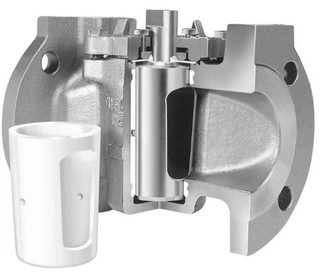
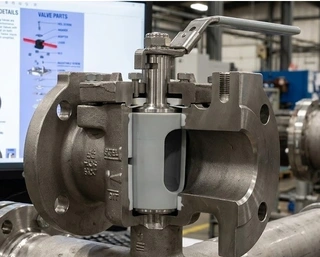
A sleeved plug valve consists of several critical components. The valve body serves as the external housing and is typically manufactured from high-strength materials such as stainless steel, cast iron, or carbon steel to withstand internal pipeline pressure. The plug is the core element responsible for controlling fluid flow; it is located inside the valve body and features a through-port on its surface.
The sleeve is installed between the plug and the valve body and represents the most crucial functional component. The valve stem connects the plug to the external operating mechanism and transmits rotational torque. The valve seat provides the sealing interface, ensuring zero leakage when the valve is closed. Gaskets and packing prevent media leakage at connection points. The bonnet is mounted on top of the valve body, securing internal components and housing the packing.
Working Process of Sleeved Plug Valves
The operation of a sleeved plug valve is simple and efficient. The operator rotates a handwheel or uses an actuator to drive the valve stem, which in turn rotates the plug. When the plug rotates by 90 degrees, the channel inside the plug aligns completely with the pipeline channel, allowing fluid to flow freely; the valve is then in the fully open position.
When the plug rotates back by 90 degrees to its original position, the channel becomes misaligned with the pipeline, completely blocking fluid flow and closing the valve. For flow regulation, the plug can be positioned at an intermediate angle, such as 45 degrees, enabling partial flow.
This quarter-turn design ensures rapid opening and closing. In emergency situations, the valve can quickly shut off fluid flow, providing critical protection for the system.
Core Role of the Sleeve in Sleeved Plug Valves
The sleeve is the defining feature that distinguishes sleeved lug valves from other valve types. It is typically made of materials such as PTFE, PFA, EPDM, or NBR and wraps around the plug surface. The sleeve forms an isolation barrier between the plug and the valve body.
During operation, the sleeve utilizes its flexibility and low-friction characteristics to ensure tight sealing while minimizing operating resistance. It also possesses self-lubricating properties, with a very low friction coefficient, allowing the plug to rotate smoothly without the need for additional lubrication.
Additionally, the sleeved protects the valve body by preventing direct contact between the fluid and the inner wall of the valve body. This effectively reduces corrosion caused by aggressive media and significantly extends the service life of the valve.
Advantages of Sleeved Plug Valves in High-Pressure Systems
After understanding the structure and working principle, it is important to examine the practical advantages of sleeved plug valves in high-pressure environments. Compared to conventional valves, they offer clear benefits in sealing, durability, operation, and maintenance.
1. Excellent Sealing Performance
Reliable sealing is the most fundamental requirement in high-pressure applications. The sealing performance of sleeved plug valves primarily depends on the sleeve material. Materials such as PTFE and PFA exhibit excellent elasticity and deformation capability, enabling them to closely conform to the plug surface under high pressure and fill microscopic gaps.
Even under high differential pressure conditions, the sleeve effectively prevents leakage between the plug and the valve body. The presence of the sleeve eliminates direct metal-to-metal contact, thereby avoiding friction and wear associated with traditional designs.
Unlike conventional sealing structures that may undergo irreversible plastic deformation over time, the sleeve maintains long-term elastic sealing capability. This makes the valve suitable for handling hazardous media, including corrosive fluids, toxic substances, and high-pressure gases.
2. Outstanding Durability and Wear Resistance
Fluids in high-pressure systems often contain solid particles or exhibit corrosive properties, posing a significant challenge to valve lifespan. Sleeved plug valves address this issue through the protective function of the sleeve.
The sleeve material offers excellent resistance to corrosion and abrasion, allowing it to withstand acidic, alkaline, and particle-laden media. When fluids containing solid particles pass through the valve, the particles first contact the sleeve rather than the valve body.
The sleeve absorbs wear and can be replaced when necessary, while the valve body remains intact. Constructed from high-strength materials such as stainless steel or cast iron, the valve body can endure prolonged high-pressure operation without deformation.
This design enables sleeved plug valves to operate reliably for five to seven years or even longer in corrosive and abrasive environments. Some designs also incorporate self-cleaning mechanisms that remove debris from sealing surfaces during operation, further reducing maintenance requirements.
3. Self-Lubricating Properties Reduce Maintenance Costs
Traditional valves operating under high pressure often require significant torque and periodic lubrication to function properly. In contrast, sleeved plug valves do not require additional lubrication.
Materials such as PTFE and PFA have extremely low friction coefficients, typically ranging from 0.05 to 0.10. This self-lubricating property minimizes rotational resistance, resulting in low operating torque. Whether operated manually or by an actuator, the valve is easy to operate.
The absence of lubrication requirements significantly reduces maintenance workload. This advantage is particularly valuable in remote or unmanned pipeline systems. Furthermore, eliminating lubricants prevents contamination of the process media, which is critical in industries such as food processing, pharmaceuticals, and fine chemicals.
4. Rapid Opening and Closing Enhances Safety
The quarter-turn design of sleeved plug valves allows full opening or closing with a 90-degree rotation. Compared to gate valves or globe valves that require multiple turns, sleeved plug valves significantly reduce operating time.
In emergency situations such as pipeline rupture or media leakage, operators can close the valve within seconds, quickly isolating hazardous fluids and preventing escalation of accidents. This rapid response capability is essential for systems transporting flammable or explosive media under high pressure.
Additionally, sleeved plug valves feature a compact structure, lightweight design, and small installation footprint, making them suitable for installations where space is limited or equipment is densely arranged.
Limitations and Selection Considerations
Despite their advantages, sleeved plug valves are not universally suitable for all high-pressure applications. Engineers must understand their limitations to make informed decisions.
1. Limited Temperature Range
The operating temperature of sleeved plug valves is limited by the properties of the sleeve material. PTFE sleeves typically function within a temperature range of -100°C to 280°C. PFA offers slightly improved temperature resistance but still has an upper limit.
If the temperature exceeds the material’s tolerance, the sleeve may soften, deform, or become brittle, leading to reduced sealing performance or complete failure. Rapid temperature fluctuations can also affect sealing due to thermal expansion and contraction.
Although some designs incorporate elastic sealing structures to compensate for dimensional changes, engineers must ensure that operating temperatures remain within specified limits. For high-temperature applications, alternative valve types or specially designed high-temperature sleeved plug valves may be required.
2. Pressure Limitations
While suitable for most high-pressure conditions, sleeved plug valves have slightly lower pressure resistance compared to certain ball valves or gate valves. Under extremely high pressure, the sleeve may deform due to compression, affecting sealing performance.
Typically, sleeved plug valves are suitable for pressure ranges from PN1.6 MPa to Class 1500. For ultra-high-pressure systems, engineers should carefully evaluate suitability or consider alternatives such as lubricated tapered plug valves or reinforced designs.
3. Comprehensive Selection Factors
Proper selection of sleeved plug valves requires a comprehensive evaluation of operating conditions. The type of medium is the primary consideration, including its corrosiveness, presence of solid particles, viscosity, and cleanliness.
Pressure rating determines the required valve body material and wall thickness. Temperature influences the selection of sleeve and sealing materials. Flow velocity and direction also affect valve lifespan.
Connection type, whether flanged, welded, or threaded, must match system requirements. Operating frequency determines whether an actuator is necessary. Maintenance conditions influence whether a replaceable sleeve design should be used.
Only by considering all these factors can engineers ensure optimal valve selection.
Main Application Fields of Sleeved Plug Valves
After understanding their characteristics, sleeved plug valves are widely applied across industries requiring reliable sealing, corrosion resistance, and durability.
1. Chemical and Petrochemical Industry
Used for transporting highly corrosive media such as acids and organic solvents. PTFE/PFA sleeves provide strong chemical resistance, ensuring long-term stability. They are also applied in high-temperature, high-pressure oil and gas processes, with multi-port designs simplifying pipelines and reducing leakage points.
2. Water Treatment and Environmental Protection
Ideal for slurry and particle-laden media in wastewater systems. Their self-cleaning and wear-resistant features prevent clogging and abrasion. Common applications include sludge transport, chemical dosing, and seawater desalination.
3. Mining and Metallurgical Industry
Designed for abrasive mineral slurries with high solid content. Replaceable sleeves reduce maintenance costs by avoiding full valve replacement. Widely used in tailings transport, alumina production, and steel plant systems.
4. Pulp and Paper Industry
Suitable for handling pulp and fibrous media. The smooth sleeve surface prevents fiber adhesion, while the cutting action avoids entanglement, ensuring reliable operation in pulp transport and coating systems.
5. Nuclear Industry
Used in environments requiring extremely high sealing integrity. Their multi-layer sealing and replaceable sleeves prevent radioactive leakage and maintain stable performance under radiation exposure.
Conclusion and Selection Recommendations
Sleeved plug valves provide strong advantages in high-pressure systems due to their excellent sealing performance, self-lubrication, wear resistance, and fast quarter-turn operation. The sleeve acts as the key sealing element, forming a reliable barrier between the plug and valve body, preventing leakage while also protecting internal components from corrosion and mechanical wear.
Their low-friction design ensures smooth operation with minimal maintenance requirements, while the quick 90-degree actuation significantly improves system safety through rapid shutoff capability. As a result, these valves are widely used in chemical processing, petrochemical industries, water treatment, mining, pulp and paper, and nuclear applications.
In valve selection, engineers must carefully assess operating conditions. Temperature should remain within the sleeve material limits, and pressure ratings must match system demands. The nature of the medium is also critical for material selection.
For corrosive media, PTFE or PFA sleeves are preferred. For abrasive, particle-laden fluids, replaceable wear-resistant sleeves are recommended. Systems with frequent operation require suitable actuators, while fire-risk applications should use fire-safe designs.
A proper balance between performance advantages and operating limitations, combined with accurate condition matching, is essential to ensure long-term, safe, and stable operation of high-pressure systems.
Send your message to this supplier
Related Articles from the Supplier
Guide to Key Steps of Safety Valve Adjustment
- Oct 09, 2025
Guide to Valve Performance and Selection
- Oct 10, 2025
Guide to Valve Electric Actuator Selection
- Nov 05, 2025
Guide to Diaphragm Pump Material Selection
- Dec 19, 2025
Guide to Industrial Valve Pressure Testing
- Jan 14, 2026
Related Articles from China Manufacturers
Guide to Non-Ferrous Metal Forging Process
- Nov 06, 2025
Guide to Aluminum Alloy Forging Technology
- Nov 13, 2025

Guide to Liquid Die Forging Technology
- May 20, 2025
Related Products Mentioned in the Article

Zhejiang Kosen Valve Co., Ltd.
- https://www.kosenvalve.com/
- Business Type: Industry & Trading, Manufacturer,
Supplier Website
Source: https://www.kosenvalve.com/media-hub/guide-to-sleeved-plug-valves-in-high-pressure-systems.html