
Brass vs. Bronze Valves: Which Is Better for Your Application?
In both industrial production and everyday life, valves play a critical role in controlling fluid flow. The choice of valve material directly affects equipment lifespan, operational reliability, and overall safety. Among copper alloy valves, brass valves and bronze valves are two of the most commonly used types. Although their names are similar, they differ significantly in material composition, physical properties, and application scenarios. This article provides a systematic comparison of brass & bronze valves from multiple perspectives, including material composition, mechanical and physical performance, corrosion resistance, application fields, economic considerations, and selection guidelines, helping engineers and end users make informed decisions in real-world applications.
Fundamental Differences in Material Composition
To understand the essential differences between brass valves and bronze valves, it is necessary to start with their material composition. Although both belong to the copper alloy family, the alloying elements added and their proportions vary significantly. These differences are the root cause of variations in strength, corrosion resistance, and machinability.
1. Composition of Brass
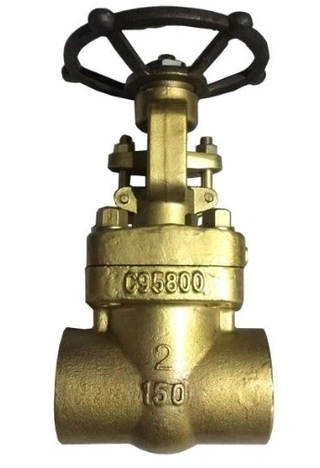
Brass is a copper alloy in which zinc is the primary alloying element. Fundamentally, it is a binary copper–zinc alloy. Depending on chemical composition, brass can be divided into common brass and special brass.
Common brass is a simple copper–zinc alloy with good plasticity, making it suitable for manufacturing plates, rods, wires, tubes, and deep-drawn components. In industrial practice, brass with copper contents of approximately 62% or 59% is commonly used for casting and is referred to as cast brass.
To enhance performance, additional alloying elements are introduced into copper–zinc alloys, forming special brasses, including:
- Lead brass: Contains lead to improve machinability and wear resistance; commonly used for watch components and bearing bushings
- Tin brass: Tin addition significantly improves corrosion resistance, especially against seawater, making it suitable for marine applications
- Aluminum brass: Aluminum enhances strength, hardness, and atmospheric corrosion resistance; often used for corrosion-resistant components
- Silicon brass: Silicon improves mechanical strength, wear resistance, and corrosion resistance; widely used in marine parts and chemical machinery
2. Composition of Bronze
Traditionally, bronze referred specifically to copper–tin alloys. In modern industry, however, copper alloys containing aluminum, silicon, lead, beryllium, manganese, and other elements are also classified as bronze. As a result, bronze encompasses several distinct categories:
- Tin bronze: Tin is the primary alloying element, typically ranging from 3% to 14% in industrial applications
- Aluminum bronze: Aluminum content generally ranges from 5% to 12%
- Beryllium bronze: Contains approximately 1.7%–2.5% beryllium, offering exceptionally high elastic and fatigue limits
- Silicon bronze and lead bronze: Designed for specific operating conditions requiring enhanced performance
For tin bronze, processing methods vary with tin content:
- Tin content below 5% is suitable for cold working
- 5%–7% is suitable for hot working
- Above 10% is primarily suitable for casting
Comparison of Physical and Mechanical Properties
Material composition directly determines physical and mechanical performance. Since brass relies mainly on zinc, while bronze incorporates tin, aluminum, beryllium, or other elements, the two materials exhibit notable differences in hardness, strength, corrosion resistance, and machinability. Understanding these differences is essential for selecting the right valve for specific operating conditions.
1. Strength and Hardness
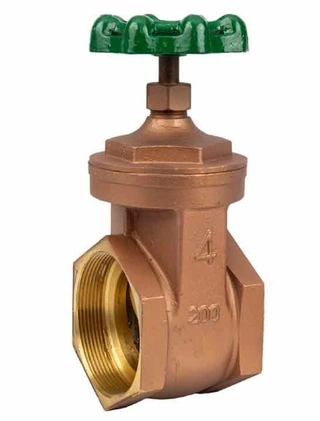
Brass has relatively low hardness, making brass valves easier to manufacture compared with stainless steel or bronze valves. Despite this, brass still offers adequate mechanical strength for most general industrial and residential applications.
In contrast, aluminum bronze exhibits significantly higher mechanical strength than both brass and tin bronze. Aluminum bronze containing 5%–7% aluminum has good plasticity and is suitable for cold working. When aluminum content exceeds 7%–8%, strength increases substantially, while plasticity decreases; such alloys are typically used in cast or hot-worked conditions.
Beryllium bronze demonstrates the highest strength among copper alloys, with exceptionally high elastic and fatigue limits. It is widely used in precision springs for instruments, high-speed and high-pressure bearing bushings, and other critical components.
2. Corrosion Resistance
Both materials perform well in corrosion resistance, but each has distinct advantages.
Brass offers good resistance to corrosion and does not rust easily, making it especially suitable for humid environments and water supply systems. Tin brass, due to its tin content, exhibits excellent resistance to seawater corrosion and is widely used in shipbuilding.
Bronze, as a category, generally provides superior corrosion resistance, particularly in extreme environments. Aluminum bronze performs exceptionally well in atmospheric conditions, seawater, carbonic acid, and most organic acids, outperforming both brass and tin bronze. Bronze materials can withstand extreme temperatures, high pressures, and complex chemical environments, making them ideal for marine and petrochemical applications.
Additionally, copper and copper alloys possess inherent antimicrobial properties, giving them unique advantages in potable water systems. Historical records indicate that as early as ancient Greece, copper was recognized for its ability to purify drinking water.
3. Machining and Casting Performance
Brass is easy to machine and manufacture, allowing for flexible customization according to design requirements. Its relatively low hardness ensures excellent machinability and comparatively low production costs.
Bronze also offers good plasticity and ductility and can be manufactured through both casting and machining. For tin bronze, different tin contents determine suitable processing methods, as noted earlier.
It should be noted that bronze valves often exhibit higher porosity due to casting processes. This characteristic may lead to gradual material degradation over time and relatively rough surface finishes. However, by adding specific alloying elements, certain bronze alloys can still achieve good polishing performance.
Application Scenarios and Industry Distribution
Given the differences in hardness, corrosion resistance, and machinability, brass and bronze valves naturally find their strengths in different application fields. Brass, with its ease of processing and cost-effectiveness, is widely used in general applications, while bronze excels in demanding industrial environments.
1. Typical Applications of Brass Valves
Brass valves are among the most widely used valve types. They are suitable for both low- and medium-pressure systems and can also handle certain high-pressure conditions. Common applications include:
Residential Applications
- Water supply and drainage systems: Brass ball valves are widely used in piping and irrigation systems
- Heating systems: Regulating hot water flow to radiators
- Gas distribution: Excellent sealing performance makes brass valves ideal for household gas pipelines
Industrial Applications
- HVAC systems: Controlling refrigerants and water flow
- Petrochemical industry: Regulating oil, gas, and chemical media
- Agricultural irrigation: Ensuring efficient water distribution
- Automotive manufacturing: Used in various fluid control systems
Brass valves are particularly well suited for water media, as brass does not rust easily and generally offers a longer service life in water supply pipelines compared with many other materials.
2. Typical Applications of Bronze Valves
Bronze valves are commonly used in industrial applications requiring higher performance, especially in the following fields:
Marine Engineering
- Shipbuilding: Tin bronze is widely used for propellers, valves, and pump bodies
- Offshore platforms: Excellent seawater corrosion resistance for long-term immersion
Heavy Industry
- Petrochemical processing: Withstands acidic and alkaline media
- Power generation: Used in high-temperature and high-pressure steam systems
- Precision instruments: Beryllium bronze for watch gears, explosion-proof tools, and navigation compasses
Special Environments
- Cryogenic systems: Stable performance under low temperatures
- Explosion-proof applications: Beryllium bronze does not produce sparks upon impact, making it ideal for safety tools
Economic Considerations and Maintenance Costs
Beyond performance, economic factors such as procurement cost, service life, and maintenance expenses also play a crucial role in material selection.
1. Material Cost Comparison
In terms of price, brass is generally more economical than stainless steel, offering a good balance between performance and cost. This makes brass valves a highly cost-effective option for many applications.
Bronze valves are often even more affordable than brass valves, which is one reason they are favored in certain industrial sectors. However, actual pricing depends on alloy composition, manufacturing processes, and market supply conditions.
2. Service Life and Maintenance
Brass valves typically have a long service life due to the chemical stability of copper. Proper maintenance practices include:
- Regular inspections to identify leaks or wear
- Periodic cleaning to prevent debris accumulation
- Timely replacement of worn components
- Avoiding highly corrosive cleaning agents
Bronze valves also offer long service life, particularly under appropriate operating conditions. Maintenance is relatively straightforward, though attention should be paid to potential long-term degradation caused by casting porosity.
Sealing Performance and Safety
- Sealing Performance: Sealing capability is one of the most critical technical indicators of valve performance. For brass valves, sealing areas include the contact between the closure element and valve seat, the packing and valve stem interface, and the connection between the valve body and bonnet. During opening and closing, brass valves generate less friction between sealing surfaces than many other materials, resulting in good wear resistance, low depreciation, and longer service life. Modern brass valves often incorporate bellows sealing designs, eliminating common issues associated with traditional packing, such as rapid aging and leakage, while improving energy efficiency and system safety.
- Safety Risks: Valve leakage can be classified as internal leakage or external leakage. Internal leakage occurs when the closure element does not seal properly against the valve seat, while external leakage occurs at the packing or body connections. Internal leakage affects operational performance, while external leakage can cause pollution, economic loss, and serious safety hazards, especially when handling toxic, flammable, or explosive media. Both brass and bronze valves perform well in this regard, particularly when equipped with modern sealing technologies that effectively prevent both internal and external leakage.
Selection Guidelines and Key Considerations
After analyzing material composition, performance characteristics, application fields, and economic factors, it becomes clear that brass and bronze valves each have distinct advantages and limitations. The following guidelines can assist in practical selection.
1. When to Choose Brass Valves
Brass valves are recommended when:
- Budget constraints require cost-effective solutions
- Media include water, gas, or oil
- Operating pressure and temperature are within normal ranges
- Frequent operation is required, demanding smooth opening and closing
- Installation space is limited and compact design is preferred
2. When to Choose Bronze Valves
Bronze valves are more suitable when:
- The environment is highly corrosive, such as seawater or acidic/alkaline media
- Extreme temperature conditions are involved
- High-pressure operation requires greater strength
- Long-term static operation demands high material stability
- Specific industrial standards mandate bronze materials
3. Key Quality Inspection
When purchasing valves, pay close attention to:
- Material certification: Request chemical composition reports
- Visual inspection: Ensure surfaces are free from porosity, cracks, or casting defects
- Sealing and pressure tests: Verify pressure testing documentation
- Standards and certifications: Confirm compliance with relevant industry standards
- Lead content: Especially critical for valves used in potable water systems
Conclusion
As two major categories of copper alloy valves, brass valves and bronze valves each offer distinct advantages and application scopes. Brass valves, with their excellent machinability, cost efficiency, and wide applicability, dominate residential and general industrial markets. Bronze valves, on the other hand, stand out in marine engineering, petrochemical processing, and other demanding environments due to their superior corrosion resistance, high strength, and adaptability to extreme conditions.
In practical selection, factors such as media characteristics, operating pressure, temperature, environmental conditions, and budget should be considered comprehensively. For general water supply and low-pressure applications, brass valves provide exceptional value. For corrosive media or extreme operating environments, bronze valves are the preferred choice.
A well-informed selection not only ensures safe and stable system operation but also significantly reduces long-term maintenance and replacement costs, achieving optimal balance between economic efficiency and operational performance. By understanding the differences in material composition, physical properties, and application scenarios, users can make sound, scientific decisions to ensure efficient, safe, and cost-effective fluid control systems.
Send your message to this supplier
Related Articles from the Supplier
Related Articles from China Manufacturers
.jpg)
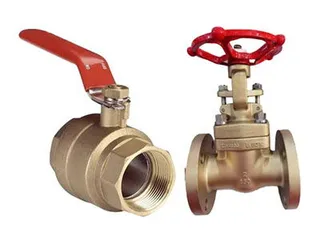
Bronze Valve VS Brass Valve
- Apr 24, 2019

Comparison Between Forged Aluminum vs Forged Brass
- Apr 14, 2024

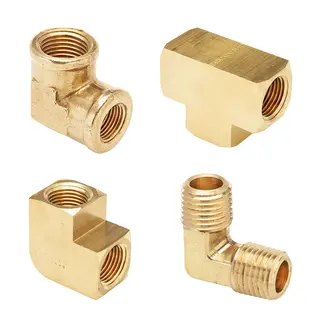
Advantages of Forged Brass Fittings
- May 25, 2024

Basic Knowledge of Brass (Part One)
- Nov 10, 2017
-150x145.webp)
Basic Knowledge of Brass (Part Two)
- Nov 24, 2017

Basic Knowledge of Brass (Part Three)
- Jan 30, 2018
Related Products Mentioned in the Article

Zhejiang Kosen Valve Co., Ltd.
- https://www.kosenvalve.com/
- Business Type: Industry & Trading, Manufacturer,
Supplier Website
Source: https://www.kosenvalve.com/media-hub/brass-vs-bronze-valves-which-is-better-for-your-application.html