Why High-Performance Engines Use Forged Crankshafts
The crankshaft is one of the most important parts of any internal combustion engine. It takes the up-and-down motion of the pistons and converts it into rotating motion. That rotation ultimately powers the drivetrain and moves the vehicle forward. Without a crankshaft, an engine simply can’t run.
Because the crankshaft handles enormous force, heat, and stress every second, it needs to be incredibly strong and reliable. That’s exactly why forged crankshafts are so important. Compared to cast crankshafts, forged versions offer higher strength, better durability, and superior resistance to fatigue. They’ve become the go-to choice for high-performance engines, racing applications, heavy-duty diesel systems, and industrial machinery.
But what exactly is a forged crankshaft? How is it different from a cast crankshaft? And why are forged crankshafts considered the gold standard for strength and reliability? Let’s take a closer look.
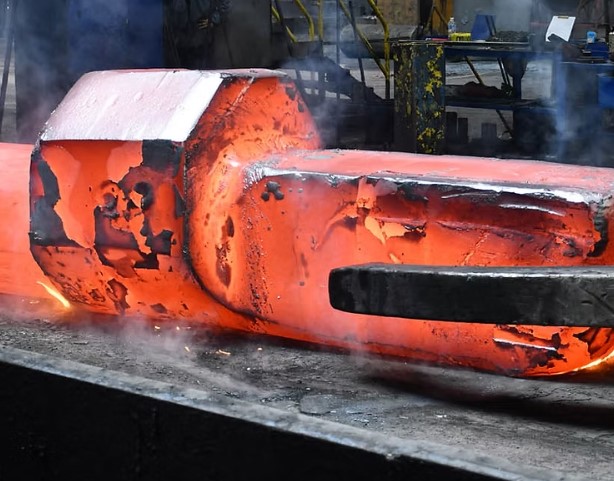
A forged crankshaft is a crankshaft made through a forging process rather than a casting process. Instead of pouring molten metal into a mold, forging uses massive pressure to compress and shape solid metal into the form of a crankshaft.
This process creates a much denser internal structure. More importantly, it aligns the metal grain flow with the shape of the crankshaft itself. Think of it like the grain direction in wood—the grain follows the shape, making the structure stronger and more resistant to cracking.
The result is a crankshaft that can handle extreme loads, high RPM, intense combustion pressure, and long-term stress without failing. That’s why forged crankshafts are commonly found in performance engines and critical industrial equipment.
Custom forged crankshafts are also widely used in industries such as oil and gas, pumps, compressors, and heavy machinery. In these applications, equipment often operates continuously under harsh conditions, so reliability becomes absolutely critical.
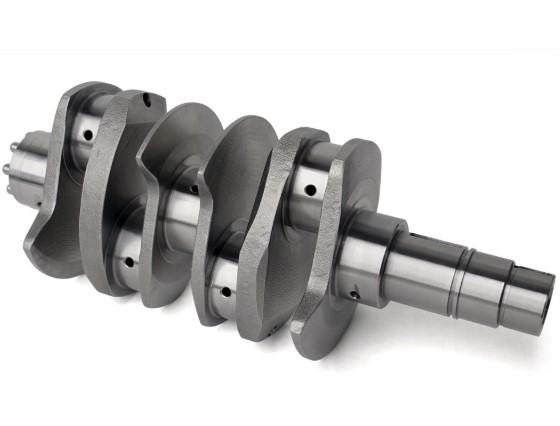
Many people don’t fully understand the difference between forged and cast crankshafts. While they may look similar on the outside, the manufacturing methods and performance characteristics are very different.
Cast crankshafts are produced by pouring liquid metal into a mold. Once the metal cools and solidifies, the crankshaft is removed, machined, and balanced. This method is relatively fast and cost-effective, which is why cast crankshafts are common in standard production vehicles.
Forged crankshafts are made differently. During forging, solid metal is pressed into shape under extremely high pressure. Since the material isn’t melted, the internal grain structure stays compact and dense.
This process significantly improves strength, toughness, and fatigue resistance.
The biggest advantage of forging comes down to grain flow. During the forging process, the metal grain aligns with the shape of the crankshaft. This improves the crank’s ability to resist cracking and stress.
Cast crankshafts don’t have this advantage. Their grain structure is random, and internal air pockets or imperfections can form during casting. Under high loads or high RPM conditions, these weak points can eventually lead to failure.
Forged crankshafts also have much higher tensile strength and better ductility. They can absorb shock loads and flex slightly under pressure without cracking. This makes them ideal for engines that regularly operate under extreme conditions.
Forged crankshafts are more expensive than cast crankshafts. That’s because the forging process requires larger equipment, more manufacturing steps, tighter quality control, and additional machining operations.
In many cases, forged crankshafts are custom-made rather than mass-produced. However, for high-performance applications, the additional cost is often worth it because of the massive increase in reliability and durability.
Forging is only the beginning. A high-quality forged crankshaft goes through several critical manufacturing steps before it’s ready for use.
Many forged crankshafts are produced using open-die forging. In this process, the metal is compressed without complete lateral confinement. This allows the grain structure to flow naturally along the crankshaft shape.
Open-die forging helps create an extremely dense internal structure with excellent strength characteristics.
Heat treatment is one of the most important steps in forged crankshaft manufacturing. It increases hardness, strength, wear resistance, and fatigue life.
A properly heat-treated crankshaft can better withstand the enormous heat and combustion pressure generated inside high-performance engines.
After heat treatment, many forged crankshafts undergo micro-polishing. This process smooths the surface and removes tiny imperfections.
A smoother surface reduces friction and improves oil flow between the crankshaft journals and bearings. Better lubrication helps improve engine efficiency and long-term reliability.
Shot peening is another important strengthening process. During shot peening, tiny steel particles strike the crankshaft surface at high speed. This creates compressive stress on the surface layer.
That compressive stress helps prevent cracks from forming and improves fatigue resistance. Shot peening also improves impact resistance and extends crankshaft service life.
That’s one reason why shot-peened forged crankshafts are so common in racing and heavy-duty engines.
Once forging and heat treatment are complete, the crankshaft still needs precision machining.
Grinding operations ensure that every journal is perfectly round and dimensionally accurate. Dynamic balancing ensures smooth rotation at high RPM.
Without proper balancing, engine vibration can become severe and potentially damage other components.
Some premium forged crankshafts also receive nitriding treatments to further improve surface hardness and wear resistance.
Performance engines place enormous stress on every rotating component. The crankshaft handles thousands of combustion cycles every minute while supporting high RPM, heavy loads, and intense torque.
That’s where forged crankshafts really shine.
Forged crankshafts are designed to handle serious power. Whether an engine produces 500 horsepower or 1,500 horsepower, a forged crankshaft can manage the load far better than a cast design.
They resist twisting, bending, and cracking under extreme pressure.
This becomes even more important in turbocharged and supercharged engines. Forced induction dramatically increases combustion pressure and stress on internal engine components.
Because forged crankshafts have fewer internal flaws and a stronger grain structure, they can survive conditions that would quickly damage weaker crankshafts.
High-performance engines experience constant stress cycles. Over time, weaker crankshafts may develop fatigue cracks that eventually lead to catastrophic failure.
Forged crankshafts are built specifically to resist fatigue. Their dense internal structure and aligned grain flow allow them to survive long-term stress far better than cast crankshafts.
That’s why forged crankshafts are commonly used in drag racing, circuit racing, rally racing, diesel performance builds, and heavy-duty towing applications.
Forged crankshafts aren’t just for race cars. They’re used anywhere durability and reliability matter.
Common applications include:
- Drag racing engines
- Track and circuit racing
- Off-road and rally vehicles
- Turbocharged street cars
- High-performance diesel engines
- Heavy-duty industrial machinery
- Oil and gas pumps and compressors
- High-mileage commercial engines
If an engine regularly sees high RPM, heavy boost, or extreme loads, a forged crankshaft is usually the best option.
Not all forged crankshafts are the same. Several factors affect performance and durability.
Material choice plays a huge role in crankshaft performance. Common forged crankshaft materials include 4140 steel, 4340 steel, and EN40B alloy steel.
Among these, 4340 steel is especially popular because it contains nickel, chromium, and molybdenum. These alloying elements improve heat resistance, toughness, and fatigue strength.
The stronger the alloy, the more horsepower and stress the crankshaft can handle.
Main journal size affects bearing speed and oil film stability, while stroke length directly influences piston speed and engine characteristics.
Typical forged crankshaft main journal diameters are around 2.560 inches, while common stroke lengths may reach approximately 4.250 inches depending on engine design.
Balancing these dimensions properly is critical for performance and reliability.
Bolt pattern layout is another important detail. It determines how the flywheel or flange connects to the crankshaft.
Many forged crankshafts use an 8-bolt flywheel design, while cast crankshafts often use a 6-bolt arrangement. Proper bolt layout ensures correct alignment, balance, and installation compatibility.
Engines generate enormous heat during operation. The crankshaft sits in the middle of that environment while rotating thousands of times per minute.
Add combustion pressure, friction, and oil exposure, and you’ve got an extremely demanding operating condition.
Forged crankshafts are built to survive it.
High-strength materials like 4340 and 5140 steel maintain excellent strength even at elevated temperatures. They resist warping, bending, and long-term wear much better than conventional cast crankshafts.
That’s one reason forged crankshafts often last significantly longer in demanding applications.
Forged crankshafts are widely considered the gold standard for strength, durability, and reliability in high-performance engines.
Their dense internal structure, superior grain flow, high-quality materials, and advanced manufacturing processes allow them to withstand extreme horsepower, high RPM, and severe operating conditions.
Yes, forged crankshafts cost more than cast versions. But they also provide dramatically better durability, fatigue resistance, and long-term reliability.
For racing engines, turbocharged street cars, diesel trucks, industrial equipment, and heavy-duty applications, a forged crankshaft is often one of the smartest upgrades you can make.
A failed crankshaft can destroy an entire engine. Investing in a forged crankshaft helps prevent that risk while giving you the confidence to push your engine harder. If you’re serious about performance, durability, and reliability, a forged crankshaft is absolutely worth the investment.
