Shrinkage in Metal Casting: Causes, Stages & Control Methods
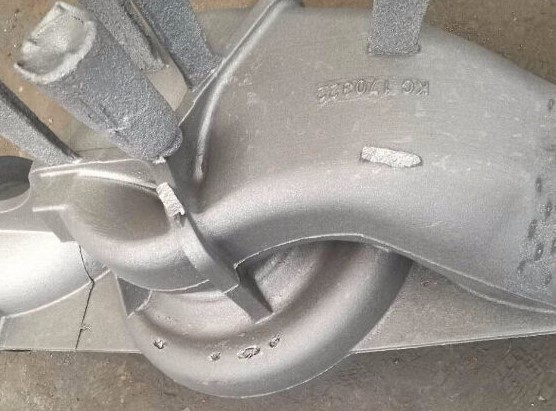
In modern manufacturing, metal casting is a widely used fundamental forming process. From automotive engine blocks to aircraft turbine blades, from pipeline valves to precision instrument components, casting technology supports the production of countless industrial products. However, during the casting process, molten metal undergoes volumetric shrinkage as it cools from a liquid state to a solid state. If this phenomenon is not effectively controlled, it can lead to internal or surface defects such as shrinkage cavities, porosity, deformation, or even cracking. These defects directly affect the mechanical properties, dimensional accuracy, and service life of cast products.
According to statistics, casting defects caused by improper shrinkage control account for a significant proportion of scrap rates in the foundry industry, resulting in substantial economic losses for enterprises. Therefore, a deep understanding of the formation mechanism, stages of development, and influencing factors of metal shrinkage in casting, as well as mastery of corresponding control technologies, is essential knowledge for metal casting engineers, quality management personnel, and related practitioners.
Shrinkage in metal casting refers to the phenomenon of volume reduction that occurs when molten metal solidifies and cools. When metal gradually transforms from a high-temperature liquid state to a solid state and finally cools down to room temperature, its volume decreases significantly. This phenomenon exists in almost all metals and alloys during casting and is one of the key issues that must be carefully controlled in production.
If shrinkage is not properly managed, various defects may appear on or inside the casting, leading to reduced mechanical performance, insufficient dimensional accuracy, or even product rejection. Therefore, understanding the causes and control methods of shrinkage is of great importance for improving casting quality and production efficiency.
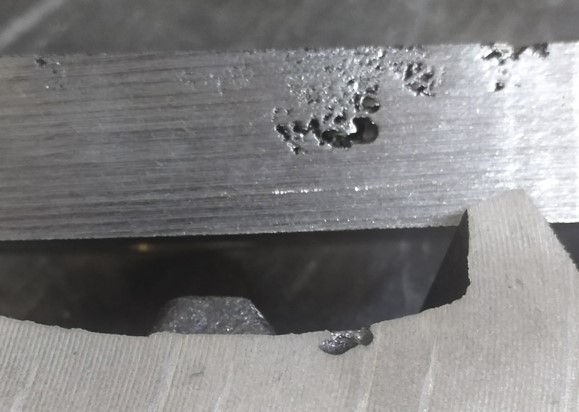
Shrinkage in metal casting generally occurs in three distinct stages: liquid shrinkage, solidification shrinkage, and solid-state shrinkage. Each stage has different physical characteristics and defect risks, requiring targeted control measures.
Liquid shrinkage occurs while the metal is still in a fully molten state. At this stage, the molten metal temperature decreases but solidification has not yet begun. Since the metal can still flow freely, this stage usually does not directly generate severe internal defects. However, liquid shrinkage causes a volumetric loss of about 1% to 2%. If the feeding (riser) design is unreasonable, it may still lead to incomplete filling, cold shuts, or surface shrinkage defects.
To address volume changes in this stage, riser design is particularly important. A riser acts as a molten metal reservoir that continuously supplies additional metal during the early shrinkage stage, ensuring that the mold cavity remains fully filled.
Solidification shrinkage occurs during the transition from liquid to solid, and it is the most critical stage in the casting process. When metal begins to solidify, the internal structure forms a mushy zone consisting of coexisting solid dendrites and residual liquid. During this stage, shrinkage is concentrated and intense, making it the primary stage for internal defects such as shrinkage porosity and cavities.
In particular, in the last solidifying regions, known as hot spots, macro shrinkage cavities are likely to form if feeding is insufficient. For alloys with a wide solidification range, such as certain copper alloys and aluminum alloys, the coexistence of solid and liquid phases over a broad temperature range increases the risk of severe shrinkage problems.
Solid-state shrinkage occurs after complete solidification as the casting continues to cool to room temperature. As temperature further decreases, the casting continues to contract, which may result in dimensional deviation, deformation, or even cracking. This stage directly affects the final dimensions of the casting and is a key factor in determining whether the part meets design tolerances.
Different alloys exhibit different shrinkage rates in the solid state. Therefore, shrinkage compensation must be considered in advance during mold design. However, due to complex and variable cooling conditions, solid-state shrinkage is often difficult to precisely control and represents one of the most uncertain factors in casting engineering.
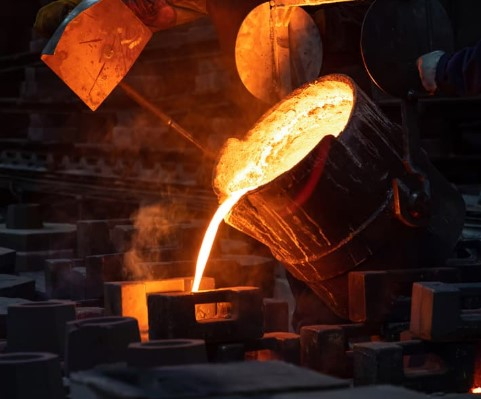
The causes of shrinkage include temperature gradients, mold material properties, alloy composition, and pouring process parameters. Temperature gradients lead to uneven cooling; mold materials affect heat dissipation; alloy composition determines shrinkage magnitude; and pouring conditions influence solidification behavior.
Temperature gradient is one of the most important factors leading to shrinkage defects. When different regions inside the mold cool at different rates, some areas solidify earlier, while thick sections with higher heat capacity cool more slowly, forming localized hot spots. If these regions cannot be properly fed with molten metal while surrounding areas have already solidified, shrinkage cavities or porosity may form.
Different mold materials have different thermal conductivity and heat retention properties, which influence the cooling rate of the casting. High thermal conductivity molds accelerate cooling, while insulating molds slow it down. If the cooling rate distribution is uneven, the solidification sequence may become disordered, increasing the risk of shrinkage defects. Therefore, mold design and material selection must consider both the casting geometry and solidification behavior.
Alloy composition is a key factor determining shrinkage behavior. Different metals and alloys exhibit significantly different shrinkage rates. For example, stainless steel typically has a shrinkage rate of about 2.8%, while copper alloys may reach up to 6%.
Gray cast iron contains a high carbon content, and during solidification, graphite precipitates form. The expansion effect of graphite can partially compensate for metal shrinkage, resulting in a lower overall shrinkage rate. In contrast, sulfur elements inhibit graphite formation, thereby increasing shrinkage tendency. Therefore, adjusting chemical composition is an important method for controlling shrinkage in casting.
Pouring speed and pouring temperature also significantly influence shrinkage. Excessively fast or slow pouring may cause unstable metal flow and turbulence, affecting normal solidification. High pouring temperature increases superheat and prolongs solidification time, thereby increasing shrinkage tendency. Conversely, low pouring temperature may lead to incomplete filling and poor casting integrity. Therefore, proper control of pouring parameters is essential for reducing shrinkage defects.
Shrinkage defects can be classified into three main types based on their appearance and location: surface shrinkage, internal shrinkage, and shrinkage cavities.
Surface shrinkage appears as depressions or holes on the casting surface. Internal shrinkage is hidden inside the casting and requires non-destructive testing to detect. Shrinkage cavities are larger voids, usually occurring in thick sections or near risers.
Surface shrinkage appears as depressions or cavities on the casting surface. It affects not only appearance quality but also surface integrity. This type of defect can usually be identified by visual inspection.
Internal shrinkage is hidden within the casting and cannot be detected by the naked eye. It typically requires X-ray inspection or ultrasonic testing. Because of its hidden nature, if not detected in time, it may lead to early failure during service.
Shrinkage cavities are relatively large void defects, usually found in thick sections or near risers. They are caused by insufficient molten metal feeding during solidification. These cavities often have sharp or irregular edges, which distinguishes them from the smooth shape of gas porosity and helps engineers in preliminary diagnosis.
All these defects reduce the mechanical strength and load-bearing capacity of castings and may cause dimensional deformation such as warping or bending, affecting assembly accuracy and structural reliability.
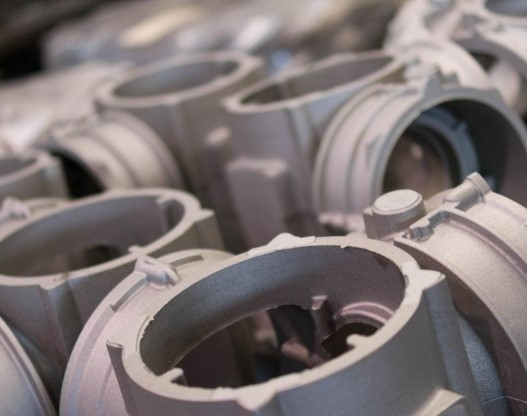
A series of mature control methods have been developed in the industry, including optimization of gating and riser systems, selection of suitable alloy materials, application of casting simulation software, control of cooling rates, and rational mold design.
A well-designed gating system ensures smooth filling of molten metal, reduces turbulence and heat loss, and controls solidification sequence. Risers act as reservoirs that continuously supply molten metal during shrinkage, preventing the formation of cavities and porosity. Proper sizing and placement of risers are key to improving casting quality.
Choosing alloys with lower shrinkage tendency can effectively reduce defects. For example, increasing carbon content to promote graphite formation or adding manganese to neutralize the harmful effects of sulfur can reduce shrinkage. Modern casting processes also use inoculants and modifiers to improve solidification behavior and feeding ability.
With the development of digital technology, casting simulation software has become an important tool for shrinkage control. Advanced simulation systems can predict potential shrinkage zones before production by analyzing metal flow, temperature distribution, and solidification sequence. This helps engineers optimize mold structure, gating systems, and process parameters, significantly reducing trial costs and improving efficiency.
By designing mold structures properly and using insulation materials or chills, more uniform solidification can be achieved, preventing localized hot spots. Uniform cooling not only reduces shrinkage defects but also improves microstructure uniformity and mechanical properties.
Proper mold design guides smooth metal flow into the cavity and avoids turbulence and localized overheating. Scientific riser arrangement ensures continuous feeding during solidification. Adjusting wall thickness and selecting materials with different thermal conductivities also helps control cooling rates, reduce temperature gradients, and prevent hot spots. High-quality mold design is fundamental to shrinkage control and casting quality improvement.
In actual production, shrinkage control must combine first-article trial production and mold correction, special treatment for complex castings, and quality inspection methods. Since shrinkage behavior is not fully predictable, trial production is required to verify dimensions and adjust molds accordingly. Complex castings require thermal control techniques, while quality inspection relies on defect identification methods and non-destructive testing.
From an engineering perspective, shrinkage is difficult to fully predict, especially during solid-state shrinkage. Even with advanced simulation and compensation design, dimensional deviations may still occur. Therefore, first-article trials are commonly used to verify results, followed by mold corrections to gradually achieve target tolerances. This iterative process is almost unavoidable in casting production.
For complex alloys or geometries, casting design becomes even more important. Ideally, the design should match solidification and shrinkage behavior rather than resist it. When ideal conditions cannot be achieved, engineers must use thermal control methods such as adjusting local cooling rates, modifying flow paths, or optimizing feeding conditions. These methods improve shrinkage control but often increase process complexity and cost.
Shrinkage defects are not always hidden; they often appear as visible cavities or depressions. Engineers can initially distinguish them by morphology: shrinkage cavities tend to have sharp or irregular edges, while gas porosity is usually smooth and round. Internal defects require X-ray or ultrasonic inspection for accurate detection.
Shrinkage in metal casting is a complex, multi-stage physical process involving liquid shrinkage, solidification shrinkage, and solid-state shrinkage. Its causes include temperature gradients, mold materials, alloy composition, and process parameters. Shrinkage defects mainly include surface shrinkage, internal shrinkage, and shrinkage cavities, all of which significantly affect mechanical performance and dimensional accuracy.
To effectively control shrinkage, the industry has developed mature techniques such as optimizing gating and riser systems, selecting appropriate alloys, applying casting simulation software, controlling cooling rates, and designing molds scientifically. In practice, due to the inherent unpredictability of shrinkage, first-article trials and mold adjustments are often required to refine the process.
Only by fully considering shrinkage mechanisms during the design stage and optimizing feeding and cooling conditions during production can high-quality castings with stable dimensions, dense structures, and reliable performance be achieved. For foundry enterprises, mastering shrinkage control technology is essential for improving product quality, reducing production costs, and enhancing market competitiveness.
