Lost Foam Casting: Principle, Advantage, and Quality Control
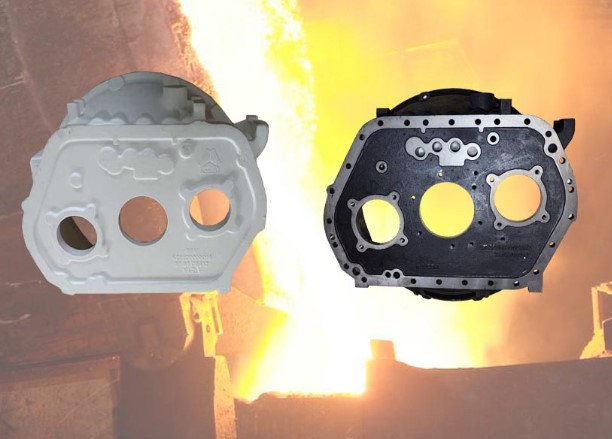
In modern manufacturing, casting technology is one of the fundamental methods for producing metal components. As industrial product structures become increasingly complex, traditional casting processes face growing challenges in terms of forming precision, production efficiency, and cost control. Lost foam casting, as an advanced near-net-shape forming technology, has gradually become an important manufacturing method for complex metal parts in industries such as automotive, machinery, and energy due to its unique process principles and significant technical advantages.
This technology achieves simultaneous vaporization of foam patterns and metal filling, enabling geometric complexity and dimensional accuracy that are difficult to achieve with conventional casting methods. At the same time, it reduces machining operations and assembly steps. For enterprises requiring mass production of complex structural parts, a deep understanding of lost foam casting process characteristics, application advantages, and quality control measures is essential for making more rational production decisions, thereby improving product quality and reducing overall manufacturing costs.
Before exploring the technical advantages and applications of lost foam casting, it is important to understand its basic definition and core principles. The key difference between lost foam casting and traditional casting lies in its “dynamic replacement” process—foam pattern vaporization and molten metal filling occur simultaneously within the same space and time.
Lost foam casting is a casting process used to manufacture complex metal components. Its core principle involves using expandable polystyrene (EPS) material to create a foam pattern that is identical in shape to the final part. Before pouring molten metal, the foam pattern is not removed from the mold but is directly embedded in unbonded sand.
When high-temperature molten metal is poured, the foam pattern instantly vaporizes due to heat and is replaced by the metal, forming the final casting structure.
The most distinctive feature of this process is the simultaneous “dynamic replacement” phenomenon: foam disappearance and metal filling occur at the same time. Since there is no need for parting lines or complex core structures as in traditional casting, lost foam casting enables one-time integral forming of complex geometries, significantly reducing manufacturing steps and assembly operations.
This technology is particularly advantageous in mass production of complex components. Compared with traditional methods, it reduces multi-section assembly and post-processing adjustments, saving both time and labor costs. It is widely used in automotive, shipbuilding, agricultural machinery, military equipment, and heavy-duty truck industries, especially for products requiring high dimensional consistency.
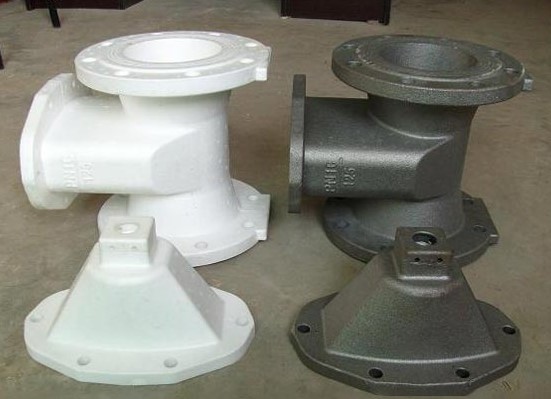
The widespread adoption of lost foam casting in automotive, machinery, and energy industries is mainly due to its significant advantages over traditional casting methods. These advantages are reflected in dimensional accuracy, machining reduction, part integration, material adaptability, environmental performance, and pattern flexibility.
One of the primary advantages of lost foam casting is its high dimensional accuracy. Since the foam pattern retains complex details and internal channel structures during metal pouring, true near-net-shape forming can be achieved.
Unlike traditional casting methods that require segmentation or post-machining correction, lost foam casting enables one-step formation of complete three-dimensional structures, greatly reducing error risks. This results in higher precision and consistency, especially in complex internal flow channels.
Because castings are close to final dimensions, machining, trimming, and assembly operations are significantly reduced, lowering both processing time and labor costs.
The process minimizes excess material usage and reduces metal removal operations. Additionally, fewer flash defects and improved surface quality further reduce post-processing workload, improving overall production efficiency.
Lost foam casting allows multiple components that would traditionally require assembly to be cast as a single integrated part. This reduces welding, assembly, and alignment errors.
For example, engine blocks, cylinder heads, and complex cooling system housings with internal channels or thin-walled structures can be formed integrally. Design modifications are also more flexible—only the foam pattern needs adjustment without redesigning complex mold systems.
This process is suitable for a variety of metals, including gray cast iron, ductile iron, aluminum alloys, brass, and stainless steel.
As long as the pouring temperature is sufficient to vaporize the foam pattern, the process can be applied stably. This broad compatibility allows it to meet diverse industrial requirements and enhances its versatility.
Lost foam casting offers environmental and energy advantages. Foam pattern production is relatively simple and consumes less water and energy.
The process reduces material waste and scrap generation compared to traditional sand casting. In addition, the use of dry sand without binders improves recyclability and reduces environmental impact, lowering overall production costs.
Foam patterns can be adjusted in density and structural parameters to meet different weight and strength requirements. Designers can optimize wall thickness and structure to improve performance and reduce weight.
This flexibility makes lost foam casting particularly suitable for lightweight and complex structural designs. The foam material also typically has good chemical resistance, enabling stable performance in various industrial environments.
The advantages of lost foam casting are achieved through a standardized five-step process: foam pattern production, gating system assembly, refractory coating, sand embedding and vibration compaction, and finally pouring and sand removal. Each step directly affects final casting quality.
The first step is manufacturing the foam pattern. For mass production, EPS bead molding is typically used. For prototypes or small batches, CNC machining may be applied.
Pattern accuracy and density directly influence casting quality, so appropriate methods and parameters must be selected based on product requirements.
The second step involves assembling the gating and riser system. The gating system controls the flow path of molten metal, while risers compensate for shrinkage during solidification.
Proper design ensures smooth metal flow, avoids turbulence and gas entrapment, and provides sufficient feeding during cooling.
In the third step, a refractory coating is applied to the foam surface. This coating allows gases generated during foam vaporization to escape smoothly while improving surface finish.
Coating thickness and uniformity are critical. Too thin may cause metal penetration; too thick may hinder gas evacuation.
The coated pattern is embedded in unbonded sand and compacted through vibration to ensure full filling around complex geometries.
The dry sand contains no binder and relies on vibration for stability. Uniform sand packing is essential to prevent deformation or sand inclusion defects.
Finally, molten metal is poured into the mold, and sand removal is performed after solidification. Once the foam vaporizes, the cavity is filled with metal.
After cooling, the dry sand naturally collapses, making cleaning relatively simple. Post-casting cleaning and inspection are performed before further machining or direct use.
Lost foam casting is widely used across industries due to its precision, integration capability, and material flexibility.
It is particularly suitable for manufacturing heavy machinery components with complex internal channels, such as pump bodies, valve bodies, and engine parts.
In automotive applications, engine blocks, cylinder heads, and intake manifolds can be produced as integrated components, reducing assembly complexity and improving reliability.
The process is also widely used in agricultural machinery and energy systems, such as tractor transmission housings, hydraulic valve bodies, and complex pipeline connectors.
Its ability to produce integrated structures reduces assembly errors and provides significant advantages in mass production.
To better understand its position, lost foam casting can be compared with traditional sand casting and investment (lost wax) casting.
Traditional sand casting requires cores and parting lines to form internal structures. In contrast, lost foam casting eliminates the need for parting lines and complex cores.
The foam pattern directly vaporizes to form cavities, allowing more complex geometries with reduced process complexity.
Compared with investment casting, lost foam casting is more suitable for large parts and medium-to-high volume production.
While investment casting offers higher precision and surface finish, it has higher costs and is better suited for small precision parts. Lost foam casting provides cost advantages for large-scale complex components with shorter production cycles.
Despite its advantages, lost foam casting may still produce defects. These include porosity, surface wrinkles, sand inclusion, shrinkage cavities, rough surfaces, cracks, and incomplete filling.
These defects are caused by high foam density, insufficient vacuum, fast pouring, or excessive moisture in coating/sand.
Solutions include optimizing foam density, improving vacuum pressure, controlling pouring speed, and ensuring proper drying.
Wrinkles occur due to low metal temperature or interrupted pouring, leading to premature solidification.
Cold shuts result from incomplete fusion of metal streams due to low temperature or long flow paths.
Solutions include increasing pouring temperature, ensuring continuous pouring, and optimizing gating design.
Sand inclusion occurs when sand enters the casting due to weak mold strength or coating damage.
Shrinkage defects result from insufficient feeding during solidification.
Solutions include improving mold strength, optimizing coating thickness, and enhancing feeding systems.
Surface roughness is related to sand size and coating quality. Cracks result from thermal stress or uneven cooling.
Solutions include using finer sand, improving coating uniformity, optimizing design, and applying heat treatment.
Incomplete filling occurs due to low temperature, insufficient flow, or gas back pressure.
Solutions include increasing pouring temperature, improving gating design, and enhancing venting capability.
Final product quality depends heavily on process stability and supplier capability.
Critical parameters include foam density, pouring temperature, vacuum pressure, sand grain size, and coating thickness.
Any deviation can cause defects. Therefore, process simulation, strict control, and online monitoring are essential.
When selecting suppliers, it is important to evaluate quality systems, inspection capabilities, material coverage, and simulation ability.
Advanced suppliers typically have X-ray or ultrasonic inspection systems and use simulation tools to predict defects before production, reducing risks at the design stage.
Lost foam casting achieves one-time integral forming through foam pattern vaporization, offering significant advantages in manufacturing complex metal components. It provides high dimensional accuracy, reduces machining and assembly operations, and lowers overall costs. It is suitable for various materials such as cast iron, aluminum alloys, and stainless steel.
The process includes foam pattern production, gating assembly, coating, sand embedding, and pouring. Compared with sand casting, it eliminates parting lines and cores; compared with investment casting, it is more cost-effective for large-scale production.
Quality control is critical, as defects are closely related to parameters such as foam density, pouring temperature, vacuum level, and coating thickness. Proper simulation and inspection are essential for stability. Overall, lost foam casting provides an efficient and economical solution for mass production of complex structural components and plays an important role in automotive, machinery, and energy industries.
