How to Buy Stainless Steel Valves from Chinese Manufacturers
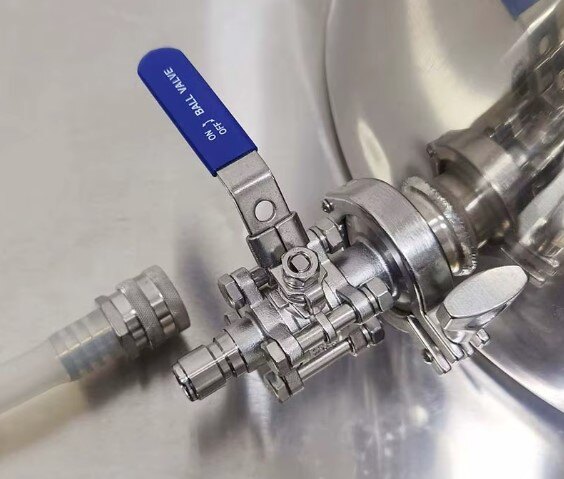
China is one of the world's largest manufacturing centers for industrial valves. Many global buyers purchase stainless steel valves from Chinese manufacturers because of competitive pricing, large production capacity, and broad product selection. However, buying valves from China is not simply about finding the lowest price. Valve quality, technical standards, export experience, and production control all directly affect the safety and reliability of industrial systems.
A stainless steel valve is an industrial device used to control the flow of liquids, gases, steam, and other media. The valve body and wetted components are manufactured from stainless steel alloys containing at least 10.5% chromium. This chromium forms a thin passive oxide layer on the metal surface that protects the material from corrosion. Because of this feature, stainless steel valves provide excellent corrosion resistance, long service life, and strong mechanical performance.
Stainless steel valves are widely used in industries such as oil and gas, chemical processing, marine engineering, power generation, food processing, pharmaceuticals, water treatment, and biotechnology. They can operate under high pressure, extreme temperatures, and corrosive environments.
This guide explains how to choose the right Chinese valve manufacturer, evaluate product quality, verify certifications, manage quality control, and avoid common sourcing mistakes.
A stainless steel valve is an industrial device that controls the flow of fluids. The valve body and its internal parts are made from stainless steel alloys. These alloys contain at least 10.5 percent chromium. The chromium reacts with oxygen to form a thin chromium oxide layer on the metal surface. This layer protects the metal from rust and corrosion. If the surface gets scratched, the layer reforms quickly.
This self-healing property gives stainless steel valves excellent corrosion resistance. They can handle acids, alkaline solutions, and chloride-containing media. Industries such as chemical processing, marine engineering, water treatment, oil and gas, and power generation use these valves.
Stainless steel valves also offer good hygiene. Their smooth surfaces are easy to clean and resist contamination. This makes them suitable for food processing, pharmaceutical manufacturing, and biotechnology.
These valves operate across a wide temperature range. They work from cryogenic conditions as low as negative 196 degrees Celsius to high temperatures exceeding 600 degrees Celsius. Compared to brass or cast iron, stainless steel has higher tensile strength and better mechanical properties. This allows the valve to handle higher pressures.

When buying stainless steel valves, you will encounter cast and forged material grades. Understanding the relationship between these grades helps you select the correct material.
- CF8 is the cast grade under ASTM A351. F304 is the forged grade under ASTM A182. Both are equivalent to 304 stainless steel.
- CF8M and F316 correspond to 316 stainless steel. These are used in chloride-rich and marine environments.
- CF3 and F304L are low-carbon grades for welding applications. They reduce the risk of intergranular corrosion.
- CF3M and F316L are low-carbon 316 grades. They are widely used in pharmaceutical and high-purity processing systems.
- CD3MN (4A) and F51 represent Duplex stainless steel 2205. This grade offers higher mechanical strength and resistance to stress corrosion cracking. It is suitable for seawater desalination and highly corrosive environments.
Knowing these relationships helps you buy the right valve for performance, durability, and cost-effectiveness.
One small mistake in manufacturer selection leads to compromised quality and lack of satisfaction. Here is why you must choose a suitable valve manufacturer.
- Product Quality and Durability: The proper manufacturer ensures product quality. A durable valve lasts longer and saves you money. Poor quality valves fail early and require frequent replacement.
- Safety Standards: Safety is a major concern with valves. The right manufacturer provides valves that meet safety standards. These standards ensure the valve works properly in high-risk operations. A valve that fails can cause accidents, leaks, or equipment damage.
- Customization Options: A good manufacturer offers customization. A customized valve does more than control pressure. It also handles temperature fluctuations. It can be designed with flexible end connections for easier installation. Customization improves performance and efficiency.
- Warranty and Customer Support: A trustworthy manufacturer offers a warranty. If the valve malfunctions, you can return it. They also provide customer support. This gives you peace of mind.
- Long-Term Relationship: A reliable manufacturer builds trust. They understand your requirements over time. For future orders, you do not need to explain everything again. This creates a long-term relationship that enhances your business reputation and productivity.
Not all companies in China produce equal-quality valves. Use the following factors as a checklist. If a manufacturer meets these criteria, they are likely reliable.
Different organizations set production standards after deep research. These standards include ISO 9001, ASME, and API certification. Valves produced according to these standards are durable and consistent. Always ask for proof of these certifications.
Check customer reviews on the manufacturer's official website. Positive feedback indicates a trustworthy option. If possible, visit a nearby company that uses their valves and ask for reviews.
Experience also matters. A well-experienced manufacturer understands requirements better. Their expertise ensures quality. You can collect this information online. A better method is to visit the facility and ask directly.
Choose a manufacturer that offers customization. Valves often need flexible designs for easy installation. The manufacturer should help customize end connections, materials, and other features.
The material is essential. If the valve is for a hydraulic system, it must handle high pressure. If it is for a harsh environment, it should resist corrosion. Ask for material specifications. What are the chemical properties? How is the material appropriate for your project? A good manufacturer answers these questions completely.
Select a manufacturer that provides a range of valve materials. These include plastic, metals, and alloys. Each material differs in durability and applications. Your choice depends on your project needs.
For international buyers, export experience is essential. Terms include export rules, taxes, handling, and safety. Not all manufacturers handle these terms smoothly.
Search each manufacturer's track record. Look for a list of countries where they have provided services and for how many years. If your country is listed, ensure they have experience with your local regulations.
Production capacity means how many valves a manufacturer can produce monthly or annually. Choose a manufacturer with sufficient capacity. For example, if you need 20,000 valves in a month, ensure their production procedure is fast enough.
Lead time is how long it takes to deliver an order. Shorter lead time benefits your business growth. Go for a manufacturer with less lead time. Ensure they are flexible with both capacity and lead times. If you need valves urgently, they should be able to deliver on time.
A good manufacturer respects customers before and after purchase. Look for these services:
- Technical guidance for malfunctions or installation problems
- Long-term warranty and repair services
- Availability of separate parts for replacement
- Customer training for minor technical issues, installation, and maintenance
Chinese valve manufacturers vary in pricing. Some offer low prices but no warranty. Their product durability is also compromised.
Compare prices and qualities before selecting. A good manufacturer may cost more, but they provide peace of mind. Their durable valves do not require constant repair. Paying higher prices for suitable quality is worth it.
Do not seek the lowest-price manufacturer first. Identify which suppliers are technically compatible with your products, industries, and order requirements.
China has many valve manufacturers, but they are not interchangeable. Some produce brass plumbing valves. Others specialize in industrial gate valves and globe valves. Some manufacture stainless steel sanitary valves for food, beverage, and pharmaceutical equipment. Some assemble actuated valves using imported or domestic actuators. Others are trading companies with access to multiple factories.
Shortlist 3 to 6 suppliers. Too many quotations create confusion. Too few provide no negotiation or technology comparison.
If you need API 600 gate valves, a company that makes low-pressure brass ball valves is not suitable. Their sales department may respond quickly, but they cannot deliver the right product.
If you need small MOQ private label valves for a retail store, a large industrial valve enterprise may refuse your order or quote too high.
A factory that regularly exports to America, Europe, the Middle East, or Asia has a deeper understanding of packaging, certificates, and standards. Experienced exporters do not guarantee quality, but they reduce avoidable problems.
Do not use ordinary descriptions in your request for proposal. Create a basic table that includes:
- Valve type
- Size range
- Pressure rating
- Material
- Connection type
- Standard
- Surface treatment
- Seal material
- Quantity
- Packaging requirements
- Logo needs
- Target market
Be specific. Saying “for watering under normal conditions” is very different from “for use in a high-temperature steam line.” A good supplier may help refine specifications, but they cannot guess your engineer's requirements.
A serious supplier will ask detailed questions about:
- Medium (what fluid flows through the valve)
- Pressure range
- Temperature range
- Connection type and standards
- Material standards
- Application description
- Required testing
- Export destination country
- Required documents
If the reply was prompt but no information was requested, be cautious. Short replies are good. Accurate replies are better.
A professional sourcing agency typically classifies suppliers into three groups:
Direct factory suitable for the project
Potential cooperative manufacturer with room for technical improvement
Supplier with attractive prices but unsuitable for the project
Many buyers move too quickly. Polished Alibaba pages, quick WeChat replies, and low quotations do not show whether a supplier can consistently meet your needs.
Valve production involves many technical stages:
- Raw material procurement
- Casting and forging
- Heat treatment
- CNC machining
- Drilling and threading
- Welding and machining
- Assembly and sealing
- Cleaning and lubricating
- Painting
- Hardness tests
- Stamp marking and documentation
A supplier may be proficient in some stages but weak in others. Your audit must cover all stages.
Business credibility: License information, export records, organization form, primary products, and customers.
Production capability: Equipment, process control, technical personnel, test facilities, quality records, and subcontracting.
Testing facilities: Valve factories must have separate test areas. Check for hydrostatic shell tests, sealant leakage checks, pneumatic tests, torque tests, dimensional checks, and material verification.
Documentation: Confirm whether the factory has drawings and standard-related documents. If a factory cannot explain the difference between similar pressure ratings, flange standards, and material grades, there is a problem.
Do not check only the final result. Audit the process. Ask about:
Sources of castings
Methods for inspecting incoming materials
Control measures during processing
Records of non-conforming items
Documentation for pressure tests
If your order must comply with API, ASME, EN, ISO, WRAS, NSF, CE, PED, or other regulations, obtain relevant certificates. Ask what each certification includes. Some certificates apply to the factory management system. Others apply only to specific product lines. Some certificates may not truly apply to valves.
The bridge from quotation to large-scale production is sample approval. Do not check appearance alone. A valve may look correct but fail because:
- The thread is slightly off
- The seal material is wrong
- The handle torque is too high
- The casting has defects
- The pressure test was not performed properly
Before approving the test sample, compare it with the drawing, specifications, and planned use. If there is no drawing, ask the supplier to produce one.
Level 1: Construction standard. Check for casting defects, rough machined marks, burrs, uneven coating, poor handling finish, unclear marking, and loose packaging.
Level 2: Dimensional scope. Measure threads, flanges, face-to-face lengths, port diameters, wall thicknesses, and stems based on the valve type.
Level 3: Function verification. Open and close the valve several times. Inspect torque, sealing, handle movement, actuator response, and smoothness.
Level 4: Document verification. Confirm material certificates, test results, design drawings, product labeling, and package marks.
Never accept samples that are only said to look fine. Use specific comments such as: “Approved for use except for pressure testing. The manufacturer will change carton thickness from 4 layers to 5-layer export carton.” This prevents problems during large-scale manufacturing.
For high-risk applications, valves need third-party testing or independent engineering examination. Sample approval is cheaper than finding problems after shipment.
Before you finalize your purchase, you must understand the export documentation and compliance requirements. Different destination countries have different rules for taxes, customs clearance, and safety standards. Failing to prepare the correct paperwork can cause delays or prevent your shipment from entering the country. This section explains the key documents you need for the United States, Europe, and other markets.
Companies usually require:
- Commercial invoice
- Packing list
- Bill of lading or air waybill
- Customs clearance declaration forms
- HS codes for different products
US standards mandate that a commercial invoice be provided with the goods for release. The invoice must specify item descriptions, quantities, and unit values accurately.
Some pressure equipment falls under the Pressure Equipment Directive (PED 2014/68/EU). This applies to stationary pressure vessels with maximum allowed working pressure exceeding 0.5 bar and pressure pipelines within these stations.
CE marking means the goods comply with certain EU product regulations. Not all valves need the same approval. Verify the specific requirements for your order.
Most importers need:
- Commercial invoice
- Packing list
- Bill of lading instructions
- Certificate of origin if applicable
- Test report
- Material certificate
- Declaration documents
- Compliance files for the target market
Most importers think quality control happens at the end. But by then, problems are already in the finished goods. Final inspection cannot detect flaws that exist throughout the entire batch, such as wrong materials, incorrect machining dimensions, substandard surface treatments, or uneven test pressures.
Quality control should happen at these stages:
Incoming material inspection
Machining inspection
Sealed component assembly inspection
Pressure test monitoring
Surface treatment inspection
Marking and packing verification
If the first batch of castings has a defect, it affects many later batches. If a CNC machining setting is incorrect, all parts made during that time have the same dimension problem. If workers use the wrong gasket or seat material, the valve may fail in the actual operating environment even if it passes a quick check.
On-site inspections
First-piece inspections
Randomly sampled process checks
Review of factory QC documents
Control level depends on order value, application risk, and buyer requirements.
Incoming materials: Verify material certificates, spectroscopy results, and source traceability documents. Check that grades are appropriate for use temperatures and chemically compatible with rubber and plastic items.
Machining: Check critical dimensions with calipers, micrometers, gauges, and specialized fixtures. Threaded valves need thread gauges. Flanged valves need bolt hole alignment and face-to-face dimension checks.
Assembly: Workers must correctly use seals, gaskets, stem packing, handles, bolts, actuators, and lubricants. Random assembly leads to problems.
Pressure tests: Record test pressure, testing time, results, date, operator, and batch code.
Marking: One project found that the supplier's marking method did not match the agreement. The problem was caught during packaging and corrected before shipping.
Pre-shipment inspection is the last control point before goods leave China. It does not replace earlier controls. But it confirms whether finished products match the order before you pay the balance and release shipping.
Schedule this inspection after manufacturing is complete and at least 80 percent of products are packed.
Quantity and packing check: Confirm carton count, pieces per carton, pallet condition, gross weight, net weight, carton dimensions, and shipping marks. Bad packaging leads to damage during sea transport.
Product compliance check: Compare final goods with approved samples, purchase orders, drawings, and specification sheets. Check size, material, connection, pressure marking, brand logo, handle color, body marking, flow direction arrow, and accessories.
Functional inspection: Perform opening and closing tests. Check basic sealing, torque feeling, and actuator operation if applicable.
Documentation review: Verify commercial invoice, packing list, bill of lading, certificate of origin, test report, material certificate, declaration documents, and compliance files.
Buying stainless steel valves from Chinese manufacturers requires systematic effort. Start by understanding valve materials and grades. Then select a manufacturer based on certifications, reputation, customization ability, export experience, and after-sales support. Shortlist 3 to 6 suppliers. Communicate technical specifications clearly. Conduct factory audits. Approve samples through four levels of testing. Manage export documentation properly. Monitor production at multiple stages. Finally, perform a pre-shipment inspection. Following these steps prevents small mistakes that lead to poor quality. The time you invest in proper selection and verification pays back through durable products, fewer safety incidents, and a long-term relationship with a reliable supplier.
