Top Guide to Selecting Reliable Pipe Strainers Manufacturers in China
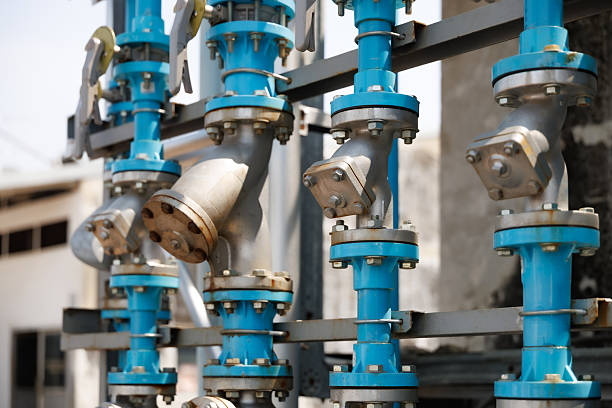
In modern industrial pipeline engineering, system reliability depends heavily on one fundamental requirement: maintaining clean, uninterrupted, and stable fluid flow. Whether the medium is water, steam, oil, gas, chemicals, or slurry, even small amounts of solid contamination can trigger serious operational problems. These problems include equipment wear, pressure drops, flow instability, clogging, and unexpected shutdowns. To solve this challenge, industries rely on an essential protective component known as the pipe strainer.
Pipe strainers are widely installed in pipelines to filter out unwanted solid particles such as rust, welding slag, scale, sand, and other debris carried by process fluids. By capturing these impurities before they reach sensitive downstream equipment, strainers significantly improve system safety and operational efficiency. Pumps, control valves, flow meters, compressors, and heat exchangers all depend on clean fluid conditions to operate reliably. Without proper filtration, these components would suffer frequent damage and reduced service life.
As global industrialization continues to expand, demand for high-quality pipe strainers has increased significantly. China has emerged as one of the most important manufacturing bases for industrial valves and strainers due to its strong production capacity, advanced machining technologies, and competitive pricing structure. However, with hundreds of suppliers in the market, choosing the right pipe strainers manufacturer from China requires careful technical and commercial evaluation.
This extended guide provides a complete overview of pipe strainers, their working principles, types, applications, and most importantly, how to select a reliable Chinese manufacturer for long-term industrial cooperation.

A pipe strainer is a mechanical filtration device installed inside a pipeline system to remove solid contaminants from flowing fluids. Unlike fine filtration systems used in laboratories or precision industries, pipe strainers are designed for industrial-scale protection. Their main purpose is not to achieve ultra-fine filtration, but to protect equipment and maintain stable process conditions.
The working principle of a pipe strainer is relatively straightforward. Fluid enters the strainer body and passes through a perforated metal screen or mesh element. Solid particles larger than the screen openings are trapped inside the straining chamber, while clean fluid continues downstream. Over time, accumulated debris increases pressure drop, requiring cleaning or replacement of the straining element.
Pipe strainers are typically installed at key positions in pipeline systems, such as:
- Pump suction lines
- Upstream of control valves
- Inlet of heat exchangers
- Metering and measurement systems
- Compressor protection lines
Industries that heavily rely on pipe strainers include:
- Oil and gas production and refining
- Petrochemical and chemical processing
- Power generation and boiler systems
- Water treatment and desalination plants
- Marine and offshore engineering
- Mining, metallurgy, and slurry transport systems
- HVAC and district energy systems
By ensuring cleaner flow conditions, pipe strainers improve overall system reliability, reduce maintenance frequency, and extend equipment lifespan significantly.
The filtration process inside a pipe strainer is based on mechanical separation. The efficiency of this process depends on several design factors:
The mesh size determines how small a particle can be captured. Coarser meshes are used for large debris removal, while finer meshes are applied for more sensitive equipment protection.
Proper installation ensures that fluid flow enters the strainer correctly, reducing turbulence and preventing premature clogging.
As debris accumulates, resistance to flow increases. High-quality strainers are designed to minimize pressure drop and maintain flow efficiency.
Depending on design, strainers may require manual cleaning, backflushing, or switching between dual chambers.
The overall performance of a pipe strainer depends on how well these design factors are optimized for the specific application.
Different industrial systems require different strainer configurations. Selecting the correct type is essential for achieving optimal performance and cost efficiency.
Y-type strainers are compact filtration devices shaped like the letter “Y”. They are typically installed in pipelines where space is limited and moderate debris removal is required.

Key features:
- Compact structure suitable for tight installations
- Suitable for high-pressure and high-temperature systems
- Can be installed horizontally or vertically
- Easy maintenance through removable screen
Typical applications:
- Steam pipelines
- Gas distribution systems
- Industrial liquid pipelines
- Petrochemical auxiliary systems
Their simple structure makes them one of the most widely used strainer types in industrial applications.
Basket strainers offer a much larger filtration area compared to Y-type designs. They contain a removable basket that collects debris efficiently.

Key features:
- High dirt-holding capacity
- Low pressure drop
- Suitable for continuous high-flow systems
- Easy basket removal and cleaning
Typical applications:
- Cooling water systems
- Chemical processing plants
- Pump protection systems
- Industrial filtration stations
Basket strainers are often selected when system downtime must be minimized and debris load is high.
Duplex strainers are designed for continuous operation. They consist of two strainer chambers connected by a diverter valve system.

Key features:
- Allows cleaning without shutting down the system
- Continuous filtration operation
- High reliability in critical processes
- Suitable for automation integration
Typical applications:
- Oil refineries
- Offshore platforms
- Power generation plants
- Continuous chemical production lines
Duplex strainers are essential in systems where shutdown is not an option.
Temporary strainers are used during commissioning or startup phases to remove construction debris from pipelines.
Key features:
- Low cost and disposable design
- Easy installation and removal
- Protects equipment during initial operation
Typical applications:
- Pipeline flushing
- System startup procedures
- Pre-commissioning protection
They play a crucial role in ensuring clean operation during early system stages.
Pipe strainers provide several essential operational benefits that directly impact system performance and cost efficiency.
They prevent solid particles from damaging pumps, valves, flow meters, and compressors.
By maintaining clean fluid flow, strainers help stabilize pressure and reduce flow resistance.
Cleaner systems require fewer repairs, fewer replacements, and less downtime.
Stable filtration ensures consistent system performance and reduces unexpected shutdowns.
In industries such as chemicals, food processing, and pharmaceuticals, clean fluid ensures compliance with strict quality standards.
Reduced abrasion and clogging significantly extend the life of expensive industrial equipment.
Selecting the right manufacturer is a strategic decision that impacts long-term operational performance. Buyers must evaluate multiple technical and commercial factors.
A reliable manufacturer must have strong production capabilities supported by modern machinery and engineering expertise.
Important indicators include:
- CNC machining centers
- Precision casting and forging facilities
- Automated welding systems
- In-house design and engineering teams
- R&D capability for customized solutions
Manufacturers with integrated production systems can ensure consistent quality and shorter lead times.
Pipe strainers must operate under various pressure, temperature, and chemical conditions. Therefore, material selection is critical.
Common materials include:
- Carbon steel (WCB, WCC)
- Stainless steel (CF8, CF8M)
- Alloy steel (WC6, WC9)
- Duplex stainless steel
- Bronze and special corrosion-resistant alloys
High-quality manufacturers strictly follow international material standards such as ASTM, API, DIN, and ANSI.
Quality assurance is one of the most important evaluation criteria when selecting a manufacturer.
A professional factory should implement:
- Hydrostatic pressure testing
- Shell and seat leakage testing
- Dimensional inspection
- Non-destructive testing (NDT) such as RT and UT
- Material chemical composition analysis
- Final assembly inspection
Factories that conduct 100% inspection before shipment provide higher reliability and reduced operational risk.
Certifications confirm that a manufacturer meets global safety and quality requirements.
Important certifications include:
- ISO 9001 Quality Management System
- CE marking for European markets
- API certifications for oil and gas applications
- PED certification for pressure equipment
- ISO 14001 environmental management standards
Certified manufacturers are generally more trustworthy in international trade.
Many industrial projects require non-standard solutions. A strong manufacturer should offer:
- OEM and ODM services
- Custom pressure ratings and sizes
- Special material selection
- Custom flange standards (ANSI, DIN, JIS, BS)
- Application-specific engineering designs
Customization capability is a major advantage when working with Chinese manufacturers.
Large-scale industrial projects require stable and continuous supply.
Key factors include:
- Monthly production capacity
- Ability to handle bulk orders
- Export packaging and logistics experience
- Delivery consistency and lead time control
Manufacturers with strong supply chains ensure smooth project execution.
Reliable manufacturers provide long-term technical support, including:
- Installation guidance
- Maintenance recommendations
- Spare parts availability
- Engineering consultation
- Troubleshooting support
Strong after-sales service reflects a manufacturer's commitment to long-term cooperation.
China has become a global leader in industrial valve and strainer manufacturing due to several advantages:
- Large-scale manufacturing capability
- Competitive pricing
- Advanced machining technology
- Skilled engineering workforce
- Mature export logistics systems
- Wide product variety and customization options
- Continuous technological innovation
These advantages make China one of the most cost-effective sourcing destinations globally.
Below are some established manufacturers in the Chinese industrial valve and strainer industry.
Landee Valve is a comprehensive industrial valve manufacturer integrating R&D, production, and global sales. The company offers a full range of valves and pipe strainers used in oil and gas, petrochemical, mining, and power industries. With strong export experience, Landee has developed a stable international supply network and diversified product portfolio.
Bosseal Valve specializes in high-performance industrial valves and strainers. The company uses advanced machining and forging technologies combined with strict quality control systems. Its products are widely used in demanding industrial environments requiring high durability and precision.
VERVO is a large-scale manufacturer offering a full range of industrial valves and strainers. With API, ISO, and CE certifications, the company provides reliable solutions for global industrial applications and supports large-volume production projects.
Baltic Valve has over 15 years of experience in industrial valve manufacturing. The company is known for strict inspection procedures and consistent product quality. It provides cost-effective solutions with strong technical support for global customers.
Weldon Valves produces a wide range of industrial valves and strainers in various sizes and standards. The company follows international standards such as API, ANSI, DIN, and JIS, ensuring compatibility with global engineering requirements.
KOSEN Valve focuses on engineered valve solutions and high-performance strainers. The company is strong in customized designs for complex industrial applications, particularly in petrochemical and power generation sectors.
To reduce risk and ensure successful procurement, buyers should follow a structured process:
- Define technical requirements clearly
- Request product datasheets and certifications
- Compare multiple suppliers
- Evaluate factory production capability
- Check quality inspection procedures
- Request samples for testing
- Review delivery timelines and logistics support
- Negotiate long-term cooperation terms
This systematic approach ensures better supplier selection and long-term reliability.
Choosing a pipe strainers manufacturer from China is not simply a pricing decision—it is a strategic engineering and procurement process that directly impacts system safety, efficiency, and operational stability.
Pipe strainers serve as essential protective components in industrial pipeline systems, ensuring clean flow conditions and preventing costly equipment failures. Therefore, selecting a reliable manufacturer with strong engineering capability, strict quality control, and international certification is critical.
China offers a highly competitive manufacturing environment with advanced production capabilities and experienced exporters. Companies such as Landee Valve, Bosseal Valve, VERVO, Baltic Valve, Weldon Valves, and KOSEN Valve represent the strength of this industry.
By carefully evaluating technical capability, quality assurance systems, and long-term service support, buyers can secure a stable and efficient supply chain, ensuring optimal performance of their pipeline systems for years to come.
