
Everything You Need to Know About Single Jersey Knitting Machines
Introduction
Single Jersey Knitting Machines are among the most fundamental tools in modern textile manufacturing, producing lightweight, elastic, and versatile fabrics known worldwide as "jersey." The single jersey knit is distinguished by its unique structure: a smooth, vertical-looped face and a horizontal-looped back, creating a fabric that is not only aesthetically appealing but also highly functional.
At the heart of the Single Jersey Knitting Machine is a single set of needles, often latch needles, arranged in a cylindrical formation. Working in concert with sinkers, these needles form loops that interlock to create a continuous sheet of fabric. This simple yet ingenious method produces fabrics with excellent drape, elasticity, and breathability. Single jersey fabrics are the backbone of apparel manufacturing, finding applications in T-shirts, sportswear, lingerie, children's clothing, and even technical textiles.
Key characteristics of single jersey fabrics include:
Distinct right and wrong side: The face is smooth and suitable for prints, while the back displays horizontal loops.
- High elasticity: Especially across the width, making garments comfortable and stretchable.
- Edge curling: A natural characteristic due to asymmetrical loops.
- Versatility: Lightweight, breathable, and suitable for a wide range of apparel and functional textiles.
This comprehensive article explores the workings, advantages, technological innovations, applications, market trends, and future outlook of Single Jersey Knitting Machines, offering valuable insight for manufacturers, designers, and textile engineers alike.
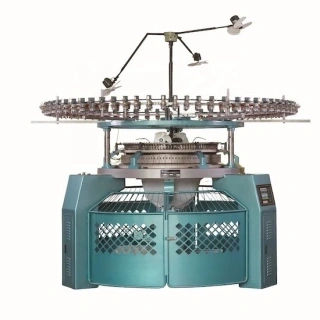
The Mechanics of Single Jersey Knitting Machines
Single Jersey Knitting Machines operate on a relatively simple yet precise principle: interlooping yarns using a single set of needles to produce a single-layer knit fabric. While the concept is straightforward, achieving consistent fabric quality requires careful control of tension, yarn feed, and needle-sinker coordination.
Core Components of Single Jersey Knitting Machines
Needle Cylinder
The cylinder houses all needles, which move vertically to form loops. Latch needles are commonly used because they can handle a wide variety of yarn types, including cotton, synthetic fibers, blends, and technical yarns.
Sinkers
Sinkers stabilize the yarn during loop formation and hold the existing loops in place. They are critical for preventing dropped stitches and ensuring smooth, uniform fabric production.
Yarn Feeding System
Modern machines feature electronic or computer-controlled yarn feeders, enabling precise tension control and multi-yarn patterns. This ensures uniform loop size and consistent fabric density.
Take-Up Mechanism
The fabric is continuously pulled downward during knitting to maintain proper tension. Adjustable take-up systems allow manufacturers to produce fabrics of varying weight and density.
Control Systems
Many modern machines use computerized controllers for patterning, stitch length adjustment, and loop monitoring. These systems reduce errors, increase efficiency, and allow for complex fabric designs.
Knitting Process Overview
The Single Jersey Knitting Machine follows a repetitive loop formation process:
- Yarn is fed into the needle hook as the needle rises.
- The needle catches the yarn and forms a new loop, pulling the previous loop through.
- Sinkers assist in stabilizing the fabric, guiding the yarn, and maintaining loop integrity.
- The take-up mechanism pulls the fabric downward, allowing continuous production.
This process repeats at high speed, resulting in a lightweight, elastic fabric that is highly sought after for apparel production.
Characteristics of Single Jersey Fabrics
Understanding the properties of single jersey fabrics is crucial for manufacturers aiming to optimize production and meet market demands.
Distinct Face and Back
The front of the fabric is smooth with vertical loops, making it ideal for printing, dyeing, and finishing processes. The back shows horizontal loops, often less visually appealing but essential for structural integrity.
High Elasticity
Single jersey fabrics stretch significantly across the width, offering flexibility and comfort. This property is particularly valuable for fitted garments, sportswear, and children's clothing.
Edge Curling
A natural consequence of the asymmetric loop structure is the curling of edges, typically toward the face. While sometimes challenging during cutting and sewing, designers can use edge curling creatively in garment construction.
Lightweight and Breathable
The open-loop structure allows airflow, making single jersey fabrics ideal for T-shirts, summer wear, and activewear.
Versatility in Yarn Types and Patterns
Single jersey machines can work with a variety of yarns—including cotton, polyester, viscose, nylon, and blends—allowing manufacturers to produce fabrics ranging from soft and stretchy to durable and moisture-wicking.
Advantages of Single Jersey Knitting Machines
Single Jersey Knitting Machines provide several benefits that make them an attractive investment for textile manufacturers:
Flexibility in Fabric Design
Manufacturers can produce different stitch densities, patterns, and multi-yarn designs with minimal adjustments. Computerized feeders enhance this flexibility, enabling complex prints, stripes, and color variations.
High Production Efficiency
Modern machines, especially high-speed or electronic models, achieve remarkable output levels, reducing production time and labor costs.
Ease of Maintenance
Compared to double jersey or more complex knitting machines, single jersey machines are simpler in design, easier to maintain, and less prone to mechanical faults.
Adaptability to Fashion Trends
The versatility of single jersey fabrics allows manufacturers to respond quickly to seasonal fashion trends, producing lightweight, elastic fabrics for T-shirts, dresses, and casual wear.
Cost Efficiency
Producing single jersey fabric consumes less yarn per square meter than heavier knit fabrics, making it economical while maintaining high quality.
Applications Across the Textile Industry
Single jersey fabrics have wide-ranging applications, making them indispensable to textile manufacturers:
Casual Apparel
T-shirts, tank tops, and lightweight pullovers are the most common uses, benefiting from the fabric's softness, elasticity, and drape.
Sportswear and Activewear
The stretchability and breathability of single jersey fabrics make them ideal for leggings, performance tops, yoga wear, and other athletic garments.
Children's Clothing
The softness, comfort, and flexibility suit infants’ and children's apparel, providing freedom of movement and skin comfort.
Home Textiles
Single jersey fabrics are increasingly used in lightweight bed linens, pillowcases, and decorative fabrics, where breathability and softness are key.
Technical Textiles
Specialty yarns—such as moisture-wicking, antimicrobial, flame-retardant, or conductive fibers—can be knitted into single jersey structures for functional applications like medical textiles or protective clothing.
Innovations in Single Jersey Knitting Machines
The textile industry has seen significant technological advancements in single jersey knitting machinery:
Computerized Control Systems
Enable precise yarn tension control, patterning, and loop consistency. These systems reduce defects and increase productivity.
Electronic Yarn Feeding
Allows multi-yarn designs, color changes, and complex patterns, all with automated precision.
Integrated Sensors
Monitor fabric tension, loop formation, and needle performance, minimizing waste and ensuring consistent quality.
High-Speed Operation
Advanced machines can operate at over 1,200 rpm, dramatically increasing production capacity.
Energy Efficiency
Machines are increasingly designed with energy-saving motors, reducing operational costs and environmental impact.
Comparing Single Jersey with Double Jersey and Other Knit Structures
While single jersey fabrics are lightweight and versatile, they differ from other knit structures:
- Double Jersey: Produced on machines with two needle beds, resulting in a thicker, more stable fabric with no curling edges. Ideal for polos, sweaters, and structured garments.
- Rib Knits: Alternating knit and purl stitches create high elasticity both widthwise and lengthwise, often used for cuffs, collars, and waistbands.
- Interlock Knits: Two layers of fabric knitted together, offering more stability and opacity while maintaining elasticity.
Understanding these differences helps manufacturers select the right fabric for specific applications and garment types.
Global Market Trends
The single jersey knitting machine market is expanding due to rising demand for comfortable, lightweight, and elastic fabrics. Key trends include:
- Growth of sportswear and activewear globally
- Increased popularity of casual T-shirts and loungewear
- Rising adoption of blended and sustainable fibers
- Expansion of textile manufacturing hubs in Asia (China, India, Bangladesh)
Manufacturers are investing in computerized and high-speed machines to meet increasing consumer demand while maintaining efficiency and fabric quality.
Maintenance and Best Practices
To ensure optimal performance, regular maintenance of single jersey knitting machines is essential:
- Needle Care: Inspect and replace bent or worn needles regularly to avoid dropped stitches and uneven loops.
- Lubrication: Essential for smooth movement of needles, sinkers, and cams.
- Tension Control: Correct yarn tension ensures uniform loops and prevents fabric distortion.
- Cleaning: Remove lint, dust, and oil residue from the cylinder, sinkers, and take-up system.
- Software Updates: Computerized machines benefit from regular firmware updates to optimize operation and reduce errors.
Future Outlook
The future of single jersey knitting machines is promising, driven by:
- Sustainable Fabrics: Integration of organic, recycled, and biodegradable fibers.
- Smart Manufacturing: AI-based defect detection, production monitoring, and energy optimization.
- Customization and Flexibility: Machines capable of rapid changeovers to produce small-batch, trend-responsive fabrics.
- Global Expansion: Textile manufacturers in emerging markets are increasingly adopting advanced single jersey machines to meet growing demand.
Conclusion
Single Jersey Knitting Machines remain a cornerstone of modern textile production. Their ability to produce lightweight, elastic, and versatile fabrics makes them indispensable across fashion, sportswear, children's clothing, home textiles, and technical applications. Technological advancements in computerized controls, high-speed operations, and energy efficiency enhance productivity, reduce waste, and improve fabric quality.
As global demand for comfortable, stylish, and sustainable fabrics continues to rise, single jersey machines will play an essential role in meeting market needs. Understanding their mechanics, applications, advantages, and best practices equips manufacturers to stay competitive, responsive, and innovative in the evolving textile industry.
Send your message to this supplier
Related Articles from the Supplier
Related Articles from China Manufacturers

Everything You Need to Know About Tubular Cam Locks
- Nov 11, 2025
Everything You Need to Know About Knife Gate Valves
- Jul 04, 2024

Related Products Mentioned in the Article



Supplier Website
Source: https://www.xmnyuanda.com/news/everything-you-need-to-know-about-single-jersey-knitting-machines.html