
Top Advantages of Cage-Guided Control Valves for High-Performance Flow Control
Introduction
In today's rapidly evolving industrial landscape, precision, reliability, and performance are essential for ensuring safe and efficient process operations. As industries continue to push the boundaries of temperature, pressure, and fluid complexity, control valves must rise to the challenge. One of the most prominent solutions for such demanding applications is the cage-guided control valve, a high-performance valve design widely adopted across oil and gas facilities, power generation plants, chemical processing units, refineries, and other heavy industrial sectors.
A cage-guided control valve incorporates a cylindrical cage that surrounds and guides the valve plug as it moves. This cage serves as a structural and functional element, allowing the valve to maintain stability under high pressure drops, reduce vibration, minimize noise, and provide precise flow control. Unlike simpler control valve types, the cage-guided configuration offers enhanced durability, interchangeability, and resistance to severe service challenges, including cavitation, flashing, and erosive flow.
As industries demand increasingly reliable solutions that can operate in harsh and variable conditions, cage-guided control valves have become integral to modern fluid control systems. The following sections explore their design, advantages, working principles, industrial applications, and the key differences between cage-guided and single-seat control valves.
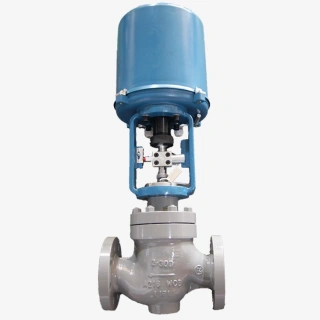
What Is a Cage-Guided Control Valve?
A cage-guided control valve is a straight-stroke control valve that uses a precision-engineered cage to guide the valve plug during operation. The cage, a cylindrical metal component with engineered openings, determines the valve's flow characteristics and stability. It also houses the plug as it moves up or down, regulating fluid passage based on the control signal received from the actuator.
Key Characteristics of a Cage-Guided Control Valve
- Cylindrical cage structure that provides smooth, guided plug movement
- Interchangeable trim components for flexible flow control and maintenance
- High-capacity flow paths suitable for severe and critical service conditions
- Noise-reducing and cavitation-mitigating design features
- Reliable performance under high-pressure drops and fluctuating conditions
The cage plays a central role in managing pressure reduction, distributing fluid flow, and reducing the energy of the flowing medium before it exits the trim. This reduces wear, vibration, and turbulence—common issues that can lead to premature valve failure.
Cage-guided control valves are engineered to provide enhanced flow control accuracy while withstanding aggressive service environments, making them indispensable for modern industrial applications.
How Cage-Guided Control Valves Work
The operational concept of a cage-guided control valve is similar to other globe-type control valves but with additional internal support.
1. Fluid Inflow and Pressure Distribution
Fluid enters the valve body and encounters the cage, which evenly distributes pressure across the plug. The cage openings or ports are designed to control the flow profile and pressure drop.
2. Plug Movement and Flow Regulation
The actuator sends a command to move the plug upward or downward. The cage guides the plug along a straight, stable path, ensuring minimal lateral movement even under severe flow conditions.
3. Controlled Pressure Reduction
As fluid flows through the cage ports, energy is dissipated gradually. This avoids abrupt pressure drops that may cause cavitation or flashing in standard valves.
4. Fluid Exit and Noise Reduction
By reducing turbulence and stabilizing the flow, the cage architecture significantly lowers noise levels—important in power generation, steam applications, and high-pressure gas services.
This guided movement and controlled flow behavior allow cage-guided valves to operate reliably in challenging service environments.
Benefits and Advantages of Cage-Guided Control Valves
Cage-guided control valves offer multiple advantages that make them superior to standard valve types in many industrial applications.
1. Superior Stability Under High Pressure Drops
The cage prevents side-load forces on the plug, ensuring stable operation even during significant pressure reductions. This stability minimizes wear on internal components and enhances valve lifespan.
2. Cavitation Control and Damage Prevention
Cavitation—caused by vapor bubbles forming and collapsing—can severely damage valves. Cage-guided valves are specifically designed to:
- Distribute pressure evenly
- Reduce fluid velocity
- Control vapor bubble formation
This dramatically decreases cavitation-related erosion and vibration.
3. Noise Reduction for Severe Service Applications
Noise is often a by-product of high-velocity fluid flow. Cage ports dissipate energy in multiple stages, lowering turbulence and helping facilities meet noise compliance requirements.
4. High Capacity and Excellent Flow Control
Cage-guided valves provide high flow capacity compared to conventional single-seat designs. Their engineered ports offer predictable flow behavior across a wide operating range.
5. Interchangeable Trims for Process Flexibility
One of the defining features of cage-guided control valves is interchangeability:
- Operators can replace cages to adjust flow characteristics
- Different trim sets can be installed for various process media
- Maintenance cycles can be optimized without replacing the entire valve
This flexibility lowers operating costs and enhances adaptability.
6. Reduced Vibration and Enhanced Plug Guidance
The cage provides precise guiding capabilities, preventing lateral movement. This reduces vibration and prevents plug misalignment—common issues in high-energy systems.
7. Ideal for Severe and Critical Service Conditions
Cage-guided valves excel in applications involving:
- High pressure differentials
- High temperatures
- Steam
- Corrosive chemicals
- Erosive liquids
- Multi-phase flows
Their robust construction and stable functionality make them suitable for demanding environments where other valve types may fail.
Industrial Applications of Cage-Guided Control Valves
Cage-guided control valves are widely used across industries where pressure control, noise reduction, and efficiency are critical.
Oil and Gas Industry
In upstream, midstream, and downstream processes, cage-guided valves manage:
- Wellhead injection systems
- Separator level control
- Gas dehydration units
- Crude oil processing
- Compressor anti-surge applications
Their ability to handle high-pressure drops and corrosive fluids makes them ideal for oil and gas operations.
Power Generation
Power plants rely heavily on cage-guided valves for:
- Boiler feedwater regulation
- Steam temperature control
- Turbine bypass systems
- Condensate control
The valves' noise and vibration reduction are particularly valuable in high-pressure steam applications.
Chemical and Petrochemical Processing
Chemical plants benefit from the valves' resistance to corrosive, erosive, and aggressive fluids. Applications include:
- Reactor feed control
- Acid regulation
- Polymer synthesis
- High-temperature media control
Interchangeable trims allow facilities to handle diverse chemicals with one valve body.
Refining and Petrochemical Plants
Cage-guided valves help maintain operational reliability in:
- Hydrocracker units
- Refinery distillation columns
- Fuel gas systems
- Catalytic reforming operations
Their ability to withstand extreme temperatures ensures safe and stable operation.
Water Treatment and Desalination
High-pressure RO systems, chemical dosing lines, and distribution networks utilize cage-guided valves for stable and precise control.
Pulp and Paper Industry
These valves provide excellent control when handling:
- Fibrous pulp
- Slurries
- Chemicals used in bleaching and digestion
Their robust design resists clogging and abrasive wear.
Cage-Guided Valve Trim Designs
Trim design is a crucial factor in performance. Cage-guided valves can incorporate:
1. Linear Trim
Provides predictable flow suitable for high-precision applications.
2. Equal-Percentage Trim
Ideal for applications requiring large variations in flow with stable control.
3. Quick-Opening Trim
Used for emergency or shutdown applications requiring rapid response.
4. Multi-Stage Trim
Designed to reduce noise and eliminate cavitation in severe service.
5. Anti-Cavitation Trim
Uses multi-hole or labyrinth structures to dissipate energy gradually.
6. Hardened or Coated Trim
Protects against erosion and corrosive media.
The ability to swap trims easily is one of the most compelling features for operators seeking adaptability and extended valve life.
Materials and Construction Options
Cage-guided control valves are built from materials selected based on process conditions:
- Carbon steel for general services
- Stainless steel (304, 316, 316L) for corrosion resistance
- Duplex and super duplex stainless steel for high corrosion and strength requirements
- Inconel, Monel, and Hastelloy alloys for extreme temperatures and aggressive chemicals
- Stellite-coated trim components for erosion resistance
Material selection ensures that the valve can withstand harsh operating conditions without premature failure.
Cavitation and Noise Control Technologies
Cage-guided valves address cavitation and noise through a combination of structural and flow-engineering principles.
1. Multi-Stage Pressure Reduction
The cage design allows pressure to drop in several small increments, not one large drop. This reduces the formation of vapor bubbles.
2. Low-Velocity Flow Path
Engineered openings limit fluid acceleration, minimizing turbulence.
3. Balanced Forces
The symmetric cage layout distributes forces evenly, reducing vibration.
4. Labyrinth Flow Cages
Some designs feature multi-path, multi-turn labyrinth structures for maximum energy dissipation.
5. High-Capacity Flow Control
Allows the valve to maintain stable flow even under extreme operating conditions.
These technologies ensure that cage-guided valves achieve long-lasting performance with minimal noise or damage.
Maintenance and Interchangeability
One of the main advantages of cage-guided control valves is their ease of maintenance. Operators can:
- Replace the cage without removing the valve body
- Swap different flow characteristics easily
- Clean and maintain components with minimal downtime
- Install new trims for updated process requirements
This design significantly reduces total lifecycle costs and improves plant efficiency.
Comparing Single-Seat vs. Cage-Guided Control Valves
Understanding the differences helps operators choose the correct valve type.
Single-Seat Control Valves
Advantages:
- Simple design
- Lower cost
- Good for clean fluids
- Excellent shutoff capability
Limitations:
- Less stable under high-pressure drops
- Higher risk of vibration
- Limited noise and cavitation resistance
- Not ideal for severe service
Cage-Guided Control Valves
Advantages:
- High pressure drop capacity
- Superior stability and plug guidance
- Noise and cavitation mitigation
- Interchangeable trims
- Excellent severe-service performance
Limitations:
- Higher cost than single-seat valves
- Slightly more complex maintenance
Which One to Choose?
- For high-pressure, high-temperature, or severe service, choose cage-guided.
- For clean, low-pressure, general applications, a single-seat valve may suffice.
Cage-guided valves deliver unmatched performance in challenging environments, making them the preferred choice for mission-critical systems.
Conclusion
Cage-guided control valves have emerged as one of the most reliable and versatile solutions for modern industrial fluid control. With their robust construction, precise plug guidance, superior pressure-handling capabilities, and interchangeable trims, they offer exceptional performance in severe and critical service applications. From oil and gas production to power generation, chemical processing, refining, and water treatment, these valves play a crucial role in optimizing process efficiency, protecting equipment, and maintaining operational stability.
Their advanced design mitigates common issues such as noise, vibration, cavitation, and wear, providing long-term reliability and peace of mind for operators. As industries continue to demand high-performance equipment capable of withstanding extreme operating conditions, cage-guided control valves will remain at the forefront of industrial valve technology—ensuring safe, accurate, and efficient flow control across the globe.
Send your message to this supplier
Related Articles from the Supplier
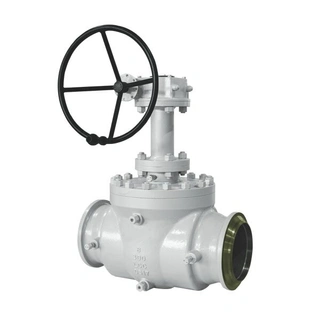
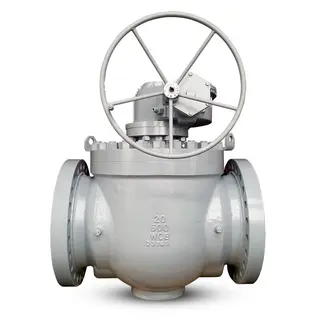
Top Entry Trunnion Ball Valve: A Comprehensive Guide
- Dec 06, 2025
Related Articles from China Manufacturers


Top Lockers Attended 3rd Phase 114th Canton Fair
- Feb 13, 2015
Top Lockers Basketball Game
- Feb 13, 2015
Top Lockers Team Building
- Feb 13, 2015

Top Lockers Company Awards Ceremony
- Feb 13, 2015

Top Lockers Company Expo Schedule
- Feb 13, 2015
Related Products Mentioned in the Article

Supplier Website
Source: https://www.weldonvalves.com/news/top-advantages-of-cage-guided-control-valves-for-high-performance-flow-control.html