
High-Temperature Control Valve Packing Selection Guide
In petrochemical plants, the failure of a critical high-temperature control valve due to improper packing selection can lead to production interruptions and significantly increased safety risks. Such losses can escalate rapidly, reaching millions of dollars or even more. In industrial systems, the success or failure of equipment often depends on a seemingly small but critically important component—valve packing.
When a high-temperature control valve operates in extreme environments exceeding 450°F (approximately 232°C), the valve packing must fulfill three primary functions: sealing the process medium to prevent leakage, ensuring smooth stem movement under high-temperature conditions, and maintaining stability under high pressure and complex media conditions. The selection of packing directly determines system reliability, safety, and long-term operational stability.
Challenges Faced by High-Temperature Control Valve Packing
High-temperature valve packing must withstand a variety of harsh operating conditions, including:
- Thermal expansion effects: At elevated temperatures, the thermal expansion rates of the valve body and stem differ. Packing materials must not only maintain structural integrity but also accommodate this differential expansion.
- Oxidation effects: High temperatures accelerate oxidation reactions, leading to degradation of packing performance.
- Chemical corrosion: Chemicals in the process medium become more aggressive at elevated temperatures, increasing the risk of material erosion.
- Mechanical stress cycling: Frequent valve operation subjects packing to repeated compression and relaxation cycles.
Traditional packing materials may perform well at ambient conditions but often fail rapidly under high-temperature service. For example, rubber or elastomeric materials may harden and crack, while conventional fiber packings may lose flexibility and resilience, increasing leakage risk. Therefore, high-temperature packing selection must not rely solely on maximum temperature ratings but must also consider thermal cycling behavior, pressure variations, media characteristics, and operating conditions.
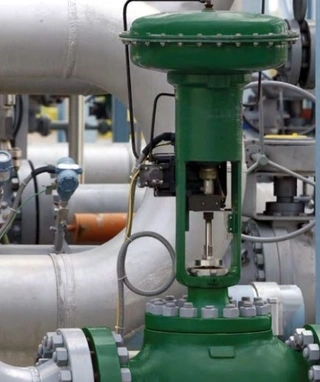
Comparison of Common High-Temperature Packing Materials
From a materials science perspective, packing performance is fundamentally determined by molecular structure.
- Graphite-based packing: Graphite has a stable crystalline structure and can withstand temperatures above 1000°F (approximately 538°C) in non-oxidizing environments. It also has excellent thermal conductivity, helping dissipate heat from the sealing area and reducing localized thermal stress.
- PTFE and modified PTFE materials: PTFE offers excellent chemical resistance and low friction properties and is typically suitable for service conditions up to around 500°F (approximately 260°C). However, PTFE undergoes phase transformation at approximately 620°F (about 327°C), which limits its applicability in higher temperature environments.
- Spring-energized sealing structures: These designs combine metal springs with high-performance sealing materials, providing consistent sealing force under temperature fluctuations and pressure changes, thereby improving overall adaptability.
Key Factors in High-Temperature Packing Selection
Selecting packing for high-temperature control valves requires a multi-parameter engineering evaluation rather than a simple temperature rating check. In practice, reliability depends on how well the material, structure, and operating conditions are matched as a system.
1. Temperature Rating and Thermal Cycling Behavior
Temperature rating is the primary consideration. In addition to maximum continuous operating temperature, the following must also be evaluated:
- Frequency of temperature fluctuations
- Heating and cooling rates
- Internal temperature gradients within the valve body
In steam systems, molten salt systems, and high-temperature chemical processes, packing is subjected to severe thermal shock and cyclic stress. If thermal expansion coefficients are not properly matched, leakage gaps or excessive compression may occur, compromising sealing stability. Modern high-temperature packing often adopts multilayer composite structures, leveraging complementary thermal properties of different materials to achieve stable sealing.
2. Chemical Compatibility
At elevated temperatures, chemical reaction rates increase significantly. Materials that are stable at room temperature may degrade rapidly under high-temperature conditions.
Specifically:
In oxidizing environments, graphite materials may undergo oxidation loss
In catalyst-containing media, organic materials may decompose more rapidly
Certain media may extract additives from polymers, reducing performance
Therefore, in complex operating conditions, it is essential to consider medium composition, reactivity, and potential chemical synergistic effects.
Installation and Maintenance of High-Temperature Packing
Proper installation is as critical as material selection.
Preload control: Preload is a key factor. Insufficient preload leads to leakage, while excessive preload may damage materials or cause premature failure.
Thermal cycling conditioning: High-temperature packing often requires a “running-in” period under thermal cycling conditions. Gradual operation allows the material to better adapt to sealing interfaces and achieve optimal performance.
Predictive maintenance: Modern predictive maintenance techniques are increasingly important. Acoustic emission monitoring, infrared thermography, and online packing force adjustment systems can monitor packing conditions in real time and detect potential issues early, reducing unplanned downtime.
High-Temperature Packing Applications in Different Industries
Petrochemical and Refining Industry: The petrochemical and refining sector represents one of the most demanding applications for high-temperature packing. Processes such as catalytic cracking, coking units, and high-temperature reactors involve not only extreme temperatures but also corrosive media and high pressure conditions. In hydrogen service applications, packing must also resist hydrogen permeation and hydrogen embrittlement, often requiring specially modified materials.
Power Generation Industry: In the power sector, high-temperature control valves are widely used in steam systems, including bypass systems and superheated steam pipelines. These environments feature high temperature, high pressure, and frequent thermal cycling, requiring excellent dynamic adaptability from packing materials.
Core Challenges in Control Valve Packing Sealing
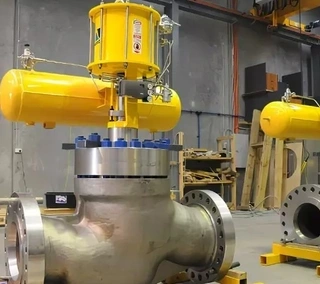
In frequently actuated control valves, stem packing faces multiple complex challenges, making it one of the most difficult sealing scenarios in industrial valve applications.
- Regulatory and environmental requirements: Modern environmental regulations impose extremely low fugitive emission limits, requiring packing systems to maintain long-term sealing performance.
- Control valve characteristics: Frequent stem movement gradually consumes packing volume and causes stress relaxation, increasing leakage over time. This directly conflicts with low-emission requirements.
- Operational requirements: Valves must provide fast and precise response, requiring minimal stem friction to avoid control delay and inaccuracies.
- Safety requirements: In industries such as refining, process media often include high-temperature flammable fluids, requiring fire-safe packing materials.
These four requirements—low leakage, low friction, fast response, and fire safety—make control valve packing design particularly challenging.
Working Principle and Balance Design of Packing Seals
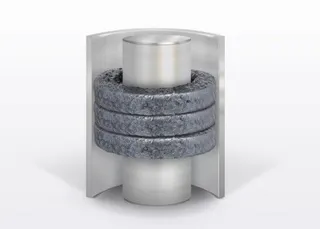
From a sealing mechanism perspective, packing rings are installed inside the stuffing box. Their operation is based on Pascal’s law, converting axial compressive force into radial sealing force.
Typically, about half of the axial load is converted into radial pressure. This radial stress generates two competing effects: sealing force and friction force. The greater the force applied to the gland, the higher the sealing force and the lower the leakage, but also the higher the friction. Therefore, the core engineering objective is to balance leakage and friction within acceptable limits.
Impact of Friction on Control Accuracy
Friction is particularly critical in control valve applications. Industrial design often requires valves to respond to input signal changes as small as 1% or even less.
However, valves using conventional graphite packing may exhibit deadbands as high as 5% or more. This leads to response lag, overshoot, process instability, and reduced control accuracy. The direct consequences include reduced production efficiency and difficulty in maintaining product quality consistency.
Packing Relaxation and Leakage Issues
Over long-term cycling, packing experiences volume loss and stress relaxation. With repeated stem movement, the structure gradually loosens and extrudes, reducing compression force and sealing effectiveness. While friction decreases, leakage tends to increase.
In real industrial applications, some users require packing systems to maintain low emissions after millions of cycles, which is highly challenging.
It is also important to note that fugitive emissions from valves account for a significant portion of industrial emissions. Approximately 50% of total plant emissions are fugitive, and 50%–60% of those originate from valves and packing areas. Less than 1% of valves may contribute to more than 70% of total leakage, making control valves a key focus of emission control strategies.
As a result, international standards such as API 622, API 624, API 641, and ISO 15848-1 have been developed to regulate valve emission performance.
Fire Safety Requirements in High-Temperature Service
In high-temperature environments, additional challenges arise beyond friction and leakage. Fire safety performance must also be considered. Standards such as API 607 and API 589 are used to verify valve sealing integrity under fire conditions, meaning packing materials must maintain structural stability even during fire exposure.
Comparison and Combination of Graphite and PTFE Materials
Graphite and PTFE are the two most widely used packing materials in industry, each with distinct advantages and limitations.
Graphite: Excellent high-temperature resistance, low friction at elevated temperatures, and good thermal cycling stability. However, it may suffer oxidation or structural sensitivity under certain conditions.
PTFE: Extremely low friction and excellent chemical stability. However, it has a high thermal expansion coefficient, poor compatibility with metal components, and a tendency to leak during thermal cycling.
Therefore, engineering designs often use combined graphite-PTFE structures to achieve balanced performance. However, due to PTFE’s poor fire test performance, its proportion is typically limited.
Thermal Expansion Differences and Solutions
PTFE exhibits a significantly different thermal expansion coefficient compared to metals. During thermal cycling, this mismatch can create sealing gaps and cause leakage.
Engineering solutions typically include dynamic loading structures that use elastic elements to compensate for volume changes and maintain constant sealing force.
Graphite performs more stably under thermal cycling, especially in the range of 150°C to 315°C, where it exhibits superior friction and volume stability compared to extreme thermal cycling conditions.
Modern Designs for Packing Relaxation Problems
To address long-term packing relaxation, modern designs incorporate elastic elements such as spring systems in gland bolt assemblies. These provide continuous compensation force, eliminating the need for frequent manual retightening.
Anti-extrusion rings are also used, typically made from reinforced graphite, carbon fiber, or high-density graphite materials, to improve structural stability and prevent material extrusion.
Conclusion
High-temperature control valve packing selection is a comprehensive engineering problem involving materials science, thermodynamics, chemical engineering, and mechanical design. Only by fully understanding operating conditions and combining appropriate material selection, structural design, and maintenance strategies can stable long-term valve operation be ensured under extreme conditions.
It must be emphasized that packing performance depends not only on material properties but also on installation quality, valve condition, and maintenance practices. Even the best materials may fail if improperly installed or poorly maintained. Therefore, in control valve sealing design, material selection, structural configuration, and field maintenance must be considered together to achieve true low leakage, high reliability, and long service life performance.
Send your message to this supplier
Related Articles from the Supplier
Solutions for High-Temperature Valve Flange Leakage
- Mar 20, 2026
An Introduction to High-Pressure Valve Packing
- Dec 26, 2025
Related Articles from China Manufacturers


High Temperature and High Pressure Gate Valve
- Jan 27, 2021
High-Temperature Alloy Steel Forging Processes
- Nov 28, 2024
Related Products Mentioned in the Article

Supplier Website
Source: https://www.valvepackingsealkits.com/news/high-temperature-control-valve-packing-selection-guide.html