
Process Introduction And Development History of API 5L Pipe
This product news is about the process introduction and development history of API 5L pipe.
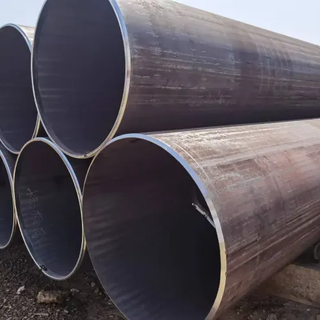
API 5L generally refers to the pipeline pipe -- API 5L pipe, which transports oil, steam and water extracted from the ground to oil and natural gas industrial enterprises through pipeline pipe. Pipeline pipe includes seamless steel pipe and welded steel pipe, with flat end, threaded end or socket end. The connection method is welding, coupling connection, socket connection, etc.
API 5L standard seamless steel pipe
With the development of pipeline steel plate technology and the progress of welded pipe forming and welding technology, the application scope of welded pipe for pipeline is gradually expanded, especially the advantages of welded pipe are more obvious in the large diameter group spacing range. Combined with the cost factor, welded pipe has occupied a leading position in the field of pipeline pipe, which limits the development of stainless steel seamless pipeline pipe. In 2004, the output of seamless pipeline pipe was about 400,000 tons, including X42 - 70 steel grade, including onshore pipeline pipe and submarine pipeline pipe.
API 5L standard seamless steel pipe
At present, the production of API 5L pipeline pipe adopts micro alloying heating treatment process, and the production cost of stainless steel seamless pipe is obviously higher than that of welded pipe. With the improvement of steel grade, such as the limitation of carbon equivalent or pipeline pipe of Grade X80 or above, the conventional process of seamless steel pipe is difficult to meet the requirements of users. At present, all 12Cr1MoV alloy pipe manufacturers are working to improve the corrosion resistance of their pipeline pipes at low temperature. It has stable performance in high temperature environment. In this regard, Panzh Iron and Steel Group Chengdu Iron and Steel Co., Ltd has started the handicraft transformation.
API 5L generally refers to the pipeline pipe -- API 5L pipe, which transports oil, steam and water extracted from the ground to oil and natural gas industrial enterprises through pipeline pipe. Pipeline pipe includes seamless steel pipe and welded steel pipe, with flat end, threaded end or socket end. The connection method is welding, coupling connection, socket connection, etc.
API 5L standard seamless steel pipe
With the development of pipeline steel plate technology and the progress of welded pipe forming and welding technology, the application scope of welded pipe for pipeline is gradually expanded, especially the advantages of welded pipe are more obvious in the large diameter group spacing range. Combined with the cost factor, welded pipe has occupied a leading position in the field of pipeline pipe, which limits the development of stainless steel seamless pipeline pipe. In 2004, the output of seamless pipeline pipe was about 400,000 tons, including X42 - 70 steel grade, including onshore pipeline pipe and submarine pipeline pipe.
API 5L standard seamless steel pipe
At present, the production of API 5L pipeline pipe adopts micro alloying heating treatment process, and the production cost of stainless steel seamless pipe is obviously higher than that of welded pipe. With the improvement of steel grade, such as the limitation of carbon equivalent or pipeline pipe of Grade X80 or above, the conventional process of seamless steel pipe is difficult to meet the requirements of users. At present, all 12Cr1MoV alloy pipe manufacturers are working to improve the corrosion resistance of their pipeline pipes at low temperature. It has stable performance in high temperature environment. In this regard, Panzh Iron and Steel Group Chengdu Iron and Steel Co., Ltd has started the handicraft transformation.
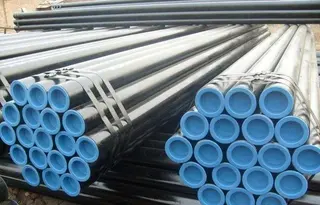
API 5L seamless steel pipe
API issued API 5L standard in 1926. At first, it only included A25, A and B steel grades, and the minimum yield values were 172 MPa, 207 MPa and 241 MPa, respectively.
API issued APl5LX standard in 1947, which added X42, X46 and X52 steel grades, with the minimum yield values of 289 MPa, 317 MPa and 358 MPa respectively.
Since 1966, four grades of steel, namely X56, X60, X65 and X70, have been issued successively, with the minimum yield values of 386 MPa, 413 MPa, 448 MPa and 482 MPa respectively.
In 1972, API issued the standard of U80 and U100, with the minimum yield values of 551 MPa and 691 MPa respectively. Later, API changed the standard of U80 and U100 to X80 and X100.
According to rough statistics, before 2000, the consumption of X70 was about 40%. X65 and X60 were hovering around 30%. There are also quite a number of small diameter finished oil pipeline lines using X52 steel grade, and most of them are ERW steel pipes.
API 5L standard seamless steel pipe
There are a lot of discussions about X80 steel grade at home and abroad. The steel giants who used to invest heavily in the development of X80 in the world are actively promoting X80, even X100. Up to now, X80 has passed the "test section stage". The world-famous second-line West to East Gas Pipeline of more than 4843 kilometers adopts X80 steel grade, and about 2445 kilometers of third-line West to East Gas Pipeline also uses X80.
API issued API 5L standard in 1926. At first, it only included A25, A and B steel grades, and the minimum yield values were 172 MPa, 207 MPa and 241 MPa, respectively.
API issued APl5LX standard in 1947, which added X42, X46 and X52 steel grades, with the minimum yield values of 289 MPa, 317 MPa and 358 MPa respectively.
Since 1966, four grades of steel, namely X56, X60, X65 and X70, have been issued successively, with the minimum yield values of 386 MPa, 413 MPa, 448 MPa and 482 MPa respectively.
In 1972, API issued the standard of U80 and U100, with the minimum yield values of 551 MPa and 691 MPa respectively. Later, API changed the standard of U80 and U100 to X80 and X100.
According to rough statistics, before 2000, the consumption of X70 was about 40%. X65 and X60 were hovering around 30%. There are also quite a number of small diameter finished oil pipeline lines using X52 steel grade, and most of them are ERW steel pipes.
API 5L standard seamless steel pipe
There are a lot of discussions about X80 steel grade at home and abroad. The steel giants who used to invest heavily in the development of X80 in the world are actively promoting X80, even X100. Up to now, X80 has passed the "test section stage". The world-famous second-line West to East Gas Pipeline of more than 4843 kilometers adopts X80 steel grade, and about 2445 kilometers of third-line West to East Gas Pipeline also uses X80.
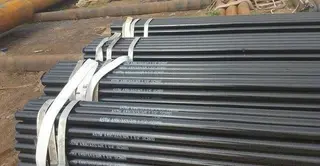
Update notes for the latest edition of 2012 (45th Edition)
Since April 2010, more than 400 comments have been collected and processed. The new standard was officially approved at the end of 2012 and officially released on the ISO network on February 18, 2013.
In 2007, ISO and API jointly issued the pipeline steel pipe standard ISO 3183:2007 / API Spec 5L (44 Edition), which is consistent with the world standards. Although due to the intellectual property rights and trade issues raised by the United States, API terminated its cooperation with ISO in 2012, and no longer participated in the drafting of ISO standards, and did not issue standards adopting ISO in the future. However, the new version of pipeline steel pipe standard is still the result of the joint working group of ISO and API standards. Except for the differences between API monogram and European onshore pipeline steel pipe ordering, other contents are consistent.
Compared with the previous version, the main technical change of ISO 3183:2012 / API Spec 5L (45 Edition) is to add two appendixes: European onshore natural gas pipeline PSL2 Steel pipe orders (Appendix M), screw thread and coupling calculation formula background, guide bending and Charpy impact calculation formula background (Appendix P), and other technical changes in reference standards, manufacturing process, performance indicators, inspection methods and so on, as well as a large number of editorial modifications and text expression adjustments. The new standard is more perfect and scientific.
Since April 2010, more than 400 comments have been collected and processed. The new standard was officially approved at the end of 2012 and officially released on the ISO network on February 18, 2013.
In 2007, ISO and API jointly issued the pipeline steel pipe standard ISO 3183:2007 / API Spec 5L (44 Edition), which is consistent with the world standards. Although due to the intellectual property rights and trade issues raised by the United States, API terminated its cooperation with ISO in 2012, and no longer participated in the drafting of ISO standards, and did not issue standards adopting ISO in the future. However, the new version of pipeline steel pipe standard is still the result of the joint working group of ISO and API standards. Except for the differences between API monogram and European onshore pipeline steel pipe ordering, other contents are consistent.
Compared with the previous version, the main technical change of ISO 3183:2012 / API Spec 5L (45 Edition) is to add two appendixes: European onshore natural gas pipeline PSL2 Steel pipe orders (Appendix M), screw thread and coupling calculation formula background, guide bending and Charpy impact calculation formula background (Appendix P), and other technical changes in reference standards, manufacturing process, performance indicators, inspection methods and so on, as well as a large number of editorial modifications and text expression adjustments. The new standard is more perfect and scientific.
Send your message to this supplier
Related Articles from the Supplier
Process Treatment of Q355B Seamless Steel Pipes
- Jan 24, 2021
Manufacturing Process of Thick-wall Welded Pipe
- May 06, 2020
The Heat Treatment Process of Cold Drawn Steel Pipes
- Oct 17, 2021
The Surface Treatment Process of 16mn Seamless Pipes
- Dec 18, 2021
Related Articles from China Manufacturers


Related Products Mentioned in the Article

Supplier Website
Source: https://www.pipessteel.com/news/process-introduction-and-development-history-of-api-5l-pipe.html