
Understand Jacketed Ball Valve: Design & Performance
In many chemical plants, food processing facilities, and pharmaceutical workshops, operators frequently encounter a persistent challenge: certain materials transported through pipelines, such as resins, syrups, or medicinal liquids, tend to become viscous, solidify, or even completely block pipelines and valves when the temperature drops. Once this occurs, production must be halted so that steam heating can be applied or valves dismantled for cleaning. This not only delays operations but also increases costs. The key to solving this problem lies in whether the valve can effectively “keep the medium warm.” The jacketed ball valve is specifically designed for this purpose. By adding a thermal “jacket” around a conventional valve and circulating heating media such as steam or hot water, it ensures that the internal process medium remains at a temperature that allows smooth flow.
This article provides a comprehensive and easy-to-understand explanation of jacketed ball valves, covering their structure, performance, selection criteria, and installation and maintenance practices, helping industry professionals quickly grasp the essential knowledge of this important equipment.
Basic Concept and Applications of Jacketed Ball Valves
In industrial piping systems, valves are used to control the flow rate, pressure, and direction of media. Conventional valves perform well in many applications, but when dealing with media that easily solidify or crystallize, they often encounter serious operational issues. Jacketed ball valves are specifically designed to address this challenge.
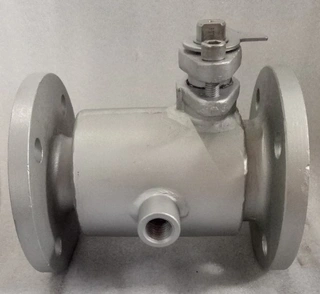
A jacketed ball valve is a special type of valve in which an additional outer layer, known as the jacket, is added to a standard ball valve. This jacket can be manufactured as part of the valve body or welded onto its exterior. The name “jacketed ball valve” originates from this structural feature.
These valves are primarily used to handle fluids that are prone to crystallization or solidification. Such media may become highly viscous or completely solid at ambient temperatures, including certain chemical materials, food pastes, and pharmaceutical intermediates. By introducing heating media such as steam or hot water into the jacket, the process medium inside the valve can be maintained within the required temperature range, preventing solidification or viscosity increase.
Various types of jacketed valves are available in the industry, and the selection depends on factors such as the nature of the fluid, system pressure, operating temperature, and performance requirements. Jacketed valves are typically available in two-way or three-way configurations, commonly with flanged connections, but threaded or welded connections can also be provided as needed.
Core Structural Components of Jacketed Ball Valves
To understand why jacketed ball valves are effective for handling solidification-prone media, it is essential to examine how their components work together.
1. Valve Body and Jacket Structure
The valve body is the primary structural component, while the jacket distinguishes it from a standard ball valve.
The valve body houses critical internal components such as the ball and seats. The jacket surrounds the outer surface of the valve body and is securely connected, typically by welding. It includes inlet and outlet ports for the heating medium (such as steam, thermal oil, or hot water), allowing continuous circulation and consistent temperature control.
Jackets can be manufactured in two main forms:
- Welded Jacket: Covers the entire valve body, forming a continuous structure. This design provides uniform heat transfer and avoids dead zones, improving flow performance.
- Assembled Jacket: Composed of multiple parts, suitable for valves with complex shapes, though slightly less effective in heat uniformity.
Based on coverage, jackets can be classified as:
- Full Jacket: Provides comprehensive temperature control, ideal for temperature-sensitive media.
- Partial Jacket: More cost-effective and lightweight, suitable for general applications.
Jackets are typically made from high-strength, corrosion-resistant materials such as carbon steel or stainless steel (e.g., 304 or 316), ensuring durability and long service life.
2. Ball and Stem
With thermal insulation provided by the jacket, the valve’s opening and closing mechanism relies on the ball and stem.
The ball is the core component responsible for flow control. It contains a central bore, and by rotating the ball, the valve can be opened or closed. When the bore aligns with the pipeline, the valve is open; when rotated 90 degrees, it becomes perpendicular to the flow, shutting off the medium.
The stem connects the ball to the actuator or handle. By rotating the stem, the ball is driven to rotate, controlling the flow of the medium.
3. Valve Seat and Sealing Structure
To ensure proper sealing and support during operation, the valve seat and sealing components play a crucial role.
The valve seat supports the ball and prevents leakage within the valve. Depending on operating conditions, different materials can be selected, including:
- PTFE (Polytetrafluoroethylene): Suitable for clean media
- Glass-filled PTFE: Enhanced strength and wear resistance
- Carbon-filled PTFE: Improved thermal conductivity and pressure resistance
- Graphite-based materials: Suitable for high-temperature applications
Packing materials are also critical sealing components, filling gaps between parts to prevent leakage. Common types include stem packing (stuffing box design) and elastomer-based seals.
Jacketed ball valves often feature a double sealing structure, ensuring both internal sealing and external environmental protection, enhancing operational reliability.
4. Flanges and Connection Methods
To be functional in a pipeline system, the valve must be securely connected.
Flanges are typically used at the valve ends to ensure tight connections with pipelines. They are available in various sizes and standards, such as ANSI and DIN. In addition to flanged connections, threaded and welded connections can also be provided based on requirements.
Performance Advantages of Jacketed Ball Valves
- Temperature Stability: Maintaining stable temperature is essential for media prone to solidification. Jacketed ball valves achieve uniform heating through circulating heating media, preventing crystallization or viscosity changes. They maintain consistent performance regardless of environmental conditions.
- Reduced Risk of Blockage: Ordinary valves often suffer from buildup and blockage when handling viscous media. Jacketed ball valves feature smooth, full-bore flow paths that minimize resistance and eliminate dead zones. Continuous heating ensures the medium remains fluid, significantly reducing the risk of blockage.
- Safety and Efficiency: These valves reduce the need for manual intervention, lowering operational risks associated with high temperature, pressure, or hazardous media. They also improve energy efficiency through precise flow control and have fire-safe designs that help prevent system failure during extreme conditions.
- Pressure Adaptability: Jacketed ball valves are designed to handle a wide range of pressures, commonly from Class 150 to Class 300, and are available in various sizes. Their robust design ensures reliable performance under different operating conditions.
- Low Maintenance Design: Most jacketed ball valves feature maintenance-free stem sealing structures with additional O-rings for enhanced flexibility and sealing performance. This reduces maintenance workload and operational costs.
Comparison with Other Valve Types
Compared with Standard Ball Valves: Standard ball valves are simpler and more economical but lack heating capability. When used with solidifying media, they can experience clogging and sealing failure. Jacketed ball valves eliminate these issues through integrated heating.
Compared with Jacketed Globe Valves: Both have jackets, but their working principles differ: Jacketed ball valves: quick operation, low resistance, less prone to clogging; Jacketed globe valves: better suited for precise flow regulation; Compared with Non-Jacketed Control or Butterfly Valves’ Jacketed ball valves outperform these valves in thermal management, flow stability, and energy efficiency, especially in temperature-sensitive processes.
Selection Criteria
- Material Selection: Common materials include WCB, CF8 (304), and CF8M (316), selected based on medium properties, temperature, and pressure.
- Sealing Materials: PTFE: for clean media (-20°C to 200°C); Metal seals: for high temperatures (above 500°C) or abrasive media
- Size and Connection Standards: Valve size must match the pipeline to ensure proper flow and control. Standards include API, ANSI, ASME, and DIN.
- Jacket Type: Full jackets are recommended for highly viscous or temperature-sensitive media.
- Operation Method: Options include manual, electric, or pneumatic actuation, depending on available power sources and automation requirements.
Main Application Industries
Jacketed ball valves are widely used in industries requiring strict temperature control:
- Chemical industry: resins, polymers, waxes
- Food industry: chocolate, syrups, oils
- Pharmaceutical industry: temperature-sensitive intermediates
- Cosmetics industry: creams and emulsions
- Coatings industry: paints and adhesives
In these sectors, they ensure stable temperature, reduce viscosity, prevent clogging, and maintain product quality.
Conclusion
A jacketed ball valve is a specialized industrial valve designed for handling high-viscosity and solidification-prone media. By incorporating a jacket structure around the valve body and circulating heating media such as steam or hot water, it maintains optimal internal temperatures and prevents solidification.
Its key advantages include excellent temperature stability, reduced blockage risk, enhanced safety and efficiency, adaptability to various pressure levels, and low maintenance requirements. Proper selection based on medium characteristics, temperature, pressure, sealing materials, and operation method is essential for reliable performance. Compared with conventional valves, jacketed ball valves offer irreplaceable advantages in temperature-sensitive applications. When chosen and maintained correctly, they significantly improve system efficiency, safety, and operational continuity.
Send your message to this supplier
Related Articles from the Supplier
Understand Jacketed Ball Valve: Design & Performance
- May 06, 2026
Related Articles from China Manufacturers
Understand Quality Control in Steel Forgings
- Mar 27, 2026
Understand the Principle and Features of Globe Valve
- Feb 27, 2024

Related Products Mentioned in the Article

Zhejiang Kosen Valve Co., Ltd.
- https://www.kosenvalve.com/
- Business Type: Industry & Trading, Manufacturer,
Supplier Website
Source: https://www.kosenvalve.com/media-hub/understand-jacketed-ball-valve-design-performance.html