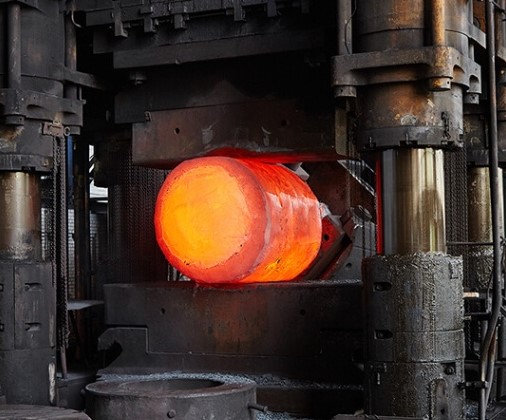
Steel forgings are core components in mechanical equipment, widely applied in critical sectors such as aerospace, automotive manufacturing, petrochemicals, and energy and power generation. Compared to ordinary castings or welded components, forgings possess higher strength, superior toughness, and longer service life. However, achieving these excellent properties is impossible without rigorous quality control throughout the entire production process.
A single non-compliant steel forging may lead to the failure of an entire machine or even cause serious safety accidents. Therefore, both manufacturers and purchasers must fully understand the key points of steel forging quality control. This article will provide a detailed explanation of the complete quality control process for steel forgings, from raw material procurement to final shipment, helping readers gain a comprehensive understanding of this specialized field.
The foundation of any high-quality steel forging lies in the quality of its raw materials. If the raw materials are problematic, no matter how advanced the subsequent processes are, producing a qualified product is extremely difficult. Therefore, raw material inspection is the first checkpoint in the quality control system and is one of the most critical stages.
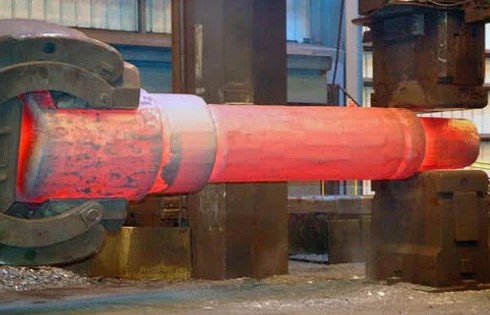
The first step in quality control starts with the raw materials. Excellent steel forging manufacturers only establish long-term cooperation with reliable suppliers capable of providing high-quality steel. When ordering materials, manufacturers request the supplier to provide a Material Test Certificate (MTC), which is a fundamental document proving that the materials meet the required standards.
However, having a certificate alone is not sufficient. Once the materials arrive at the factory, technical personnel conduct further inspections to ensure that the materials are genuine and reliable.
The chemical composition of steel directly determines its mechanical properties. Manufacturers use spectrometers to test the chemical composition of the raw materials, focusing on key elements:
- Carbon (C): Increases steel strength, but excessive amounts can cause brittleness.
- Manganese (Mn): Improves strength and hardness and enhances heat treatment performance.
- Sulfur (S): A harmful element that reduces toughness and can cause hot brittleness.
- Phosphorus (P): Another harmful element that can cause cold brittleness.
Through spectroscopic analysis, technical personnel can accurately determine the content of each element, ensuring that it falls within the specified range for the particular forging type. In addition, after forging, the semi-finished products are re-tested to confirm that the material composition has not changed during the forging process.
Besides chemical composition, the physical state of raw materials also requires strict examination. Inspectors carefully check the surface of the steel for cracks, scratches, inclusions, or other defects. Any steel showing obvious surface defects is rejected, as such defects can become weak points in the final forging, affecting product safety.
Once the raw materials pass inspection, the steel is officially sent to the forging stage. This stage is critical for transforming raw materials into forgings with specific shapes and properties. Precise control of temperature, pressure, and speed directly affects the internal structure and mechanical properties of the product.
The pre-forging stage is crucial before formal forging begins. This stage includes two key aspects:
- Material Selection: Selecting the most suitable steel grade according to the final product’s performance requirements and operating conditions. Different application scenarios require different levels of strength, toughness, and corrosion resistance. Improper material selection can directly affect product service life.
- Process Design: Through careful planning and computer simulation, potential issues are predicted and resolved before actual production. Advanced simulation software can analyze metal flow, mold filling, stress distribution, and other factors, optimizing process parameters and improving both efficiency and quality.
Forging temperature is a critical factor affecting forging quality. The optimal forging temperature range varies for different steel types:
- Too low: Steel deformation is insufficient, mold filling is incomplete, and internal defects are more likely to occur.
- Too high: Causes surface oxidation, coarse grains, and reduced material strength.
Modern forging workshops use thermocouples and infrared temperature sensors for real-time monitoring and automated systems to maintain temperatures within the optimal range.
The performance of forging equipment directly impacts product quality. Key equipment such as presses and hammer forging machines must undergo regular maintenance and calibration to ensure uniform and consistent force application. For example, a well-maintained friction press can produce forgings with uniform density and precise shape.
Additionally, forging speed and the number of impacts must be strictly controlled. A proper combination of speed and impact frequency can optimize the steel grain flow, significantly enhancing the mechanical properties of the forging.
Modern forging processes employ advanced sensors and automation systems for real-time monitoring. These technologies detect deviations from target parameters and allow immediate adjustments. Moreover, the professional skills of operators are critical. Experienced technicians can make informed decisions and respond to emergencies, ensuring smooth process execution.
Heat treatment is a core process for enhancing the mechanical properties of steel forgings, including annealing, quenching, and tempering. Key quality control aspects during this stage include:
During quenching, rapid cooling is required to achieve high hardness, but excessively fast cooling can create large internal stresses and cause cracking. Technical personnel select specific quenching media (such as water, oil, or polymer solutions) and precisely control immersion times to ensure appropriate cooling rates.
Heat treatment furnaces require regular calibration to maintain correct temperatures throughout the cycle. After heat treatment, parts are tested using Brinell or Rockwell hardness testers, with measurements taken at multiple points to ensure uniform hardness distribution.
For products with special performance requirements, tensile testing is also conducted. This destructive test measures tensile strength, yield strength, elongation, and reduction of area, comprehensively verifying material performance.
After forging and heat treatment, the forging generally achieves the required mechanical properties and internal structure. However, to ensure proper assembly into customer equipment and normal operation, dimensional accuracy must be strictly inspected. Dimensional deviations are a primary cause of assembly failure and product rejection, making this stage indispensable.
Dimensional inspection is one of the most important tasks for custom steel forgings. Any deviation in dimensions or tolerances can render a product unusable or cause assembly difficulties. Common manual inspection tools include:
- Calipers: Measure length, internal and external diameters.
- Depth gauges: Measure hole and slot depths.
- Dial indicators: Detect shape and positional errors.
- Bore micrometers: Accurately measure hole diameters.
- Height gauges: Measure height dimensions and flatness.
For higher accuracy requirements, Coordinate Measuring Machines (CMM) are used. CMMs can measure complex 3D dimensions with micron-level precision, detecting even the smallest deviations. However, due to their high cost, only a few large forging enterprises are equipped with such systems.
Many steel forgings are eventually assembled into mechanical equipment, making some dimensions or assembly conditions difficult to inspect directly. To ensure that products function correctly for customers, manufacturers develop specialized gauges or perform mock assembly tests. This method simulates actual usage conditions and can effectively identify potential interference or fit issues.
Even after dimensional inspection, the surface and internal quality of forgings must be strictly controlled. Even if dimensions are compliant, cracks, porosity, or other defects can cause serious problems during use, especially for high-load or safety-critical components. Defect detection is essential for ensuring reliability.
Common surface defects in steel forgings include poor trimming, cold shuts, dents, and other irregularities. Detection methods include:
- Visual inspection: 100% of forgings undergo surface inspection to identify obvious defects.
- Magnetic Particle Inspection (MPI): Suitable for ferromagnetic materials, effectively detects surface and near-surface defects. A magnetic field is applied, and magnetic particles accumulate at defect locations for identification. This method is costly and usually performed only at the customer’s request.
Internal quality is equally important for safety-critical or load-bearing steel forgings. Common inspection methods include:
- Ultrasonic Testing (UT): One of the most widely used nondestructive testing methods. Ultrasonic waves reflect differently in the presence of internal cracks or voids, enabling defect detection without damaging the part.
- X-ray Inspection: Visually reveals the shape and location of internal defects, suitable for comprehensive inspection of critical components.
- Sectioning: Cutting the product to inspect defects visually. This is the most direct method but destroys the part, typically used only for sampling or problem analysis.
After passing defect inspection, forgings enter the final machining and surface treatment stages. This stage aims to achieve precise final dimensions, improve surface quality, and provide necessary protective properties, making the parts ready for immediate use.
After forging and heat treatment, components undergo machining using precision equipment to achieve final dimensions and surface quality. CMMs are used during machining to ensure dimensional accuracy. Parts exceeding tolerance limits are reworked or scrapped.
Surface treatment includes coating, polishing, and plating, aiming to prevent corrosion and wear while improving appearance. Key quality control points include:
- Surface finish: Measured with surface roughness testers to meet customer requirements.
- Deburring: Checking and removing burrs generated during machining.
- Coating quality: Checking coating thickness, adhesion, and uniformity.
High-quality surface treatment not only improves appearance but also significantly reduces the risk of corrosion and wear during use, extending the service life of components.
The quality control of steel forgings is a systematic process covering every stage from raw material procurement to final shipment. Only by establishing a comprehensive quality control system, adopting advanced inspection technologies, and strictly following industry standards can truly reliable, durable, and high-quality forgings be produced.
For purchasers, understanding these quality control points helps evaluate supplier capabilities and select genuinely reliable partners. For manufacturing enterprises, continuously optimizing quality control processes is key to enhancing competitiveness and gaining customer trust.
Quality is the life of a product and the future of an enterprise. In the steel forging industry, this statement is particularly profound.
