
Lubricated vs. Non-Lubricated Plug Valves: How to Choose
Plug valves are a type of on-off valve used in pipeline systems and are widely applied in industrial flow control. This type of valve belongs to the category of quarter-turn valves and is usually chosen for applications requiring frequent operation. The core component of a plug valve is a tapered plug, which rotates inside the valve body to open, close, or regulate the flow.
According to the type of flow passage, plug valves can be divided into three types: conventional, venturi, and short-port. Different passage forms are suitable for different flow requirements and pressure conditions. At a more fundamental classification level, plug valves are mainly divided into two types: lubricated plug valves and non-lubricated plug valves. These two types differ significantly in working principle, structural composition, applicable scenarios, and maintenance requirements. The following sections provide a detailed introduction to each type.
What is a Non-Lubricated Plug Valve?
A non-lubricated plug valve is a type of valve that can operate normally without an external lubrication system. It reduces friction and achieves sealing through built-in non-metallic sleeves or self-lubricating materials. This type of valve has clear advantages in conditions where maintenance is limited or where lubricant contamination needs to be avoided. The following sections describe the structure, advantages and disadvantages, and applications of non-lubricated plug valves.
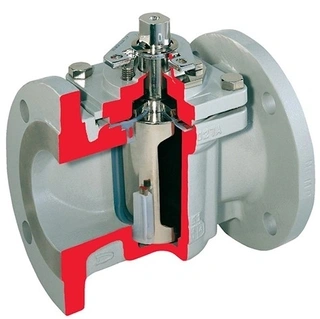
1. Structure and Principle of Non-Lubricated Plug Valves
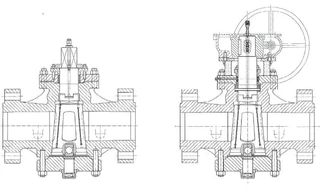
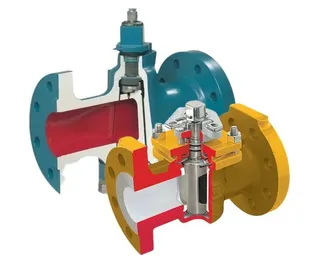
Non-lubricated plug valves are equipped with a liner or sleeve inside the valve cavity. The tapered plug presses the sleeve tightly against the inner wall of the valve body. This non-metallic sleeve reduces the friction between the plug and the body during operation. Similar to soft-seated ball valves, non-lubricated plug valves are limited by the properties of the non-metallic materials, mainly including temperature range and chemical compatibility.
These valves do not rely on torque to seal the seat for closure. The plug is polished, forming a smooth surface that fits closely with the sleeve, thereby achieving a reliable sealing effect.
2. Main Advantages of Non-Lubricated Plug Valves
Non-lubricated plug valves have multiple advantages. First, they have a small number of moving parts, which directly reduces the probability of mechanical failure. Second, maintenance costs are low, because the structure is simple and no external lubrication system is required, making daily maintenance minimal. Third, maintenance can be carried out while the valve is installed, without removing the valve from the pipeline. Fourth, the valve opens and closes quickly, with a quarter-turn operation completing full open or full close. Fifth, they offer low resistance to the flow of liquids, air, or gases, resulting in low pressure drop. Sixth, sealing performance is good, and the contact surface is designed to prevent debris accumulation. Seventh, sealing performance can be improved by injecting sealant, or performance can be restored by directly replacing the sleeve. Eighth, multiple passage design options are available to meet different flow control needs.
3. Disadvantages & Limitations of Non-Lubricated Plug Valves
Non-lubricated plug valves also have certain drawbacks. They require relatively large operating force, especially for large-diameter valves. For large specifications, actuators are usually needed to assist operation. The tapered plug structure reduces the passage area compared to the same pipe size, which causes a certain flow loss. In addition, under the same specification, non-lubricated plug valves are more expensive than ball valves.
In terms of temperature range, non-lubricated plug valves are limited by the material of the non-metallic sleeve. Under high-temperature conditions, the sleeve may soften or deform, affecting sealing performance. Under pressure conditions exceeding the material tolerance, performance may also decline.
4. Applications of Non-Lubricated Plug Valves
Non-lubricated plug valves are suitable for almost all types of media, specifically including:
- Gaseous media such as air, gas, and steam;
- Hydrocarbons in petroleum or natural gas pipelines;
- Slurries containing solids such as coal, ore, or mud;
- Impure fluids in wastewater treatment systems;
- Various pressure conditions from vacuum systems to high-pressure systems.
When it is necessary to minimize maintenance requirements, non-lubricated plug valves are a good alternative to lubricated plug valves. These valves are also suitable for special working conditions, such as corrosive media like sulfur and hydrogen fluoride. During switching, the valve cavity of a non-lubricated plug valve does not directly communicate with the fluid, avoiding issues of trapped or solidified fluid that could cause valve jamming.
About Lubricated Plug Valves
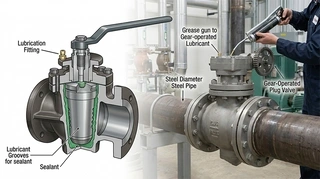
Lubricated plug valves rely on externally injected sealant to achieve lubrication and sealing. Through the lubrication system, a protective layer is formed between the plug and the valve body, reducing friction, preventing corrosion, and achieving reliable sealing. They perform well under high-pressure, high-temperature, and heavy-duty conditions. The following sections provide detailed information on structure, advantages, disadvantages, and applications.
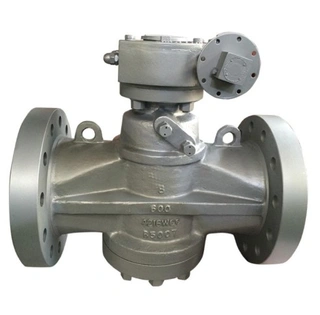
1. Structure and Principle of Lubricated Plug Valves
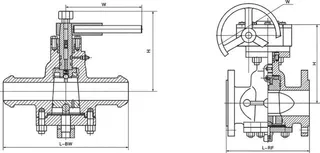
Lubricated plug valves have a closed structure in the central part of the valve cavity. The bottom of the valve body is closed, while the top is equipped with a sealant injection port, through which operators can inject sealant into the cavity. A check valve is installed below the injection port to prevent sealant backflow.
During operation, the sealant flows from the central cavity through radial holes into lubrication grooves on the contact surfaces between the plug and the valve body. The tapered plug and body cavity fit precisely, forming a wide sealing area. Lubricated plug valves usually adopt an inverted pressure-balanced design, which helps reduce operating torque.
Lubricated plug valves are typically of a reduced-bore design, meaning the plug bore is smaller than the pipeline diameter. For high-solid-content slurry applications, manufacturers may provide full-bore designs. Full-bore valves are more suitable than other types in high-solid slurry conditions but are significantly more expensive than reduced-bore valves and are usually not used for hydrocarbon service.
2. Main Advantages of Lubricated Plug Valves
Lubricated plug valves have multiple advantages. First, a renewable seal can be formed between the valve body and the plug, as the sealant fills any micro gaps. Second, internal leakage is minimized, ensuring reliable sealing performance. Third, metal surfaces are protected from corrosion by the sealant layer. Fourth, lubrication reduces operating force, making valve operation easier. Fifth, high-pressure lubrication prevents solid particles from entering the cavity, reducing wear. Sixth, sealing performance is superior under high-pressure and high-temperature conditions. Seventh, they are durable and can be used long-term under harsh conditions. Eighth, maintenance is relatively simple, requiring only regular lubrication according to schedule. Ninth, they are suitable for heavy-duty and large-diameter pipeline applications.
3. Disadvantages of Lubricated Plug Valves
The main disadvantage of lubricated plug valves is the risk of sealant contaminating the medium. If the sealant is washed away, it can contaminate the fluid and compromise the seal, leading to leakage. Lubricated plug valves also have more moving parts and a more complex structure compared to non-lubricated valves.
When using lubricated plug valves, the sealant must be chosen according to the medium. Sealants usually consist of base oil and thickening agents such as amorphous silica or fumed silica. Sealants must have the following properties: appropriate elasticity, solvent and chemical corrosion resistance, ability to form a tight seal under pressure, and corrosion protection. For high-temperature applications, sealants must have high-temperature resistance. Using the wrong sealant may result in fluid contamination or seal failure. Failure to perform planned lubrication can prevent the valve from opening or closing properly.
4. Applications of Lubricated Plug Valves
Lubricated plug valves are suitable for high-pressure conditions, particularly environments exceeding 2,500 psi (approximately 17,250 kPa). Applicable media include air, gas, acids, alkalis, water, steam, petroleum, and fuels.
In the oil and gas industry, lubricated plug valves are used for pipeline flow management, media isolation, and control. Their pressure resistance and corrosion protection make them the preferred valve type in this industry. These valves are widely applied in upstream polluted environments where fluid contamination is not a major concern.
In chemical plants, lubricated plug valves regulate corrosive chemicals, and their sealing performance and corrosion resistance ensure stable chemical production. In power plants, they are used for flow control in boilers, turbines, and cooling systems. In water treatment systems, lubricated plug valves regulate water and other fluids during filtration, purification, and distribution.
Lubricated plug valves are also widely used in natural gas pipelines, often as bypass valves, emission valves, or auxiliary valves in valve stations. For highly corrosive environments, manufacturers may provide valves made of special materials, such as duplex stainless steel or Inconel coatings.
Core Differences Between the Two Types
From the above descriptions, it is clear that lubricated and non-lubricated plug valves differ in several aspects. To help users make clearer selection decisions, the differences can be analyzed in terms of lubrication method, maintenance requirements, applicable conditions, cost, and contamination risk:
- Lubrication Method: Lubricated plug valves rely on externally injected sealant to achieve lubrication and sealing. The sealant is pumped between the plug and valve body, filling micro gaps and reducing direct metal contact. Non-lubricated plug valves reduce friction through polymer sleeves or elastic liners and require no external lubrication.
- Maintenance Requirements: Lubricated plug valves require regular sealant replenishment to maintain performance. Operators must establish a lubrication schedule according to manufacturer guidelines, flush the lubrication system to remove debris, and monitor valve operation, replacing worn or aged parts promptly. Non-lubricated plug valves require minimal maintenance, with no external lubrication needed, low contamination risk, and low long-term maintenance costs.
- Applicable Conditions: Lubricated plug valves are suitable for high-pressure, high-temperature conditions, especially above 2,500 psi. Non-lubricated plug valves have certain limitations in temperature and pressure ranges; self-lubricating materials may degrade or wear faster under extreme conditions.
- Cost: Lubricated plug valves are more expensive initially due to the added lubrication system. Non-lubricated plug valves are more economical and cost-effective for specific applications.
- Contamination Risk: Lubricated plug valves have a risk of sealant contaminating the medium. For sanitary applications or situations where sealant contamination is unacceptable, non-lubricated plug valves are more suitable. Non-lubricated plug valves operate without risk of fluid contamination and maintain cleaner operation.
Selection Recommendations
Understanding the differences above, actual valve selection must also consider specific operating conditions and project requirements. The following recommendations can be considered:
Engineers and procurement professionals should consider the following factors when selecting plug valves. For conditions requiring high sealing strength and durability, particularly in high-pressure, high-temperature environments, lubricated plug valves are suitable. For scenarios with limited maintenance capacity or restricted system downtime, non-lubricated plug valves are more appropriate. For sanitary applications or situations requiring avoidance of sealant contamination, non-lubricated plug valves should be prioritized. For high-solid-content slurry conditions, full-bore lubricated plug valves may be considered.
Choosing the wrong valve type may lead to high maintenance costs, reduced sealing performance, or premature valve failure. Understanding the differences between lubricated and non-lubricated plug valves helps industrial users balance performance, maintenance requirements, and cost, optimizing the efficiency and lifespan of pipeline systems. In upstream applications requiring dual-blocking and emissions where cleaning is not possible, dual isolation plug valves can be considered instead of two valves in series when space and weight are limiting factors.
Send your message to this supplier
Related Articles from the Supplier
Related Articles from China Manufacturers
Non-lubricated Plug Valve VS Lubricated Plug Valve
- Oct 19, 2021
Complete Guide to Lubricated Plug Valves
- Jul 31, 2024
A Complete Guide to Lubricated Plug Valves
- Apr 02, 2026
Related Products Mentioned in the Article

Zhejiang Kosen Valve Co., Ltd.
- https://www.kosenvalve.com/
- Business Type: Industry & Trading, Manufacturer,
Supplier Website
Source: https://www.kosenvalve.com/media-hub/lubricated-vs-non-lubricated-plug-valves-how-to-choose.html