
High-Temperature Faults in Diesel Generator Sets
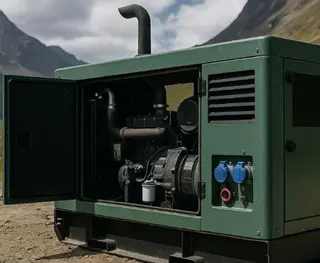
High-temperature abnormalities during the operation of diesel generator sets are one of the most common types of faults. If overheating problems are not investigated and handled in time, they may trigger more serious mechanical failures, such as cylinder scuffing, piston crown burning, and even knocking. For technicians, only by being familiar with the various causes of generator overheating can faults be eliminated more quickly during routine maintenance and operation, ensuring the normal operation of the equipment.
Diesel Generator Overheating Faults
Diesel generator overheating refers to a fault phenomenon in which the coolant temperature exceeds the normal range (usually 80–95°C) during operation. The hazards of overheating faults are multifaceted: first, overheating will damage the normal matching relationship between components, causing changes in fitting clearances; second, engine oil becomes thinner under overheating conditions, and its lubrication performance declines; furthermore, due to the deterioration of lubrication conditions, the wear rate of components will increase significantly, shortening the service life of the equipment.
It should be particularly pointed out that overheating faults in diesel generators may be caused by factors within the cooling system itself, or they may be the indirect result of problems in other systems. Therefore, troubleshooting must be comprehensive and should not be limited to the cooling system alone.
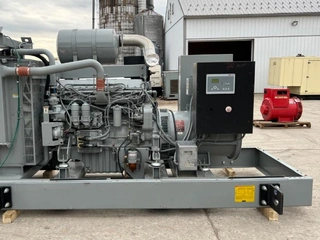
Overheating Causes by Cooling System
After understanding the basic concept and hazards of overheating faults, it is necessary to know that failures within the cooling system itself are the most direct cause of temperature rise in generator sets. The cooling system is like the human circulatory system, responsible for carrying away the heat generated by the engine in a timely manner. Once any link in this system fails, heat will accumulate inside the engine, and the temperature will naturally remain high. Below is a detailed analysis of common fault points in the cooling system.
1. Thermostat Failure
The thermostat is a key component that controls the small and large circulation of the cooling system. A properly functioning thermostat begins to open at about 85°C and is fully open at about 105°C. The method to determine whether the thermostat is working properly is simple: after the diesel generator starts operating, when the water tank temperature rises to the thermostat opening temperature (80–90°C), touch the upper and lower radiator tanks by hand. The temperature difference can be used to determine whether the thermostat has opened. If the temperature difference is too large, it indicates that the thermostat has not opened.
For further inspection, the thermostat can be removed and placed in hot water for heating to observe whether its opening temperature and maximum opening degree meet the specifications. Common thermostat faults include paraffin leakage leading to delayed valve opening, insufficient opening, or failure to open at all. In this case, antifreeze cannot enter the large circulation, and the diesel generator operating under such conditions will inevitably overheat.
2. Issues with Coolant Level
For engine units equipped with an expansion tank, there are level scale marks on the expansion tank. When filling antifreeze normally, the liquid level should be between the highest and lowest scale marks. It should be noted that after draining the cooling device and refilling antifreeze, some air will remain inside the system. When the thermostat opens, the trapped air will be completely expelled, and at this time the coolant level will drop. Therefore, it is necessary to check the liquid level again after the thermostat opens and replenish the coolant to the standard level in time.
3. Water Pump Failure
The water pump is the power source for coolant circulation. Corrosion and wear of the water pump impeller will greatly reduce its pumping capacity, decrease water circulation, and cause the coolant temperature of the diesel generator to become too high. Damage to the water pump itself, low rotational speed, excessive scale accumulation inside the pump body, and narrowed passages will all reduce coolant flow, decrease heat dissipation performance, and ultimately lead to increased oil temperature in the generator set.
4. Radiator Failure
If the radiator or intercooler fins are blocked by oil sludge or debris, it will directly impair the heat dissipation effect and cause excessive coolant temperature. If a large area of radiator fins collapses or if oil sludge and debris block the spaces between fins, heat dissipation will be hindered. In particular, when the surface of the water radiator is contaminated with engine oil, the mixture of dust and oil sludge has a lower thermal conductivity coefficient than scale, seriously obstructing heat dissipation.
During maintenance, thin steel sheets can be carefully used to straighten the fins and restore their flat shape, then compressed air or a water gun can be used for cleaning. Heating the water and adding cleaning agents before spraying will achieve better results. In addition, if the antifreeze used is unqualified or contaminated, it will also cause internal blockage of the radiator and affect heat dissipation performance.
5. Water Pipe Problems
The circulating water pipes in the circulation system may corrode over time, causing internal rubber to peel off and form throttling. Some hoses become soft after aging; when the diesel generator runs at high speed, the softened water pump inlet hose may collapse under suction, directly reducing the pump’s water delivery capacity and leading to insufficient heat dissipation.
6. Blockage of Expansion Tank Vent Pipes
There are two thin pipes on the top of the radiator expansion tank, one connected to the cylinder head return pipe and the other connected to the radiator upper chamber. If these two pipes are not unobstructed, air in the system cannot be discharged in time, resulting in excessive coolant temperature. In such cases, the pipelines should be inspected and cleaned, and the radiator replaced if necessary.
7. Fan System Failure
The fan is a key component for forced heat dissipation. If the fan belt is too loose, slipping will occur, causing the fan speed to be too low and weakening the air delivery effect. If the belt is found to be loose, it should be adjusted; if the rubber layer is aged or damaged, or if the fiber layer is broken, it should be replaced. When the fan blades are deformed, new blades of the same specification can be used for comparison to check whether the angle between the blades and the rotation plane has decreased. If the angle is too small, the air supply intensity will be insufficient.
Electronically controlled plunger oil pumps and electronic thermostatic fans are widely used at present. When such fans experience circuit faults or mechanical damage, they will also cause the diesel generator temperature to rise excessively. Therefore, it is necessary to regularly inspect the electrical system and mechanical components of the fan.
Overheating Caused by Engine Body Problems
- Poor cylinder liner sealing: Diesel generators often use wet cylinder liners. When the positioning shoulder of the liner is corroded, causing the liner height to fail to meet specifications, the sealing at the cylinder opening cannot be guaranteed. When high-pressure combustion gas from the combustion chamber leaks into the water jacket through the cylinder opening, the liquid level in the expansion tank will flow outward, increasing the radiator volume and causing overheating.
- Cylinder block cracks: Cracks in the cylinder liner, cylinder block, or cylinder head will allow high-pressure gas in the cylinder to leak into the water jacket; coolant may also enter the cylinder and crankcase through the cracks. In cases of severe leakage, the leakage location can be determined by removing the oil pan for observation. Minor cracks may require pressure testing and leak detection to identify.
- Burned cylinder head gasket: If the gasket is burned by high-temperature gas, high-pressure gas will rush into the cooling system, causing coolant to churn and boil. The method to determine whether the gasket is burned is: shut down the generator set, wait for a short period, then restart and increase the speed. If a large number of bubbles appear at the radiator filler neck and small water droplets are discharged from the exhaust pipe along with exhaust gas, it can be determined that the cylinder head gasket is damaged and must be replaced immediately.
Overheating Caused by Combustion System Problems
- Injector malfunction: Poor injector performance is an important cause of overheating. If the fuel injection advance angle is too early or too late, the contact area between high-temperature combustion gas and the cylinder wall increases and the duration is prolonged, increasing the heat transferred to the coolant and raising coolant temperature. At this time, it is often accompanied by decreased generator power and increased fuel consumption. If the injection pressure drops and atomization is poor, fuel will not burn completely, exhaust temperature will rise, and indirectly cause coolant temperature to increase. Therefore, the injector working condition must be inspected regularly, and faulty injectors should be replaced when necessary.
- Fuel quality problems: Low-quality fuel with excessive water or sulfur content will affect combustion efficiency and cause excessive temperature. The filter elements of the oil-water separator and fuel filter must be replaced regularly. Excessive water content in fuel is a major cause of premature wear of fuel pumps and injectors, indirectly affecting combustion conditions and engine temperature.
Overheating Caused by Improper Operation
- Overload operation: When the generator set operates under overload conditions, excessive fuel supply will generate more heat. When the generated heat exceeds the cooling capacity of the generator set, coolant temperature will rise. At this time, black smoke, increased fuel consumption, and abnormal noise are often observed. When the diesel generator power is seriously insufficient, it is equivalent to being in an overloaded state for a long time, and the temperature will inevitably be high. Therefore, when power decline is accompanied by overheating, the cause of insufficient power should be identified first. After maintenance and power restoration, the high-temperature issue is often resolved simultaneously.
- Long-term low-load operation: Long-term low-load operation or no-load idling should be avoided as much as possible. This working condition leads to incomplete combustion and increased carbon deposits, affecting heat dissipation and indirectly causing temperature rise.
- Improper coolant selection: Generator sets supporting engineering machinery generally operate at high temperatures. Filling antifreeze ensures a high boiling point and reduces scale formation in the cooling system. If air in the cooling system is not discharged or coolant is not replenished in time, cooling performance will decline and coolant temperature will rise.
Preventive Maintenance Measures
To prevent high-temperature faults in diesel generator sets, the following maintenance measures are recommended:
- Replace filters regularly: Replace engine oil and oil filter every 250 hours; replace air filter elements in time and perform regular maintenance.
- Inspect the intake system: Check engine intake pipelines to ensure there is no damage and ensure smooth air intake.
- Clean the radiator regularly: Use compressed air or a water gun to clean radiator fins regularly, keeping them clean and straight.
- Check belt tension: Regularly check fan belt tension, adjust if loose, and replace if aged or damaged.
- Use qualified coolant: Use antifreeze that meets standards and avoid using contaminated or unqualified coolant.
- Inspect the thermostat regularly: Check thermostat working condition according to the maintenance cycle to ensure its opening temperature and opening degree meet specifications.
- Avoid improper operation: Avoid long-term overload operation and avoid long-term low-load or no-load idling.
Summary of Troubleshooting Process
When a high-temperature alarm occurs in a diesel generator set, it is recommended to troubleshoot according to the following steps:
- Preliminary inspection: Check for coolant leakage and whether the engine oil level is reasonable.
- Check the heat dissipation system: Inspect whether the radiator and guide plates operate normally and whether fins are blocked or collapsed.
- Check the transmission system: Check whether the engine belt is properly tensioned and ensure belt cleanliness.
- Check the water pump: Inspect whether the water pump is operating normally and replace it in time if necessary.
- Check the thermostat: Inspect whether the thermostat opens normally and whether there is sticking or incomplete opening.
- Check the combustion system: Inspect injector working condition, fuel quality, and whether overload operation exists.
- Check sensors: Confirm whether the water temperature sensor and indicator gauge are functioning properly to eliminate the possibility of false alarms.
Conclusion
Through the above systematic inspection and maintenance, high-temperature faults in diesel generator sets can be effectively prevented and resolved, ensuring stable equipment operation, extending service life, and reducing maintenance costs. Technicians should be familiar with these fault causes and troubleshooting methods, apply them flexibly in practical work, and ensure that diesel generator sets are always maintained in good working condition.
Send your message to this supplier
Related Articles from the Supplier
Related Articles from China Manufacturers

Water-cooled High Temperature Forged Steel Valves
- Jan 06, 2021

High Temperature Carbon Steel tube
- Aug 04, 2023
Design Analysis of High Temperature Valves
- May 18, 2022

Pros and Cons of High Temperature Butterfly Valve
- Dec 28, 2020
High Temperature and High Pressure Gate Valve
- Jan 27, 2021
Valves for High Temperature Application
- Jun 05, 2023
Related Products Mentioned in the Article

Supplier Website
Source: https://genset-generator-suppliers.com/news/high-temperature-faults-in-diesel-generator-sets.html