
Diesel Generator vs. Natural Gas Generator: A Purchasing Guide
Reliable electricity is essential for commercial and industrial operations. When the grid fails, generators serve as the last line of defense to ensure business continuity. Among the wide variety of generator types, diesel generators and natural gas generators are the most common and widely used options on the market today.
These two types of generators differ significantly in fuel characteristics, operational efficiency, maintenance costs, service life, and emissions performance. For facility managers, understanding these differences and making a selection based on actual operational needs directly impacts long-term reliability and cost-effectiveness.
This article provides an in-depth comparison of diesel generator and natural gas generator from multiple perspectives, including fuel efficiency, load response, service life, maintenance requirements, initial investment, operational costs, and emissions compliance.
Detailed Overview of Diesel Generators
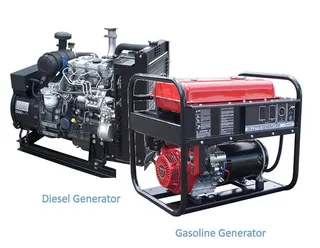
As a cornerstone of industrial backup power, diesel generators are highly valued for their reliable load response and long service life. The following sections analyze diesel generators across seven dimensions: operating principle and core features, fuel efficiency, service life, maintenance requirements, load response capability, emissions performance, and fuel costs.
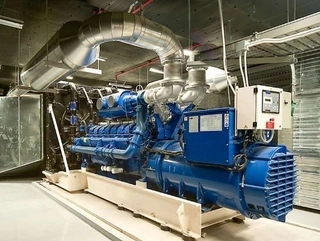
1. Principle and Features of Diesel Generator
Diesel generators operate using compression ignition. Diesel fuel is injected into the cylinder, where it self-ignites under high pressure and temperature, driving the piston to produce mechanical energy, which is then converted to electricity. This ignition process does not require spark plugs, resulting in a relatively simple structure.
Diesel generators excel under high load and critical applications. The diesel engine provides strong torque and reliable load response, enabling rapid reaction to large power demands, such as starting cooling systems or sudden increases in production line load.
2. Fuel Efficiency of Diesel Generator
Diesel fuel is one of the highest energy-density fuels available. It contains more usable energy per unit volume than gasoline, propane, or natural gas, meaning a diesel generator consumes less fuel to produce the same amount of electricity.
From a fuel conversion perspective, diesel generators perform best under high-load conditions. When operating at 70–85% of rated load, diesel engines achieve optimal fuel efficiency. This is why diesel generators are often preferred for industrial applications requiring long-term, high-load operation.
3. Service Life of Diesel Generator
Diesel engines are composed of mechanically simpler parts that operate at slower speeds, reducing friction and wear compared to gas engines. As a result, diesel generators typically have a much longer lifespan.
For reference, consumer-grade air-cooled natural gas generators often last 250–1,000 hours, while diesel generators generally operate for 20,000–80,000 hours. This difference is critical for facilities requiring frequent or continuous operation.
4. Maintenance Requirements for Diesel Generator
Diesel fuel also serves as a lubricant for the engine’s internal components, reducing wear. In contrast, gasoline, propane, and natural gas act as solvents that can dissolve oils and accelerate component wear.
Maintenance intervals also differ significantly. Many gas generators require an oil change every 100 hours, whereas diesel generators only need one every 500 hours. Consequently, diesel generators require less frequent maintenance, saving labor and consumables costs.
5. Diesel Generator Load Response Capability
Diesel generators respond quickly to sudden load increases, which is essential in applications with unexpected high-power demands. Hospitals, data center cooling systems, and large industrial motors all experience significant load shocks. Diesel engines can rapidly increase output to prevent voltage drops or equipment shutdowns.
6. Emissions Performance of Diesel Generator
Traditional diesel generators, especially Tier 2 units, have relatively high emissions. Modern Tier 4 Final diesel generators, however, use advanced exhaust after-treatment systems to significantly reduce nitrogen oxides and particulate emissions.
Additionally, diesel generators can use renewable diesel fuels like HVO (hydrotreated vegetable oil), derived from plant oils, animal fats, tallow, or waste cooking oils. HVO can reduce lifecycle CO₂ emissions by up to 90% without equipment modification.
7. Fuel Costs of Diesel Generator
Off-road diesel, used for generators and vehicles, enjoys a tax exemption and is marked with red dye for identification. While chemically similar to regular diesel, it is cheaper—saving approximately $0.25 per gallon.
Commercial diesel generators, however, cannot connect to continuous fuel pipelines and require on-site fuel delivery from suppliers. This necessitates fuel storage tanks and careful inventory management.
A Detailed Introduction to Natural Gas Generators
Compared with diesel generators, natural gas generators offer unique advantages in fuel availability and emissions performance. The following sections cover operating principle and core features, fuel efficiency, service life, maintenance requirements, load response, emissions performance, and fuel costs.
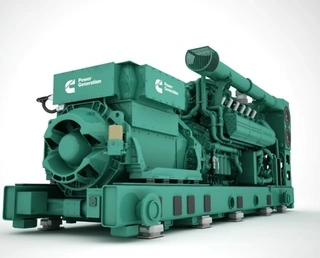
1. Principle and Features of Natural Gas Generator
Natural gas generators rely on spark ignition to ignite a mixture of natural gas and air, driving the piston to produce electricity. Unlike diesel engines, natural gas engines require an external ignition system, resulting in a slightly more complex design.
Natural gas generators excel in microgrid and continuous operation scenarios due to fuel stability and availability. With predictable load and a stable pipeline supply, natural gas units can operate continuously without frequent refueling.
2. Natural Gas Generator Fuel Efficiency
Natural gas has a lower energy density than diesel, meaning more fuel volume is required to produce the same electricity. However, natural gas combustion is more consistent under steady-state operation, maintaining stable thermal efficiency.
Natural gas generators experience smaller efficiency drops under partial load compared with diesel. This can provide an advantage in applications with fluctuating loads.
3. Service Life of Natural Gas Generator
As mentioned, air-cooled natural gas home generators last 250–1,000 hours. Industrial natural gas units have significantly longer lifespans, but still generally fall short of diesel generators.
High combustion temperatures and the lack of lubricating properties in natural gas accelerate internal wear, which explains the shorter service life.
4. Maintenance Requirements for Natural Gas Generator
Natural gas generators require oil changes every 100 hours—five times more frequently than diesel units. Additionally, spark plugs, ignition coils, and related components need regular inspection and replacement, increasing maintenance costs and downtime.
5. Natural Gas Generator Load Response Capability
Natural gas generators respond slower to sudden load increases due to slower combustion and intake system delays. This is less critical in predictable, steady-load applications but must be considered for high-power shock scenarios.
6. Emissions Performance of Natural Gas Generator
Natural gas combustion produces fewer greenhouse gases than diesel. Per million BTUs, natural gas emits 116.65 lbs of CO₂, compared to 163.45 lbs for diesel. Particulate matter is nearly negligible, and NOx emissions are much lower than untreated diesel engines.
Natural gas generators also tend to operate more quietly, making them suitable for installations near residential or commercial areas, although actual noise levels depend on the model, enclosure, and exhaust system.
7. Fuel Costs of Natural Gas Generator
Natural gas generators can utilize municipal gas pipelines, eliminating the need for on-site fuel storage. However, backup units often require high-flow gas meters costing around $1,000 on average, depending on local rates. Pipeline connections and proximity to the distribution panel may require additional construction.
Historically, diesel prices are higher than natural gas. In early 2024, the average US natural gas price was $2.95 per GGE, while diesel averaged $3.94 per gallon. Although natural gas units generally have 50% higher upfront costs than comparable diesel units, long-term fuel savings can offset the difference.
Direct Comparison: Diesel vs. Natural Gas Generators
After understanding the characteristics of each type, it is essential to compare them across six dimensions: fuel supply, initial investment, operating costs, reliability, emissions compliance, and efficiency related to size selection.
1. Fuel Supply
Diesel generators require on-site storage tanks and deliveries. This method suits remote locations without gas pipeline access but requires space and inventory management.
Natural gas generators connect to municipal pipelines, providing near-unlimited supply. However, pipeline damage from natural disasters could disrupt fuel availability, necessitating emergency on-site reserves.
2. Initial Investment
Natural gas generators typically cost 50% more upfront due to precision combustion controls and ignition systems. Additional expenses may include gas meter upgrades and pipeline installation, which should be factored into project budgets.
3. Operating Costs
Fuel costs favor natural gas due to lower prices, potentially reducing long-term operational expenses. Diesel generators, with lower maintenance frequency and longer component life, enjoy reduced upkeep costs compared to gas units requiring frequent oil changes and spark system maintenance.
4. Reliability
Diesel generators generally outperform industrial gas units in reliability, especially under frequent use. Advantages include simpler structure, better lubrication, and mature manufacturing technology. Diesel engines also perform better under harsh conditions, including low-temperature starts and high-humidity environments.
5. Emissions Compliance
Natural gas generators produce lower CO₂ and particulate emissions, making them favorable in areas with strict environmental regulations. Tier 4 Final diesel units with after-treatment can approach similar cleanliness but at the cost of added complexity and maintenance.
6. Size Selection and Efficiency
Correct sizing is crucial for both diesel and natural gas units. Oversized generators operating at low loads suffer efficiency losses, and for diesel engines, prolonged low-load operation can cause wet exhaust or carbon buildup. Undersized units require continuous high-load operation, increasing wear and failure risk. Selecting a generator based on actual load profiles ensures optimal efficiency.
Application Guidelines
Different generator types are suitable for specific scenarios. Understanding when to choose diesel versus natural gas involves evaluating multiple factors.
1. When Diesel is Preferred
Applications requiring rapid response to frequent load changes (e.g., industrial production lines, large motor startups).
Facilities operating long hours annually, needing lifespans exceeding 20,000 hours.
Remote locations without gas pipeline access.
Limited maintenance personnel seeking lower upkeep.
Facilities prepared to manage on-site fuel storage safely.
2. When Natural Gas is Preferred
Steady, predictable continuous loads.
Facilities in areas with strict environmental regulations.
Limited space precluding large fuel storage tanks.
Natural gas costs consistently below diesel, with high utilization to recover initial investment.
High noise-control requirements favoring quieter operation.
3. Other Considerations
Fuel supply reliability, including pipeline history and natural disaster risks.
Utility policies, including gas meter upgrade subsidies.
Emissions regulations and permit requirements.
Long-term planning for 5–10 years of load growth and operational pattern changes.
System Integration and Operations Management
Once a generator type is chosen, proper integration and operational management are critical. Consider generator roles in microgrids, benefits of hybrid power systems, and operational best practices.
1. Generator Role in Power Systems
In microgrids, generators are part of a larger system. Smart control systems optimize runtime, startup sequence, and load distribution, keeping each unit at its most efficient operating point.
2. Advantages of Hybrid Systems
Hybrid systems with UPS or energy storage smooth load fluctuations, preventing generators from chasing every peak. This improves overall efficiency and extends generator lifespan.
3. Operational Best Practices
Regular preventive maintenance ensures long-term efficient operation. Tasks include inspections, filter replacements, oil quality checks, and exhaust treatment system checks. Operational teams should perform load testing, automatic transfer switch drills, and analyze load data to optimize performance. Without disciplined maintenance, even the best generator can become an inefficient, noisy liability.
Conclusion and Recommendations
Diesel and natural gas generators each have advantages and disadvantages. The key is matching the choice to facility needs.
Diesel generators excel in load response, service life, maintenance frequency, and reliability, ideal for facilities facing frequent load shocks, long operational hours, or remote locations.
Natural gas generators offer superior emissions performance, convenient fuel supply, and lower fuel costs, suitable for steady loads, environmentally sensitive locations, or sites with pipeline access.
Before making a final decision, facility managers should:
- Plot actual load curves, identifying peaks, troughs, and seasonal variations.
- Evaluate fuel supply stability and costs.
- Consider local energy regulations.
- Design control and integration schemes.
- Assess maintenance capabilities to support desired reliability levels.
Only a well-designed, professionally managed generator system can ensure efficiency and uninterrupted power during grid failures or load fluctuations.
Send your message to this supplier
Related Articles from the Supplier


Related Articles from China Manufacturers

Related Products Mentioned in the Article

Supplier Website
Source: https://genset-generator-suppliers.com/news/diesel-generator-vs-natural-gas-generator-a-purchasing-guide.html