
Diesel Generator Set Power Ratings and De-rating
Diesel generator sets are core equipment for industrial production and emergency power supply. Their power parameters directly influence equipment selection and operational performance. However, many users focus only on the generator's rated power during procurement and operation while overlooking the significant impact of power categories and operating environments on actual output. This article systematically explains power rating standards, classification systems, and environmental derating methods for diesel generator sets, helping you make informed purchasing decisions and ensure safe, stable operation.
What Is Rated Power for a Diesel Generator Set?
Rated power refers to the output a diesel generator set can deliver continuously for 12 hours under standard environmental conditions. These conditions are typically defined as:
- Atmospheric pressure: 100 kPa (sea level)
- Relative humidity: 30%
- Ambient temperature: 25°C
During the 12-hour continuous operation period, the generator is allowed to operate at up to 10% overload for one hour.
It is important to note that when a generator must operate continuously for more than 12 hours, its electrical output should be reduced to 90% of the diesel engine's rated power. This requirement stems from the cumulative mechanical and thermal loads associated with prolonged operation; appropriate derating helps protect the equipment.
Diesel generator power ratings follow strict international standards, most commonly ISO 3046-1, which specifies baseline conditions of 25°C ambient temperature, 100 kPa atmospheric pressure, and 30% relative humidity. In China, the GB/T 2820-2009 standard is widely referenced, with nearly identical baseline conditions: 25°C ambient temperature, 0 meters altitude, 30% relative humidity, and intake resistance not exceeding 1 kPa.
These standards provide a reliable and comparable benchmark for generator performance worldwide. Regardless of where the equipment is purchased, using the same rating standard allows accurate performance comparisons and selection calculations.
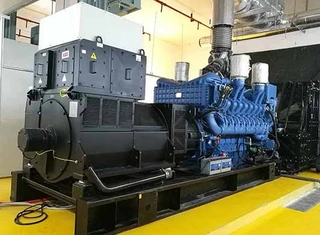
Four Power Categories of Diesel Generator Sets
National standards require manufacturers to indicate the power category on the product nameplate using specialized codes such as COP, PRP, LTP, or ESP. The same generator can have significantly different rating values depending on the category. Users must carefully identify these markings to avoid costly selection errors.
1. Continuous Operating Power (COP)
Continuous Operating Power (COP) is the maximum power a generator can supply continuously to a constant load for an unlimited number of operating hours per year, provided maintenance is performed according to the manufacturer's recommendations.
Constant load refers to scenarios with minimal load variation (typically within ±5%). Typical applications include:
- Base power supply in remote areas
- Offshore platforms
- Mining sites with stable long-term demand
Choosing a generator rated for COP means it can operate 24/7 without time restrictions.
2. Prime Rated Power (PRP)
Prime Rated Power (PRP) is the maximum power a generator can deliver continuously to a variable load for unlimited annual operating hours under agreed conditions and proper maintenance.
The key distinction from COP is the variable load capability. PRP is suitable for environments with fluctuating electricity demand, such as construction sites and manufacturing facilities.
Although annual operating hours are unrestricted, the average load over a 24-hour period typically should not exceed 70% of the PRP rating, unless otherwise specified by the manufacturer.
3. Limited-Time Running Power (LTP)
Limited-Time Running Power (LTP) refers to the maximum power a generator can provide for up to 500 hours per year under agreed operating conditions and proper maintenance.
According to national standards, operation at 100% LTP must not exceed 500 hours annually.
LTP is ideal for seasonal or temporary power demands, such as:
- Agricultural irrigation seasons
- Short-term engineering projects
These units are generally more affordable but must never be operated beyond the permitted time. If annual usage is expected to exceed 500 hours, a PRP or COP-rated generator should be selected instead.
4. Emergency Standby Power (ESP)
Emergency Standby Power (ESP) is the maximum power available during utility outages or testing conditions, allowing operation for up to 200 hours per year within a variable load profile.
Key limitations include:
- Annual operation must not exceed 200 hours
- Average output over a 24-hour cycle should not exceed 70% of ESP, unless otherwise approved by the engine manufacturer
ESP generators are primarily used for critical facilities such as hospitals, data centers, and telecommunications base stations. They remain on standby and start immediately when grid power is interrupted.
Scientific Selection of the Power Matching Ratio
- Definition and Function: The matching ratio refers to the ratio between the diesel engine's rated power Pe (kW) and the generator's output power PH (kW), expressed as K. This ratio directly affects operational reliability and service life. It is influenced by atmospheric pressure, relative humidity, ambient temperature, and other environmental factors. A properly selected ratio ensures the engine neither operates under overload nor wastes resources.
- Practical Values: For generator sets used in low-altitude regions, the matching ratio K typically ranges from 1.35 to 1.6. For example, if the generator output is 100 kW, the supporting diesel engine should be rated between 135 kW and 160 kW. For high-reliability applications such as data centers and hospitals, K = 2 is recommended. A higher ratio provides greater power reserve, improves reliability during sudden load impacts, reduces mechanical and thermal stress, and extends equipment life.
Significant Impact of Environmental Factors on Power Output
Generator performance is closely tied to the operating environment. When installation conditions deviate from standard parameters, particularly altitude, temperature, or humidity, the actual output power can change dramatically.
Ignoring these factors and selecting equipment based solely on rated power often leads to overload, frequent failures, and premature retirement.
1. Altitude Effects
Above 1,000 meters, thinner air produces two major consequences:
- Reduced cooling efficiency: Less dense air removes heat less effectively.
- Poor combustion: Insufficient intake air prevents complete fuel combustion.
Generators operating at high altitude must therefore be derated to prevent overheating. If the load exceeds the corrected rating, the engine may emit heavy black smoke and experience severe thermal stress, potentially leading to major failures.
For every 1,000-meter increase in altitude, oxygen content drops by about 10%, significantly reducing combustion efficiency. Field data suggests a power reduction of approximately 2%–4% for every 500 meters.
Example:
A turbocharged generator rated at 500 kW operating at 3,000 meters would have an available power of:
500 kW × (1 − 3% × 6) = 410 kW
2. Dual Impact of Ambient Temperature
High temperatures affect generators in two ways:
Lower combustion efficiency: Reduced air density decreases oxygen supply.
Weaker cooling: Hot air diminishes the cooling effect on windings, raising internal temperatures.
To keep winding temperatures within allowable limits, output power must be reduced.
For every 5°C increase, power typically drops by 1%–3%, with turbocharged engines being particularly sensitive.
Conversely, at temperatures below −20°C, cold-start resistance increases. However, once running normally, power may slightly exceed rated values due to higher air density.
3. Hidden Influence of Relative Humidity
High humidity lowers oxygen concentration. Although water vapor is a gas, it contains no oxygen. Excess moisture occupies intake space, reducing the oxygen available for combustion.
When relative humidity exceeds 60%, every additional 10% increase typically reduces power by 0.5%–1%.
In tropical rainforest environments (humidity above 90% and temperatures around 35°C), the combined correction factor may fall to 0.85, meaning a generator rated at 100 kW may effectively deliver only 85 kW.
The Core Purpose of Power Derating
Power correction addresses the gap between rated power and actual usable output. When environmental parameters exceed standard limits, correction factors must be applied to prevent overload and premature equipment failure.
Operating generators at rated power in high-altitude or high-temperature regions without derating can cause severe consequences, including:
- Excessive exhaust temperatures that may destroy turbochargers
- Engine knocking leading to piston ring failure
- Overheated generator windings and insulation breakdown
Practical Applications of Power Correction
- Data Center UPS Configuration: Loads should be selected based on corrected available power to avoid insufficient supply or wasted capacity. For example, at 2,000 meters where corrected power is 85% of the nominal value, a 500 kW generator can support only 425 kW, and UPS capacity should be configured accordingly.
- Strategic Load Reduction: Even after calculating corrected power, operating at about 80% of the corrected value is recommended. This strategy reduces carbon buildup, lowers mechanical stress, extends overhaul intervals, and improves overall economic efficiency.
- Contractual and Legal Protection: Sales contracts should clearly specify corrected power values to avoid disputes over “inflated ratings.” Insurance claims may be denied if damage results from operating without proper derating, making documented correction criteria essential for protecting both parties.
Conclusion
Power rating and derating of diesel generator sets involve specialized knowledge spanning thermodynamics, fluid mechanics, and mechanical engineering. Understanding the differences among Continuous Operating Power, Prime Rated Power, Limited-Time Running Power, and Emergency Standby Power, and recognizing how altitude, temperature, and humidity affect output, is fundamental to ensuring safe, reliable, and economical generator operation.
Whether for continuous industrial supply or emergency backup, only by performing accurate power corrections based on real environmental conditions and selecting an appropriate power reserve can users maximize equipment lifespan and investment value. It is strongly recommended that users consult professional technicians during procurement and operation to obtain detailed environmental correction data and develop scientifically grounded operation and maintenance strategies.
Send your message to this supplier
Related Articles from the Supplier
Diesel Generator Set Power Ratings and De-rating
- Feb 05, 2026

Diesel Generator Set Centerline Alignment
- Nov 21, 2025
Complete Guide to Diesel Generator Set Installation
- Mar 25, 2026
Guide to Diesel Generator Set Starting System
- Dec 20, 2025
How a Diesel Generator Set Produces Electricity
- Mar 09, 2026
Related Articles from China Manufacturers
Analysis of Diesel Generator Set Power Insufficiency
- Apr 02, 2025
Diesel Generator Set Lifespan and Maintenance Guide
- Mar 25, 2025
Why Diesel Generator Set Fails to Start?
- Nov 06, 2025
Guide to Diesel Generator Set Startup & Shutdown
- Mar 22, 2025
Related Products Mentioned in the Article

Supplier Website
Source: https://genset-generator-suppliers.com/news/diesel-generator-set-power-ratings-and-de-rating.html