Magnesium Alloy Die Casting: Key in Automotive Lightweighting
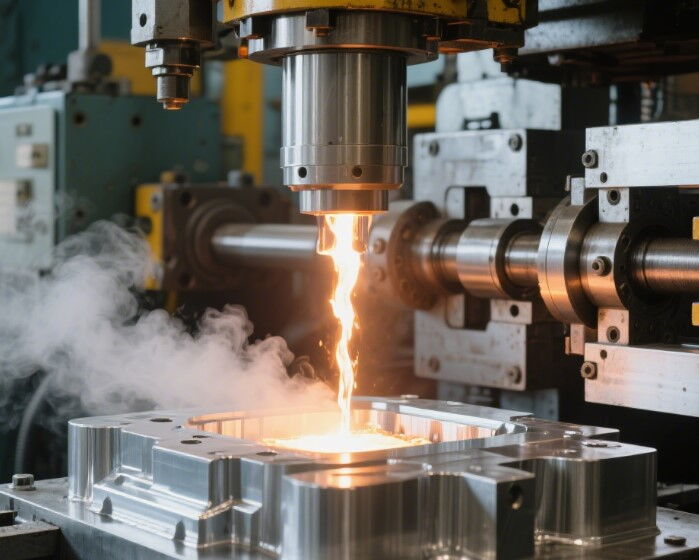
In today's rapidly evolving automotive industry, vehicle lightweighting has emerged as a major trend. As an advanced manufacturing process, magnesium alloy die casting has attracted wide attention and application in the automotive sector due to its multiple advantages. This article provides an in-depth exploration of the characteristics, applications, research progress, and related technologies of magnesium alloy die casting, offering readers a comprehensive understanding of this field.
Magnesium alloy die casting integrates design, manufacturing, and research into a systematic process. Compared with zinc and aluminum alloy die casting, magnesium alloy die casting requires more extensive knowledge, experience, and development capabilities. In automotive manufacturing, magnesium alloy castings offer remarkable benefits in the following aspects.
Magnesium alloys used in automobiles are primarily die-cast products. Incorporating magnesium die-cast components can significantly reduce vehicle weight, thereby lowering fuel consumption and exhaust emissions. This is particularly appealing to automakers, as weight reduction is one of the most effective ways to enhance fuel economy and reduce emissions in the face of increasingly stringent environmental regulations worldwide.
Magnesium alloy castings possess excellent noise and vibration damping properties, crucial for improving vehicle comfort. Additionally, they deliver high dimensional accuracy, meeting the strict precision requirements of automotive parts. These features make magnesium alloy castings highly promising for future automotive applications.
With a density of less than 2 g/cm³, magnesium alloy is the lightest structural metal material available. It has a higher specific strength than aluminum alloy and steel, slightly lower than that of the highest-strength fiber-reinforced plastics. Its specific stiffness is comparable to aluminum alloy and steel but far exceeds fiber-reinforced plastics. Magnesium alloys also offer much better corrosion resistance than low-carbon steel, surpassing that of A380 aluminum alloy, and exhibit superior damping and electromagnetic shielding properties compared to aluminum alloys.
Due to its low viscosity, magnesium alloy has a higher filling speed under the same fluid conditions than aluminum alloy. It also has a lower melting point, specific heat, and latent heat of phase transformation, resulting in lower melting energy consumption, faster solidification, and up to 50% shorter die casting cycles. Furthermore, magnesium alloys have low affinity for iron, reducing die sticking and increasing mold life by 2–3 times compared to aluminum alloy casting. These attributes provide significant overall economic advantages.
The application of magnesium alloy die-cast parts in automobile manufacturing is becoming increasingly widespread. The commonly used die-cast magnesium alloys are mostly American grades AZ91, AM60, AM50, AM20, AS41, and AE42, which belong to the four major series of MG-AL-ZN, MG-AL-MN, MG-AL-SI, and MG-AL-RE. The applications of these magnesium alloys in automobile manufacturing are mainly reflected in the following aspects:
The application of magnesium alloy die-cast parts in automobile engine components is growing. For example, the Volkswagen BEETLE engine crankcase previously used AS41 and AS42, but recently an improved alloy, AE42, has been adopted for its better creep resistance at high temperatures. These magnesium alloy die-cast parts not only reduce the weight of the engine components but also enhance the performance and reliability of the engine.
The application of magnesium alloy die-cast parts in automobile safety components is also of great importance. AM60 and AM50 are widely used in safety components such as dashboard brackets, steering wheel shafts, and seats, while AM20 is currently applied to the backrest frames of seats. These magnesium alloy die-cast parts not only possess good mechanical properties but also contribute to the safety of automobiles.
The application of magnesium alloy die-cast parts in automobile body components is also on the rise. For example, magnesium alloy car wheels and steering wheel parts have been successfully produced using the vacuum die-casting method. These magnesium alloy die-cast parts not only reduce the weight of the body components but also increase the strength and stiffness of the body.
With the continuous advancement of the automotive industry, the performance requirements for magnesium die castings are rising. Research has focused on.
AZ and AM series alloys account for 90% of automotive magnesium die castings, but their strength drops sharply above 150°C. To meet high-temperature demands, AS-series alloys with creep resistance above 150°C have been developed, such as AS41A, which outperforms AZ91D and AM60B at 175°C. Rare earth elements (Y, Nd, Sr) also refine grains and enhance creep resistance. AE42, for example, can operate at 200–250°C long-term. However, AS and AE alloys have inferior castability and higher production costs due to expensive rare earth elements, limiting their widespread use.
To improve fracture toughness, researchers have reduced aluminum content in alloys. Alloys such as AM60, AM50, and AM20 are widely used in safety-critical components. Elongation at break increases with temperature, especially above 50°C.
Magnesium's high chemical reactivity has limited its applications. High-purity alloys (e.g., AZ91D) and rare-earth-containing alloys (e.g., AE42) have demonstrated corrosion resistance surpassing A380 aluminum alloy and low-carbon steel. Improvements can also be achieved through composition control, surface treatment, and microstructure optimization. However, material-level solutions remain essential for large-scale adoption.
Adding Al (2.5%), Be (0.0005–0.03%), or Ca-containing alloys can effectively reduce oxidation of molten magnesium. Research into flame-retardant magnesium alloys aims to make their melting and casting as safe and convenient as aluminum alloys, unlocking broader applications.
SiC-particle-reinforced magnesium composites have been studied for years. While not yet commercially viable for die casting, they have been produced via sand casting and investment casting for parts like impellers, bicycle cranks, and cylinder liners, with future potential in semi-solid casting and extrusion.
High-quality magnesium alloy die castings depend on advanced technologies and equipment. Both cold-chamber and hot-chamber die casting machines can be used.
Improvements in hot-chamber machines include accumulator-assisted high-speed injection (up to 6 m/s), induction-heated goosenecks and nozzles, dual-furnace melting with thermal insulation, and precise molten metal temperature control. Cold-chamber machines require modifications for magnesium, such as higher injection speeds (6–10 m/s), shorter pressure build-up times, increased injection force, and electromagnetic dosing systems to prevent oxidation.
Key specialized technologies include:
This process removes air from the mold cavity, reducing porosity and dissolved gases, improving mechanical properties and surface quality. For example, AM60B wheels and steering wheels produced via vacuum die casting show elongation increases from 8% to 16%.
By filling the cavity with oxygen or reactive gas before casting, trapped air is replaced, and in-situ metal oxides form, eliminating porosity and enabling heat treatment. This process has been applied to automotive wheels, reducing weight by 15% compared to aluminum wheels.
This process injects semi-solid magnesium slurry into the die under pressure, similar to injection molding. It uses pre-made non-dendritic magnesium pellets heated to a semi-solid state before injection. This method represents a promising direction for magnesium casting production.
Mold design is crucial for high-quality magnesium castings and differs significantly from aluminum die casting due to magnesium's unique properties. Magnesium alloys have a greater tendency to oxidize and hot crack, requiring precise temperature control during melting, pouring, and casting. Their lower heat capacity and latent heat also mean that premature solidification in thin sections can block feeding channels and cause defects.
Key considerations include:
Machine Selection: Hot-chamber machines are suited for small, thin-walled parts (<1 kg), while cold-chamber machines are recommended for larger components.
Process Parameters: Injection speed for magnesium is about 30% higher than aluminum (often exceeding 10 m/s). Magnesium's flow characteristics are highly sensitive to mold and pouring temperatures, requiring precise control to avoid defects.
Magnesium alloy die casting combines lightweighting, structural performance, and production efficiency, making it a cornerstone technology for the next generation of vehicles. Its benefits, from weight reduction and fuel savings to superior damping, precision, and cost effectiveness, align perfectly with the automotive industry's goals of sustainability and performance.
Ongoing research into high-temperature alloys, improved fracture toughness, corrosion resistance, flame retardancy, and composite materials will further expand magnesium's applications. Coupled with advancements in vacuum casting, oxygen-charged processes, and semi-solid forming, the production of magnesium automotive components will continue to grow.
In the coming years, magnesium alloy die casting is expected to move beyond niche applications into more structural and safety-critical roles, reinforcing its position as both a key material and a key technology in achieving automotive lightweighting.
