
How to Choose the Right Storage Tank Level Gauge
In industrial production, agricultural storage, and energy supply systems, storage tanks are essential facilities for holding liquid materials. Whether storing fuel, chemical feedstocks, or water resources, accurately knowing the volume of liquid inside a storage tank is a fundamental requirement for daily operation and management. However, because storage tanks are typically large, enclosed containers, their internal liquid levels cannot be directly observed. This makes the selection of appropriate measurement tools and methods especially important.
This article systematically introduces the working principles and practical applications of storage tank level gauges from the perspectives of safety, measurement accuracy, device types, and selection criteria, helping readers choose the most suitable level measurement solution based on specific needs.
Why Accurate Storage Tank Level Measurement Is Necessary?
In industrial production and storage operations, storage tanks are critical equipment used to store raw materials or finished products. Once a new storage tank is installed, one of the first operational challenges is determining how much liquid is actually inside. While this may seem simple, obtaining an accurate answer is not always straightforward in practice.
Measuring the flow of liquid entering or leaving a storage tank is relatively easy, as a flow meter can be installed directly on the pipeline. However, measuring the current remaining volume inside the storage tank is far more complex. This is because storage tanks are closed large vessels where liquid levels continuously change due to filling and withdrawal operations, and are also influenced by temperature variations, changes in liquid density, and pressure fluctuations inside the storage tank. Therefore, selecting a proper level measurement method and monitoring device is essential for ensuring safe operation and continuous production.
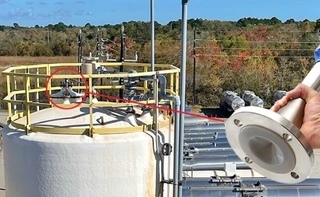
1. Safety as the Primary Consideration
Safety is always the top priority in any storage tank system. If the stored liquid is flammable or toxic, certain measurement methods may not be suitable. For example, some electronic sensors may generate tiny sparks under extreme conditions, which can pose serious risks in environments containing combustible gases. In addition, mechanical systems that require large openings in the storage tank wall may become potential leakage points, increasing the risk of hazardous fluid release.
Therefore, when selecting a storage tank level gauge, it is necessary to strictly follow the manufacturer’s technical specifications, including explosion-proof ratings, sealing performance, and material compatibility. For storage tanks containing hazardous chemicals, it is generally recommended to choose devices that require minimal storage tank openings and have certified explosion-proof designs, as this significantly reduces safety risks.
2. Measurement Accuracy Influencing Operational Efficiency
Different applications require different levels of measurement accuracy. Some traditional methods may have errors of up to about 2%. While such errors may be negligible in small storage tanks, in large storage tanks with capacities of tens of thousands of liters, a 2% deviation can mean hundreds of liters of difference. This can seriously affect inventory management accuracy and may even lead to production planning errors or supply chain disruptions.
Therefore, the required accuracy level must be determined based on actual process and management needs. For general water or fuel storage, medium accuracy may be sufficient. However, for high-value chemical materials or processes requiring precise formulation, high-precision electronic measurement systems are necessary.
Types of Storage Tank Level Gauges and Their Principles
There are many types of storage tank level gauges, each based on different operating principles and suited to different applications. Understanding these principles is essential for making the correct selection.
1. Sight Glass Level Gauge
A sight glass level gauge is a very direct and simple measurement device. It typically consists of a transparent tube or connected pipe installed at the same height as the storage tank. The tube is connected to the storage tank via valves on the side or bottom. When the valve is opened, the liquid flows into the transparent tube, and the level inside the tube matches the actual liquid level in the storage tank. Operators can directly read the level from the outside of the tube.
This device has the advantages of simple structure, high reliability, and low cost. Because it is equipped with isolation valves, maintenance or cleaning can be performed without emptying the entire storage tank. However, its accuracy is relatively limited, providing only a rough reference of liquid level. In addition, it requires openings on the storage tank body, making it more suitable for storage tanks designed with this installation in mind. In some industry standards, sight glass gauges are no longer suitable for new double-wall leak-proof storage tank systems and are mainly used in older single-wall storage tanks.
2. Float Type Level Gauge
The float type level gauge is a low-cost and widely used solution. It is installed on the top of the storage tank and uses a float connected by a wire or cable inside the storage tank. As the liquid level rises or falls, the float moves accordingly. This movement is transmitted through pulleys or mechanical linkages to an external indicator, causing a dial or pointer to rotate and display the liquid level.
Some float-type gauges can display level in percentage form, making them suitable for storage tanks of different heights. Compared with sight glass gauges, this system is more complex, but because it is installed on the storage tank roof, it reduces the risk of leakage associated with side openings. However, its accuracy is generally moderate, and it is susceptible to mechanical wear, cable aging, or float sticking, which may require maintenance or replacement over time.
3. Hydrostatic Pressure Level Gauge
A hydrostatic pressure level gauge measures the pressure exerted by the liquid column at the bottom of the storage tank using a pressure sensor installed at the base. This pressure is then converted into liquid level height. This type of device offers relatively high accuracy and can be considered an upgraded alternative to float-type gauges.
Hydrostatic level gauges are available in analog and digital versions. Analog systems typically transmit pressure readings through mechanical tubing to an external dial, but require manual operation and sometimes calibration using a pressure pump, especially in horizontal storage tanks where calibration is more complex. Digital versions transmit data via cables or wireless signals, offering greater installation flexibility. In explosion-proof or flammable environments, wireless transmission reduces the risk of sparks and adapts more easily to different storage tank shapes and liquid densities.
However, hydrostatic measurement can also be affected by factors such as liquid stratification, density changes due to temperature, and internal pressure fluctuations. In high-precision applications, temperature sensors are often used to compensate for these variations.
4. Ultrasonic and Radar Level Gauges
Ultrasonic and radar level gauges are considered among the most accurate measurement technologies. These devices are installed at the top of the storage tank and emit sound waves or electromagnetic waves toward the liquid surface. By measuring the time it takes for the signal to reflect back, the system calculates the liquid level precisely.
These gauges offer high accuracy and non-contact measurement, and usually require only a small opening at the top of the storage tank, minimizing structural impact. However, calibration often requires professional expertise, and installation and commissioning can be technically demanding. Thanks to advanced sensor technology, these systems provide real-time data and support transmission to display terminals or remote monitoring platforms, ensuring stable performance even in complex environments.
5. Remote Monitoring Systems
Modern level measurement technology is no longer limited to standalone readings. Remote monitoring systems integrate storage tank level gauges with wireless communication technologies, allowing operators to monitor storage tank status in real time from control rooms or even remote monitoring centers hundreds of meters away.
These systems often include alarm functions that trigger alerts when liquid levels exceed preset upper or lower limits. Advanced versions can also monitor temperature and pressure simultaneously, further enhancing safety and operational efficiency.
Remote monitoring is especially suitable for large industrial sites or fuel depots with multiple storage tanks, significantly reducing manual inspection workload while enabling rapid detection of abnormal conditions.
Selection of Storage Tank Level Gauge
When faced with multiple types of level measurement devices, users must evaluate their specific conditions comprehensively. The following key factors should be considered.
1. Selection Based on Storage Tank Type and Capacity
Different storage tank structures impose different installation limitations. For example, sight glass gauges are generally unsuitable for double-wall leak-proof storage tanks, while electronic level gauges offer greater flexibility and can be applied to almost any storage tank type.
Storage tank capacity also influences selection. Large storage tanks require higher accuracy, while small storage tanks may prioritize cost control. Horizontal and vertical storage tanks also differ in installation and calibration complexity, especially for hydrostatic systems. Structural details such as insulation layers or double walls must also be considered.
2. Selection Based on Budget and Accuracy Requirements
If the budget is limited and high precision is not required, sight glass or float type gauges are cost-effective options. These devices are simple and easy to maintain, making them suitable for household or small agricultural storage tanks.
If convenience and remote monitoring are required, electronic level gauges are more advantageous. Although they require higher initial investment, they offer wireless transmission and mobile or tablet monitoring capabilities.
For industrial applications requiring higher accuracy and reliability, hydrostatic level gauges are often the preferred solution. They do not require external power in some configurations, offer good stability, and provide higher accuracy than mechanical systems.
3. Additional Functions and System Compatibility
Modern storage tank management often requires more than just level reading. When selecting a gauge, it is important to consider whether alarm systems, temperature monitoring, or compatibility with existing automation systems are required.
Some electronic gauges can integrate directly into enterprise management systems, enabling automated inventory tracking and early warning functions. This significantly improves efficiency and reduces manual recording errors in large-scale operations.
Comprehensive Comparison of Storage Tank Level Gauges
From the perspective of measurement accuracy, sight glass gauges offer the lowest precision, providing only rough estimates. Float gauges offer medium accuracy but are limited by mechanical components. Hydrostatic gauges provide higher accuracy and stability. Ultrasonic and radar systems offer the highest precision, suitable for applications requiring strict data accuracy.
In terms of installation, sight glass gauges require side openings, float gauges are installed on the top, hydrostatic gauges require bottom-mounted sensors, and ultrasonic/radar systems typically require only a small top opening. Regarding maintenance, sight glass systems are easy to clean but prone to damage, float systems require periodic mechanical inspection, and electronic systems require less maintenance but depend on power and signal stability.
In practical applications, multiple types of gauges are sometimes used together to improve reliability. This redundancy allows cross-verification of data and enhances overall system safety.
Conclusion
Storage tank level gauges are indispensable components of storage tank systems. Accurate measurement of liquid levels not only ensures smooth daily production but also plays a critical role in safety management and inventory control.
Selecting the appropriate level gauge requires comprehensive consideration of safety, accuracy, storage tank type, capacity, budget, and functional requirements. For simple household or agricultural applications, sight glass or float gauges may be sufficient. For applications requiring remote monitoring, electronic systems provide better convenience. In industrial environments, hydrostatic gauges are commonly used due to their accuracy and reliability. For high-precision scenarios, ultrasonic or radar systems combined with remote monitoring offer the most complete solution.
Ultimately, no single type of storage tank level gauge is suitable for all situations. Users should choose the most appropriate solution based on specific media characteristics, operating conditions, and management requirements, and seek professional support when necessary to ensure long-term stable operation of the measurement system.
Send your message to this supplier
Related Articles from the Supplier
How to Choose the Right Storage Tank Level Gauge
- May 19, 2026

How to Choose Pressure Gauges for Pressure Vessels
- Apr 14, 2025
How to Choose Carbon Dioxide Storage Tank Capacity?
- Aug 18, 2025
Related Articles from China Manufacturers

How to Choose the Right Safe Lock
- Jul 11, 2024

How to Choose the Right Lock for Your Cabinet Doors
- Jul 27, 2024


How to choose the right diaper for your baby
- Feb 15, 2019

How to choose the right toys for your pet?
- Oct 12, 2021


Related Products Mentioned in the Article

Supplier Website
Source: https://www.fabtank.com/news/how-to-choose-the-right-storage-tank-level-gauge.html