
CHAdeMO vs. CCS: Which Fast-Charging Standard Leads the Global EV Market?
Introduction
As electric vehicles (EVs) transition from niche technology to mainstream transportation, charging infrastructure has become one of the most influential factors shaping adoption. Among the various plug types and charging standards introduced over the past decade, two have played particularly significant roles: CHAdeMO and the Combined Charging System (CCS). Although technological innovation and regional policies have pushed the industry toward convergence, understanding the distinctions between these two standards is essential for industry professionals, EV owners, fleet operators, and charging-network planners.
This industry news deep dive explores the origins of CHAdeMO and CCS, their technical foundations, their evolution, their global acceptance, and how their competition ultimately influenced the direction of fast-charging infrastructure worldwide. As the market moves toward harmonization—particularly with the rapid adoption of CCS and the rise of NACS (North American Charging Standard)—the legacy of CHAdeMO and CCS provides important context for where EV charging infrastructure is heading next.
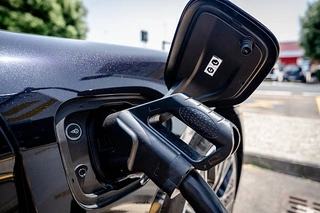
What Is CHAdeMO Charging?
CHAdeMO, short for "Charge de Move," originated in Japan in 2010. It was developed by a consortium of companies—Nissan, Mitsubishi, TEPCO (Tokyo Electric Power Company), and others—who wanted a fast-charging method capable of supporting long-distance EV travel. At the time, the global EV industry was still in its infancy, with limited range, low battery capacity, and very few public fast chargers.
A Dedicated DC Fast-Charging Standard
CHAdeMO was built specifically as a DC fast-charging method. Unlike AC EV charging, where the vehicle converts AC power into DC using an onboard charger, CHAdeMO sends DC power directly into the battery, bypassing the vehicle's internal converter. This offloads the conversion responsibility to the charger itself and allows significantly higher charging power than early AC charging solutions.
Key Features of CHAdeMO
- Dedicated DC connector separate from the AC port
- Bi-directional capability (supports vehicle-to-grid, V2G)
- Simple communication protocol between charger and vehicle
- Early adoption by Japanese automakers
- Global deployment, especially in Japan, early U.S. markets, and some European networks
The Nissan Leaf—one of the world's best-selling EVs for many years—became the flagship CHAdeMO vehicle and helped establish the standard in global markets.
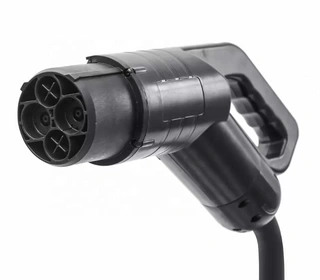
What Is CCS Charging?
The Combined Charging System (CCS) emerged in 2012 as a collaborative effort by major American and European automakers, including BMW, Volkswagen, Ford, General Motors, Daimler, and others. CCS was developed to solve a major inconvenience: EVs at the time required separate ports for AC and DC charging.
A Dual-Purpose Connector
CCS integrated AC and DC charging into a single inlet. By starting with the widely used Type 1 (North America) or Type 2 (Europe) AC connector and adding two larger DC pins beneath it, CCS provided:
- Slow AC charging
- Rapid DC fast charging
- Smaller vehicle inlet
- More streamlined user experience
This approach ultimately made CCS more attractive to automakers looking for unified hardware and global scalability.
Adoption by the Global Automotive Industry
Over the years, CCS has become the standard for most new EVs sold across Europe and North America. Manufacturers adopting CCS include:
- Volkswagen Group
- BMW
- Mercedes-Benz
- Ford
- General Motors
- Audi
- Porsche
- Volvo
- Rivian
CCS gained further momentum as large fast-charging networks—like Electrify America, Ionity, and EVgo—prioritized CCS installations, cementing the standard's position in the global EV ecosystem.
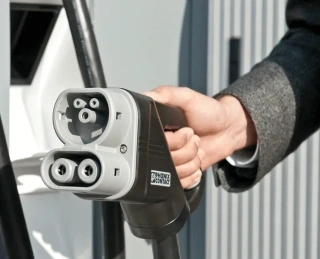
Key Differences Between CHAdeMO and CCS
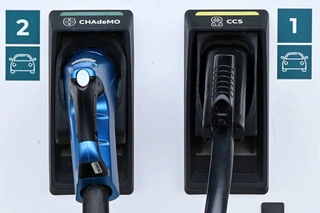
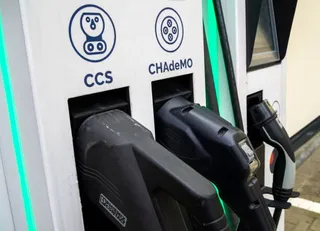
While both CHAdeMO and CCS provide fast charging, they differ significantly across several technical and regional dimensions. These differences, in turn, shaped their adoption, compatibility, and long-term viability.
1. Connector Design
CHAdeMO: Two-Port System
CHAdeMO was designed as a dedicated DC fast-charging connector, requiring most EVs to include:
- One port for AC charging
- Another port for CHAdeMO DC fast charging
Its connector is:
- Large and round, with multiple pins
- Bulky, especially compared to later standards
- Easy to identify, due to its distinctive shape
While functional, this two-port requirement increased cost and design complexity for automakers.
CCS: Unified AC + DC Connector
CCS streamlined the user experience by supporting both AC and DC charging through a single port.
CCS Type 1 (North America):
- Based on the J1772 AC connector
- Adds two high-power DC pins underneath
CCS Type 2 (Europe):
- Based on the IEC Type 2 AC connector
- Adds two DC pins to create the widely recognized "combo" plug
This hybrid design improves vehicle aesthetics, reduces cost, and simplifies charging logistics.
2. Charging Speed
CHAdeMO Charging Speeds
- Early versions: Up to 62.5 kW
- Most deployed public chargers: 50 kW
- CHAdeMO 2.0: Up to 200 kW
- CHAdeMO 3.0 (CHAdeMO Next-Gen / ChaoJi): Up to 400 kW
Despite these improvements, real-world availability of high-power CHAdeMO stations remains limited.
CCS Charging Speeds
- Standard DC chargers: 50–150 kW
- High-power chargers: up to 350 kW
- Porsche Taycan and other 800V vehicles can charge extremely fast at high-powered CCS stations
The widespread deployment of 150–350 kW CCS chargers gives CCS a significant advantage for long-distance travel.
3. Vehicle Compatibility
CHAdeMO Vehicle Support
Primarily Japanese automakers:
- Nissan (Leaf, e-NV200)
- Mitsubishi (i-MiEV, Outlander PHEV)
- Subaru (limited early models)
- Toyota (limited support—mainly for V2G applications)
As Japanese automakers shift to CCS and NACS, CHAdeMO's future support is shrinking.
CCS Vehicle Support
CCS has become the dominant global standard for most EV manufacturers:
- Europe: Virtually all automakers
- North America: Ford, GM, Volkswagen, BMW, Mercedes, Rivian, Lucid, and others
- South Korea: Hyundai, Kia (though moving to NACS in North America)
- China (export models): Increasing CCS adoption
This widespread support makes CCS the universal choice for public charging infrastructure across many regions.
4. Regional Usage and Market Share
Japan: Strong CHAdeMO Presence
Japan remains the largest CHAdeMO territory, with thousands of installations and strong government backing. Many local EV models still support CHAdeMO.
Europe: CCS Dominant
Europe standardized on CCS early, making it the default connector for:
- Ionity network
- Major automaker fleets
- Public charging infrastructure
CHAdeMO exists but plays a minor role.
North America: CCS Until the Rise of NACS
For many years, CCS was the main fast-charging standard in North America, except for Tesla's proprietary connector. Recently, the adoption of NACS by nearly all major automakers is reshaping the market again, but CCS remains critical for non-Tesla vehicles.
China: GB/T As the Primary Standard
China uses its own national standard—GB/T—but exports EVs equipped with CCS to international markets.
Technical Comparison: CHAdeMO vs. CCS
Power Delivery
- CHAdeMO: Traditionally lower, max 62.5 kW in early models; new versions offer much faster power but are not widely deployed.
- CCS: Broad deployment of high-power 150–350 kW chargers.
Communication Protocol
- CHAdeMO uses CAN-based communication
- CCS uses PLC (Power Line Communication) and supports more advanced charging technologies
Bi-Directional Charging
- CHAdeMO: Built for V2G from the beginning
- CCS: Gaining V2G capability through ISO 15118, but adoption varies
Future Scalability
- CHAdeMO has a next-gen standard (ChaoJi), but few markets are adopting it
- CCS is still expanding and remains the global default
Evolution of CHAdeMO and CCS Over Time
As EVs grew in popularity, the limitations and strengths of each standard became clearer.
CHAdeMO's Evolution
- 2010: CHAdeMO 1.0 introduced
- 2015–2017: Widespread deployment in Japan and early U.S. markets
- 2018: CHAdeMO 2.0 announced (200 kW capability)
- 2020: CHAdeMO 3.0 / ChaoJi released (up to 900 kW theoretically)
Despite technological progress, market share outside Japan declined as automakers moved to CCS or NACS.
CCS's Evolution
- 2012: CCS introduced
- 2015–2018: Rapid adoption across Europe
- 2019–2023: CCS became the default standard for fast charging in Europe and North America
- 2024 onward: Automakers begin transitioning North American models to NACS, but CCS remains standard globally
Industry Adoption and Infrastructure Deployment
Infrastructure investment is one of the biggest factors in determining the success of fast-charging standards.
CHAdeMO Network Presence
- Strong presence in Japan
- Significant but declining presence in the U.S. and Europe
- Limited investment in new CHAdeMO stations
CCS Network Presence
- Major fast-charging networks prioritize CCS
- Rapid expansion driven by government incentives and automaker alliances
- Better support from high-power charging infrastructure manufacturers
In recent years, many charging networks have begun phasing out CHAdeMO ports or reducing installation frequency in favor of CCS.
The Future of Fast Charging: What Happens Next?
Although CHAdeMO and CCS have shaped EV charging for more than a decade, new market forces are now accelerating change.
The Rise of NACS
Tesla's North American Charging Standard (NACS) has gained massive support, with nearly all major automakers in North America adopting it for future EVs starting around 2025.
CCS will continue to coexist, especially in:
- Europe
- Export markets
- Existing fleets
- Public network transitions
CHAdeMO, however, is expected to remain primarily in Japan and niche markets.
Vehicle-to-Grid (V2G) Integration
CHAdeMO remains the most proven V2G technology. However, CCS is gaining momentum through:
- ISO 15118
- Grid-interactive DC fast chargers
- Pilot programs in Europe and North America
High-Power Charging
CCS leads the deployment of high-power chargers (150 kW to 350 kW). CHAdeMO's next-gen versions promise similar speeds but lack infrastructure investment globally.
Conclusion: Which Standard Is Better?
From a technological standpoint, both CHAdeMO and CCS have played essential roles in the growth of the EV industry:
CHAdeMO Strengths
- Early pioneer of DC fast charging
- Proven bi-directional charging (V2G)
- Strong Japanese market presence
CHAdeMO Weaknesses
- Bulky connector design
- Limited global adoption
- Declining support from automakers
CCS Strengths
- Unified AC + DC charging
- Supported by nearly all global automakers
- Rapid expansion of high-power charging infrastructure
- Future-ready communication standards
CCS Weaknesses
- Limited V2G deployment compared to CHAdeMO
- Regional variations between CCS1 and CCS2
Overall, CCS has emerged as the dominant global standard, especially as major automakers converge around unified charging interfaces. CHAdeMO retains relevance in Japan and in legacy EV models, but its long-term global role is diminishing.
As the industry transitions into the next era—driven by NACS adoption in North America and continued CCS expansion worldwide—the competitive history between CHAdeMO and CCS remains a critical chapter in the evolution of EV charging infrastructure.
Send your message to this supplier
Related Articles from the Supplier
CCS vs. CHAdeMO – What’s the Difference?
- Dec 02, 2024
Related Articles from China Manufacturers
Related Products Mentioned in the Article

Supplier Website
Source: https://ev-charger-china.com/news/chademo-vs-ccs-which-fast-charging-standard-leads-the-global-ev-market.html