How to Find Reliable China Spiral Wound Gasket Manufacturers

In industrial piping systems, sealing failure can lead to severe safety accidents and significant economic losses. As a critical sealing component, the quality of spiral wound gaskets directly determines the reliability of the entire system. For global buyers, China offers a well-developed manufacturing base and a vast pool of suppliers, making it an important destination for sourcing spiral wound gasket manufacturers.
However, faced with a large number of suppliers and complex procurement processes, efficiently identifying, verifying, and establishing long-term cooperation becomes a core challenge for many procurement professionals. This article provides a comprehensive practical guide covering product knowledge, sourcing channels, supplier evaluation, procurement processes, and quality control.
Before searching for manufacturers, procurement professionals must first develop a full understanding of spiral wound gaskets. Only by understanding their definition, structure, types, and applications can accurate judgments be made during supplier evaluation and technical communication. The following sections provide a systematic introduction.
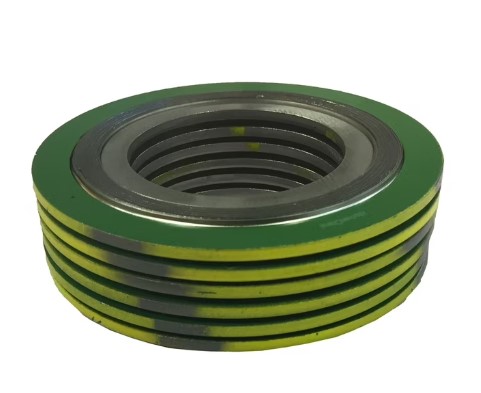
A spiral wound gasket is a high-performance sealing element used in industrial piping and flange connections. Its primary function is to create a reliable seal between two flange surfaces and prevent leakage of media.
Unlike conventional gaskets, spiral wound gaskets are made by alternately winding metal strips and soft filler materials in a spiral structure. This design enables them to maintain stable sealing performance under high temperature, high pressure, and fluctuating operating conditions.
They are widely used in industries such as oil and gas, petrochemical processing, power generation, and chemical engineering. In these critical applications where leakage control is essential, spiral wound gaskets play a vital role.
For example, in oil and gas pipelines, sealing failure may result in catastrophic safety incidents and environmental pollution. In chemical plants, leakage of toxic or corrosive media can directly endanger personnel safety. Therefore, selecting reliable spiral wound gaskets and manufacturers is a key step in ensuring industrial safety.
The structure of a spiral wound gasket consists of alternating layers of metal strips and soft filler materials wound in a spiral form.
The metal strip is typically made of stainless steel or high-performance alloys such as Inconel, providing strength, resilience, and resistance to high temperature and pressure. The filler material is commonly graphite or PTFE, where graphite is suitable for high-temperature environments, while PTFE is used for highly corrosive media.
In terms of design, spiral wound gaskets may include inner and outer rings. The inner ring prevents inward buckling under high pressure and enhances structural stability. The outer ring ensures proper centering during installation and prevents over-compression.
This multi-layer composite structure allows the gasket to compensate for minor flange surface irregularities while maintaining sealing performance under temperature and pressure fluctuations.
The superior performance of spiral wound gaskets is mainly due to their “rigid-flexible combination” structure. The metal provides structural support, while the filler ensures sealing adaptability. After compression, the gasket maintains elastic recovery, allowing it to sustain sealing force over time.
Additionally, it accommodates thermal expansion and contraction, compensates for flange misalignment, and resists chemical corrosion and mechanical stress. This makes it highly suitable for unstable or vibration-prone operating conditions.
Spiral wound gaskets are generally classified into the following types:
Style R (Basic Type): No inner or outer ring. Suitable for tongue-and-groove or male-female flanges, typically used in low-pressure or non-critical applications.
Style CGI (Outer Ring Type): Equipped with an outer centering ring, commonly used in raised face flanges. It prevents misalignment and over-compression, making it suitable for higher pressure and temperature environments.
D Type and DI Type: Enhanced structural designs, with DI type featuring an additional inner ring for improved pressure resistance and stability, suitable for more demanding conditions.
In addition, customized designs are available with different metal materials, filler combinations, and structural configurations to meet specific media or industry standards. Selection must consider pressure, temperature, media characteristics, and flange design.
Spiral wound gaskets are suitable for a wide range of demanding operating conditions:
High-pressure systems, typically up to 250 bar or higher
Extreme temperature environments, from cryogenic conditions to over 1000°C
Hazardous or toxic media sealing systems
Systems with thermal cycling and mechanical vibration
In practical applications, spiral wound gaskets are often compared with other gasket types. For example, Kammprofile gaskets offer higher structural stability and blowout resistance, while spiral wound gaskets provide better resilience and adaptability, especially under thermal cycling and vibration.
Ring Type Joint (RTJ) gaskets are suitable for extremely high-pressure applications but lack tolerance for flange imperfections. In contrast, spiral wound gaskets offer better flexibility and error compensation.
Compared with sheet gaskets such as PTFE or CNAF, spiral wound gaskets provide significantly better performance in high-temperature and high-pressure environments.
Spiral wound gaskets typically follow ASME B16.20 or API color coding standards. The outer ring color identifies the metal material, while the filler color indicates sealing material type. However, color coding is only a visual reference and cannot replace certified material documentation.
After understanding the product, the next step is identifying where to find suppliers. There are multiple sourcing channels, including B2B platforms, industry exhibitions, professional networks, and sourcing agents. Each has its own advantages and limitations.
Online platforms are often the first step in supplier search. However, more effective sourcing relies on B2B platforms such as Alibaba, Global Sources, and Made-in-China, rather than general search engines.
These platforms connect global buyers directly with Chinese suppliers. Using specific keywords such as “spiral wound gasket manufacturer” yields more accurate results than general terms like “gasket.”
While platform certifications such as “Gold Supplier” or “Verified Supplier” can be useful for initial screening, they should not be considered proof of manufacturing capability. These labels often indicate membership status or basic verification rather than production strength.
Industry exhibitions are one of the most effective ways to identify suppliers. The Canton Fair is the largest comprehensive trade fair in China, held twice a year in Guangzhou, featuring tens of thousands of exhibitors and international buyers.
There are also specialized exhibitions such as China Diecasting Fair in Shanghai, which focuses on casting and manufacturing industries.
International exhibitions such as the National Hardware Show in Las Vegas or IMTS in Chicago also attract Chinese suppliers, though in smaller numbers.
Industry referrals provide a more reliable sourcing method. Recommendations from industry associations, business partners, or peer companies are often based on real cooperation experience and can provide valuable insights into supplier performance, quality, and reliability.
Sourcing agents provide end-to-end procurement support, including supplier selection, quotation management, factory audits, quality control, logistics, and payment negotiation.
They can also leverage regional industrial clusters in China to identify suitable manufacturers more efficiently, reducing procurement risks and improving sourcing accuracy.
Once a list of potential suppliers is obtained, the next step is screening and verification. The goal is to identify genuine manufacturers and eliminate trading companies or unreliable suppliers.
The first principle is to prioritize manufacturers over trading companies. While trading companies may be acceptable for low-complexity products, industrial components requiring precision manufacturing should be sourced directly from factories.
Preference should be given to suppliers specializing in gasket production rather than general product traders. Export-experienced manufacturers are also preferred due to their familiarity with international standards and logistics.
At this stage, suppliers should receive clear technical and commercial requirements, including:
- Manufacturing process requirements
- Minimum order quantity (MOQ)
- Sample or development requirements
- Material specifications
- Target pricing
Suppliers should also provide company background information, including factory status, export experience, certifications, and production capacity.
It is recommended to use a dedicated email system for supplier communication to maintain organization.
Verification ensures the supplier is a legitimate manufacturer with real production capability. Methods include:
- Business license and certification review
- Financial and tax documentation
- VAT invoices
- Product samples
- Cross-checking factory registration information
On-site factory audits are highly recommended when possible. Sourcing agents can also assist in conducting factory inspections.
After issuing RFQs (Request for Quotation), suppliers should be evaluated based on technical capability, pricing, communication efficiency, and certifications.
Manufacturers with export experience are generally preferred due to their understanding of compliance and logistics requirements.
Before placing orders, two key preparations are required: defining the product clearly and preparing complete technical documentation.
It is essential to confirm whether the product is suitable for outsourcing. Products should have stable specifications, sufficient volume, and a mature design.
Highly customized or frequently changing designs are not ideal for outsourcing. Engineering drawings must be complete and accurate to avoid amplified errors during production.
A complete technical package should include:
- Engineering drawings
- Material specifications
- Dimensional tolerances
- Bill of Materials (BOM)
- Packaging requirements
- Quality standards
A structured RFQ document helps minimize communication errors and production issues.
Once suppliers are selected, the procurement process begins.
- Requirement definition
- Supplier development
- RFQ submission
- Sample production
- Supplier evaluation
- Contract signing
- Trial production
- Mass production
- Quality inspection
- Delivery and logistics
Samples are critical, as approved samples become the benchmark for production quality.
AQL (Acceptable Quality Limit) inspection standards are commonly used to control defect rates. Third-party inspection agencies may also audit production systems, equipment, and quality control processes.
Shipping methods include sea freight, air freight, and courier services. Sea freight is preferred for large volumes, while air freight is used for urgent or small shipments.
Common payment structures include deposit plus balance payment or milestone-based payments.
Trade terms such as FOB, CIF, EXW, and DDP define responsibility allocation. FOB is often preferred by beginners.
Key contractual documents include:
NNN agreements for IP protection
Mold ownership agreements
Production contracts specifying quality, price, and delivery terms
These ensure legal protection and clarity between parties.
Three main procurement models are available:
Direct Factory Cooperation: Provides better pricing and control but requires higher MOQ and stronger management capability.
Trading Companies: Easier to work with and lower MOQ, but higher cost.
Sourcing Agents: Provide balanced support across sourcing, inspection, and logistics, especially suitable for inexperienced buyers.
Finding reliable spiral wound gasket manufacturers in China is a systematic process involving product understanding, supplier sourcing, verification, technical preparation, quality control, and procurement strategy selection.
Success depends on systematic supplier validation, clear communication, complete technical documentation, and strict quality control.
In critical sealing applications, quality always comes first. Although price is important, the consequences of sealing failure in high-pressure, high-temperature, or hazardous environments far exceed procurement costs. Therefore, investing sufficient time and resources in supplier evaluation is essential for ensuring industrial safety and long-term reliability.
