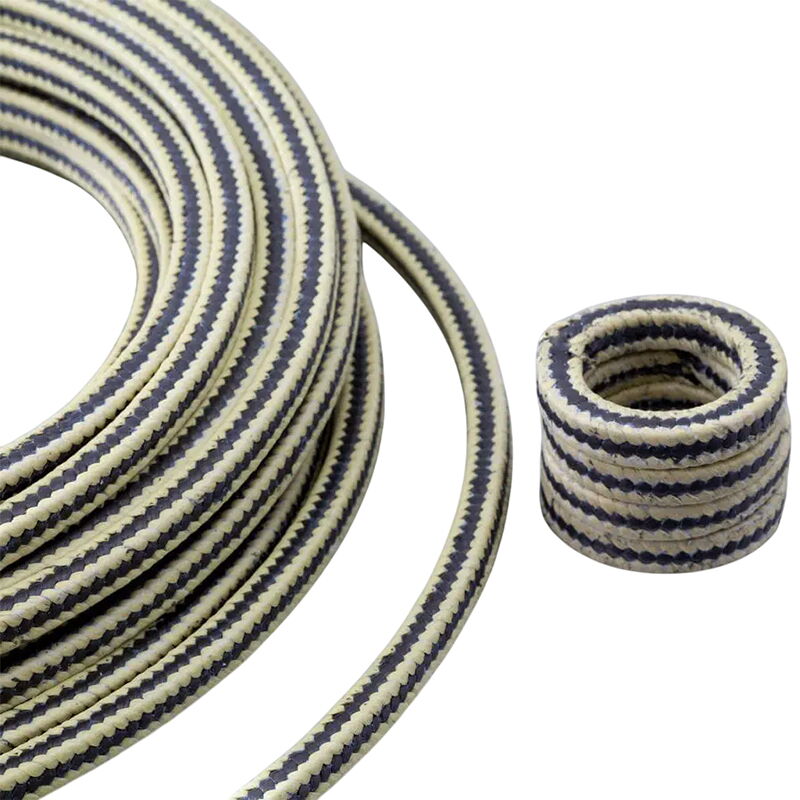
Valve Stem Packing, Aramid & Graphited-PTFE Fibers, Braided
Key Specifications / Features
The China Valve Stem Packing Manufacturer specializes in producing high-quality braided packing for valve stems, utilizing a blend of aramid fiber and graphited PTFE fiber. This packing is impregnated with PTFE to enhance its chemical resistance and durability. Available in customized dimensions, it is designed to provide a reliable seal in harsh chemical environments. The packing is ideal for various industrial applications, including pumps and valves, ensuring minimal leakage and extended service life.
Detail Information
Product Name: Valve Stem Packing, PTFE Impregnated
Type: Braided Packing
Material: PTFE, Aramid Fiber, Graphited PTFE Fiber
Dimensions: Customized
Characteristics: Chemical-resistant
Operating Temperature Range: Maximum 300°C (572°F), Minimum -220°C (-364°F)
Fluids: Slurry Fluids
Usage: Valves, Reciprocating pumps, mixers, stirrers, reactors
Parameters: Speed < 22 m/s, pH 2 - 14
Applications: Chemical, agro-chemical, petrochemical, paper and sugar industries, power stations
Multi-Yarn Packing: Our multi-yarn packing features corners composed of 100% aramid yarns impregnated with PTFE. The friction faces are crafted from 100% graphited PTFE and are lubricated for enhanced performance. During the braiding process, the packing is re-impregnated with a blend of PTFE and inert lubricant. Available in preformed packing rings upon request. This packing combines the benefits of braided graphite-PTFE and aramid, offering high mechanical resistance and is specifically designed for use in reciprocating and rotary pumps.
Supplier Information
Zhejiang Magpie Sealing Technology Co., Ltd.
Verified Supplier
Certifications:
