
Rising Stem Gate Valves vs. Non-Rising Stem Gate Valves
Gate valves are essential components in pipeline systems, used to control the flow of fluids. By raising or lowering the gate, these valves can open or close the passage, offering advantages such as low flow resistance and reliable sealing. They are widely used across industries including petroleum, natural gas, chemical, power, and water treatment.
In practice, gate valves are primarily divided into two types based on the movement of the stem: rising stem gate valves and non-rising stem gate valves. Rising stem gate valves are commonly referred to in the industry as “outside screw and yoke” (OS&Y) valves, while non-rising stem gate valves are often called “concealed stem” valves. Although both types serve the same function, stopping or allowing the flow of medium through the pipeline, they differ significantly in structural design, operating principle, working environment, and maintenance requirements.
Understanding the distinctions between these two types of gate valves is critical for proper engineering selection, installation, and long-term maintenance. An inappropriate choice may result in inefficient space utilization, difficult maintenance, reduced service life, and other operational issues. This article provides a detailed explanation of their working principles, structural characteristics, advantages and disadvantages, and application scenarios to help users make informed decisions based on their actual needs.
Basics of Rising Stem Gate Valves
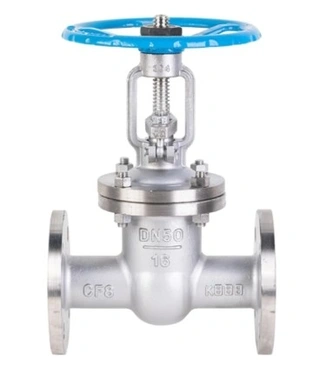
The primary characteristic of rising stem gate valves is that the stem moves vertically during operation. When an operator rotates the handwheel, the stem lifts or lowers the gate, thereby opening or closing the valve.
1. Operating Principle of Rising Stem Gate Valve
When the valve is closed, the gate rests on the sealing surface at the bottom of the valve body, blocking fluid flow. As the handwheel is rotated clockwise or counterclockwise, the threaded stem converts this rotational motion into vertical movement, lifting the gate. When the gate is fully raised, the passage is completely open, allowing minimal pressure loss. Conversely, reversing the handwheel lowers the gate, re-establishing contact with the sealing surface, and closes the valve.
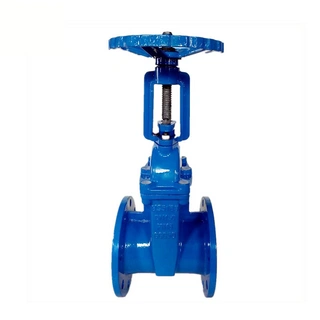
Because the threaded portion of the stem is located outside the valve body, the entire lifting process is visible. When open, the stem extends above the valve bonnet; when closed, it retracts. This visible motion provides operators with an intuitive indication of valve position.
2. Structural Components of Rising Stem Gate Valve
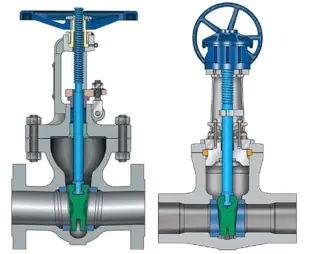
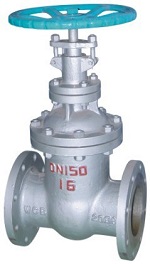
The primary components of a rising stem gate valve include the handwheel, visible rising stem, bonnet, valve body, and gate.
- Handwheel: Positioned at the top of the stem, it allows the operator to apply torque.
- Stem: The core transmission component, threaded on the exterior to interact with a stationary stem nut mounted on the bonnet or yoke.
- Bonnet: Seals the upper part of the valve body and supports and guides the stem.
- Valve body: Forms the main structure and the internal fluid passage.
- Gate: Connected to the lower end of the stem, it physically stops or allows fluid flow.
In a rising stem gate valve, the stem nut is fixed to the bonnet or yoke. As the handwheel rotates, the nut turns, causing the stem to move axially, lifting or lowering the gate. The stem rotates relative to the nut but has no axial movement relative to the gate.
3. Key Advantages of Rising Stem Gate Valve
- Visible Valve Position: Operators can determine whether the valve is open or closed at a glance without additional indicators, which is crucial in large industrial systems for operational safety and process management.
- Ease of Maintenance: The external threads are not in contact with the fluid, reducing corrosion risk. The threads are also easily observed and lubricated, reducing friction and wear and extending service life.
- Reliable Performance: Rising stem gate valves are designed to withstand high pressures and temperatures, and the external threads remain stable even under harsh conditions.
- Suitable for Viscous Media: The lifting mechanism makes these valves effective for media containing solids or high-viscosity fluids, reducing the likelihood of jamming.
4. Key Limitations in Rising Stem Gate Valve
- High Vertical Space Requirement: The stem extends above the valve when open, requiring sufficient clearance, which may limit use in confined spaces.
- Exposure to Environment: External stems are susceptible to rain, dust, debris, or impact damage. Protective measures, such as covers, are often required for outdoor installations.
- Higher Cost: Longer stems and more complex support structures generally make rising stem valves more expensive than non-rising stem valves.
An Introduction to Non-Rising Stem Gate Valves
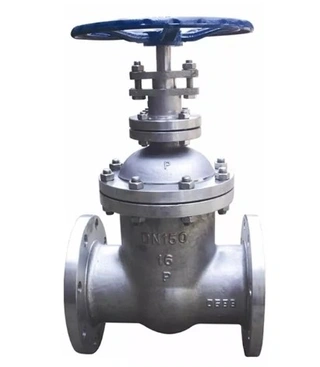
Non-rising stem gate valves feature a stem that rotates but does not move vertically. The gate’s lifting occurs entirely within the valve body.
1. Non-Rising Stem Gate Valve Operating Principle
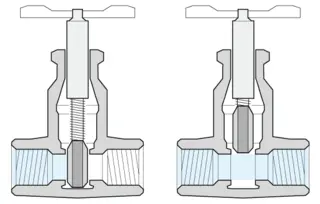
As the handwheel rotates, the stem turns. Because the stem nut is fixed to the gate, the rotational motion of the stem is converted into vertical motion of the gate. The gate moves along guide slots inside the valve body to open or close the passage. Externally, the stem height remains unchanged, with only the handwheel rotating, making the lifting action invisible.
This design keeps the overall valve height consistent in both open and closed positions, resulting in a compact structure.
2. Main Components of Non-Rising Stem Gate Valve
The main components of a non-rising stem gate valve include the handwheel, fixed-height stem, valve body, and gate.
- Handwheel: Mounted on top of the stem for operation.
- Stem: Passes through the bonnet into the valve body, with internal threads that engage the gate nut.
- Valve body: Contains the guide structures to ensure proper vertical movement of the gate.
- Gate: Connected to the internal stem nut, moving up and down as the stem rotates.
Unlike rising stem valves, the non-rising stem’s threads are inside the valve and in contact with the fluid. The external portion of the stem remains smooth and stationary.
3. Key Advantages of Non-Rising Stem Gate Valve
- Space Efficiency: No vertical movement of the stem allows installation in confined areas such as underground pipelines, narrow equipment rooms, or low-ceiling spaces.
- Lower Cost: Simpler structure, shorter stem, and less complex support reduce manufacturing and purchase costs.
- Protected Stem: The stem is shielded from external elements, reducing risk of damage from impacts or debris.
- Flexible Installation: Compact design facilitates easier layout and installation in tight spaces.
4. Key Limitations in Non-Rising Stem Gate Valve
- No Visible Position Indicator: The external stem does not move, so operators cannot easily determine valve status. Additional indicators may be needed, increasing cost and complexity.
- Internal Thread Corrosion: Threads inside the valve are exposed to fluid, making them susceptible to corrosion and wear, especially with abrasive or corrosive media.
- Difficult Maintenance: Internal threads require disassembly to inspect or lubricate, increasing maintenance effort and cost.
- Limited Pressure Applications: Typically used in low- to medium-pressure systems; performance under high pressure and temperature is less reliable than rising stem valves.
Differences Between Rising and Non-Rising Stem Gate Valves
Based on the above descriptions, the two types of valves differ significantly in operating principle, structural design, and performance characteristics.
1. Structural Differences
Rising Stem: Stem nut on the bonnet/yoke; external threaded stem moves axially when rotated.
Non-Rising Stem: Stem nut inside valve body; stem rotates but does not move axially.
Thread Placement: External in rising stem valves, internal in non-rising stem valves.
2. Space Requirements
Rising Stem: Requires vertical clearance above the valve to accommodate the extended stem.
Non-Rising Stem: Valve height remains constant, suitable for space-constrained installations.
3. Maintenance and Corrosion
Rising Stem: External threads avoid contact with fluid, reducing corrosion risk and simplifying lubrication and maintenance.
Non-Rising Stem: Internal threads contact the fluid, making corrosion more likely and maintenance more complex.
4. Application Scenarios
Rising Stem: Ideal for visible position indication, high-pressure/high-temperature systems in petroleum, natural gas, petrochemical, and power industries, as well as above-ground industrial installations.
Non-Rising Stem: Suitable for confined spaces such as water treatment plants, building plumbing, fire-fighting systems, underground pipelines, and low- to medium-pressure industrial processes.
Selecting the Right Gate Valve
Choosing between rising and non-rising stem gate valves depends on specific operational conditions, including system pressure, fluid characteristics, installation space, and frequency of operation. Incorrect selection may result in installation difficulties, costly maintenance, shorter service life, or compromised system safety.
1. When to Choose Rising Stem Gate Valves
Clear visible indication of valve position is required.
Sufficient vertical space is available above the valve.
System operates at high pressure or temperature.
Media is viscous or contains solid particles.
Frequent operation and maintenance are expected.
2. When to Choose Non-Rising Stem Gate Valves
Limited vertical space, such as underground or confined installations.
Desire to reduce exposure to external damage.
System operates at low to medium pressure and temperature.
Budget constraints prioritize cost efficiency.
3. Practical Selection Advice
In addition to stem type, consider:
Fluid characteristics: Corrosiveness, temperature, pressure, viscosity, and presence of solids. Rising stem valves are preferable for corrosive media.
Installation environment: Available space, outdoor vs. underground, and exposure to contaminants or mechanical risks.
Operation frequency: High-frequency valves benefit from easy-maintenance designs like rising stem valves.
Budget: Ensure technical requirements are met while controlling procurement costs.
Standards and regulations: Some industries or projects may mandate specific valve types.
Conclusion
Rising and non-rising stem gate valves are two common types in pipeline systems, each with distinct features and suitable applications.
Rising Stem Gate Valves: Stem moves visibly, providing intuitive position indication; external threads are easy to maintain; reliable in high-pressure and high-temperature systems; but require significant vertical space and higher cost.
Non-Rising Stem Gate Valves: Stem is fixed; gate moves internally; compact and space-saving; lower cost; suitable for low-pressure systems; but lacks visible position indication, internal threads may corrode, and maintenance is more complex.
Ultimately, valve selection should be based on operational requirements. Rising stem valves are ideal for applications requiring visible position indication and high-pressure performance, while non-rising stem valves are better for space-limited and cost-sensitive installations.
By understanding differences in operating principles, structural features, advantages, disadvantages, and application scenarios, engineers and procurement specialists can make informed decisions, ensuring safe, reliable, and economical pipeline operation. Proper selection enhances system efficiency, reduces maintenance costs, and prolongs equipment service life.
Send your message to this supplier
Related Articles from the Supplier
Related Articles from China Manufacturers
Rising Stem vs. Non-rising Stem Gate Valves
- Mar 08, 2024
Rising Stem Gate Valve VS Non-rising Stem Gate Valve
- Feb 19, 2019
Related Products Mentioned in the Article

Supplier Website
Source: https://www.magpievalves.com/media-hub/rising-stem-gate-valves-vs-non-rising-stem-gate-valves.html