
Metal Seated Ball Valves: Structure, Types and Applications
In modern industrial pipeline systems, valves are not only responsible for basic functions such as medium shutoff and flow regulation, but also play a critical role in ensuring the safety and operational stability of entire installations under extreme conditions such as high temperature, high pressure, strong corrosion, and severe abrasion. As industrial processes continue to evolve toward higher parameters, continuous operation, and increased complexity, the limitations of traditional soft-seated valves in terms of temperature resistance, wear resistance, and erosion resistance have become increasingly apparent, making them difficult to rely on for long-term service in demanding applications.
Against this backdrop, the metal seated ball valve has emerged as an indispensable valve type for critical service conditions due to its unique metal-to-metal sealing structure, high-strength material system, and advanced surface hardening technologies. It not only demonstrates outstanding performance in sealing reliability and structural stability, but also maintains long-term stable operation in environments involving extreme temperatures and media containing solid particles. As a result, it has been widely adopted across industries such as power generation, petrochemicals, metallurgy, mining, and chemical processing.
The following sections will provide a systematic analysis of metal seated ball valves from multiple perspectives, including structural principles, types and characteristics, material technologies, and engineering applications.
What is Metal Seated Ball Valve?
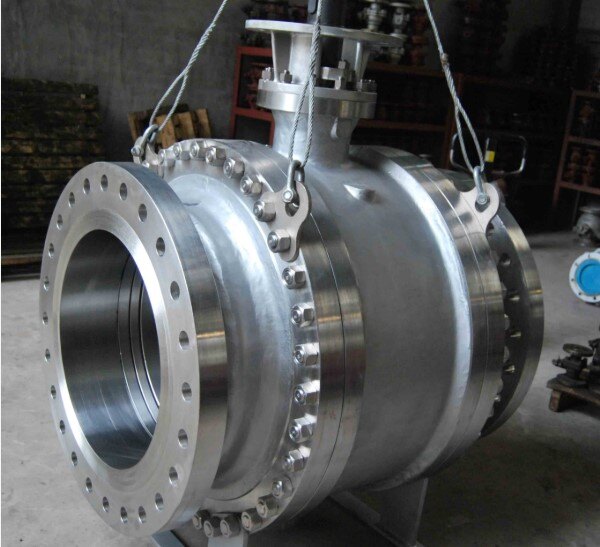
A metal seated ball valve is an industrial valve designed to achieve sealing through direct metal-to-metal contact between the rotating ball and the fixed valve seat. Unlike conventional soft-seated valves, all primary sealing components are made entirely from metallic materials, without the use of polymers, elastomers, or other non-metallic sealing elements. This structural characteristic gives the valve exceptional resistance to extreme operating environments where conventional sealing materials would fail.
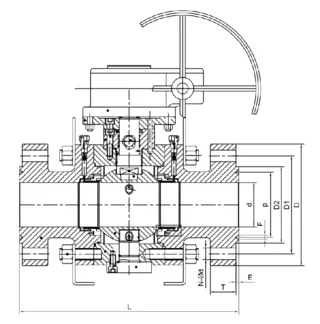
The core components of a metal seated ball valve include the ball, valve seat, valve stem, sealing system, and actuation mechanism. Both the ball surface and the seat contact surfaces are subjected to specialized hardening treatments. These treatments create a robust sealing interface capable of withstanding high pressure, high temperature, and abrasive media.
During operation, when the valve is in the open position, the internal bore of the ball aligns precisely with the pipeline axis, allowing fluid to pass through with minimal resistance. When the valve is closed, the ball rotates 90 degrees, positioning the bore perpendicular to the flow direction. In this state, the solid metallic surface of the ball tightly presses against the valve seat, effectively blocking flow.
The defining feature of this valve type is that sealing is achieved entirely through precision-machined metal surfaces. There are no elastomeric or polymeric sealing rings involved. The ball and seat are typically manufactured from stainless steel, alloy steel, or other high-strength metallic materials. To further enhance durability, their surfaces are often coated or surfaced with wear-resistant materials such as tungsten carbide, chromium carbide, or cobalt-based Stellite alloys.

Working Principle of Metal Seated Ball Valves
The operating principle of a metal seated ball valve is based on controlled rotational motion. The valve stem transmits torque from a manual handle or an automated actuator to the ball, enabling it to rotate around its axis. A cylindrical bore passes through the center of the ball, and its diameter is typically designed to match the inner diameter of the pipeline to minimize flow resistance.
In the fully open position, the bore is aligned with the pipeline axis, allowing the medium to flow directly through the valve body. This configuration results in very low pressure loss and smooth fluid transport. The flow path is nearly unobstructed, which is one of the key advantages of ball valve design.
When closing the valve, the operator rotates the ball by 90 degrees. This rotation causes the solid portion of the ball to face the flow direction, blocking the passage completely. At the same time, the outer surface of the ball presses firmly against the valve seat, creating a sealing interface that prevents leakage.
Unlike soft-seated ball valves, which depend on elastic deformation of materials such as PTFE, metal seated ball valves rely on rigid, precisely machined contact surfaces. The sealing force is maintained by mechanical design, often enhanced through spring-loaded seats that continuously apply pressure between the ball and seat. This ensures consistent sealing performance even when subjected to thermal expansion, vibration, or pressure fluctuations.
This mechanism allows metal seated ball valves to operate reliably in environments exceeding 500°C, where soft materials would degrade, soften, or chemically break down. In comparison, soft-seated valves typically become unreliable above 200°C due to material deformation or loss of structural integrity.
Main Types of Metal Seated Ball Valves
Metal seated ball valves are not a single uniform product but rather a family of specialized designs tailored for different industrial conditions. While they all share the same fundamental sealing principle, variations in geometry, material treatment, and structural configuration allow them to serve a wide range of applications.
1. Metal-to-Metal Seated Ball Valve
This is the most fundamental type, featuring both the ball and seat with hardened metal surfaces. These surfaces are engineered to withstand direct metal contact under high pressure and erosive flow conditions. This type is widely used in high-pressure gas systems, catalyst injection lines, and other abrasive service environments.
The hardened surfaces significantly reduce wear caused by solid particles suspended in the medium. This ensures long-term sealing stability even under continuous operation in demanding industrial conditions.
2. High-Temperature Metal Seated Ball Valve
This variant is specifically designed for extreme thermal environments such as steam systems, thermal oil circuits, and refinery processing units. It is capable of continuous operation at temperatures exceeding 500°C.
To achieve this, manufacturers use heat-resistant alloys and incorporate structural compensation mechanisms that account for thermal expansion. These design features ensure that the sealing contact between the ball and seat remains stable even under severe thermal cycling conditions.
3. Metal Seated Throttling Ball Valve
Unlike standard on-off valves, this type uses a segmented ball design. The ball is not fully spherical but instead features a partially contoured geometry. This allows the valve to perform both shutoff and flow regulation functions.
Metal seated throttling ball valves are commonly used in slurry systems, pulp processing, and industrial applications involving solid-liquid mixtures. Their ability to handle abrasive media while also providing controlled flow makes them highly versatile.
4. Floating and Trunnion Mounted Structures
Metal seated ball valves can also be classified based on how the ball is supported.
Floating ball designs allow the ball to move slightly under pressure, pressing against the downstream seat to achieve sealing. These are typically used in smaller diameter and moderate pressure applications.
Trunnion mounted designs, on the other hand, fix the ball using upper and lower support shafts. The sealing force is applied through spring-loaded seats rather than ball movement. This reduces operating torque and improves stability, making trunnion-mounted valves suitable for large diameter, high-pressure, and severe service conditions.
Comparison with Soft Seated Ball Valves
Soft seated ball valves rely on materials such as PTFE, RPTFE, or PEEK to achieve sealing. These materials provide excellent elasticity, allowing them to form bubble-tight, zero-leakage seals under normal conditions. They are widely used in clean fluid systems such as water, oil, and natural gas pipelines.
However, these materials have significant limitations. At elevated temperatures, they tend to soften, creep, or degrade chemically. In abrasive media, solid particles act like cutting tools, rapidly eroding the sealing surface. Over time, this leads to leakage or complete failure.
Metal seated ball valves, although unable to guarantee absolute zero leakage in all conditions, provide superior performance in extreme environments. Their advantages include:
- High-temperature resistance up to or exceeding 600°C
- Exceptional resistance to abrasive wear
- Strong performance under high-velocity flow conditions
- Longer operational lifespan
- Greater structural stability under fluctuating pressure and temperature
Their primary disadvantages include higher operating torque and increased manufacturing cost. However, in severe industrial applications, they are often the only practical solution. Over long service periods, their durability often results in lower total lifecycle cost compared to soft-seated alternatives.
Surface Treatment Technologies
The performance of a metal seated ball valve depends heavily on surface engineering technologies applied to the ball and seat.
- Tungsten Carbide Coating: Tungsten carbide is one of the hardest known industrial materials. When applied using thermal spraying techniques, it forms a highly wear-resistant layer. This is ideal for extremely abrasive conditions such as coal transport and mining slurry pipelines.
- Chromium Carbide Coating: Chromium carbide offers slightly lower hardness than tungsten carbide but performs better under high-temperature conditions. It is commonly used in boiler ash handling systems and high-temperature gas transport lines.
- Stellite Hard-Facing: Stellite is a cobalt-based alloy known for its excellent resistance to wear, corrosion, and galling at elevated temperatures. It is typically applied through welding processes to form a durable protective layer on sealing surfaces.
- Nitriding Treatment: Nitriding is a thermochemical process that diffuses nitrogen into the metal surface, creating a hardened outer layer. It is cost-effective and suitable for moderate wear environments.
Precision machining is equally important. Modern manufacturing techniques ensure that ball and seat surfaces are finished to micron-level tolerances. Surface roughness, roundness, and dimensional accuracy all directly influence sealing performance.
Industrial Applications of Metal Seated Ball Valves
Metal seated ball valves are widely used in industries where standard valves cannot withstand operating conditions:
- Thermal power generation systems handling high-temperature steam and ash
- Petrochemical and refining processes involving catalysts and corrosive fluids
- Mining and mineral processing systems transporting abrasive slurries
- Pulp and paper industries handling fibrous and abrasive mixtures
- High-temperature chemical reactors and gas processing systems
These applications typically involve combinations of high temperature, high pressure, erosion, and chemical corrosion. Metal seated valves are often the only viable solution.
Selection Considerations for Metal Seated Ball Valves
Proper selection requires a comprehensive evaluation of multiple parameters:
Temperature limits must account not only for normal operation but also for transient conditions such as startup and shutdown. Thermal cycling can significantly affect sealing performance.
Pressure ratings must be evaluated alongside material strength, wall thickness, and overall system integrity.
Media characteristics such as particle size, hardness, and concentration directly influence wear behavior.
Coating selection must match operating severity.
Cavity design must prevent particle accumulation that could increase torque or cause jamming.
Leakage standards must be clearly defined during selection, as metal seated valves are not inherently zero-leakage devices.
Conclusion
Metal seated ball valves are critical components in modern industrial systems. Their defining strength lies in their ability to operate reliably under extreme conditions involving high temperature, high pressure, and abrasive or corrosive media.
Through advanced surface engineering, precision machining, and robust structural design, these valves provide long-term stability where other valve types fail. While they require higher initial investment and operating torque, their durability and reliability make them indispensable in demanding industrial environments.
With proper selection, installation, and maintenance, metal seated ball valves deliver consistent performance across their entire lifecycle, ensuring safe, efficient, and economically sustainable operation in heavy-duty industrial applications.
Send your message to this supplier
Related Articles from the Supplier
An Introduction to Metal Jacketed Gaskets
- Jun 16, 2025
Introduction to Metal Corrugated Composite Gaskets
- Jun 16, 2025
Understanding Metal Toothed Composite Gaskets
- Jun 16, 2025
Related Articles from China Manufacturers
Related Products Mentioned in the Article
Supplier Website
Source: https://www.magpievalves.com/media-hub/metal-seated-ball-valves-structure-types-and-applications.html