
How to Select Industrial Valves for Chemical Plants
In chemical plants, valves are essential equipment that ensure the safe and stable operation of pipeline systems. Whether the selection is appropriate directly affects production efficiency, operational reliability, and maintenance costs. As process conditions become increasingly complex, the differences in valve types and performance have grown more pronounced. Designers must therefore start from actual operating conditions and systematically analyze critical factors such as functional requirements, connection methods, and materials. This approach ensures that the selected valves not only meet process demands but also offer strong economic performance and durability. Accordingly, valve selection should follow clear and scientific principles.
Core Principles of Valve Selection
In chemical production facilities, valves are key devices for controlling fluid transportation, and their selection quality directly influences operational safety, efficiency, and economic benefits. Faced with a wide variety of valve products with different functions, designers need to establish a systematic selection methodology. Specifically, valve selection should adhere to the following three core principles:
1. Clarifying Functional Positioning
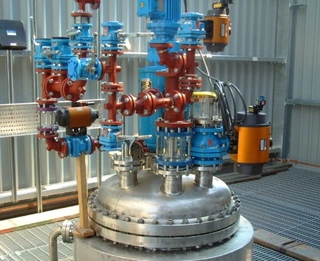
The primary task in valve selection is to clearly define its specific function and purpose. In chemical design, it is essential to fully understand the valve’s role within the process flow, including control mode, working pressure, and other fundamental parameters. Only by accurately grasping the valve’s function can designers comprehensively evaluate real conditions and complete a rational selection.
Different valve types vary significantly in characteristics, manufacturing, and applications. Designers must focus on these features, thoroughly understand the properties of each type, and ensure that the selected valve meets on-site requirements, thereby providing reliable safety for chemical production.
2. Selection of End Connection Methods
Valve end connections generally come in three forms: threaded connections, flanged connections, and welded connections. Among them, threaded and flanged connections are the most widely used.
Threaded connections are suitable for nominal diameters of DN ≤ 50 mm. Beyond this range, installation and sealing become significantly more difficult, so they are rarely used in large-diameter pipelines.
Flanged connections offer convenient installation and removal, a wide application range, and adaptability to pipelines with different diameters and pressure conditions. They are the most commonly used connection type in chemical plants.
Welded connections have stricter requirements but provide higher reliability. However, valves with welded connections are difficult to dismantle and reinstall, limiting their application. This method is suitable for situations requiring long-term reliability, stringent conditions, or high temperatures.
3. Scientific Basis for Material Selection
Material selection for valves should prioritize the physical and chemical properties of the working medium while considering its cleanliness and relevant standards. Appropriate material selection ensures valve quality, performance, and service life.
For valve body materials, the typical priority order is: cast iron → carbon steel → stainless steel.
For sealing ring materials, the priority order is: rubber → copper → alloy steel → PTFE (F4).
This hierarchy reflects a comprehensive balance of economic efficiency, applicability, and reliability.
Detailed Overview of Major Valve Types
Chemical design involves a wide variety of valve types, each suited to specific operating conditions due to structural differences. The following section systematically introduces eight major valve types, from working principles and performance characteristics to application scenarios, to provide practical guidance for engineering selection.
1. Gate Valve: Ideal for Full Open or Full Close Operation
Gate valves are commonly used in chemical production units and are characterized by their ability to maintain the direction of fluid flow. When fully open, they exhibit a relatively low resistance coefficient and accommodate a wide range of diameters, pressures, and temperatures. Compared with globe valves of the same diameter, gate valves can save installation space, resulting in broader application.
Main disadvantages include:
- Large structural height and long opening/closing times
- Possible erosion of sealing surfaces during operation
- Certain cleanliness requirements for the medium
- Difficulty in manufacturing with non-metallic corrosion-resistant materials
When open, vortices may form behind the gate, causing erosion and vibration that can damage the valve seat sealing surface.
Applicable scenarios: Gate valves are suitable for applications requiring effective control under fully open or fully closed conditions but are not appropriate for flow regulation. Typical media include steam, oil and gas, or high-temperature oils, especially in frequently operated positions. However, they are less suitable for media prone to coking.
Classification and selection:
- By stem design: Rising stem and non-rising stem. Rising stem valves are preferred in corrosive environments, while non-rising stem valves can be used in low-pressure, non-corrosive conditions.
- By gate structure: Wedge and parallel types. Wedge gate valves can be single-gate or double-gate, while parallel gate valves are mainly used in oil and gas transmission systems and are less common in chemical plants.
- For high-temperature coking media: Use wedge single-gate valves.
- For steam and oil: Wedge double-gate valves are recommended.
2. Ball Valve: A Flexible Choice for Multiple Media
Ball valves are suitable for low-temperature, high-temperature, and high-viscosity media. Most ball valves perform well when the medium contains suspended solid particles. Depending on sealing materials, they can also be reasonably applied to granular and powder media.
Full-bore ball valves are mainly used for rapid opening/closing and emergency shutoff rather than flow regulation. In chemical pipelines requiring strict sealing, wear resistance, high-pressure shutoff, quick action, or reduced-bore passages, ball valves are a practical option. They are also appropriate for corrosive media, lightweight structures, and low-pressure shutoff. For cryogenic media, specialized low-temperature ball valves with suitable bonnets must be used.
Selection considerations:
- Floating ball valves require seat materials capable of bearing loads from the ball and working medium.
- Large-diameter ball valves (DN ≥ 200 mm) should primarily use worm gear transmission due to higher operating force.
- When both diameter and pressure ratings are high, trunnion-mounted ball valves are recommended.
- Pipelines carrying flammable or toxic media must use ball valves with fireproof and anti-static structures for safety.
3. Check Valve: Guardian of One-Way Flow
Check valves are suitable for clean media and require a certain level of cleanliness. Selection should be based on nominal diameter:
- DN ≤ 40 mm: Lift check valves installed on horizontal pipelines.
- DN 50–400 mm: Swing lift check valves suitable for both horizontal and vertical pipelines. For vertical installation, flow must move upward.
- DN ≥ 450 mm: Cushioning check valves are recommended.
- DN 100–400 mm: Wafer check valves are also an option.
Swing check valves can withstand high working pressures, with PN ratings up to 42 MPa. Depending on material combinations, they can operate across various media and temperature ranges, from steam and corrosive fluids to oil, within approximately -196°C to 800°C.
4. Globe Valve: A Reliable Option for Regulation
When fluid resistance is not a major concern, globe valves are a viable choice. They are widely used under high-temperature and high-pressure conditions. Steam pipelines with DN ≤ 200 mm can utilize globe valves, and smaller valves such as sampling valves, needle valves, instrument valves, or valves in low-vacuum systems and vent lines can also adopt this design.
- Core function: Globe valves primarily regulate pressure and flow. When high precision is not required and pipeline diameters are moderate, they are often preferred.
- Special applications: For toxic media, bellows-sealed globe valves should be used to ensure sealing performance. Where strict sealing is required, globe valves are advantageous due to their sealing rings and easy gasket replacement. Installation must ensure the valve direction matches the flow direction.
- Not suitable for: Media with poor cleanliness, large particle deposits, or moderate viscosity.
5. Throttle Valve: Dedicated Equipment for Precise Adjustment
Structurally similar to globe valves, throttle valves differ in that they lack dedicated throttling components. Although generally smaller in size, they offer notable advantages in safety supervision and energy efficiency.
- Limitations: Their control accuracy still requires improvement, which restricts application scope.
- Applicable conditions: Low-temperature, high-pressure media, and scenarios requiring flow or pressure adjustment. They are not suitable for dirty or high-viscosity media.
6. Butterfly Valve: An Economical Solution for Large Diameters
Butterfly valves feature low fluid resistance and rapid opening/closing. Their advantages in weight, structure, and size help reduce material costs. They are suitable for shutoff and throttling designs, though sealing materials may limit their use in large-flow regulation.
Typical applications: Liquid media containing suspended solids and large-diameter pipeline designs. With ongoing improvements in materials, design, and manufacturing processes, butterfly valve performance continues to evolve, expanding their application range.
Selection recommendations: When conditions permit, butterfly valves should be prioritized. They are particularly beneficial for low design pressures, large pipeline diameters, and situations requiring quick operation.
Classification and temperature selection:
- Soft-sealed butterfly valves: Better sealing performance.
- Hard-sealed butterfly valves: Suitable for higher temperatures.
- Large-diameter butterfly valves are commonly used for crude oil, petroleum products, and water, typically within 300°C and 1.0 MPa.
7. Plug Valve: Traditional and Reliable Bidirectional Sealing
Plug valves are among the earliest valve designs and provide excellent sealing with bidirectional capability. They require less effort to operate and have long service lives, making them suitable for systems handling hazardous materials. However, their higher operating torque results in relatively higher costs.
Unique advantages: No liquid accumulation occurs inside the cavity, preventing contamination in batch processes. Plug valves can perform shutoff, distribution, and flow direction changes. Multi-port designs simplify pipeline layouts, reducing the number of valves and fittings required.
Types and selection:
Lubricated (oil-sealed) plug valves: Form an oil film through forced lubrication, enhancing sealing performance and reducing surface damage. Attention must be given to potential material contamination and routine maintenance.
Non-lubricated plug valves: More commonly used.
Applicable conditions: Media with moderate temperatures but higher viscosity, and environments requiring rapid switching. Steam and high-temperature media typically do not use plug valves.
8. Diaphragm Valve: A Hygienic Isolation Solution
Diaphragm valves have a distinct structure that uses rubber or plastic membranes to effectively control fluid movement. They offer low resistance, bidirectional sealing, and are well suited for low-pressure, suspended viscous fluids and corrosive slurries.
Core advantage: The operating mechanism is safely separated from the media channel, and the elastic diaphragm ensures effective shutoff. This isolation makes diaphragm valves widely used in pharmaceutical, sanitary, and food production systems.
Temperature limitation: The diaphragm material determines the allowable temperature range.
Structural types: Straight-through and weir-type.
Application scope: Best for suspended solids, oils, and acidic media with temperatures not exceeding 200°C and pressures below 1.0 MPa. They are generally not used with strong oxidizers or organic solvents.
Key Factors in Valve Selection
- Fluid Property Analysis: Valves control various fluids, including steam, slurry, gases, and liquids, some of which may contain suspended solids or dust. Thorough analysis of fluid properties is essential to ensure compliance with operational requirements.
- Functional Requirement Matching: Selection must consider whether the valve regulates pressure or flow, provides shutoff, requires rapid action, or supports one-way versus bidirectional flow. Understanding valve characteristics and functions forms the foundation for proper selection.
- Size and Specification Compatibility: Valve sizes should align with process pipeline types and dimensions. Because different valves perform differently under varying pressures and temperatures, correct type selection is critical.
- Operating Condition Evaluation: Material and pressure ratings must be defined based on process conditions. Local resistance losses are directly related to valve structure, making allowable resistance an important consideration.
- Scientific Material Selection: Material choice should reflect temperature, pressure ratings, and fluid characteristics. Valve body, seat, and disc materials differ, and transporting corrosive substances demands particularly careful selection to ensure long-term performance.
Conclusion
Valve selection is a crucial aspect of chemical engineering design that should never be overlooked. By clearly defining valve functions, choosing appropriate connection methods and materials, and gaining a thorough understanding of each valve type’s characteristics and applications, engineers can make informed and scientifically sound decisions.
In practice, factors such as fluid properties, functional requirements, size specifications, operating conditions, and material selection must all be considered comprehensively. Doing so ensures that the chosen valves not only meet process requirements but also deliver strong economic value and reliability, ultimately providing solid support for the safe and stable operation of chemical production facilities.
Send your message to this supplier
Related Articles from the Supplier
How to Select Industrial Valves for Chemical Plants
- Feb 03, 2026
How to Select V-Port Ball Valves for Nitrate Media
- Jun 09, 2025
How to Select Packing Materials?
- Jun 20, 2025

How to Choose the Right Valve Materials
- Jun 10, 2025
How to Deal with PTFE Gasket Creep?
- Nov 06, 2025
Related Articles from China Manufacturers

How to select Kids backpacks
- Jul 29, 2016

How to Select a Bag
- Dec 29, 2015

How to Select a Bag
- May 13, 2016

How to Select the Size of Cam Locks and Catches?
- Dec 22, 2022
How to Select Gate Valves and Globe Valves?
- Jul 12, 2017
Related Products Mentioned in the Article

Supplier Website
Source: https://www.magpievalves.com/media-hub/how-to-select-industrial-valves-for-chemical-plants.html