
How Long Do Graphite Gaskets Last
The lifespan of graphite gaskets is not a fixed or guaranteed number. Many users, when purchasing gaskets, commonly ask, “How long will it last?” However, the answer is not straightforward because gasket longevity depends on a combination of factors ranging from material quality to installation practices, operating conditions, and maintenance routines. Based on real-world experience, high-quality graphite gaskets can typically last between three to five years under ideal operating conditions, and in some cases, even longer. In contrast, in harsh environments or under aggressive operating conditions, gaskets may require replacement within just a few months.
Understanding these nuances is critical. It allows industrial operators and maintenance teams to set realistic expectations, implement proper preventative measures, and avoid oversimplifying the issue to mere “durability” or “failure” complaints. Proper management of graphite gaskets not only improves operational reliability but also reduces unplanned downtime and associated costs.
Six Factors Affecting Graphite Gasket Lifespan
A comprehensive understanding of the factors affecting gasket longevity is essential. Gasket failure is rarely caused by a single factor. From raw material quality to operating media, from installation methods to routine maintenance, each element contributes to the service life. The following six factors are particularly critical:
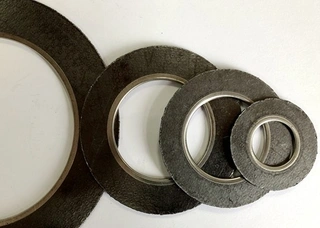
1. Material Properties
The fundamental material of a graphite gasket is expanded graphite. The purity of the graphite significantly influences its overall performance. High-purity expanded graphite, typically containing over 99% carbon, offers superior heat resistance, corrosion resistance, and flexibility, which in turn extends the gasket’s operational life. Low-purity graphite, on the other hand, contains higher levels of impurities that may lead to flaking, disintegration, and premature failure.
In addition to purity, the type of additives used in the gasket plays a critical role. Composite graphite gaskets reinforced with a metal core—such as 304 stainless steel or tinplate—exhibit significantly higher compressive strength than pure graphite gaskets. This makes them more resistant to flange deformation, pressure fluctuations, and operational stresses. Manufacturing quality also influences durability. Inconsistent compression, uneven binder distribution, or local density variations can result in stress concentration points, accelerating material fatigue and eventual gasket failure.
2. Media Characteristics
The chemical nature of the medium in which the gasket operates is another crucial determinant of longevity. Corrosive, oxidizing, or chemically reactive media can degrade graphite rapidly. Strong acids, bases, or oxidizing agents—such as nitric acid, chlorine, or caustic solutions—can chemically attack graphite, causing weight loss, flaking, and a rapid decline in sealing performance.
Conversely, milder media such as oils, water, or inert gases have minimal chemical impact, significantly extending gasket life. When selecting a gasket, operators must carefully assess the chemical compatibility of the material with the medium. Conducting compatibility tests may be necessary to avoid premature gasket failure caused by blind selection.
3. Temperature Conditions
Temperature is a significant factor influencing graphite gasket durability. Standard graphite gaskets are designed for operating temperatures ranging from approximately -200°C to 650°C. Exceeding these limits, especially for prolonged periods, can lead to thermal oxidation, uneven expansion, and decreased flange contact, resulting in leaks and reduced performance.
Frequent temperature cycling—rapid heating and cooling—also poses risks. Thermal fatigue can develop, causing microcracks, delamination, or surface degradation. In practice, industrial systems should aim to minimize rapid temperature fluctuations. When unavoidable, specially designed gaskets with enhanced thermal cycling tolerance should be considered to maintain sealing integrity.
4. Pressure and Pressure Fluctuations
Graphite gaskets must endure both the compressive load of flange preloading and the operational pressure of the medium. If operational pressures exceed the gasket’s rated compressive strength, the graphite material may extrude from the flange sealing surface, a phenomenon known as “cold flow,” which causes permanent deformation and potential leakage.
Pressure fluctuations are particularly damaging. Systems experiencing frequent pressure variations—such as those with intermittent compressor operation, valve cycling, or pulsating flows—expose the gasket to repeated alternating stresses. This can deteriorate the graphite fiber structure, reduce elasticity, and shorten the operational lifespan. In fluctuating-pressure systems, graphite gaskets often experience a 30–50% reduction in service life compared to systems operating under stable pressure conditions.
5. Flange Condition
The condition of the flange sealing surface is directly related to gasket performance. Surface flatness, roughness, and overall integrity determine how well the gasket conforms to the sealing interface. Flanges with scratches, pits, corrosion, or deformation prevent full contact, leading to localized stress, accelerated wear, and potential leakage.
The recommended surface roughness for graphite gaskets typically ranges from Ra 1.6 μm to Ra 6.3 μm. Surfaces that are too rough may scratch the gasket, while surfaces that are too smooth may hinder effective sealing. Similarly, flange parallelism deviations can cause uneven stress distribution, leading to premature localized gasket failure. Proper flange inspection and maintenance are therefore essential to maximize gasket performance.
6. Installation and Maintenance Practices
Improper installation is one of the most common human factors contributing to premature gasket failure. Insufficient flange preloading leaves gaps in the seal, while excessive torque can crush the graphite structure, compromising elasticity and sealing ability.
Bolts should be tightened in a cross-diagonal pattern to ensure uniform force distribution. Foreign debris, such as metal shavings or residual sealant, can scratch or damage the gasket surface during installation, reducing sealing reliability.
Routine maintenance is equally important. During system shutdowns, failing to inspect for wear, deformation, or flaking may result in leaks when operations resume. Over time, solid particles in the medium can abrade the gasket surface, causing additional wear. Proactive inspection and timely maintenance are essential for prolonging gasket life.
Five Practical Methods to Extend Graphite Gasket Lifespan
Based on the factors above, the following proven strategies can significantly increase the service life of graphite gaskets:
1. Scientific Material Selection: Follow the TAMP Principle
Choosing the appropriate gasket material is the first step in prolonging life. The TAMP principle—Temperature, Application, Media, and Pressure—provides a systematic approach for material selection.
Operators should evaluate:
- Medium temperature, including during cleaning processes
- Ambient environmental temperature range
- Internal system pressure
- Corrosiveness and chemical properties of the medium
- Uniformity of the sealing gap
- Frequency of flange interface operation
Different applications impose varying material requirements. Low-frequency, mild environments such as indoor electrical enclosures require different materials than high-temperature, high-pressure systems like boilers. Common options include NBR (limited temperature and pressure), EPDM or neoprene (food-grade applications), PTFE (excellent chemical resistance), and graphite (soft and high-temperature resistant).
2. Proper Storage Conditions
Storage conditions are equally important as installation. Exposure to moisture, ultraviolet light, or extreme temperatures can degrade gasket material before it is even used.
Storage best practices include:
- Avoid direct sunlight, as UV accelerates aging
- Keep away from heat sources and prevent freezing in winter
- Control humidity to prevent moisture absorption and material degradation
- Avoid hanging gaskets, which can cause distortion
- Do not place heavy objects on gaskets to prevent permanent compression
- Track production dates; rubber-based gaskets are recommended for replacement after four years
Regardless of chemical or thermal resistance, gaskets should always be stored in a cool, dry, dust-free environment, away from solvents and chemical exposure.
3. Standardized Installation Procedures
Correct installation ensures optimal gasket performance. Clean all contact surfaces thoroughly, inspect for scratches or damage, and lubricate bolts to avoid misleading torque readings.
When placing the gasket, ensure correct alignment and use a torque wrench to achieve accurate preloading. Tighten bolts gradually, following a cross-diagonal pattern, to achieve uniform compression and prevent localized over-stressing.
4. Implement Regular Inspection Protocols
Even the most durable gaskets will deteriorate over time. Regular visual inspection can detect surface degradation, material embrittlement, uneven compression, or chemical corrosion early.
Inspection frequency depends on the operating environment. Pharmaceutical plants may check monthly, whereas chemical plants with highly corrosive media may require more frequent inspections. Maintaining detailed inspection records allows operators to track wear patterns, predict replacement cycles, and plan maintenance proactively.
5. Optimize Operating Conditions
Even with proper material selection and installation, poor operating conditions accelerate wear. Key factors to monitor and optimize include:
- Amplitude and frequency of temperature fluctuations or thermal cycles
- Equipment vibration and alignment issues
- Variations in bolt preloading
- Stability of system pressure
Calibration tools should be used during installation, and periodic recalibration ensures consistent flange stress distribution. In situations with unavoidable pressure fluctuations or thermal cycling, fatigue-resistant gasket designs should be considered.
Cost Considerations and Maintenance Value
The cost of gasket replacement is significant, and unplanned downtime or additional labor often exceeds the gasket price itself. Extending gasket life therefore has substantial economic implications.
Premature gasket failure can disrupt production schedules, reduce output, and increase operational costs. Careful management of material selection, storage, and installation can significantly reduce the risk of early failure and associated expenses.
For chemical, pharmaceutical, and food-grade facilities, selecting high-temperature or chemically resistant gaskets and maintaining them properly ensures safe and uninterrupted operation. Preventive maintenance, correct installation, and proper storage are strategic investments that reduce downtime and operational costs. Partnering with reliable industrial gasket manufacturers ensures durability, regulatory compliance, and operational peace of mind.
Conclusion
Graphite gasket lifespan is influenced by multiple factors: material properties, chemical media, temperature, pressure, flange condition, and installation/maintenance practices. No single gasket is suitable for all environments, and mismatched materials are a primary cause of premature failure.
Key strategies to extend gasket life include:
- Scientific material selection based on actual operating conditions
- Proper storage to prevent material degradation before use
- Correct installation to ensure uniform preloading and sealing
- Regular inspection to detect early signs of wear or chemical attack
- Optimization of operational conditions to reduce harmful stress
By following these guidelines, operators can significantly extend graphite gasket service life, reduce operational costs, enhance equipment reliability, and achieve better economic and safety outcomes. Proper gasket maintenance is not merely a best practice but a strategic investment that supports long-term operational efficiency and safety.
Send your message to this supplier
Related Articles from the Supplier
How Long Do Graphite Gaskets Last
- Apr 09, 2026
How to Select V-Port Ball Valves for Nitrate Media
- Jun 09, 2025

How to Choose the Right Valve Materials
- Jun 10, 2025
How to Select Packing Materials?
- Jun 20, 2025
How to Deal with PTFE Gasket Creep?
- Nov 06, 2025
Related Articles from China Manufacturers


How Long Can The Disposable Protective Mask Be Used
- Mar 24, 2020
How Long Can Vacuum-packed Rice Cakes Last?
- Aug 27, 2020

How Long Can The Disposable Protective Mask Be Used
- Apr 19, 2020


How Long Does an Electric Car Battery Last?
- Jan 03, 2025

Related Products Mentioned in the Article

Supplier Website
Source: https://www.magpievalves.com/media-hub/how-long-do-graphite-gaskets-last.html