
Comparison between EPDM Gasket and PTFE Gasket
In industrial piping systems, food processing equipment, marine systems, and many other engineering applications, leakage is a persistent problem that directly affects operational safety, efficiency, and long-term equipment reliability. The primary function of a gasket is to create a tight and reliable seal between two mating surfaces, even when those surfaces are not perfectly smooth or evenly aligned. By filling microscopic gaps and compensating for surface irregularities, gaskets prevent the escape of fluids or gases.
Among the many gasket materials used in industry, EPDM (ethylene propylene diene monomer rubber) and PTFE (polytetrafluoroethylene) are two of the most widely adopted options, but they differ significantly in structure and performance. EPDM is known for its elasticity, weather resistance, and suitability for outdoor and water-based environments. PTFE, in contrast, is valued for its exceptional chemical resistance, wide temperature range, and extremely low friction coefficient, making it suitable for highly corrosive or high-performance applications.
Selecting the wrong material may lead to sealing failure, leakage, equipment downtime, or even safety hazards. Therefore, a clear understanding of both materials is essential. This article provides a structured and practical comparison of EPDM and PTFE from multiple perspectives, including physical properties, chemical resistance, mechanical behavior, and industrial applications, to help engineers make informed material selection decisions.
Basic Introduction to EPDM and PTFE Materials
In industrial sealing systems, gaskets serve the critical role of maintaining a secure barrier between two contact surfaces under pressure. Even when flange faces are not perfectly aligned or smooth, the gasket must deform and maintain contact to prevent leakage.
EPDM and PTFE are two fundamentally different types of materials used for this purpose. EPDM (ethylene propylene diene monomer) is an elastomer, meaning it behaves like rubber with high flexibility and compressibility. It performs well in environments involving water, steam, and outdoor exposure.
PTFE (polytetrafluoroethylene), on the other hand, is a fluoropolymer plastic. It is widely known under the brand name “Teflon.” PTFE gasket is characterized by its extremely stable chemical structure, which gives it outstanding resistance to heat, chemicals, and friction.
While EPDM is flexible and resilient, PTFE is rigid but highly stable under extreme conditions. These fundamental differences determine their suitability for different industrial environments.
Characteristics and Applications of EPDM Gaskets
EPDM is one of the most commonly used synthetic rubber materials in sealing applications due to its balanced performance and cost efficiency. Its suitability is mainly derived from its molecular structure and physical behavior.

1. Material Composition and Physical Properties of EPDM
EPDM stands for ethylene-propylene-diene monomer rubber. Ethylene and propylene are hydrocarbon gases that, through polymerization, form long-chain molecular structures. By introducing a diene component, cross-linking sites are created, allowing the material to achieve enhanced elasticity and durability.
From a physical perspective, EPDM exhibits several important characteristics:
- Temperature resistance: EPDM typically operates within a range of approximately -60°F to 300°F (-51°C to 149°C). One of its key advantages is its ability to maintain flexibility even at low temperatures, where many other elastomers become brittle.
- Mechanical strength: EPDM has a tensile strength of approximately 7–21 MPa. Compared with other elastomers such as silicone, nitrile rubber, and neoprene, it generally offers higher strength and better abrasion resistance, making it suitable for dynamic sealing environments.
- Electrical insulation: EPDM also has strong dielectric properties, allowing it to be used in electrical sealing and insulation applications where resistance to current leakage is required.
2. Chemical Resistance and Limitations of EPDM
EPDM performs well in many chemical environments, particularly those involving:
- Dilute acids and alkalis
- Steam and hot water
- Ketones and alcohol-based substances
- Brake fluids
However, its key limitation is poor resistance to petroleum-based products and hydrocarbons. When exposed to oils, fuels, or petroleum derivatives, EPDM tends to swell, soften, or lose mechanical integrity. This makes it unsuitable for oil pipelines or hydrocarbon processing systems.
3. Industrial Applications of EPDM
Due to its balanced properties, EPDM is widely used across industries:
- Marine systems: EPDM is commonly used in sealing and weatherproofing applications where resistance to UV radiation, saltwater, and moisture is essential.
- Electrical systems: Its insulation properties and compression recovery ability make it suitable for electrical joints and protective sealing components.
- Automotive industry: EPDM is widely used in door seals, hoses, O-rings, and coolant systems due to its heat and weather resistance.
- Outdoor and environmental applications: EPDM performs particularly well in outdoor exposure conditions, resisting ozone, UV radiation, and weathering over long periods. It also maintains stability in steam and hot water systems, making it suitable for wastewater treatment facilities.
4. Comparison with Other Elastomers
Compared with neoprene, EPDM offers better weather resistance and outdoor durability. Compared with silicone rubber, EPDM is generally more cost-effective while still providing sufficient temperature resistance and superior mechanical strength. In many industrial applications, EPDM represents a balanced solution between performance and cost.
Characteristics and Applications of PTFE Gaskets
PTFE is a high-performance engineering plastic with a very different behavior compared to elastomeric materials like EPDM. Its molecular structure gives it unique properties that are highly valued in extreme operating conditions.
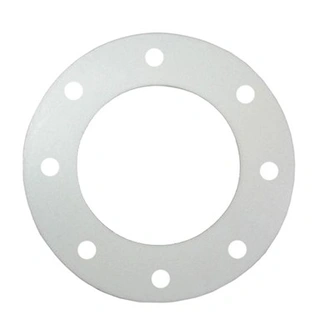
1. Material Composition and Physical Properties of PTFE
PTFE consists of carbon chains fully bonded with fluorine atoms. This strong carbon-fluorine bond creates a highly stable molecular structure with very low surface energy. As a result, PTFE has a self-lubricating surface and extremely low friction characteristics.
Key physical properties include:
- Temperature resistance: PTFE can operate in an extremely wide range, approximately -240°C to 260°C, with a melting point around 335°C. This makes it suitable for both cryogenic and high-temperature applications.
- Mechanical properties: PTFE has a tensile strength of about 3900 psi and a compressive strength of around 3500 psi. While strong under compression, it lacks elasticity and does not recover well after deformation.
- Electrical properties: It has excellent dielectric strength, making it a reliable insulating material in electrical applications.
- Surface characteristics: Its surface is highly non-stick and resistant to adhesion, which helps prevent contamination and buildup.
2. Chemical Resistance and Limitations of PTFE
PTFE is chemically inert and can resist nearly all acids, alkalis, solvents, and aggressive cleaning agents. This makes it one of the most chemically resistant materials available for industrial use.
However, PTFE has two main limitations:
It lacks elasticity, meaning it cannot effectively compensate for flange movement or surface irregularities
It is relatively difficult to process compared to elastomer materials
Despite these limitations, PTFE remains indispensable in demanding industrial environments.
3. Industrial Applications of PTFE
PTFE is widely used in industries that require high chemical and thermal stability:
- Chemical processing: Used in seals, gaskets, valve components, and pipe linings exposed to corrosive media.
- Food and beverage industry: Its non-stick and non-reactive nature ensures contamination-free processing environments.
- Pharmaceutical industry: PTFE is ideal for sterile environments due to its chemical inertness and cleanability.
- Oil and gas industry: Used in high-pressure and corrosive systems where conventional materials fail.
- Electrical applications: Used as insulation in wiring and circuit protection components.
- Filtration systems: PTFE membranes are widely used in gas and liquid filtration under harsh chemical conditions.
4. Types of PTFE Gaskets
Different types of PTFE gaskets are available depending on application requirements:
Virgin PTFE gaskets for general use
Filled PTFE gaskets reinforced with glass fiber, carbon, or graphite for improved mechanical strength
Expanded PTFE gaskets designed for better sealing adaptability
Composite PTFE gaskets combining PTFE with reinforced fibers or metal structures for extreme conditions
5. PTFE and Teflon Clarification
PTFE is commonly referred to as Teflon, which is a trademarked brand name. While Teflon products are based on PTFE, they may also include other fluoropolymers such as PFA and FEP. Therefore, material selection should always be based on actual operating conditions rather than brand terminology alone.
Key Performance Comparison Between EPDM and PTFE
- Temperature Range: EPDM operates between -51°C and 149°C, while PTFE operates between -240°C and 260°C. PTFE is clearly superior in extreme temperature environments.
- Chemical Resistance: EPDM resists water-based chemicals but fails in oil environments. PTFE resists nearly all chemical substances, making it suitable for highly aggressive media.
- Mechanical Properties: EPDM offers elasticity and flexibility, while PTFE provides rigidity and compressive strength but lacks rebound capability.
- Environmental Performance: EPDM performs well outdoors under UV and ozone exposure. PTFE performs well in chemically aggressive and low-friction environments.
- Application Summary: EPDM is best suited for outdoor, marine, automotive, and general industrial sealing. PTFE is best suited for chemical, pharmaceutical, food, and high-performance industrial systems.
Selection Guidelines for Gasket Materials
Selecting between EPDM and PTFE requires evaluating multiple factors:
- Temperature conditions: If operating conditions exceed EPDM limits, PTFE must be used.
- Chemical media: Presence of hydrocarbons requires PTFE; water-based chemicals may allow EPDM use.
- Mechanical requirements: EPDM is suitable for flexible sealing; PTFE is suitable for high-pressure static sealing.
- Environmental exposure: EPDM is preferred for outdoor weather exposure; PTFE is preferred for chemically aggressive environments.
- Industry requirements: Food and pharmaceutical industries typically require PTFE for hygiene compliance.
- Cost considerations: EPDM is more economical, while PTFE is more expensive but necessary for extreme conditions.
Conclusion
EPDM and PTFE are two fundamentally different gasket materials, each offering distinct advantages. EPDM provides excellent flexibility, weather resistance, and cost efficiency, making it suitable for general industrial and outdoor applications. PTFE offers unmatched chemical resistance and extreme temperature tolerance, making it indispensable in highly demanding environments.
There is no absolute “better” material; the correct choice depends entirely on operating conditions. A proper evaluation of temperature, pressure, chemical exposure, environmental factors, and cost considerations ensures reliable sealing performance and long-term system stability.
Send your message to this supplier
Related Articles from the Supplier
Comparison between EPDM Gasket and PTFE Gasket
- Apr 30, 2026
Comparison Data of Packing Ring Stress
- Apr 22, 2025
Guide to Gasket and O-Ring Comparison & Selection
- Jun 03, 2026
Related Articles from China Manufacturers

Comparison Between Forged Aluminum vs Forged Brass
- Apr 14, 2024

Comparison between Electric and Pneumatic Actuators
- Jun 29, 2015

Comparison between ABS and PP
- Sep 20, 2017
Comparison between Hot Rolled and Cold Rolled Pipe
- Sep 01, 2014

Related Products Mentioned in the Article

Supplier Website
Source: https://www.magpievalves.com/media-hub/comparison-between-epdm-gasket-and-ptfe-gasket.html