
Sanitary Diaphragm Valve: Structure, Advantage & Application
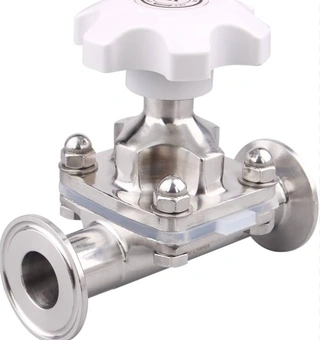
A sanitary diaphragm valve is a specialized valve designed for industries with extremely strict hygiene requirements, such as food processing, pharmaceuticals, and biotechnology. Unlike conventional valves, it uses a flexible diaphragm made of soft rubber or silicone rubber as the opening and closing element. The diaphragm is controlled by the vertical movement of the valve stem, which causes the diaphragm to bend and deform, thereby opening or closing the pipeline.
One of the most distinctive features of this valve is its ability to completely separate the internal cavity of the valve body from the cavity of the valve bonnet, forming a reliable sealing barrier. When the valve stem is in the raised position, the spherical diaphragm bends upward, creating an open passage that allows fluid to flow smoothly. When the valve stem moves downward, it drives the valve core and causes the diaphragm to bend and tightly press against the valve seat area, effectively closing the pipeline flow channel.
The term sanitary reflects the strict material selection and surface treatment of the valve. All metal components are made of corrosion-resistant stainless steel such as 304 or 316L. The sealing materials are food-grade silicone rubber or PTFE, fully complying with food hygiene standards. The sanitary diaphragm valve body undergoes high-speed precision polishing, achieving a surface roughness of Ra 0.2 μm. This ultra-smooth surface ensures a sterile structure without pores or dead corners, preventing bacterial growth.
Structural Features of Sanitary Diaphragm Valves
How does this valve achieve such excellent hygienic performance? The answer lies in its structural design. Unlike conventional valves that rely on metal-to-metal sealing surfaces, sanitary diaphragm valves operate using the deformation of a flexible diaphragm to control the opening and closing of the flow path. This design fundamentally changes the sealing mechanism and provides several advantages that traditional valves cannot easily achieve.
1. Unique Diaphragm Design
The core component of a sanitary diaphragm valve is the diaphragm, typically made from reinforced silicone rubber. This design offers several key advantages.
First, the diaphragm completely isolates the process fluid from other valve components, ensuring that the medium does not contact moving parts such as the valve stem. Second, the diaphragm is elastic and can tightly seal against the valve seat during closure, achieving zero leakage. Third, diaphragm replacement is simple and convenient, resulting in low maintenance costs.
Based on structural design, sanitary diaphragm valves are available in single-diaphragm and double-diaphragm types. Double-diaphragm valves provide improved corrosion resistance and heat resistance, making them particularly suitable for biotechnology and pharmaceutical applications. Their simple flow path design also offers a “self-cleaning” effect, enabling the valve to maintain reliable performance even when handling relatively contaminated media.
2. Multiple Connection Options
To meet various installation requirements, sanitary diaphragm valves are available with different connection types:
Clamp connection – quick installation and removal, fast operation, and the most common option in the food industry.
Welded connection – provides the best sealing performance and is suitable for permanent installations.
Quick-release connection – ideal for applications requiring frequent disassembly and cleaning.
External threaded connection – suitable for integration with standard pipe fittings.
Flanged connection – commonly used in large-diameter pipeline systems.
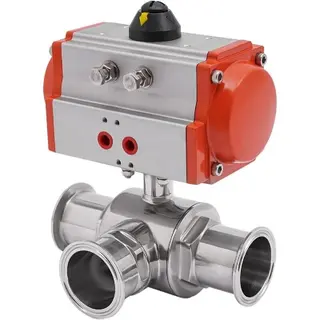
Special configurations such as T-type and U-type three-way valves are also available to accommodate complex pipeline layouts.
3. Various Actuation Methods
Sanitary diaphragm valves can be equipped with three standard actuation configurations:
Normally closed type – the valve automatically closes when the power source is lost, suitable for safety-critical applications.
Normally open type – the valve remains open when power is lost, ensuring continuous flow.
Air-to-air type – controlled by pneumatic signals, offering fast response for automated systems.
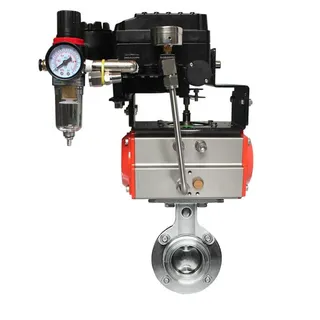
In addition to manual operation, pneumatic actuators can be installed to enable automatic control using compressed air. Pneumatic diaphragm valves feature simple structures, rapid response, and easy integration with remote control and automated systems.
Advantages of Sanitary Diaphragm Valves
- Dead-Leg-Free Design for Complete Drainage: Sanitary diaphragm valves are designed with cleaning and drainage in mind. Installation at an angle of approximately 15° to 30° (depending on valve size) is recommended to facilitate complete drainage after cleaning. When installed at about 35°, the drainage performance is optimal, ensuring that no medium remains in the pipeline. This is particularly important in the food and pharmaceutical industries, where preventing cross-contamination is critical.
- Zero Leakage for Safe Operation: The tight integration between the valve body and the diaphragm provides dual sealing protection: body sealing and seat sealing. This design completely isolates the pipeline interior from the external environment, achieving true zero leakage. This feature is especially important when handling toxic, hazardous, expensive, or high-purity media.
- Low Flow Resistance and Excellent Flow Performance: The valve body has a smooth flow path without complex internal structures, resulting in minimal fluid resistance. This makes the valve especially suitable for transporting high-viscosity materials. Even very viscous liquids can pass through easily. Compared with ball valves and butterfly valves, sanitary diaphragm valves perform better in high-viscosity applications.
- Excellent Corrosion Resistance: Because the diaphragm isolates the process medium from other valve components, and the valve body is made from stainless steel with corrosion-resistant sealing materials, sanitary diaphragm valves offer excellent corrosion resistance. They can handle strong acids, strong alkalis, highly corrosive media, and fluids containing particles or fibers.
- Simple Maintenance and Low Operating Cost: Sanitary diaphragm valves have a simple structure without vulnerable components such as stem packing or directional seats. The diaphragm is the only moving part in the flow path. This eliminates common problems found in traditional valves, such as corrosion or seizure. As a result, these valves have low failure rates and high reliability. Diaphragm replacement is quick and convenient, significantly reducing maintenance costs and downtime.
- Attractive Design and Flexible Operation: The valve features a refined appearance and high-quality surface finishing, meeting both functional and aesthetic requirements for modern industrial facilities. Whether operated manually or automatically, it offers flexible operation and rapid response.
Application Fields of Sanitary Diaphragm Valves
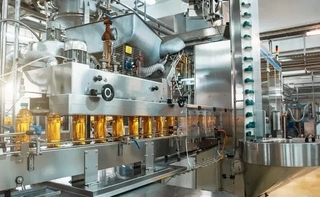
- Food Industry: In brewing, beverage production, dairy processing, and other food manufacturing sectors, sanitary diaphragm valves are essential components. From raw material processing to final product filling, reliable fluid control is required. Their dead-corner-free design and easy cleaning capabilities fully comply with food hygiene standards, ensuring product safety and quality.
- Pharmaceutical Industry: Pharmaceutical manufacturing requires extremely high cleanliness levels, especially for sterile formulations. Sanitary diaphragm valves comply with GMP requirements and are widely used in API production, formulation processing, purified water systems, and water-for-injection systems. Their zero-leakage performance ensures that pharmaceutical products remain uncontaminated.
- Biotechnology: Processes such as fermentation, cell culture, and the purification of biological products require strict microbial contamination control. With their sterile design and smooth, pore-free surfaces, sanitary diaphragm valves are an ideal choice for biotechnology applications.
- Fine Chemical and Cosmetics Industries: These industries often handle high-viscosity, corrosive, or high-value media. The excellent performance of sanitary diaphragm valves meets complex process requirements while ensuring product purity.
- Electronics Industry: Ultra-pure water preparation and distribution systems are essential in electronics manufacturing. Sanitary diaphragm valves help ensure that ultra-pure media remain uncontaminated, meeting the strict demands of semiconductor production and other high-tech applications.
- Other Industrial Fields: Sanitary diaphragm valves are also widely used in petroleum, metallurgy, chemical processing, and water treatment industries, particularly in applications involving corrosive media, viscous fluids, or strict sealing requirements.
Installation and Maintenance of Sanitary Diaphragm Valves
In practical engineering applications, some users find that valves of the same specification can perform reliably for many years, while others experience frequent failures. The difference often lies not in the product itself but in whether installation and maintenance are properly performed.
1. Sanitary Diaphragm Valve Installation Precautions
Install the valve at the recommended angle to ensure complete drainage.
Thoroughly clean the pipeline before installation to prevent debris from damaging the diaphragm.
Pay attention to the flow direction. Although diaphragm valves are typically bidirectional, some designs require a specific flow direction.
Ensure reliable sealing at connection points to prevent external contamination.
For pneumatic actuators, ensure the air supply is clean and dry and equipped with proper filtration and pressure regulation.
2. Sanitary Diaphragm Valve Routine Maintenance
Regularly inspect the diaphragm for wear and replace it if aging or damage is detected.
Keep the valve body surface clean and periodically perform CIP (Clean-in-Place) or SIP (Sterilize-in-Place) procedures.
Check connection points for looseness and tighten them when necessary.
Periodically drain condensate from pneumatic actuators and check the air system for leaks.
If the valve is not used for a long time, keep it in the open position to prevent the diaphragm from remaining compressed.
3. Sanitary Diaphragm Valve Troubleshooting
Common issues include leakage, difficult operation, and incomplete closure. Leakage is usually caused by diaphragm damage or improper installation. Operational difficulty may result from crystallized media or foreign particles obstructing movement. Incomplete closure may occur due to diaphragm wear or seat damage. Accurate diagnosis and timely repair can significantly extend the valve’s service life.
Conclusion
With its unique structural design and outstanding performance, the sanitary diaphragm valve has become an indispensable fluid control device in industries with strict hygiene requirements, including food processing, pharmaceuticals, and biotechnology. Its advantages—such as dead-corner-free design, zero leakage, easy cleaning, corrosion resistance, and simple maintenance—effectively address critical challenges in these industries.
As technology continues to advance and application demands increase, sanitary diaphragm valves will continue to evolve toward greater intelligence, higher performance, and improved reliability. By understanding their characteristics, selecting appropriate models, ensuring proper installation, and performing regular maintenance, users can fully utilize their advantages and maximize operational value.
Send your message to this supplier
Related Articles from the Supplier
Related Articles from China Manufacturers




Related Products Mentioned in the Article

Zhejiang Kosen Valve Co., Ltd.
- https://www.kosenvalve.com/
- Business Type: Industry & Trading, Manufacturer,
Supplier Website
Source: https://www.kosenvalve.com/media-hub/sanitary-diaphragm-valve-structure-advantage-application.html