
How to Replace Diaphragm in Your Diaphragm Valves
In industrial production as well as everyday applications, diaphragm valves are widely used due to their simple structure, reliable sealing performance, and ease of maintenance. As the core sealing component of a diaphragm valve, the diaphragm directly affects operational efficiency and overall system safety. Because the diaphragm operates in a continuous dynamic state, it is constantly exposed to chemical media corrosion, temperature fluctuations, and mechanical wear, which gradually leads to aging and eventual failure. Therefore, understanding diaphragm material properties, selection methods, replacement cycles, and maintenance practices is essential for ensuring stable equipment operation and reducing maintenance costs.
This article provides a systematic overview of diaphragm replacement for diaphragm valves, covering its basic functions, common material types, selection considerations, failure identification methods, replacement procedures, and maintenance strategies across different applications. It aims to help readers fully understand the key knowledge required for diaphragm replacement and management.
Basic Concepts of Valve Replacement Diaphragms
The diaphragm plays a dual role in diaphragm valves: it functions both as a sealing element and as an actuating component for flow regulation. Due to continuous dynamic operation, diaphragms inevitably age and degrade over time, making periodic replacement a necessary measure for reliable system performance.
1. Function of the Diaphragm in Valves
A valve replacement diaphragm is a critical component in diaphragm valve systems and their applications. As a dynamic sealing element, it ensures proper flow control while maintaining tight sealing performance, preventing leakage during operation.
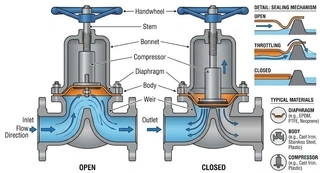
Inside the valve, the diaphragm performs two key functions. On one hand, it must tightly press against the valve seat to prevent leakage. On the other hand, it moves up and down with the valve stem to regulate flow. By isolating the process medium from the valve body structure, the diaphragm ensures stable valve operation while protecting internal components from direct chemical corrosion.
2. Why Diaphragms Need Periodic Replacement
With extended use, diaphragms gradually deteriorate due to chemical attack, temperature variation, and mechanical stress. This results in reduced efficiency and a shortened service life of the valve system. Since diaphragms have a limited lifespan, they must be replaced according to preventive maintenance schedules.
When diaphragms develop cracks, swelling, deformation, or significant wear, or when leakage, increased actuator force, unstable flow, or pressure fluctuations occur, it usually indicates that the diaphragm has reached a failure stage and must be replaced promptly. Failure to do so may lead to severe equipment damage, unplanned shutdowns, and increased maintenance and production losses.
Common Diaphragm Materials and Their Applications
The material of a diaphragm directly determines its chemical resistance, temperature resistance, and service life. Different working conditions require different diaphragm materials. Common materials include EPDM, NBR, FKM, PTFE, and silicone rubber, each with specific performance characteristics and application environments.
1. EPDM Diaphragm
EPDM is a synthetic rubber suitable for water and steam applications. It offers good heat resistance, ozone resistance, and aging resistance. In the food and beverage industry, EPDM diaphragms are commonly used in pipelines for coffee, milk, and similar media.
With regular cleaning and maintenance, EPDM diaphragms typically last 2 to 3 years. However, they are not suitable for oil-based media or strong acidic environments.
2. NBR Diaphragm
NBR is suitable for oils and fuel media and offers excellent oil resistance and wear resistance. It is widely used in petrochemical systems and fuel transportation applications involving oil-based media.
NBR performs well with mineral oil, vegetable oil, and certain fuels, but its performance decreases in high-temperature or strong oxidizing chemical environments.
3. FKM Diaphragm
FKM is suitable for high-temperature and chemically aggressive environments. It provides excellent chemical corrosion resistance and is widely used in industrial applications requiring high reliability under harsh conditions.
It has strong resistance to acids, alkalis, and organic solvents. However, its cost is relatively high compared to other materials.
4. PTFE Diaphragm
PTFE is used in strong acid and solvent environments due to its outstanding chemical resistance. However, PTFE itself has low flexibility and is usually combined with an elastomer backing layer to ensure sealing performance and mechanical flexibility.
In industrial and pharmaceutical environments, PTFE diaphragms can last up to 5 years under proper maintenance. In stainless steel valve systems, PTFE diaphragms typically provide a service life of 3 to 5 years.
5. Silicone Diaphragm
Silicone diaphragms are suitable for food-grade and high-purity applications. They offer a wide temperature range and are widely used in pharmaceutical, biotechnology, and food processing industries.
Due to their non-toxic, odorless, and high-purity characteristics, silicone diaphragms are ideal for hygienic applications.
How to Identify When a Diaphragm Needs Replacement?
Even with proper material selection, diaphragms will gradually age during operation. Early identification of failure signs helps prevent system breakdowns and unplanned shutdowns.
1. Common Signs of Diaphragm Failure
Typical indicators that a diaphragm needs replacement include:
- Leakage when the valve is in the closed position
- Unstable or reduced flow control performance
- Increased actuator operating force
- Abnormal noise during operation
- Frequent malfunction or misoperation of control valves
During visual inspection after disassembly, cracks, deformation, swelling, or significant wear on the diaphragm surface also indicate failure.
2. Importance of Regular Inspection
Regular inspection is essential for preventing diaphragm valve leakage. For continuously operating systems, inspection is recommended every 3 to 6 months. In highly corrosive or particle-laden media, inspection intervals should be shorter.
Common inspection methods include:
- Visual inspection: checking diaphragm condition after opening the valve cover
- Flow testing: measuring leakage under closed conditions
- Pressure testing: monitoring pressure differentials across the valve
These methods are simple and allow early detection of potential failures without disrupting production.
Key Considerations for Diaphragm Replacement Selection
When replacement is required, correct selection ensures long-term stable operation. Selection depends on three key factors: valve type and specifications, operating conditions, and material compatibility.
1. Confirm Valve Type and Specifications
Before selecting a replacement diaphragm, the valve type and specifications must be clearly identified. Diaphragm valves are generally classified into weir-type and straight-through designs, and each requires specific diaphragm shapes and dimensions.
The replacement diaphragm must fully match the valve model, including size, thickness, and installation method. Any mismatch may lead to sealing failure or abnormal valve operation.
2. Evaluate Operating Conditions
Operating conditions such as chemical media, temperature range, and pressure levels must be carefully evaluated. High-cycle and low-cycle applications require different selection strategies.
High temperature and high pressure conditions accelerate diaphragm wear. Corrosive media such as acids or cleaning agents also shorten service life. Fluids containing solid particles may cause mechanical abrasion. Therefore, material and structural selection must be based on actual operating conditions.
3. Material Compatibility Verification
Material compatibility must be strictly verified with the process medium. For example:
- EPDM is not suitable for oil-based media
- NBR is not suitable for strong oxidizing acids
- PTFE has excellent chemical resistance but requires backing material compatibility
Incorrect material selection can result in rapid failure and potential safety risks.
Replacement Cycles in Different Applications
Different application environments cause different levels of diaphragm wear, resulting in varying replacement cycles.
1. Household Water Purification Systems
In household water filters or low-cost plastic valves, diaphragms typically need replacement every 1 to 2 years. Without proper maintenance, failure may occur within one year.
2. Food and Beverage Pipelines
In coffee shops, beverage systems, and light industrial applications, diaphragms are generally replaced every 2 to 3 years. EPDM diaphragms can achieve this lifespan under regular cleaning conditions.
3. Pharmaceutical and Hygienic Systems
In pharmaceutical and sanitary stainless steel systems, diaphragms can last 3 to 5 years under proper maintenance. PTFE or silicone diaphragms are commonly used, combined with strict CIP (clean-in-place) cleaning procedures.
4. Industrial Chemical Pipelines
In industrial chemical systems, diaphragm replacement cycles are typically 1 to 3 years due to strong corrosion and complex operating conditions. Inspection intervals should be shortened for harsh environments.
Diaphragm Replacement Procedure
Proper replacement procedures are essential to ensure safe and effective operation.
1. Preparation Before Replacement
Before replacement, the valve and system pressure must be fully shut down to ensure safety. The correct replacement diaphragm must be prepared, ensuring material and model compatibility. Necessary tools should be ready, and operators must follow safety guidelines.
2. Disassembly and Installation
When removing the valve cover, bolts should be loosened gradually in a diagonal sequence to avoid deformation. The old diaphragm should be carefully removed, and the valve body and seat should be inspected and cleaned.
When installing the new diaphragm, ensure correct positioning without twisting. Proper contact with the valve seat must be maintained, and sealing surfaces must not be damaged.
3. Post-Replacement Testing
During reassembly, bolts should be tightened evenly in a diagonal sequence to avoid over-compression. After assembly, pressure should be gradually applied to check for leakage.
Flow and pressure tests should be conducted to verify sealing performance and control accuracy. The valve should only be returned to service after confirming there is no leakage.
Methods to Extend Diaphragm Service Life
Preventive measures can significantly extend diaphragm lifespan.
1. Proper Material Selection
Correct material selection is the most important factor in extending diaphragm life. EPDM is suitable for heat and water applications, PTFE for chemical media, and NBR for oil-based media.
2. Establish Preventive Maintenance Plans
Compared to replacing entire valves, replacing only the diaphragm significantly reduces maintenance costs and improves system reliability. Preventive replacement every 1 to 2 years is recommended to avoid unexpected failures.
3. Proper Operation and Maintenance
Keeping valves clean and avoiding debris accumulation reduces wear. Over-tightening bolts should be avoided. Regular inspections and periodic cleaning help identify issues early and extend service life.
Conclusion
Valve replacement diaphragms are essential components for ensuring the stable and continuous operation of diaphragm valve systems. Proper selection ensures leak-free performance, accurate flow control, compatibility with existing components, and extended service life.
Replacement cycles vary by application:
- Household systems: 1–2 years
- Food and beverage pipelines: 2–3 years
- Pharmaceutical systems: 3–5 years
- Industrial chemical pipelines: 1–3 years
Regular inspection, preventive maintenance, and correct material selection are key to extending diaphragm lifespan. By implementing proper maintenance strategies and standardized operating procedures, companies can significantly reduce maintenance costs, improve system reliability, and ensure safe and stable production.
Send your message to this supplier
Related Articles from the Supplier
How to Replace Diaphragm in Your Diaphragm Valves
- Jun 04, 2026
How to Choose Valves for the Chemical Industry
- Jan 13, 2025
How to Prevent Leakage in Steam Trap?
- Sep 18, 2025
How to Choose the Right Plug Valves?
- Oct 15, 2025
How to Choose the Appropriate Check Valves?
- Oct 21, 2025
How to Choose the Right Butterfly Valves?
- Oct 28, 2025
How to Choose Gaskets for Your Industrial Valves?
- Nov 04, 2025
Related Articles from China Manufacturers

How to Replace Cam Locks and Its Production Process
- Jun 29, 2023
How to Replace Diesel Generator Set Spare Parts
- Jul 30, 2024
How to Completely Replace Excavator Hydraulic Oil
- Apr 01, 2024
Related Products Mentioned in the Article

Zhejiang Kosen Valve Co., Ltd.
- https://www.kosenvalve.com/
- Business Type: Industry & Trading, Manufacturer,
Supplier Website
Source: https://www.kosenvalve.com/media-hub/how-to-replace-diaphragm-in-your-diaphragm-valves.html