
How to Choose Between DBB and DIB Ball Valves
In the oil and gas, chemical, and other industrial sectors, reliable pipeline isolation is fundamental to operational safety. When handling flammable, explosive, toxic, or high-value media, even minor leakage can lead to severe safety incidents or significant economic losses. Double Block and Bleed (DBB) and Double Isolation and Bleed (DIB) ball valves are two advanced isolation technologies that appear similar in terminology but differ fundamentally in structural design, functional characteristics, and application scenarios. Understanding these differences between DBB and DIB ball valves is essential for engineering design and safe plant operation.
What is a DBB Ball Valve?
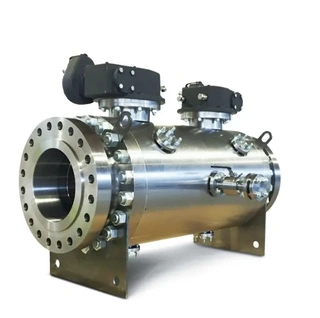
The Double Block and Bleed (DBB) valve is designed to achieve simultaneous sealing at both ends of a pipeline while providing a venting channel for the intermediate cavity. According to the American Petroleum Institute’s API 6D standard, a DBB ball valve is defined as a valve with two or more sealing surfaces that can provide bidirectional sealing against pressure from both ends in the closed position while offering a means to vent or relieve pressure trapped between the sealing elements.
From a structural perspective, DBB valves typically rely on two independent sealing elements, usually valve seats, to block upstream and downstream media respectively. When the valve is closed, each sealing surface functions independently, preventing media passage even under differential pressure conditions. Meanwhile, the cavity between the two sealing surfaces is connected to an external vent port, allowing accumulated pressure or trace leakage to be safely discharged.
The practical value of this design is reflected in several aspects. First, it provides true bidirectional isolation regardless of pressure direction. Second, the cavity venting function facilitates sealing integrity testing. By monitoring whether media discharges from the vent port, operators can verify the condition of the primary sealing surfaces. In addition, maintenance personnel can confirm that no pressure remains inside the valve cavity before disassembly, enabling safer repair operations.
Definition and Characteristics of DIB Ball Valves
The Double Isolation and Bleed (DIB) valve is defined in the API 6D standard as a valve with two or more sealing surfaces, each capable of isolating a single pressure source in the closed position while also providing cavity venting or pressure relief between the sealing elements.
The key distinction lies in the sealing capability of each seat. In a DIB valve, each sealing surface is capable of independently isolating pressure from a single side. This means that when the valve is closed, even if pressure exists on only one side, the two sealing surfaces together form a dual isolation barrier, providing a higher level of protection against leakage.
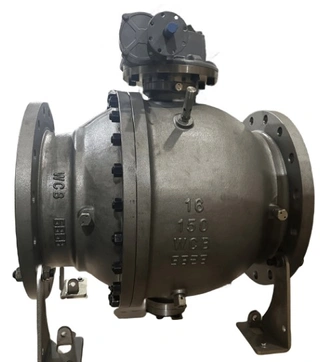
DIB valves are generally divided into two structural configurations. The first is the DIB-1 type, which uses double piston effect (DPE) sealing seats in pairs. In this design, both seats are capable of bidirectional sealing. Pressure can act on both sides of the sealing surface to enhance sealing performance. If one seat fails due to damage, pressure buildup in the valve cavity may act in reverse on the other seat, activating its sealing function and forming a fail-safe protection mechanism. However, this configuration typically requires a liquid relief kit (LRK) to release thermal expansion pressure that may develop inside the cavity.
The second configuration is the DIB-2 type, which combines a double piston effect (DPE) seat with a single piston effect (SPE) seat. The DPE seat ensures reliable sealing under bidirectional flow conditions, while the SPE seat automatically releases excess cavity pressure to the upstream or downstream side depending on the installation orientation. This design eliminates the need for external relief accessories and simplifies system structure. To avoid installation errors, manufacturers usually mark the valve body to clearly indicate the self-relieving seat location.
Key Technical Differences between DBB and DIB Ball Valves
Although DBB and DIB valves are similar in terminology and functional description, deeper analysis of their sealing mechanisms, pressure management strategies, and operational boundaries reveals fundamental differences in design philosophy and technical performance.
1. Difference in Sealing Mechanisms
The primary difference between DBB and DIB valves lies in their sealing principles. DBB valves are designed to block pressure from both ends simultaneously, with two seats typically configured as unidirectional seals responsible for blocking media pressure from one side each. This structure performs well when pressure exists on both sides but may provide reduced isolation performance when pressure exists on only one side.
In contrast, each seat in a DIB valve is capable of independent sealing, forming a dual isolation barrier under single-side pressure conditions. This significantly improves system redundancy. Even if one sealing surface suffers slight damage, the other can still prevent leakage. Therefore, DIB valves are preferred in applications requiring extremely strict leakage control, such as highly toxic media handling, high-value product transport, or environments with stringent environmental protection requirements.
2. Pressure Relief Methods
The two valve types also differ in pressure management strategies. DBB valves typically adopt self-relieving seat designs. When cavity pressure increases due to thermal expansion, the seat may automatically open a micro-flow passage to release excess pressure to the lower-pressure side. This self-regulating mechanism reduces the need for external intervention and simplifies maintenance.
DIB valves, due to their bidirectional sealing seats, form a fully enclosed cavity where media cannot be automatically discharged through the seats. Therefore, external pressure relief systems such as liquid relief kits or dedicated relief valves are required to manage cavity pressure variations. Although this increases system complexity, it also provides more precise pressure control and higher sealing reliability.
3. Application Scenario Differences
DBB valves are suitable for general isolation applications, particularly where simultaneous upstream and downstream blocking is required but single-side isolation performance requirements are relatively moderate. Typical uses include mainline pipeline shutoff valves, general process isolation points, and frequently operated systems.
DIB valves are designed for high-risk conditions, including liquefied natural gas (LNG) liquefaction, storage, and transportation systems, as well as petrochemical processes involving hazardous media. In flowmeter calibration systems, DIB valves are especially valuable because measurement accuracy is highly sensitive to even minor leakage. Their dual isolation capability ensures zero leakage during calibration, preventing measurement deviation and economic loss.
Standards and Definition Variations
Because DBB and DIB terminology is widely used in the oil and gas industry, different organizations and countries may have varying definitions, which directly influences valve selection, system design, and compliance requirements.
1. API and OSHA Definition Differences
Within the U.S. industrial standards framework, the DBB concept has two important interpretations. The first is provided by the American Petroleum Institute (API), which defines DBB valves primarily from a structural perspective. This definition emphasizes mechanical configuration and allows two unidirectional seats to be combined into a single valve assembly. However, API also notes that such a configuration cannot provide complete dual isolation protection when pressure exists on only one side.
The Occupational Safety and Health Administration (OSHA), on the other hand, defines DBB from an operational safety perspective. It describes DBB as a system configuration that isolates pipelines by closing and locking two upstream valves while opening and locking a bleed or relief valve between them. This definition essentially requires a dual-valve arrangement with an intermediate venting device, forming a “double block plus bleed” isolation system.
The practical implication of this difference is that API-certified DBB single-body valves may not fully meet OSHA isolation requirements. To resolve this conflict, some manufacturers have developed integrated dual-valve designs that combine two valves within one body, reducing weight and potential leakage points while satisfying stricter OSHA-level safety standards.
2. International Industry Practice
Beyond U.S. standards, other regions have also established relevant specifications. The British Valve and Actuator Association (BVAA) defines DBB as an integrated valve assembly that usually combines one or more isolation valves (typically ball valves) and one or more bleed valves (such as needle or globe valves) into a single unit for connection with pressure gauges or sensing instruments.
In practical engineering operations, traditional DBB systems may also be configured using two independent valves connected by a spool piece. The bleed valve is used to release pressure within the spool segment while simultaneously allowing sealing integrity verification. Although this configuration occupies more space, it facilitates maintenance and is suitable for fixed isolation points with low operating frequency.
Typical Applications
- Oil and Gas Industry: DBB and DIB valves are widely used across the oil and gas supply chain. DIB valves are commonly installed in high-pressure wellheads to prevent toxic gas leakage, while DBB valves are used in trunk pipeline shutoff and station isolation systems. In LNG processes, including liquefaction, cryogenic storage, marine transport, and regasification, DIB-1 and DIB-2 valves provide reliable dual isolation under ultra-low temperature and highly flammable conditions.
- Chemical and Refining Plants: These valves are essential for handling corrosive, high-temperature, high-pressure, or toxic media. They prevent cross-contamination in reactor, separator, and heat exchanger interfaces. Zero-leakage isolation is critical for high-purity product lines such as polymer-grade olefins. Venting functionality also supports safe maintenance by confirming cavity depressurization and enabling predictive sealing inspection.
- Measurement and Calibration Systems: DBB and DIB valves are widely applied in custody transfer metering systems where micro-leakage can cause significant measurement errors. Drip-tight sealing performance is required to ensure calibration accuracy. Standards such as API 6D certification and factory acceptance testing are recommended for quality assurance.
- Liquid Pipeline and Municipal Infrastructure: DBB ball valves are commonly used in long-distance liquid pipelines and manifold systems due to their full-bore design and block-and-bleed functionality. Double expansion gate valves with DBB capability are suitable for environmentally sensitive areas, providing stable sealing performance with reduced dependence on pipeline pressure.
Selection Principles and Operational Considerations
- Clarify Application Requirements: Valve selection should begin with a precise evaluation of operating conditions, including media hazard level, pressure and temperature range, allowable leakage rate, and potential failure consequences. For general industrial applications involving non-hazardous media, DBB valves usually provide cost-effective isolation performance. In high-consequence environments such as densely populated areas, environmentally sensitive zones, or high-value product pipelines, DIB valves are generally preferred due to their higher isolation reliability.
- Understand Standard Definitions: Since DBB and DIB terminology varies across standards, procurement specifications must clearly state the governing technical standard. When OSHA compliance is required, a single-body DBB valve may be insufficient, and a dual-valve or integrated dual-valve configuration should be verified. Testing requirements should also be emphasized. API 6D specifies factory pressure and sealing performance tests, and witnessed factory acceptance testing is strongly recommended for critical applications.
- Maintenance and Operation: Lifecycle cost is often more significant than initial purchase cost. DBB valves with self-relieving seats require relatively simpler maintenance, while DIB valves equipped with external relief systems need periodic inspection but offer more flexible pressure control. Operating frequency should also be considered. High-cycle applications are better suited to wear-resistant ball valve structures, whereas long-term isolation points may be more suitable for gate or plug valves.
- Manufacturer Qualification: Valve quality largely depends on the manufacturer’s engineering capability and production process. Suppliers with API 6D certification can better ensure compliance with international standards. For special applications such as cryogenic LNG service, the manufacturer’s technical experience and project track record should also be evaluated. Technical support is equally important, including correct installation orientation (especially for DIB-2 configurations), proper operating torque, and maintenance guidance, all of which directly affect valve performance and service life.
Conclusion and Future Outlook
DBB and DIB ball valves are essential safety components in modern industrial pipeline systems, providing reliable isolation protection for hazardous media through dual sealing and venting designs. DBB valves, with bidirectional sealing and self-relieving characteristics, are suitable for most general industrial applications, while DIB valves meet the most stringent zero-leakage requirements through dual independent isolation barriers.
With continuously improving industrial safety standards and increasingly stringent environmental regulations, the application scope of these technologies will keep expanding. Emerging sectors such as hydrogen energy and carbon capture will create new demands for high-pressure and high-purity media isolation, offering new development opportunities for DBB and DIB valve technologies. A thorough understanding of their operational differences and application boundaries is essential for ensuring industrial safety, protecting the environment, and improving economic efficiency.
Send your message to this supplier
Related Articles from the Supplier
How to Choose Between DBB and DIB Ball Valves
- Mar 05, 2026
How to Choose Valves for the Chemical Industry
- Jan 13, 2025
How to Choose the Right Plug Valves?
- Oct 15, 2025
How to Choose the Appropriate Check Valves?
- Oct 21, 2025
How to Choose the Right Butterfly Valves?
- Oct 28, 2025
How to Choose Gaskets for Your Industrial Valves?
- Nov 04, 2025
How to Choose Your Right Diaphragm Valves?
- Nov 14, 2025
Related Articles from China Manufacturers


Related Products Mentioned in the Article

Zhejiang Kosen Valve Co., Ltd.
- https://www.kosenvalve.com/
- Business Type: Industry & Trading, Manufacturer,
Supplier Website
Source: https://www.kosenvalve.com/media-hub/how-to-choose-between-dbb-and-dib-ball-valves.html