
Bidirectional Sealing of Triple-Eccentric Butterfly Valve
The triple-eccentric bidirectional sealing butterfly valve is an advanced valve device used in industrial piping systems, primarily designed to control the on-off operation and flow regulation of the medium within pipelines. Compared with traditional butterfly valves, this valve adopts a unique "triple-eccentric" structural design, enabling complete sealing in both directions, which is why it is called "bidirectional sealing."
The term "triple-eccentric" refers to three eccentricities in the valve design: the first eccentricity refers to the offset between the valve stem centerline and the valve body centerline; the second eccentricity refers to the offset between the valve stem centerline and the disc sealing surface centerline; and the third eccentricity refers to the parabolic shape of the disc sealing surface. The combination of these three eccentricities allows the disc to follow a unique movement trajectory during opening and closing, avoiding friction between sealing surfaces and thus extending the service life of the valve.
Core Structural Features
The ability of the triple-eccentric butterfly valve with bidirectional sealing to achieve reliable sealing under harsh conditions lies in its unique structural design. These designs not only address the sealing challenges of traditional butterfly valves but also significantly enhance valve lifespan and operational performance. The following details the four core structural features.
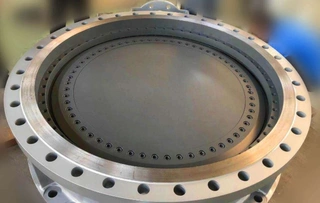
1. Floating Seat Structure
The triple-eccentric bidirectional sealing butterfly valve uses a floating seat design. The core advantage of this design is that the seat is not rigidly fixed to the valve body but has a certain degree of freedom. When the valve closes, the seat can automatically adjust according to the position of the disc to ensure optimal contact between them.
In actual use, corrosion and damage of the valve seat are inevitable. In traditional butterfly valves, once the seat is damaged, the valve must be shut down for maintenance and seat replacement. In the triple-eccentric bidirectional sealing butterfly valve, the perimeter of the seat seal ring increases with the angle of eccentricity. When the seat is corroded or damaged, the operator only needs to adjust the closing position, increase the angle of eccentricity and the elastic compression of the seat, and through the engagement between the disc and seat during opening and closing, the seat damage can be eliminated. The floating function of the seat ensures that after the valve closes, the disc and seat always maintain the optimal sealing position, thereby preventing leakage.
2. Eccentric Parabolic Sealing Surface
The disc sealing surface adopts an eccentric parabolic geometry, which has a defined curvature characteristic. The advantage of the parabolic shape is that when the valve opens or closes, the movement trajectory of the disc perfectly matches the parabolic shape, making operation more effortless.
From a mechanical perspective, this curvature characteristic effectively reduces the friction torque on the seat and the radial eccentricity, thereby lowering the eccentric moment. Under the same operating conditions, the eccentricity of a triple-eccentric metal bidirectional sealing butterfly valve is only 40% to 60% of that of a unidirectional sealing butterfly valve. This means the torque on the valve stem is significantly reduced. Using the same materials and actuator force, the triple-eccentric metal bidirectional sealing butterfly valve can meet higher process requirements.
3. Composite Seal Ring Design
The seat seal of high-performance triple-eccentric bidirectional hard-sealing butterfly valves uses a composite structure of a soft T-shaped seal ring with multiple stainless steel layers on both sides. This design combines the advantages of metal hard sealing and soft sealing.
The specific structure includes: the sealing surfaces of the disc and seat adopt a bevel conical structure, with the disc conical surface overlaid with temperature- and corrosion-resistant alloy material; the spring fixed between the adjustment ring and pressure plate is assembled with the adjustment bolts on the plate. This structure effectively compensates for tolerances between the bushing and valve body and the elastic deformation of the stem under medium pressure, thereby resolving the sealing issues in bidirectional medium flow.
Whether under low or high-temperature conditions, this composite sealing structure maintains zero-leakage performance. Test data shows that under forward flow (the direction of medium flow is the same as the disc rotation), the pressure on the sealing surface is generated jointly by the torque of the actuator and the medium pressure on the disc. The greater the forward medium pressure, the tighter the contact between the disc conical surface and the seat sealing surface, resulting in better sealing.
4. Wedge-Block Transmission Mechanism
The bidirectional metal-sealing butterfly valve adopts a unique wedge-block transmission mechanism, mainly composed of lower wedge block shaft, upper wedge block shaft, guide blocks, and other components.
The working principle is divided into two stages:
- Closing process: The stem rotates clockwise; the guide block directs the stem to rotate the disc 90° to the right, aligning the disc sealing surface parallel to the valve body sealing surface. The stem continues to rotate clockwise, and the guide block directs the stem downward, pushing the upper and lower wedge blocks. The wedge faces push the disc to contact the valve body sealing surface, achieving sealing.
- Opening process: The stem rotates counterclockwise; the guide block directs the stem upward, pushing the wedge blocks upward. The wedge faces drive the disc to translate, separating the disc sealing surface from the valve body sealing surface. After moving a certain eccentric distance, the stem continues to rotate counterclockwise; the guide block directs the stem to rotate, rotating the disc 90° to the left until fully open.
The core advantage of this design is that the disc rotates only after being offset a certain distance relative to the valve body sealing surface, preventing interference or friction during opening and closing.
The disc is equipped with a wedge-shaped dovetail groove; the stem’s vertical movement drives the wedge blocks, which apply sealing force to the disc sealing surface. This structure not only enhances sealing performance but also compensates for wear, improving the reliability of metal-sealing butterfly valves. The wedge faces push the disc in a reciprocating linear motion along the dovetail groove, allowing contact or separation from the valve body sealing surface and effectively reducing surface abrasion.
Since the disc first moves linearly and then rotates, this design extends the opening and closing time, reducing hydrodynamic torque. Moreover, both the disc and valve body sealing surfaces are conical, ensuring reliable sealing while maintaining relatively simple design and machining.
Technical Performance Advantages
- Zero Leakage Performance: The elastic metal seat of the triple-eccentric bidirectional sealing butterfly valve ensures zero leakage. The parabolic seal maintains bidirectional zero-leak performance during continuous operation, which is especially important for pipelines conveying toxic, hazardous, or flammable media.
- Intrinsic Fire Safety: With an all-metal structure and zero-leak capability, the valve has intrinsic fire safety. Even under extreme conditions like fire, the metal sealing structure maintains some sealing, unlike rubber or plastic seals, allowing more time for emergency response.
- Super-Hard Coating: The disc sealing surfaces undergo super-hard coating treatment, significantly improving hardness and wear resistance, extending service life, particularly for media containing solid particles or high abrasion.
- Bidirectional Pressure Capability: While traditional butterfly valves achieve reliable sealing in only one direction, the triple-eccentric design ensures reliable sealing under both forward and reverse flow. In reverse flow, the disc is pressed against the seat by actuator torque. As reverse pressure increases, the spring in the adjustment ring compensates automatically to maintain seal tightness. The thrust from the wedge blocks on the upper and lower stem overcomes reverse flow pressure, ensuring reliable sealing in bidirectional flow.
- Torque Optimization: The triple-eccentric design reduces eccentric moment, lowering torque on the valve stem. This allows the use of smaller actuators, reduces energy consumption, or enables the valve to handle higher pressure under the same actuator force.
Application Fields
As a key component for pipeline on-off and flow control, triple-eccentric bidirectional sealing butterfly valves are widely used in various industrial fields.
- Petrochemical Industry: Pipelines often convey high-temperature, high-pressure, and corrosive media. The valve’s high-temperature and corrosion resistance, combined with reliable sealing, make it ideal for refineries and chemical production facilities.
- Metallurgical Industry: High-temperature gases, hot air, and other media require valves that maintain stable sealing in high-temperature environments. The triple-eccentric metal hard-sealing valve meets control requirements for furnaces, gas pipelines, and other metallurgical systems.
- Power Industry: In thermal and nuclear power plants, pipelines conveying steam and cooling water require valves with excellent sealing and reliability. The bidirectional sealing property is particularly suitable for systems where flow direction may change.
- Water Treatment and Supply Systems: Urban water supply and wastewater treatment systems require long-term stable operation with low maintenance costs. The valve’s long lifespan and low friction reduce maintenance frequency and operating costs.
- Other Industrial Fields: The valve also plays an important role in paper, food, pharmaceutical, and shipbuilding industries, especially where high hygiene standards or complex media exist.
Installation and Maintenance Points
- Preparation: Verify markings and certificates; ensure internal cleanliness.
- Installation Position: Can be installed at any position on pipelines, but valves with actuators should be upright, with the actuator perpendicular to horizontal pipelines.
- Flow Direction: Preferably, medium should flow from the stem toward the sealing surface, as forward sealing is better. Although bidirectional sealing is possible, installing according to design flow ensures optimal performance.
- Connection Requirements: Flange bolts should be tightened diagonally in multiple passes to prevent uneven force and leakage.
- Operation: Open counterclockwise, close clockwise according to indicators. For electric valves, first manually open halfway to verify actuator and valve alignment.
- Maintenance: Stop operation immediately upon detecting faults and identify and remove the cause. Uninstalled valves should be stored indoors in dry conditions, neatly stacked, and protected from corrosion. For long-term storage, clean, dry, and apply anti-rust oil; protect flange surfaces with blind plates.
Selection Recommendations
Consider the following when selecting a triple-eccentric bidirectional sealing butterfly valve:
- Medium Characteristics: Temperature, pressure, corrosiveness, and presence of solids. High-temperature, high-pressure media require full-metal seals; corrosive media require corrosion-resistant materials.
- Pipeline Parameters: Diameter, operating pressure, and flow requirements. Large pipelines require higher-strength models.
- Operation Frequency: High-frequency applications require low-friction valves to extend lifespan and reduce operating force.
- Sealing Requirements: For strict zero-leak applications, select models with elastic compensation.
- Installation Space: Consider space constraints and select suitable connection types and structural length.
Conclusion
The triple-eccentric bidirectional sealing butterfly valve represents the development direction of modern industrial valve technology. Its unique triple-eccentric structure, floating seat, composite seal ring, and wedge-block transmission mechanism together create an efficient, reliable, and durable pipeline control system.
This valve not only solves the sealing problems of traditional butterfly valves under high temperature, high pressure, and corrosive conditions but also adapts to complex processes through bidirectional sealing. Although its manufacturing cost is higher than conventional butterfly valves, considering longer service life, lower maintenance costs, and higher reliability, the valve provides significant economic benefits in critical applications.
For engineers and procurement professionals, a deep understanding of the working principles and technical characteristics of triple-eccentric bidirectional sealing butterfly valves helps make correct selection decisions, ensuring safe, stable, and efficient operation of pipeline systems.
Send your message to this supplier
Related Articles from the Supplier
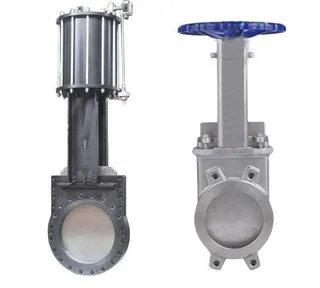
Knife Gate Valves: Unidirectional vs. Bidirectional
- Dec 31, 2024
Related Articles from China Manufacturers

Related Products Mentioned in the Article

Zhejiang Kosen Valve Co., Ltd.
- https://www.kosenvalve.com/
- Business Type: Industry & Trading, Manufacturer,
Supplier Website
Source: https://www.kosenvalve.com/media-hub/bidirectional-sealing-of-triple-eccentric-butterfly-valve.html