
Balanced Pressure Steam Trap: Principle, Advantage & Use
In industrial steam systems and HVAC equipment, steam traps are critical components for ensuring efficient operation. Among various types, balanced pressure steam traps are widely preferred due to their unique temperature-sensing mechanism and reliable automatic regulation. This article provides a systematic overview of balanced pressure steam traps, covering their basic structure, working principles, technical advantages, typical applications, energy-saving benefits, and operational considerations, helping engineers and procurement professionals gain a comprehensive understanding of their characteristics and suitable applications.
What Is a Balanced Pressure Steam Trap?
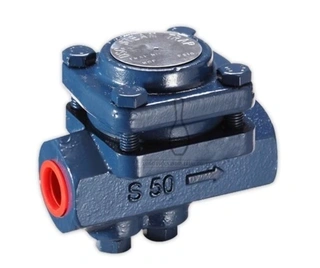
Balanced pressure steam traps are a type of temperature-controlled trap. They automatically open and close based on the temperature difference between steam and condensate. When steam enters the trap, its high temperature closes the valve; when steam condenses into water, the temperature drops, and the valve reopens to discharge condensate from the system. This temperature-based control allows stable operation under varying pressures.
The core component of this trap is a thin-walled metallic bellows. The bellows is connected to the valve stem of the internal valve, forming a complete actuation mechanism. Inside the bellows is typically a small amount of low-boiling-point liquid, often a water-alcohol mixture, contained in a near-vacuum state. The low boiling point ensures that when steam heat reaches the bellows, the internal liquid vaporizes quickly, creating high internal pressure that expands the bellows and closes the valve. The overall structure is compact yet highly effective in discharging condensate, making it suitable for diverse industrial environments.
Working Principles and Operating Mechanism
With the basic structure clarified, we can examine how the unique design of the bellows enables automatic, precise condensate discharge. The operation can be divided into startup and normal running phases.
1. Temperature Sensing and Bellows Operation
The balanced pressure steam trap works based on the pressure equilibrium between the internal bellows liquid and the external steam. At ambient or low temperatures, the internal liquid remains in liquid form, maintaining low pressure. The bellows contracts, and the valve stays open. When steam enters, heat is transferred through the bellows wall, causing the liquid to boil rapidly and increase internal pressure. Once the internal pressure exceeds the external steam pressure, the bellows expands, pushing the valve stem to close the valve and prevent steam leakage.
As the steam cools and condenses into water, the condensate temperature falls below the saturated steam temperature. The internal vapor pressure of the bellows decreases, the bellows contracts, and the valve reopens, allowing condensate to be discharged under system pressure. This cycle occurs automatically without any manual adjustment.
2. Air Discharge During Startup
During system startup, pipes and equipment contain air. When air enters the trap, the bellows has not yet been heated, so the valve remains fully open, allowing air to escape efficiently. This makes balanced pressure traps particularly effective in systems requiring rapid air removal, shortening startup time and improving operational efficiency.
3. Cyclic Operation During Normal Running
In normal operation, steam continuously enters the trap. The internal liquid in the bellows keeps evaporating, maintaining high pressure and keeping the valve closed to prevent steam from entering the condensate return line. As the steam releases heat and condenses, the temperature drops, internal pressure decreases, and the valve opens to discharge condensate. When new steam enters, the valve closes again. This periodic opening and closing ensure timely condensate removal while minimizing steam loss.
Key Technical Advantages of Balanced Pressure Steam Trap
The temperature-driven bellows mechanism gives balanced pressure steam traps several distinct advantages that outperform other types of traps under certain conditions.
1. Excellent Air Discharge Performance
At startup, the fully open valve enables efficient removal of air and low-temperature condensate. Air removal is critical because trapped air forms a gas blanket on heat transfer surfaces, reducing efficiency and increasing energy consumption. Rapid air discharge helps the system reach normal operating conditions faster.
2. Automatic Regulation and Pressure Adaptability
The trap operates based on the pressure difference between the internal bellows liquid and external steam, giving it self-regulating capability. Within a certain operating pressure range, the trap can automatically adapt to pressure fluctuations without external adjustment, simplifying commissioning and reducing maintenance requirements.
3. Freeze Resistance and Compact Design
When installed for free discharge, balanced pressure steam traps are less prone to freezing in low-temperature environments. After valve closure, no liquid remains inside, preventing ice expansion damage. Despite their compact size, these traps can handle significant condensate loads, making them suitable for space-limited installations.
Suitable Applications for Balanced Pressure Steam Trap
Due to their air discharge efficiency, self-adaptive pressure response, and compact design, balanced pressure steam traps are ideal for specific industrial scenarios. Understanding their typical applications aids engineers in precise selection.
1. Industrial Steam Systems
Balanced pressure steam traps are commonly used in industrial heating equipment, heat exchangers, and process pipelines. Their reliable automatic adjustment and strong condensate discharge capabilities meet most industrial requirements. Systems with fluctuating steam pressures particularly benefit from the trap’s self-regulation.
2. HVAC Systems
In HVAC systems, steam trap performance directly affects efficiency and reliability. Balanced pressure traps are typically installed on the discharge side of heating equipment. They efficiently remove air and subcooled condensate during startup while preventing steam from entering return lines, ensuring stable system operation.
Under ambient conditions, the trap remains fully open, allowing free air and condensate discharge. As temperature rises near steam saturation, the volatile internal liquid expands, moving the control element to close the valve and prevent steam loss. The trap maintains a fixed discharge temperature below steam saturation, closely following system pressure and temperature variations to optimize performance.
3. Steam Tracing Systems
Balanced pressure traps are especially suitable for steam tracing applications, where maintaining pipeline temperature is critical. These traps discharge condensate in a subcooled state, allowing not only latent heat recovery but also the extraction of sensible heat from condensate to sustain fluid temperature. This reduces overall steam consumption and lowers fuel costs.
Unlike conventional traps that discharge condensate near steam temperature, balanced pressure traps retain condensate in the line longer and release it roughly 20°C below saturation, providing an additional ~20 kcal/hr of heat energy for transfer. This feature is advantageous in tracing systems, where the primary goal is maintaining medium viscosity rather than delivering high-temperature heat.
Energy-Saving Analysis
The subcooled discharge characteristic of balanced pressure steam traps translates directly into measurable energy savings.
1. Subcooled Discharge and Sensible Heat Recovery
By allowing condensate to release additional heat before discharge, these traps improve thermal efficiency, reducing total steam consumption and fuel costs. Conventional traps discharge near saturation, leaving latent energy unused. Balanced pressure traps utilize delayed discharge to extract additional heat, enhancing energy utilization.
2. Practical Energy Saving Example
At a working pressure of 3 barg, condensate discharged by a conventional trap at saturation contains roughly 144 kcal/kg of enthalpy. A balanced pressure trap discharges condensate 20°C below saturation, with an enthalpy of ~124 kcal/kg, recovering ~20 kcal/kg of additional heat. For a system with 30 kg/hr condensate load, the total energy saved is ~600 kcal/hr, equivalent to ~1.18 kg of steam per hour. Over a year, continuous operation can save approximately 8.5 tons of steam, significantly reducing operational costs and improving energy efficiency in large industrial systems.
Limitations and Operational Considerations
Despite their benefits, balanced pressure traps have limitations that must be considered to prevent operational issues.
1. Superheated Steam Conditions
Since these traps rely on temperature differences, superheated steam can prevent proper operation. Excess steam temperature keeps the bellows liquid continuously evaporating, preventing valve opening and condensate discharge. Therefore, balanced pressure traps are unsuitable for superheated steam systems, and selection should confirm saturated steam operation.
2. Water Hammer and Corrosion
The thin-walled bellows design has limited resistance to water hammer. Rapid pressure fluctuations or sudden valve operation can damage the bellows, shortening service life. Additionally, corrosive condensate can degrade internal components, affecting performance and stability. In corrosive environments, stainless steel bellows or protective measures are recommended.
3. Subcooled Discharge Trade-offs
Subcooled discharge provides energy recovery but may extend condensate retention time in systems that require rapid drainage, potentially reducing heat transfer efficiency. Selection should balance energy savings against operational needs.
Selection and Maintenance Recommendations
Proper selection and maintenance are critical to ensuring long-term stability and maximizing energy-saving potential.
1. Selection Guidelines
Confirm the system uses saturated steam, not superheated. Consider maximum condensate load, operating pressure range, and allowable back pressure when choosing trap size and discharge capacity. For tracing applications, verify that subcooled discharge aligns with process temperature requirements. In corrosive conditions, prioritize stainless steel or specially treated models.
2. Maintenance Recommendations
Regularly inspect discharge performance and temperature behavior. Continuous steam discharge or blocked drainage may indicate bellows damage or liquid leakage and requires replacement. In cold regions, free discharge installation is recommended to prevent freezing during shutdown. Minimize pressure shocks, and consider installing upstream buffer devices to extend bellows life.
Conclusion
Balanced pressure steam traps, with their temperature-sensing automatic operation, compact design, efficient air discharge, and notable energy-saving performance, are widely applied in industrial steam systems and HVAC applications. In steam tracing systems, subcooled discharge allows additional condensate heat recovery, reducing fuel consumption. However, limitations such as unsuitability for superheated steam and limited water hammer resistance must be considered. Through proper selection and maintenance, balanced pressure steam traps can ensure long-term, stable operation, supporting enterprises in achieving energy efficiency and cost reduction goals.
Send your message to this supplier
Related Articles from the Supplier
A Complete Guide to Balanced Bellows Safety Valve
- May 21, 2026
Related Articles from China Manufacturers

Related Products Mentioned in the Article


Zhejiang Kosen Valve Co., Ltd.
- https://www.kosenvalve.com/
- Business Type: Industry & Trading, Manufacturer,
Supplier Website
Source: https://www.kosenvalve.com/media-hub/balanced-pressure-steam-trap-principle-advantage-use.html