Optimization Strategies for Zinc Alloy Die-Casting Process
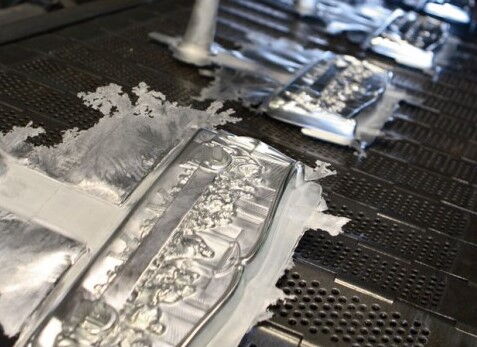
In modern manufacturing, the zinc alloy die-casting process has been widely favored for its efficiency and high-quality finished products. However, to achieve the desired casting effect, it is necessary to consider many details in the process formulation. This article will explore in depth the key points of the zinc alloy die-casting process and provide practical optimization strategies to help manufacturers improve production efficiency and product quality.
The gating system is the core link in the zinc alloy die-casting process. It directly affects the flow state of the molten metal in the cavity, which in turn determines the quality of the casting. An ideal gating system should ensure that the molten metal flows cleanly and smoothly, avoiding separation and turbulence. These phenomena may cause pores or inclusions inside the casting, thereby reducing the strength and durability of the product.
When designing the gating system, special attention should be paid to the following aspects:
Sharp corners and dead zones are common problems in the gating system. Sharp corners will cause the molten metal flow to be blocked, forming turbulence, while dead zones are areas where the molten metal stagnates. These areas tend to accumulate gases and impurities, which eventually enter the interior of the casting, forming defects. Therefore, in the design of the gating system, smooth transitions and reasonable flow channel layouts should be adopted as much as possible to avoid the appearance of sharp corners and narrow areas.
The change in the cross-sectional area of the gating system will also affect the flow of molten metal. Sudden changes in cross-sectional area will cause sharp changes in the velocity of the molten metal, thereby generating turbulence and separation phenomena. To avoid this situation, the change in cross-sectional area should be gradual during design so that the molten metal can transition smoothly.
Venting and overflow channels are indispensable parts of the gating system. Their main function is to discharge the gas and excess molten metal in the cavity to prevent pores and inclusions. The venting channels should be designed at the end of the molten metal flow to ensure that the gas can be smoothly discharged. At the same time, the cross-sectional area of the venting channels should be large enough to avoid being blocked by the molten metal. The overflow channels should be set at positions where pores are likely to occur, and the total cross-sectional area should not be less than 60% of the total cross-sectional area of the inner gate; otherwise, the slag removal effect will be greatly reduced.
With the continuous advancement of technology, computer simulation has become an indispensable tool in the zinc alloy die-casting process. By simulating the filling process, the flow state of the molten metal in the cavity can be visually analyzed, and potential problems such as turbulence, separation, and pores can be detected in advance. This not only saves time and cost but also helps engineers select reasonable process parameters and optimize the design of the gating system.
Computer simulation can simulate different process conditions, such as pouring speed, temperature, gate position, etc., to find the best combination of process parameters. For example, simulation can show that reasonable injection speed and high-speed switching points are crucial to reducing pore formation. Sequential filling design is also beneficial for gas venting in the cavity, ensuring that the molten metal flows smoothly.
Porosity is one of the most common defects in zinc alloy castings, directly affecting the strength and durability of the casting. The formation of pores is usually related to the gas content in the molten metal. Therefore, when solving the porosity problem, it is necessary to start from multiple aspects.
First, it is necessary to analyze the specific causes of porosity. Common causes include excessive gas generation, improper spraying process, excessive or burned punch lubricants, etc. These factors can cause gases to enter the molten metal, forming pores. Therefore, during production, these factors should be strictly controlled to ensure the purity of the molten metal.
Dry and clean alloy material is the key to reducing porosity. During melting, the alloy material should be prevented from getting damp or mixed with impurities. At the same time, controlling the melting temperature is also very important. Excessive temperature will cause the alloy liquid to absorb gas, increasing pore formation. Therefore, the melting temperature should be strictly controlled within an appropriate range to avoid overheating.
Reasonable selection of die-casting process parameters, especially injection speed, is crucial to reducing pore formation. Excessive injection speed will cause the gas in the molten metal to fail to discharge in time, forming pores. Therefore, the injection speed and high-speed switching point should be reasonably adjusted according to the shape and wall thickness of the casting to ensure that the molten metal can fill the cavity smoothly.
In addition, changing the gate thickness and direction, and setting overflow and venting channels at positions where pores are likely to form can optimize the flow state of the molten metal and reduce the occurrence of pores.
Zinc alloy melting is an important part of the die-casting process. The melting process not only needs to obtain molten metal but also to ensure that the chemical composition of the molten metal meets the requirements, achieves good crystallization, and reduces gas and inclusions. Therefore, the correct melting process specification is an important guarantee for obtaining high-quality castings.
The melting point of zinc alloy is 382°C to 386°C, and proper temperature control is an important factor in component control. To ensure good fluidity of the alloy liquid, the molten metal temperature in the zinc pot of the die-casting machine should be controlled at 415 ~ 430°C. For thin-walled and complex parts, the upper limit can be used; for thick-walled and simple parts, the lower limit can be used. The molten metal temperature in the central melting furnace should be controlled at 430 ~ 450°C.
Excessive melting temperature will cause the reaction between the iron crucible and zinc liquid to accelerate, forming oxides and compounds, increasing the generation of zinc dross. At the same time, high temperature will lead to the burning loss of aluminum and magnesium elements, the acceleration of metal oxidation, and increased burning loss. In addition, thermal expansion may cause the hammer head to seize, increase fuel consumption, and reduce the mechanical properties of the casting.
Too low a melting temperature will lead to poor alloy fluidity, which is not conducive to forming and affects the surface quality of the die-casting. Therefore, maintaining temperature stability is crucial.
Modern die-casting machine zinc pots or melting furnaces are usually equipped with temperature measurement and control systems. The accuracy of temperature measuring instruments should be checked regularly, and the actual furnace temperature should be measured with a portable thermometer for correction. Experienced die-casting operators can judge the temperature by observing the state of the molten metal. If the molten metal is not too viscous after skimming, and the slag does not rise too quickly, the temperature is suitable; if the molten metal is too viscous, the temperature is low; if a layer of white frost appears quickly after skimming, and the slag rises too fast, the temperature is high and should be adjusted in time.
The best method is to use a central melting furnace, with the die-casting machine furnace as a holding furnace, to avoid large temperature fluctuations caused by directly melting zinc ingots in the zinc pot. Centralized melting can ensure the stability of the alloy composition. In addition, an advanced automatic metal feeding system can be used to maintain a stable feeding speed, alloy liquid temperature, and zinc pot liquid level. If it is necessary to add material directly into the zinc pot, it is recommended to add small pieces of alloy ingots several times instead of a whole ingot at once to reduce temperature fluctuations.
The generation of zinc dross is an unavoidable phenomenon during melting. The formation of zinc dross is mainly due to chemical reactions between gases and molten metals, among which oxygen reacts most strongly. The alloy surface oxidizes to produce floating dross, which contains oxides and Fe, Zn, and Al intermetallic compounds. The reaction rate of zinc dross formation increases exponentially with the rise in melting temperature.
Under normal conditions, the dross yield of original zinc alloy ingots is less than 1%, within 0.3 ~ 0.5%; the dross yield of remelted runners and scrap castings is usually 2 ~ 5%. To reduce zinc dross formation, the following measures can be taken:
Avoid stirring the molten metal: Any form of agitation will increase the contact between the molten metal and oxygen in the air, resulting in more dross. Therefore, unnecessary stirring should be avoided during melting.
Strictly control melting temperature: The higher the temperature, the more zinc dross is generated. Therefore, the melting temperature should be strictly controlled within a proper range to avoid excessive temperature leading to large amounts of dross.
Proper skimming: When molten alloy is exposed to air, oxidation occurs, forming dross. Keeping a thin layer of floating dross on the furnace surface helps prevent further oxidation. When skimming, a porous (Ф6 mm) disc-shaped skimming rake should be used to gently scrape under the floating dross to minimize agitation of the molten metal. The skimmed dross should be gently tapped on the edge of the zinc pot to allow the molten metal to flow back.
Avoid using electroplating scrap: Electroplating scrap contains metals such as copper, nickel, and chromium, which are insoluble in zinc and exist as hard particles in the alloy, causing difficulties in polishing and machining. Therefore, electroplating scrap should not be directly remelted in the zinc pot for die-casting.
Control the use of runner material: The surface of runner material oxidizes during the die-casting process, and its zinc oxide content is much higher than that of original ingots. When remelted, zinc oxide becomes viscous at high temperatures, taking away a large amount of alloy components. Therefore, the use of runner material should be minimized, or it should be pretreated to reduce zinc oxide content before use.
Coating and spraying processes also play an important role in zinc alloy die-casting. Proper coatings can prevent mold sticking, reduce surface defects, and improve surface quality. However, improper coating use or excessive spraying can cause large gas emissions, increasing porosity.
Therefore, when selecting coatings, high-performance coatings should be chosen, and the amount of spray should be strictly controlled. Spraying should ensure uniform coating distribution, avoiding areas that are too thick or too thin. At the same time, the spraying parameters should be reasonably adjusted according to the shape and wall thickness of the casting to ensure that the coating performs effectively.
The zinc alloy die-casting process is a complex procedure involving multiple stages and factors. Through reasonable gating system design, application of computer simulation, control of porosity, optimization of melting processes, and proper coating and spraying methods, the quality and performance of zinc alloy die-castings can be effectively improved. Manufacturers should continuously optimize process parameters according to their production conditions and product requirements to improve efficiency, reduce costs, and gain an advantage in fierce market competition.
In actual production, continuous experience accumulation and process parameter adjustment through practice are essential. Only in this way can the optimization of the zinc alloy die-casting process be truly achieved, leading to the production of high-quality products.
