Investment Casting: A High-Precision Metal Casting Technology
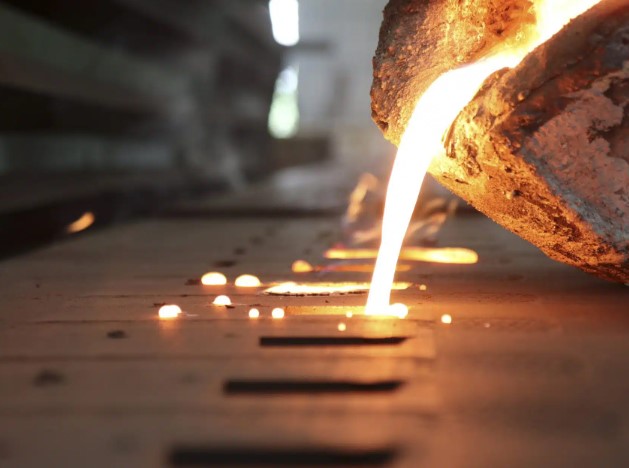
In modern manufacturing, the demand for precision metal components is steadily increasing. From turbine blades in aerospace engines to medical implants and high-performance automotive parts, these applications impose stringent requirements on component complexity, dimensional accuracy, and surface quality. Investment casting, a historically rich and technologically mature manufacturing method, uses the unique “lost-wax” technique to translate intricate design concepts almost perfectly into physical components. By combining wax pattern replication, ceramic shell coating, and high-temperature metal pouring, the process enables the casting of complex geometries in a single piece, ensures precise dimensional control, and produces excellent surface quality. Whether for producing fine structures that are challenging with conventional methods or implementing new materials and innovative designs, investment casting demonstrates its irreplaceable value, serving as a cornerstone technology in modern high-end manufacturing.
Investment casting, also known as “lost-wax casting,” is a long-established metal manufacturing process. Its core principle involves creating an exact wax replica of the desired part, coating the wax pattern with multiple layers of ceramic to form a hard shell, then melting and draining the wax to leave a hollow ceramic mold. Molten metal is poured into this mold, and after cooling and solidification, the ceramic shell is broken to reveal the finished metal component.
This technique has a history spanning over 5,000 years. Ancient craftsmen in Egypt and China used similar methods to create jewelry, artwork, and tools. During the 19th and 20th centuries, with the rise of the Industrial Revolution, investment casting gradually entered industrial production. Today, thanks to advances in materials science and automation, it has become an indispensable process in modern manufacturing, particularly for producing high-precision parts.
The term “lost-wax” derives from a critical step in the process: the disappearance of the wax. Once encased in ceramic, the wax is melted out completely, leaving a cavity that perfectly matches the part's shape. This “loss of wax” is both the namesake and the key reason investment casting achieves such high precision.
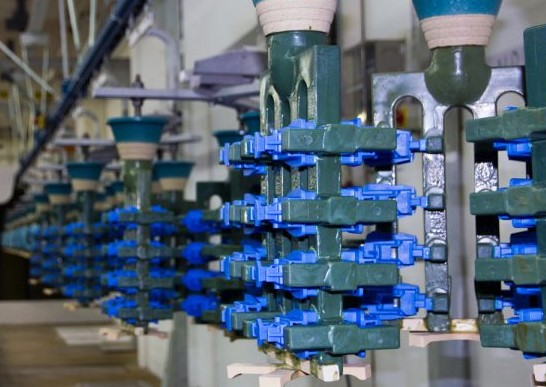
Investment casting involves multiple interdependent steps, each directly affecting the final part's quality. From wax pattern creation to finished part delivery, the process requires rigorous procedures. The following is a detailed explanation of each stage.
The first step in investment casting is producing the wax pattern, an exact replica of the final part. There are three primary methods:
- Wax Injection Molding: Liquid wax is injected into steel or aluminum molds. Once cooled and solidified, the wax pattern is removed, precisely mirroring the mold. This method is highly efficient and consistent, suitable for large-scale production.
- Hand Carving: For uniquely shaped or low-quantity parts, skilled workers manually carve wax patterns. While flexible, this method is less efficient.
- 3D Printing: With advances in additive manufacturing, wax patterns can now be directly 3D-printed. This method avoids the need for metal molds and is ideal for prototyping or highly complex, low-volume parts.
To improve production efficiency, individual wax patterns are often assembled into a central wax gating system, forming a tree-like structure known as a “cluster” or “tree.”
Cluster design is critical. It affects heat distribution during metal solidification, influences metal flow within the mold, and impacts production costs. Proper cluster design enables the simultaneous casting of multiple parts in a single pour, significantly improving efficiency.
The assembled wax cluster is coated with multiple layers of ceramic to form a rigid shell capable of withstanding molten metal temperatures. The process generally involves:
- Dipping: The wax cluster is immersed in a specially formulated ceramic slurry for even coating.
- Stuccoing: Fine sand is sprinkled onto the wet ceramic layer to increase thickness and strength.
The dipping-stucco cycle is repeated 5 to 10 times until the ceramic shell reaches the required thickness. Environmental conditions, particularly humidity and temperature, must be carefully controlled. Excessive humidity can lead to uneven drying, and temperature fluctuations may cause cracks or structural defects in the ceramic shell.
After the ceramic shell solidifies, the internal wax is removed, usually using an autoclave. Heating melts the wax, which flows out through the mold’s gates, leaving a cavity precisely shaped like the final part.
The shell is then fired at high temperatures to strengthen it, ensuring it can withstand the thermal shock of molten metal during casting.
Molten metal is poured into the fired ceramic mold. Common materials include carbon steel, stainless steel, aluminum, titanium, bronze, copper alloys, and various high-performance alloys. Pouring temperatures often exceed 1,000°C, so the ceramic shell must be highly heat-resistant.
Metal solidifies within the mold, forming a solid part that exactly matches the cavity. Cooling rates are controlled to optimize the part’s internal structure and mechanical properties, tailored to material specifications and design requirements.
Once solidified, the ceramic shell is broken mechanically or chemically to extract the metal parts. Residual ceramic is removed using blasting, acid washing, or other cleaning techniques.
Depending on requirements, parts may undergo additional processing, including machining (drilling, threading), heat treatment (hardening, tempering), surface finishing (polishing, electroplating, coating), to meet final specifications and performance criteria.
Investment casting involves numerous finely controlled steps, each contributing to superior final part quality. Compared to other metal forming methods, it excels in forming complex shapes, achieving high surface quality, maintaining dimensional precision, and accommodating a wide range of materials. Six key advantages are outlined below:
Investment casting allows the production of extremely intricate geometries. Wax patterns can replicate nearly any shape, enabling complex internal cavities, chamfers, thin walls, and multi-axis structures that are difficult to achieve through other methods.
These structures can be cast in one piece, eliminating welding or assembly. This enhances structural integrity, avoids stress concentration from welds, simplifies production, and reduces part count.
Parts produced via investment casting have smooth surfaces that often require minimal post-processing. The ceramic shell faithfully reproduces fine wax details, including textures and intricate patterns.
High surface quality reduces machining steps, lowers costs, and improves fatigue performance and overall part longevity. Smoother surfaces minimize stress concentrations, extending service life.
Investment casting achieves tight tolerances and consistent repeatability across batches. Since wax patterns are exact replicas of the final part, the mold captures fine details, ensuring high dimensional consistency.
This repeatability is crucial for interchangeable parts in assembly, particularly in aerospace and automotive applications, where part uniformity directly affects assembly efficiency and product quality.
Investment casting can accommodate nearly all common metals and alloys, including stainless steel, carbon steel, alloy steel, aluminum, titanium, bronze, copper alloys, cobalt-based alloys, and nickel-based high-temperature alloys.
Material flexibility allows engineers to select metals according to application needs, such as corrosion-resistant stainless steel, heat-resistant nickel alloys, or lightweight aluminum and titanium.
Unlike subtractive machining, which removes material from a solid block, investment casting produces near-net-shape parts, minimizing material waste. Metal is poured directly into the mold cavity, generating virtually no scrap.
For high-value alloys like titanium or nickel-based superalloys, waste reduction significantly lowers cost and supports sustainable manufacturing practices.
Investment casting suits both low-volume and high-volume production. For small batches or custom parts, 3D-printed or hand-carved wax patterns eliminate the need for expensive metal molds. For large-scale production, durable metal molds combined with automated processes enable efficient, cost-effective mass manufacturing.
This flexibility allows engineers and procurement specialists to select production methods that align with project scale, budget, and delivery requirements.
The benefits of investment casting are fully realized in practical applications, where precision, complexity, and surface quality are critical. Its applications span aerospace, automotive, medical, industrial machinery, and beyond.
Aerospace components demand extreme precision, strength, and reliability. Investment casting is widely used for turbine blades, engine parts, structural components, and precision assemblies.
Turbine blades, for example, feature complex geometries and internal cooling channels and must withstand high-temperature, high-pressure environments. Investment casting enables one-piece production of such components, using heat-resistant nickel-based superalloys, making it the preferred method for turbine blades.
The automotive sector emphasizes lightweight, high-performance parts. Investment casting produces engine components, suspension parts, and drivetrain components requiring high load capacity, precise dimensions, and low weight.
By casting thin-walled, hollow structures, investment casting reduces part weight while maintaining strength, improving fuel efficiency and vehicle handling.
Medical instruments and implants demand high precision, smooth surfaces, and biocompatibility. Investment casting is used for surgical tools, orthopedic implants (joints, plates, screws), dental instruments, and diagnostic device housings.
Materials like stainless steel and titanium are selected for biocompatibility, and smooth, burr-free surfaces prevent tissue damage, meeting stringent medical standards.
In industrial machinery, investment casting produces high-strength parts such as pump housings, valve bodies, brackets, guides, and machine casings. Components require precise assembly, reduced wear, and consistent performance under high-volume operations.
Investment casting has a long tradition in jewelry and art, enabling intricate, customized designs, hollow structures, fine textures, and tiny details for high-end jewelry and art pieces.
Engineers often choose between multiple processes based on part requirements. Comparing investment casting with sand casting, die casting, machining, and metal injection molding (MIM) clarifies its advantages.
Sand casting suits large, simple-shaped parts with low mold cost, but surface quality and detail are limited. Investment casting excels in producing medium-to-small, complex precision parts with superior surface finish and dimensional accuracy, though mold costs are higher.
Die casting offers high-speed production for thin-walled parts using soft metals like aluminum, zinc, or magnesium, but mold costs are significant, and internal porosity can reduce strength and gas-tightness. Investment casting accommodates stronger alloys, denser internal structures, and higher precision.
Machining achieves high accuracy from solid stock but wastes material and struggles with complex internal geometries. Investment casting forms complex shapes in one step with high material efficiency and shorter production cycles, though high-precision surfaces may still require minor machining.
MIM produces small, high-volume parts efficiently, usually under 100 grams. Investment casting is better for parts over 100 grams, requiring fine details and custom designs. MIM is advantageous for ultra-small components or rapid production, while investment casting suits larger, more complex parts.
- High Initial Investment: Investment casting requires molds for each part, leading to higher upfront costs. For very low-volume production, mold cost feasibility must be evaluated.
- Longer Lead Times: Compared to rapid methods like MIM, investment casting involves multiple steps—mold making, wax pattern production, ceramic coating, dewaxing, metal pouring, and post-processing—resulting in longer overall lead times.
- Unsuitable for Ultra-Small Parts: While precise, investment casting is challenging for micro-parts smaller than a few millimeters, where MIM or micro-machining may be more appropriate.
Investment casting is a mature, efficient, and precise metal manufacturing process. Its ability to produce complex geometries, superior surface finish, precise dimensions, broad material adaptability, and flexible production scale makes it indispensable across aerospace, automotive, medical, industrial machinery, and other industries.
Although it involves higher initial investment and longer lead times, careful design, material selection, and collaboration with suppliers can maximize its benefits, enabling high-quality, cost-effective, and efficient production.
For metal parts requiring intricate geometry, high surface quality, and robust mechanical performance, particularly where machining or MIM is unsuitable, investment casting often represents the optimal choice. Components over 100 grams that require precise detailing or custom design are particularly suited to this process.
