Cold Forging Process: Principles, Workflow & Advantages
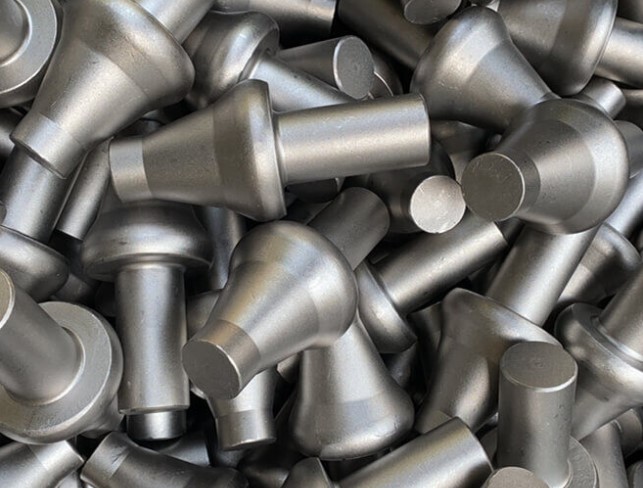
Cold forging is a metalworking process that involves shaping metal at or near room temperature. Unlike hot forging, which is primarily used for producing large, heavy components, cold forging is focused on the manufacture of lightweight, high-precision parts. In essence, cold forging forms metals such as steel or aluminum into desired shapes without the need for external heating. This process takes place at ambient or slightly elevated temperatures, eliminating the need to heat the metal to high levels, which is why it is referred to as cold forging.
At its core, cold forging is a plastic deformation process. During cold forging, metal billets or wire rods are placed into specially designed dies, where high pressure is applied via mechanical presses or hydraulic presses. This force causes the metal to undergo plastic deformation within the die, gradually assuming the required shape and geometry.
Because the metal remains at room temperature during cold forging, it is inherently more resistant to deformation compared to hot forging. Consequently, significantly higher pressures are required to shape the material, necessitating the use of high-powered machinery capable of generating sufficient force to ensure complete die filling and precise part formation.
The advantages of cold forging stem directly from the physical properties of the metal at room temperature. The absence of high-temperature exposure prevents oxidation, scaling, and decarburization, which are common issues in hot forging, thereby improving the surface quality and dimensional accuracy of the final product.
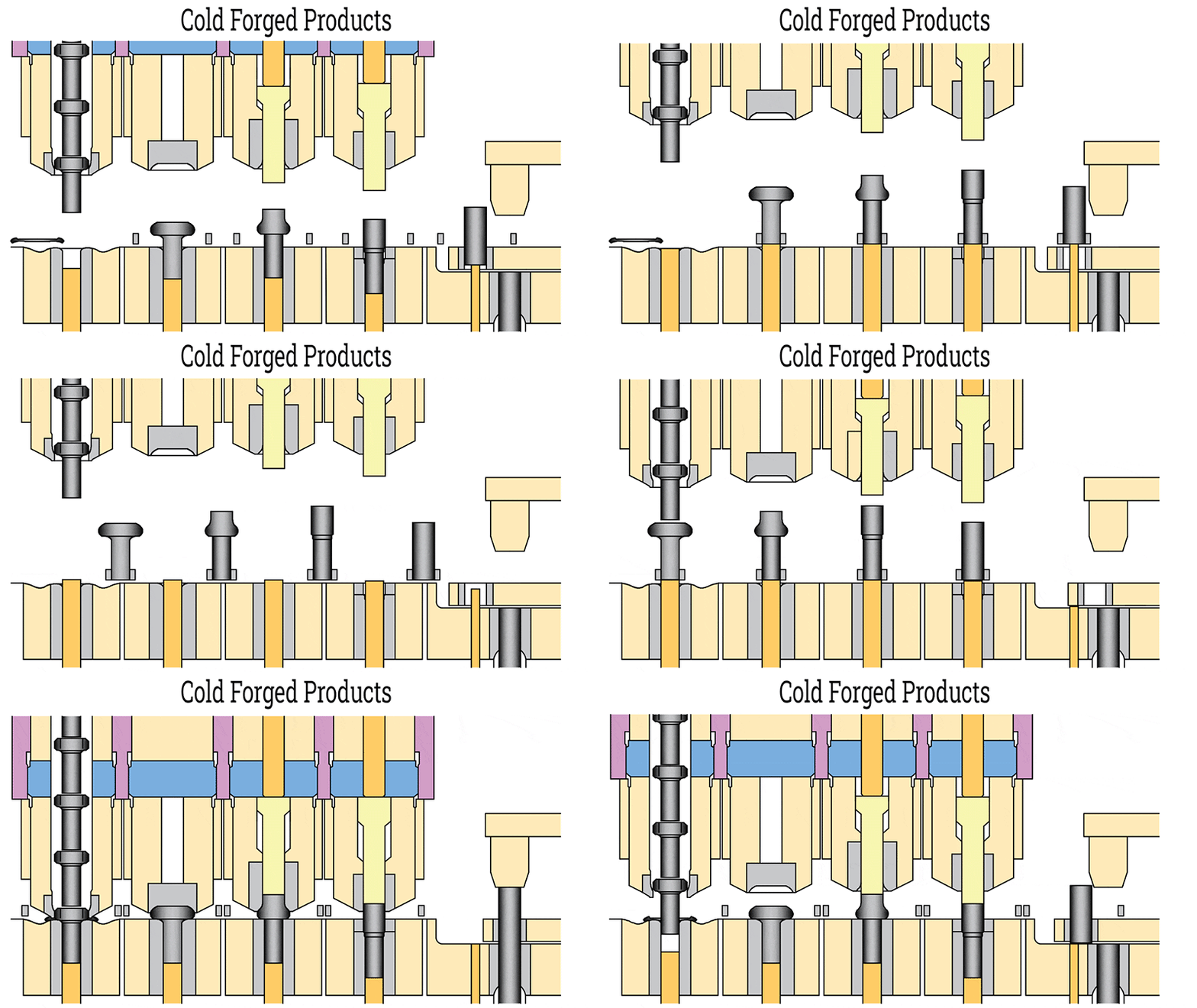
The cold forging process consists of several key stages, each critically affecting the final product’s quality.
Cold forging typically begins with metal wire or bar stock. Before processing, the raw material undergoes surface treatment and lubrication. Surface treatment removes oxides, scale, and other impurities from the material, while lubrication minimizes friction between the metal and the die during forging. Proper lubrication ensures uniform deformation and prevents surface defects.
For steel, suppliers often perform pre-treatment, such as softening through thermal processing, to enhance ductility and make the material suitable for cold forging. Not all steel grades are appropriate for this process; materials must generally have a carbon content below 0.5% and a controlled work-hardening rate to facilitate smooth forming.
Lubrication is a critical step in cold forging. Its primary purposes are:
Preventing the workpiece from sticking to the die under high pressure.
Reducing heat generated by friction during the forming process.
Although cold forging does not involve external heating, the plastic deformation and friction between metal and die can raise the workpiece temperature to between 250°C and 450°C. Adequate lubrication controls this temperature rise, protects the surface quality of the workpiece, and extends die life.
Aluminum alloys, in particular, require continuous lubrication during multi-stage forging to maintain low friction and ensure consistent shape and quality.
The forging operation is the heart of the cold forging process. Prepared materials are sequentially placed into a series of dies, where horizontal or vertical mechanical or hydraulic presses apply force, gradually shaping the metal to the desired dimensions and structure.
Cold forging can utilize several techniques, including impression-die forging and closed-die forging. Each die in the sequence is a critical step in the process, ensuring dimensional accuracy and geometric consistency. Through multiple passes and die stages, parts with simple or complex geometries can be produced efficiently.
Depending on the intended use of the forged part, additional heat treatment such as quenching may be applied to enhance mechanical properties. Surface treatments, including galvanization, nickel plating, or other coatings, improve corrosion resistance, durability, and long-term reliability.
The final stage includes deburring, polishing, and other finishing operations, alongside rigorous dimensional and quality inspections. These steps ensure the parts meet design specifications and customer requirements.
Compared to other manufacturing processes, cold forging often requires minimal post-processing, which reduces production costs—a key advantage of this method.
Cold forging offers numerous benefits, making it a preferred technique in many industrial applications:
- High Precision and Superior Surface Finish: Cold forging achieves excellent dimensional accuracy and surface quality, suitable for parts with strict tolerance requirements.
- High Material Utilization: The process generates minimal waste, maximizing raw material usage and reducing costs.
- High Production Efficiency: Cold forging is fast, enabling rapid production and cost-effective high-volume manufacturing.
- Enhanced Part Strength and Performance: Parts forged at room temperature exhibit superior strength and durability. Plastic deformation refines the internal grain structure, improving mechanical properties. The process also ensures repeatable part quality across batches.
- Complex Geometries Achievable: Cold forging can produce intricate shapes that meet diverse industrial design requirements.
- Low Unit Cost: Minimal material waste, high efficiency, and reduced post-processing contribute to lower per-unit costs, especially for mass production.
- No External Heating Required: Eliminating heating reduces energy consumption and avoids oxidation or decarburization issues.
Despite its advantages, cold forging has certain limitations:
- Not Ideal for Small-Batch Production: Specialized dies are required, resulting in high tooling costs. Cold forging is more economical for large-volume production.
- Material Constraints: Cold forging is suitable for ductile metals such as steel, aluminum, copper, and their alloys. Brittle or low-ductility materials are difficult to process.
- Complex Shape Restrictions: Extremely intricate or internal geometries may require additional operations or hybrid processes.
- High Lubrication Requirements: Materials like aluminum demand consistent, high-quality lubrication to prevent friction, control temperature, and protect dies.
- High Equipment Investment: The process requires high-capacity mechanical or hydraulic presses, representing significant capital investment.
Cold forging is widely used across industries that demand high-precision, durable, and cost-effective metal components. Its advantages are particularly valuable in automotive, electronics, household appliances, construction, and general machinery manufacturing.
Cold forging is extensively applied in automotive manufacturing. Key parts produced using this process include:
- Fasteners: bolts, nuts, screws
- Transmission components
- Gear and shaft elements
- Steering system parts
- Suspension components
- Engine parts: cylinders, pistons, valve bodies
Cold forging enables high-volume, high-strength production of these components, reducing manufacturing costs while improving vehicle reliability and safety.
In electronics and appliance manufacturing, cold forging is used to produce:
- Electrical contacts
- Wire terminals
- Small precision metal components
These parts require tight tolerances and excellent surface finishes to ensure reliable and long-term operation of electronic devices and home appliances.
In the construction sector, cold forging is employed for:
- Fasteners of various types
- Structural brackets
- Connectors and joints
These components must provide high strength and durability, ensuring the safety and economic efficiency of building structures.
Cold forging is also used in producing shafts, gears, and other mechanical components for a wide range of machinery, offering high strength and precision.
- Cold vs. Hot Forging: Hot forging involves shaping metal at elevated temperatures, typically used for heavy or complex components. Hot forging requires lower pressures, but results in surface oxidation, lower dimensional accuracy, and often requires additional finishing operations. Cold forging, conducted at room temperature, requires higher pressures but delivers superior dimensional accuracy, surface quality, and material utilization. It is ideal for producing lightweight, high-precision components in large quantities.
- Cold vs. Warm Forging: Warm forging is performed at temperatures slightly above room temperature but below hot forging conditions. It combines certain advantages of both cold and hot forging, but requires more complex process control. Cold forging remains preferred for high-precision, low-waste production.
Achieving high-quality cold-forged parts depends on several critical factors:
- Material Properties: Chemical composition, mechanical properties, and ductility affect feasibility and part quality. Proper material selection is essential.
- Die Design and Manufacturing: Dies are central to cold forging. Their design, precision, surface finish, material strength, and wear resistance directly influence part quality and production efficiency.
- Lubrication Conditions: Adequate lubrication reduces friction, lowers forming force, controls temperature, protects dies, and improves surface finish. Lubricant choice and application must match material and process requirements.
- Equipment Performance: Press tonnage, speed, accuracy, and rigidity must align with process requirements to ensure forming quality and efficiency.
- Process Parameters: Deformation degree, deformation speed, and multi-pass distribution must be optimized according to material characteristics and part specifications.
Cold forging is a metal forming process performed at room temperature, offering high precision, efficiency, material utilization, and superior part performance. Through careful control of material preparation, lubrication, forging operations, post-processing, and quality inspection, cold forging produces reliable, cost-effective components.
Although it presents challenges such as high die costs, equipment requirements, and limitations for small-batch production, its advantages in high-volume manufacturing are significant. Cold forging is particularly well-suited for automotive, electronics, appliances, construction, and general machinery sectors that require high-precision, high-strength metal parts.
Selecting the appropriate manufacturing process requires balancing material properties, part complexity, production volume, quality standards, and cost considerations. For parts suitable for cold forging, this process ensures efficient, reliable, and economical production, providing critical support for modern industrial manufacturing.
With continuous advancements in die materials, lubrication technology, and automated machinery, cold forging continues to expand its applications and product range, securing its role as an indispensable technology in contemporary manufacturing.
