
Storage Tank Design: Conditions and Considerations
In industrial production, storage tanks are indispensable and crucial equipment. Whether in the petroleum, chemical, or other related industries, storage tanks play a vital role in storing various liquid media. However, the design of storage tanks is not a simple task. It requires a comprehensive consideration of numerous factors to ensure the safety, economy, and practicality of the tanks. This article will delve into the conditions and considerations for storage tank design, aiming to provide a comprehensive and practical reference for relevant practitioners.
Climate Conditions of the Tank Construction Area
Climate conditions are an important factor that cannot be ignored in tank design, as they have a profound impact on the safety, stability, and service life of the tank. When designing a storage tank, it is essential to fully consider the climate factors of the tank construction area, such as temperature, wind load, and snow load, to ensure that the tank can adapt to the local natural environment and operate safely and reliably.
1. Temperature Factor
The temperature of the tank construction area has a multifaceted impact on the storage tank. First, it is closely related to the evaporation loss of the stored liquid. For the same medium, the higher the ambient temperature and the longer the duration, the higher the temperature of the stored liquid inside the tank will be, leading to increased vapor pressure and consequently more evaporation loss. Moreover, the diurnal temperature variation and changes in atmospheric pressure can cause the tank to "breathe," further increasing evaporation loss. To reduce evaporation loss, water spray devices are often used to cool the tank body during high-temperature seasons.
For liquids that need to be stored at temperatures below room temperature, such as liquefied gas, liquid oxygen, ammonia, and vinyl chloride, in addition to taking thermal insulation measures, refrigeration equipment must be installed to maintain a lower temperature. Here, storage pressure and storage temperature are interdependent. Under the premise that the tank can withstand a certain pressure, an appropriate storage temperature should be sought to minimize the energy consumption of the refrigeration equipment.
In cold seasons, for media with high viscosity or low freezing points, in addition to insulation, the storage tank must also be heated to maintain a flowable state for easy transportation. This not only affects the storage quality of the liquid but also directly impacts the smooth operation of the production process.
2. Wind Load Factor
The wind load of the tank construction area has a significant impact on the stability and economy of the storage tank. In areas with high wind loads, designing the tank in a "short and stout" shape is a more economical choice. During strong wind seasons, special attention must be paid to the displacement and overturning of the storage tank, especially when the tank is empty or contains very little liquid. When calculating wind force, it is necessary to comprehensively consider the impact of factors such as the thickness of the tank's insulation layer, ladders, platforms, pipelines, and the shape of the tank cover. These details often change the actual wind-receiving area and wind force distribution of the tank, thereby affecting its stability.
In areas with frequent and strong sandstorms, to ensure the purity and cleanliness of the stored liquid, the selection of the storage tank form must be given great attention. The structural design of the tank should minimize the possibility of sand and dust entering the tank to prevent contamination of the stored liquid.
3. Snow Load Factor
The snow load of the tank construction area has an important impact on the design and operation of the tank roof. Especially in areas with high snow loads, for large-diameter, large storage tanks, the load on the tank roof will increase significantly. For media with strict requirements on the purity or cleanliness of the stored liquid, the selection of the storage tank type requires extra caution. When designing a storage tank, it is essential to fully consider the requirements of snow load on the structural strength of the tank roof to ensure that the tank can operate safely in heavy snow weather and to prevent contamination of the stored liquid due to excessive snow load.
4. Protective Measures for Ancillary Facilities
For the ancillary facilities of the storage tank, such as pumps, breather valves, flame arresters, measuring instruments, and insulation layers, corresponding protective measures should be taken. These measures include anti-freezing, thermal insulation, waterproofing, or using all-weather structured products. These ancillary facilities play an important role in the operation of the storage tank. If they are damaged due to adverse weather conditions, it will not only affect the normal operation of the tank but may also lead to safety accidents. Therefore, proper protection of these ancillary facilities is an important link to ensure the safe operation of the storage tank.
Seismic Factors
Earthquakes are one of the natural disasters that cause relatively serious damage to storage tanks. When constructing tanks in areas with a seismic intensity of 7 or above, seismic measures must be taken. Areas with an intensity of 9 are not suitable for tank construction. This is because earthquakes can cause great damage to the structural stability of storage tanks, leading to tank rupture, leakage, and even serious accidents such as fires and explosions. The implementation of seismic measures can effectively enhance the disaster resistance of storage tanks during earthquakes, ensuring their safety and reliability.
Ground-Bearing Capacity Factors
The ground-bearing capacity of the tank construction area plays a decisive role in the design of storage tanks. In areas with high ground-bearing capacity, not only can the cost of foundation treatment be greatly reduced, but the height-to-diameter ratio of the storage tank can also be increased. This means that the storage tank itself occupies less land area, and the spacing between tanks can also be correspondingly reduced. For areas with high land prices, this design can make full use of the limited land area, thereby greatly saving the investment cost of the tank area. Therefore, ground-bearing capacity is an important factor that cannot be ignored when selecting a tank construction site.
External Environmental Corrosion Factors
Corrosion of the external surface of storage tanks is often more difficult to deal with than internal surface corrosion. Especially in chemical zones, the atmosphere often contains impurities such as acid mist, alkali, or salt dust. These impurities combine with dew, steam, and oxygen in the atmosphere to form an active corrosive medium, which has a severe corrosive effect on the external surface of storage tanks. Almost every type of corrosion can occur in storage tanks, and common external environmental corrosion includes: corrosion of the tank bottom plate resting on the foundation; stress corrosion of stainless steel storage tanks caused by chloride in the air; condensation of water vapor, especially condensation of water vapor under the insulation layer; and crevice corrosion of welds, reinforcement plates, and bolts.
External environmental corrosion of storage tanks can shorten the maintenance and inspection cycle of the tanks and may even lead to premature scrapping of the tanks, thereby affecting the normal operation of storage and transportation. Therefore, in the design and operation of storage tanks, it is necessary to fully consider the impact of external environmental corrosion and take effective anti-corrosion measures to extend the service life of the tanks and ensure the safety and stability of the storage and transportation process.
Properties of the Stored Liquid
The characteristics of the stored liquid directly determine the design requirements and safety measures of the storage tank. The diversity of its properties requires precise matching in tank design to ensure the safety and efficiency of the storage process.
1. Flash Point, Boiling Point, and Vapor Pressure
The flash point, boiling point, and vapor pressure of the stored liquid are important parameters closely related to the flammability and volatility of the liquid and are also the main basis for selecting the form of the storage tank and safety accessories. Based on these parameters, the storage conditions and safety measures of the tank can be determined to ensure the safe storage and transportation of the liquid.
2. Special Issues of Toxic Media
For storage tanks containing toxic media, some special issues need to be considered. First, environmental pollution must be prevented, and the safety of operating personnel must be ensured. Therefore, the exhaust gas cannot be directly discharged in the tank area but must be specially treated to remove harmful components. All measuring instruments and accessories should minimize the possibility of poisoning for operating personnel. All lap welds inside the tank must be continuous welds instead of intermittent welds to prevent toxic media from entering and remaining in the gaps. In addition, to facilitate the complete cleaning of the storage tank, the structure of the liquid inlet and outlet should be able to completely drain the liquid, avoiding residual liquid from causing harm to the environment and personnel.
3. Chemical Reaction Activity
The chemical reaction activity of the stored liquid includes polymerization and decomposition reactions that occur at certain temperatures, as well as situations where the liquid is polluted by air or undergoes chemical reactions with air. For the former, measures such as stirring, adding polymerization inhibitors, preventing polymerization and sedimentation, spraying water, and cooling are generally taken. For the latter, gas filling protection is used, with nitrogen being the commonly used gas. The nitrogen seal pressure of the storage tank is generally 0.5 to 2.0 kPa, and the purity of nitrogen is determined by the requirements of the protected liquid. For high-temperature storage tanks, it is strictly forbidden to add low-boiling-point liquids to tanks containing high-boiling-point liquids to prevent explosive vaporization and tank rupture.
4. Corrosiveness
The corrosiveness of the stored liquid is an important basis for selecting the material of the storage tank. In the material selection design of the storage tank, in addition to considering the corrosion allowance, attention must also be paid to the pollution of the stored liquid by the tank material. For example, carbon steel materials may cause Fe ion contamination, thereby reducing the purity of the product, especially for liquid chemicals. Stainless steel materials need to consider the intergranular and stress corrosion resistance of different grades of stainless steel to the stored liquid. Therefore, when selecting the material of the storage tank, it is necessary to comprehensively consider the corrosiveness of the stored liquid and the corrosion resistance of the material to ensure the safety of the storage tank and the quality of the stored liquid.
5. Density
The density of the stored liquid has a direct impact on the tank wall and foundation. The thickness of the tank wall is proportional to the density. For some liquid chemical media, such as sulfuric acid and liquid alkali, which have a higher density, the additional external pressure on the foundation of these storage tanks generally exceeds 200 kN/m². For weak foundations, preventing uneven settlement or excessive foundation settlement is a notable issue in the design of the storage tank foundation. When designing a storage tank, it is essential to fully consider the impact of the liquid density on the tank wall and foundation to ensure the structural safety and stable operation of the storage tank.
Conclusion
Storage tank design is a complex and meticulous task that requires a comprehensive consideration of numerous factors, including the climate conditions of the tank construction area, seismic factors, ground-bearing capacity factors, external environmental corrosion factors, and the properties of the stored liquid. Only by fully considering these factors can a storage tank that is both safe and economical, as well as practical and reliable, be designed. In actual work, relevant practitioners should conduct detailed analysis and scientific design based on specific conditions to ensure the safe operation and long-term stable use of the storage tank.
Send your message to this supplier
Related Articles from the Supplier
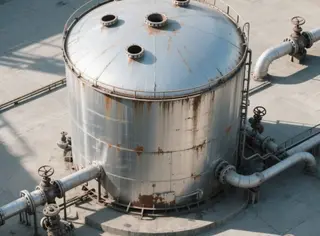
Storage Tank Design: Conditions and Considerations
- Jul 07, 2025

Guide to Spherical Storage Tank Structure and Design
- Jun 01, 2026
Design of Multifunctional Oil Storage Tank
- Apr 30, 2022
Preventive Measures of Air Storage Tank Explosions
- Nov 11, 2024

Methods for Large Vertical Storage Tank Installation
- Dec 29, 2025
Related Articles from China Manufacturers

The Importance of Storage Tank Thickness Design
- Oct 18, 2024


What is the function of an air storage tank?
- Nov 22, 2017

What is the role of air storage tank?
- Jan 10, 2018
Related Products Mentioned in the Article

DFC Tank Pressure Vessel Manufacturer Co., Ltd.
- http://www.dfctank.com/
- Business Type: Manufacturer,
Supplier Website
Source: https://www.dfctank.com/news/storage-tank-design-conditions-and-considerations.html