
Fermentation Tank Selection and Usage Guide
A fermentation tank is a specialized vessel designed for fermentation processes, whose core function is to promote microbial reactions under controlled environmental conditions. During fermentation, yeast or bacteria interact with sugars in raw materials, thereby producing alcohol, carbon dioxide, and a variety of flavor compounds. Whether in the production of beer, wine, kombucha, yogurt, or other fermented products, fermentation tanks play a crucial role.
The importance of fermentation tanks lies in the fact that they directly affect the final product quality, production efficiency, and cost control. The material, structural design, and capacity of the fermentation tank all influence temperature control performance, contamination risks, and overall fermentation stability. Therefore, selecting an appropriate fermentation tank can significantly improve product quality and optimize the production process.
Role of Fermentation Tanks in the Brewing Process
In the brewing process, malt is first mashed and then boiled to form wort, which is a sugar-containing liquid. After cooling, the wort is transferred into the fermentation tank, where fermentation begins.
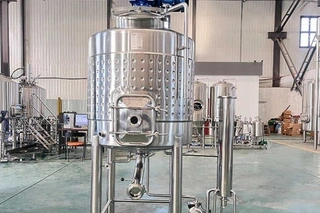
1. Primary Fermentation Stage
Yeast is added into the fermentation tank and begins to consume sugars while producing alcohol and carbon dioxide, thereby forming the target beverage. This is the most critical stage of the fermentation process, and the activity of yeast as well as environmental conditions directly determine the fundamental quality of the product.
2. Secondary Fermentation
In some processes, a secondary fermentation stage is carried out to further enhance flavor complexity or improve carbonation levels. This step is particularly important for certain premium beers and sparkling wines.
3. Maturation Stage
Fermentation tanks can also serve as maturation vessels, allowing the product to develop a richer and more layered flavor profile. Without high-performance fermentation tanks, these key process stages would be difficult to control stably, thereby affecting the final product quality.
Main Types of Fermentation Tanks
According to different structures and applications, fermentation tanks can be divided into multiple types:
1. Conical Fermentation Tanks
These tanks feature a conical bottom structure, which facilitates the discharge of sediment. They are commonly used in the production of beer, wine, and other products requiring high clarity. This design allows yeast and impurities to naturally settle at the bottom, making removal convenient and improving product clarity.
2. Flat-Bottom Fermentation Tanks
With a simple structure and relatively low cost, these tanks are suitable for small-scale production or non-alcoholic fermentation processes such as kombucha and yogurt. Although their functionality is relatively basic, they offer excellent cost-effectiveness in applications where complex sediment removal is not required.
3. Cylindroconical Fermentation Tanks
These tanks combine a cylindrical body with a conical bottom structure and are suitable for large-scale industrial production, balancing efficiency and functionality. They are currently the most commonly used type in craft brewing and industrial fermentation.
4. Open Fermentation Tanks
This is a traditional structure that allows contact with air and is suitable for certain ale beers and specific flavor fermentation processes. Open fermentation can create unique flavor characteristics, but it requires stricter environmental control.
5. Closed Fermentation Tanks
These tanks feature a fully sealed structure and allow fermentation to occur in an oxygen-free environment. They are commonly used for lager beer, cider, and other oxygen-sensitive products. The closed design effectively prevents oxidation and contamination.
Capacity and Space Requirements of Fermentation Tanks
The selection of fermentation tanks usually depends on production scale and process requirements. Their capacity range is very wide, from small 5-gallon tanks used in home brewing to large industrial fermentation systems of up to 100,000 gallons.
In terms of space requirements, small equipment is suitable for laboratories or home environments, while large fermentation tanks require dedicated plant facilities for installation and operation. In terms of functional design, modern fermentation tanks are typically equipped with temperature control systems, sampling ports, and pressure relief devices to meet various process needs.
In addition, users can customize tanks according to actual requirements, such as adding insulation layers, agitation systems, or special internal coatings to adapt to specific fermentation environments.
Key Factors in Selecting a Fermentation Tank
After understanding the main types and capacity ranges of fermentation tanks, the next step is to focus on the key factors that should be carefully evaluated during the actual selection process. Different types of fermentation tanks vary in material, function, and structure. Only by comparing them based on specific production requirements can the most suitable equipment be selected. The following are several key factors to consider.
1. Material Selection
Stainless steel has become the mainstream choice due to its corrosion resistance, ease of cleaning, and excellent hygienic properties. Although glass is transparent and visually appealing, it is fragile and unsuitable for industrial applications. Among various materials, stainless steel fermentation tanks dominate the market primarily because of their superior overall performance.
Stainless steel offers extremely high corrosion resistance and mechanical strength, enabling long-term stable operation. Its smooth surface is not prone to bacterial growth and meets food-grade hygiene standards. At the same time, it has good thermal conductivity, which is beneficial for precise temperature control. Its professional appearance is suitable for industrial display and commercial production environments. In addition, stainless steel structures are easy to clean and maintain, significantly reducing long-term operating costs.
2. Temperature Control Capability
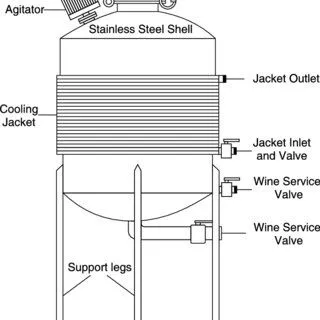
Temperature control capability is one of the core performance indicators of a fermentation tank. Equipment equipped with cooling jackets or heating systems can better maintain fermentation stability. The fermentation process is highly sensitive to temperature, and a well-designed cooling system enables precise temperature control, thereby improving product consistency and quality.
3. Ease of Cleaning
Equipment with smooth internal surfaces and CIP (Clean-In-Place) systems can significantly reduce maintenance costs. In terms of operation and maintenance, priority should be given to tanks with good accessibility design, such as those equipped with manways, sampling ports, and CIP systems. These features greatly improve cleaning efficiency and reduce labor costs.
4. Pressure Resistance
Pressure resistance is particularly critical for carbonated beverages. During fermentation, pressure is generally released at 1 to 2 PSI, while during carbonation or storage, pressure may reach 12 to 30 PSI. Therefore, a pressure-resistant single-tank system can integrate fermentation and storage, improving operational flexibility.
5. Tank Shape and Size
The shape and size of the tank directly affect sediment discharge efficiency and space utilization. A conical design facilitates sediment removal, while proper sizing helps improve space utilization within the facility.
Fermentation Tank Capacity Design
The capacity design of fermentation tanks is one of the most easily underestimated yet critical aspects of a brewing system. Once an incorrect selection is made, it often directly limits production capacity and leads to additional costs. Therefore, when planning a fermentation system, it is essential to clearly understand the following key concepts.
1. Nominal Capacity
Nominal capacity refers to the rated volume of the equipment, such as a 15 BBL fermentation tank.
2. Working Capacity
In actual use, only about 80% to 90% of the total volume is typically used as the working capacity, leaving space for foam and fermentation activity.
3. Maximum Capacity
The maximum filling level should not exceed 95% of the total capacity. For a 15 BBL fermentation tank, the working capacity is typically 12 to 13.5 BBL, and approximately 1.5 to 3 BBL must be reserved for foam and gas release. In actual operation, the volume should not exceed 14.25 BBL.
4. Capacity Calculation Method
When determining capacity, the overall production demand should be considered. First, calculate the target weekly output (in BBL), and then convert it based on the fermentation cycle.
Generally speaking:
Ale fermentation cycle: 10 to 14 days
Lager fermentation cycle: 21 to 30 days
Additional 2 to 3 days are required for maturation or carbonation
Using the formula:
Total Required Fermentation Capacity = (Weekly Output × Total Fermentation Days) ÷ 7
For example, if the target output is 50 BBL per week and the total fermentation and maturation time is 15 days, the required total capacity would be: 50 × 15 ÷ 7 ≈ 107 BBL. If 15 BBL fermentation tanks are used, at least 8 tanks are required to meet production needs.
5. Matching with the Brewhouse System
Fermentation tank capacity must also match the brewhouse system. For craft breweries, the total fermentation capacity is typically 2 to 3 times the brewhouse batch capacity to ensure production continuity and flexibility.
For example:
A 7 BBL brewhouse is recommended to be equipped with 21 to 28 BBL fermentation capacity
A 15 BBL system requires 45 to 60 BBL
A 30 BBL system requires 90 to 120 BBL
This redundant capacity supports multiple batches fermenting simultaneously, flexible scheduling, seasonal adjustments, and future expansion.
Materials and Manufacturing Processes
Stainless Steel Material Selection: Stainless steel is the standard material for fermentation tanks. Among them, 304 stainless steel is suitable for most beer brewing applications, offering good corrosion resistance and cost performance. On the other hand, 316L stainless steel provides superior resistance to chloride corrosion and is more suitable for wine, sour beer, or highly corrosive environments, although it is more expensive.
Surface Treatment: Surface treatment is equally important. The internal surface roughness (Ra value) of the tank directly affects cleaning difficulty and hygiene levels. For general applications, an Ra value of 0.8 to 1.2 microns is sufficient, while high-end craft brewing systems typically require an Ra value of less than or equal to 0.4 microns to reduce bacterial adhesion and improve product quality.
Conclusion
As the core equipment of the fermentation process, fermentation tanks directly determine the quality of the final product and production efficiency. In practical applications, the appropriate type of fermentation tank should be selected based on product type, production scale, and process requirements to achieve the best balance between performance and cost.
The selection of fermentation tanks is not merely a matter of capacity calculation, but a systematic decision involving production rhythm, process requirements, equipment configuration, and long-term operating costs. Proper design and configuration can significantly improve production efficiency, product quality, and return on investment, while improper selection may continuously increase costs and risks during later operation.
Whether for home brewing enthusiasts or industrial-scale producers, understanding the basic principles, types, and selection criteria of fermentation tanks is a prerequisite for making correct decisions. It is hoped that this guide can provide valuable reference and help you select the most suitable fermentation tank equipment for your needs.
Send your message to this supplier
Related Articles from the Supplier
Fermentation Tank Selection and Usage Guide
- Apr 27, 2026
How to Maintain Your Fermentation Tank?
- May 25, 2024
Temperature Control in Fermentation Tanks
- May 30, 2025
Related Articles from China Manufacturers

Fermentation Tank for Pharmaceutical
- Jul 14, 2015

fermentation tank considerations
- Mar 09, 2018

How to clean a fermentation tank
- May 24, 2018

How to Choose a Beer Fermentation Tank
- Jun 23, 2026
How to Maintain Your Fermentation Tanks?
- May 24, 2025
Related Products Mentioned in the Article

DFC Tank Pressure Vessel Manufacturer Co., Ltd.
- http://www.dfctank.com/
- Business Type: Manufacturer,
Supplier Website
Source: https://www.dfctank.com/news/fermentation-tank-selection-and-usage-guide.html