
Comprehensive Guide to Cryogenic Control Valves
In cutting-edge industries such as liquefied natural gas (LNG), aerospace rocket propellants, and industrial gas production, there is a critical device that quietly ensures the safety and stability of entire systems under extreme cold conditions; this is the cryogenic control valve. Designed specifically for service conditions below -100°C, these valves must not only prevent material embrittlement at ultra-low temperatures but also achieve precise flow regulation of hazardous media such as liquid oxygen and liquid hydrogen. This article provides a clear and in-depth introduction to the definition, types, application fields, material selection, and selection considerations of cryogenic control valves, helping you fully understand how this key equipment operates reliably under extreme conditions.
What Is a Cryogenic Control Valve?
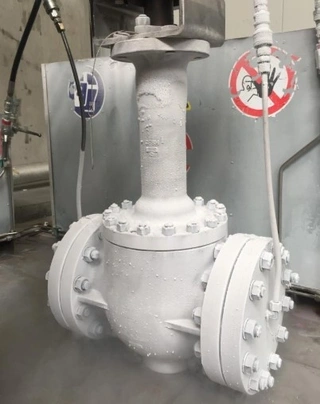
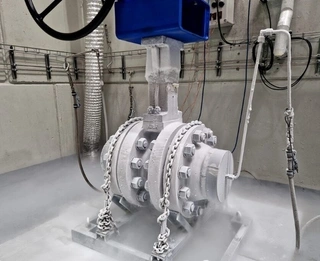
A cryogenic control valve is a valve device specifically designed for ultra-low temperature conditions. Its primary function is to regulate the flow of liquids or gases in low-temperature environments. These valves are typically used in conditions below -100°C and are therefore also known as cryogenic valves.
The working principle of a cryogenic control valve is relatively straightforward. It controls the flow rate and pressure of the medium through the movement of its internal components. In liquefied natural gas, compressed natural gas, and other cryogenic media processing systems, these valves play a vital role.
Cryogenic control valves are characterized by simple structure and relatively low installation cost. In most cases, users do not require special tools for installation. However, they must be operated with caution. Improper operation may cause leakage of cryogenic media such as liquid nitrogen, posing risks to both the environment and personnel.
These valves are capable of precisely controlling pipeline pressure and fluid state under low-temperature conditions, thereby ensuring stable operation of the entire system.
Main Types of Cryogenic Control Valves
Based on structure and function, cryogenic control valves can be divided into several types. Each type has its own applicable scenarios and advantages.
1. Cryogenic Ball Valve
A cryogenic ball valve controls fluid flow through a rotating ball with a through-hole. When the hole aligns with the pipeline direction, the valve opens. When the ball rotates 90 degrees, the valve closes. This design provides excellent sealing performance and low operating torque. Operators can control large valves with relatively little force.
2. Cryogenic Butterfly Valve
A cryogenic butterfly valve regulates flow through the rotation of a disc. The disc rotates in the center of the pipeline. When it is parallel to the pipeline direction, the valve is fully open. When perpendicular, it is closed. This type of valve is compact, lightweight, and fast-acting, making it suitable for large-diameter pipelines and applications requiring rapid switching.
3. Cryogenic Gate Valve
A cryogenic gate valve uses a sliding gate structure. The gate moves up and down like a door. When fully open, the gate is completely withdrawn from the flow path. When closed, it blocks the flow. This design provides excellent sealing performance and low pressure loss, making it suitable for on/off service conditions.
4. Cryogenic Globe Valve
A cryogenic globe valve achieves precise regulation through a disc moving perpendicular to the flow direction. By adjusting the position of the disc, the flow area changes gradually, making it ideal for throttling control applications. Operators can accurately control flow by adjusting the disc position.
5. Cryogenic Safety Relief Valve
A cryogenic safety valve is used to release excess pressure when the system becomes over-pressurized. When the pressure exceeds the set value, the valve opens automatically to discharge part of the medium. Once the pressure returns to normal, it closes automatically. This ensures system safety and prevents equipment damage.
Application Fields of Cryogenic Control Valves
Cryogenic control valves are widely used across multiple industrial sectors. Although different industries have varying performance requirements, the core need is safe and reliable control of cryogenic media.
1. Industrial Gas Processing Industry
In industrial gas processing, cryogenic control valves regulate the flow of liquid nitrogen, oxygen, argon, and hydrogen. These gases are liquefied at extremely low temperatures for storage and transportation. Valves ensure safe and stable separation, purification, and liquefaction processes. For example, in air separation units, cryogenic valves control feed and discharge flow in distillation columns.
2. Liquefied Natural Gas Industry
In the LNG industry, cryogenic control valves are essential core components. LNG is stored at approximately -162°C. These valves are widely used in LNG production, storage, transportation, liquefaction terminals, and regasification units. During production, they regulate liquid levels in heat exchangers and separators. During transportation, they control tank filling and discharge. In regasification units, they help convert LNG back into gas for pipeline distribution.
3. Petrochemical Industry
In petrochemical applications, cryogenic control valves are used in low-temperature distillation, refrigeration, and reaction control processes. Many separation and purification processes require low temperatures. Valves regulate cooling media to maintain stable process temperatures. For example, ethylene production units such as de-methanizers and de-ethanizers rely heavily on cryogenic control valves.
4. Pharmaceutical and Biotechnology Field
In pharmaceutical and biotech industries, cryogenic control valves are used in cryogenic preservation, low-temperature grinding, and biological sample storage. Vaccines and biological products require stable low-temperature environments. Valves regulate liquid nitrogen or mechanical refrigeration systems to maintain constant storage temperatures.
5. Food and Beverage Industry
In the food and beverage sector, cryogenic valves are used in freezing and preservation processes. Frozen food production requires rapid cooling, and valves control refrigerant flow to regulate freezing temperature. Cold chain logistics systems such as refrigerated trucks and cold storage facilities also rely on cryogenic control valves.
6. Aerospace and Defense Industry
In aerospace and defense applications, cryogenic control valves regulate the flow of liquid oxygen and liquid hydrogen propellants. Rocket engines require precise control of propellant supply to ensure correct thrust and mixture ratios. These valves must operate reliably under extreme conditions to guarantee system performance and safety.
Material Challenges in Cryogenic Conditions
In industries handling liquefied gases such as LNG, liquid oxygen, liquid nitrogen, and liquid hydrogen, cryogenic control valves play a crucial role in ensuring safe and efficient operation. These valves must withstand extremely low temperatures, often down to -196°C or even lower depending on the application.
Material selection is essential for ensuring durability, performance, and safety under such extreme conditions. Unlike conventional industrial valves, cryogenic valves face risks such as embrittlement, leakage, and failure. Materials must maintain mechanical integrity at ultra-low temperatures while also offering corrosion resistance, low thermal contraction, and reliable sealing performance.
1. Cryogenic Embrittlement
At low temperatures, metals lose ductility and become brittle. Materials that perform well at room temperature may crack or fail catastrophically when exposed to extreme cold. This occurs because atomic movement decreases, preventing materials from absorbing stress through plastic deformation.
2. Thermal Contraction Issues
Different materials contract at different rates under low temperatures. Since valves consist of multiple components—body, plug, seals—uneven contraction can create internal stress, affecting sealing performance and structural stability. In severe cases, it may cause jamming or leakage.
3. Permeation and Leakage Risks
For highly volatile media such as liquid hydrogen, even microscopic defects can lead to permeation and leakage. Hydrogen molecules are extremely small and can pass through tiny pores. Once leaked, hydrogen rapidly vaporizes and may form explosive mixtures.
4. Corrosion Resistance Requirements
Many cryogenic environments involve reactive gases such as oxygen. Although oxygen is not flammable itself, it strongly supports combustion. In oxygen-rich environments, many materials oxidize rapidly or even ignite. Therefore, proper material selection is critical for long-term reliability.
Common Materials and Their Properties
To operate under extreme temperatures, cryogenic valve materials must exhibit high toughness at low temperatures, low thermal contraction, excellent corrosion resistance, good weldability, and in some cases non-magnetic and anti-spark properties.
1. Stainless Steel
Stainless steel is widely used due to its strength, corrosion resistance, and low-temperature toughness. Austenitic stainless steels such as 304, 316, and 321 perform particularly well. They maintain ductility down to -269°C without brittle transition. They also offer excellent oxidation resistance.
316 stainless steel, containing molybdenum, provides enhanced corrosion resistance, especially for LNG and liquid oxygen applications. Its low thermal expansion reduces stress during temperature changes, improving sealing stability.
2. Nickel-Based Alloys
Nickel-based alloys such as Inconel and Monel offer excellent toughness, crack resistance, and corrosion resistance at low temperatures. Inconel 625 resists oxidation and pitting, making it suitable for corrosive cryogenic fluids. Monel 400 resists seawater corrosion and is commonly used in LNG marine transport systems.
These alloys are expensive and are used only when stainless steel is insufficient.
3. Copper and Aluminum Alloys
Copper and aluminum alloys are occasionally used where thermal conductivity is important. Aluminum 5083 is widely used in LNG and liquid oxygen systems due to its strength, corrosion resistance, and lightweight properties. It performs well at -196°C.
Beryllium copper is used in anti-spark applications such as oxygen handling systems, reducing fire risks in oxygen-rich environments.
4. Brass and Bronze
Brass and bronze are used in small valves and low-pressure applications. Silicon bronze and aluminum bronze offer good corrosion resistance and moderate low-temperature strength. They are cost-effective and suitable for small-diameter valves.
5. Titanium Alloys
Titanium alloys are increasingly used in cryogenic valves due to their corrosion resistance, strength, and low thermal expansion. Ti-6Al-4V maintains performance at low temperatures and is suitable for aerospace and medical applications. However, high cost limits widespread use.
Sealing and Gasket Materials
In addition to body materials, sealing materials are equally important for leak-free operation.
- PTFE (Polytetrafluoroethylene): PTFE is flexible and chemically resistant, maintaining properties down to -200°C. It has a very low friction coefficient, making it suitable for dynamic sealing. However, it may creep under high pressure.
- Graphite: Graphite performs well under extreme temperatures and has low permeability. It works from -200°C to 500°C, making it suitable for severe conditions. However, it may require composite use for very small gas molecules like helium.
- Elastomer Materials: Special elastomers such as Viton and Kalrez are used in some cryogenic applications. However, below -50°C, they may lose flexibility and become brittle, so careful selection is required.
How to Select a Suitable Cryogenic Control Valve?
Selecting a cryogenic control valve requires consideration of multiple factors.
- Temperature Rating: The valve must maintain toughness within the operating temperature range. Material performance at minimum temperature must be verified.
- Pressure Management: Valves must withstand system pressure, especially during vaporization-induced pressure rise. Relief devices may be required.
- Media Compatibility: Materials must be compatible with cryogenic fluids. Oxygen service requires oil-free and oxidation-resistant components.
- Flow Control Requirements: Selection depends on whether manual or automatic operation is required.
- Service Life: High-cycle applications require durable stems and wear-resistant components.
- Maintenance Convenience: Valves should allow easy sealing replacement without full disassembly.
- Standards Compliance: Valves should comply with ASME, API, EN, and CGA standards.
Quality Control of Cryogenic Control Valves
Quality is critical in cryogenic valve manufacturing. Reliable valves ensure safety when handling hazardous ultra-low-temperature fluids.
Manufacturers follow strict quality systems, including raw material verification, precision machining, and assembly control. Non-destructive testing, dimensional inspection, and functional testing are essential.
Final validation includes leakage testing, pressure testing, temperature testing, and durability testing. Leakage tests ensure sealing performance under rated pressure. Pressure tests verify body strength. Temperature tests confirm operation under cryogenic conditions. Durability tests simulate long-term service performance.
High-quality cryogenic control valves significantly reduce operational risks and ensure safe, efficient performance in advanced industrial applications. Users should select reputable manufacturers and provide detailed operating conditions to ensure optimal valve selection.
Send your message to this supplier
Related Articles from the Supplier
Comprehensive Guide to Cryogenic Control Valves
- May 28, 2026
Comprehensive Guide to Electro-Hydraulic Actuators
- Jul 08, 2024
Comprehensive Guide to Control Valve Selection
- Oct 22, 2025
Related Articles from China Manufacturers
Comprehensive Guide to Forging Cleaning Methods
- Dec 11, 2024
Comprehensive Guide to Forged Steel Ball Valve
- Apr 02, 2025

Comprehensive Guide to Sensor Types and Applications
- Sep 24, 2024


Related Products Mentioned in the Article

Supplier Website
Source: https://www.valvecontrol.cn/news/comprehensive-guide-to-cryogenic-control-valves.html