How to Find Trusted China DBB Ball Valve Manufacturers
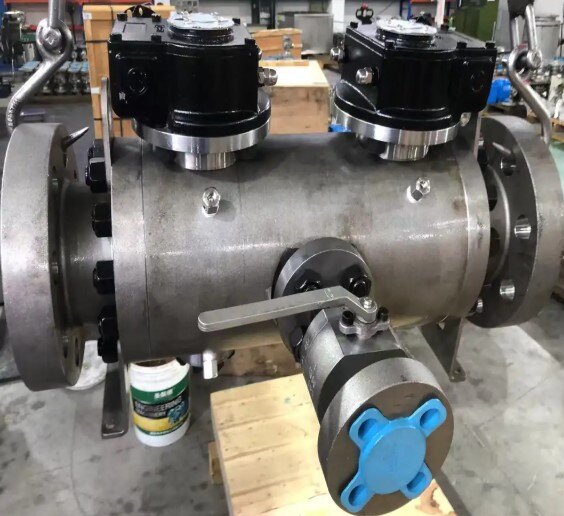
As global oil and gas projects intensify their focus on operational safety, zero-leakage risk, and compact system design, the demand for Double Block and Bleed (DBB) ball valves has never been stronger. Entering 2026, the industry continues to face pressure to reduce environmental incidents, optimize maintenance windows, and lower total lifecycle costs. From upstream wellhead facilities and midstream pipelines to downstream refineries and petrochemical complexes, EPC contractors and end users increasingly specify DBB ball valves as the preferred solution for reliable isolation and safe maintenance.
A DBB ball valve integrates two independent sealing surfaces within a single valve body, with a bleed port that allows the cavity between the seals to be vented or monitored. This design delivers critical advantages over traditional valve arrangements: enhanced safety during maintenance, reduced potential leak paths, significant space and weight savings, and full alignment with modern oil and gas isolation philosophies. Typical applications include oil and gas transmission pipelines, metering and sampling systems, offshore platforms, refineries, and petrochemical plants. Key governing standards include API 6D, ISO 14313, ASME B16.34, API 607, and API 6FA.
China remains an indispensable hub for global valve production. Its supply chain for castings, forgings, CNC machining, elastomeric seals, PTFE seats, stainless steel components, brass parts, actuators, and custom packaging is highly mature and cost-competitive. However, the real challenge is not finding a manufacturer; it is finding a trusted manufacturer that can meet your specific technical requirements, deliver consistent quality, and provide proper documentation and support. This guide offers a systematic, step-by-step strategy to help you make better sourcing decisions and avoid costly mistakes.
Before starting your search, you must clearly define what distinguishes a qualified DBB ball valve manufacturer from an unqualified one. In the oil and gas industry, selecting a DBB valve supplier involves far more than comparing price quotes.
- Standards and Certification: Ensure compliance with API 6D, ISO 14313, ASME B16.34, and fire-safe standards such as API 607 or API 6FA. These certifications are non-negotiable for oil and gas applications. They demonstrate that the manufacturer has passed rigorous third-party audits and can consistently meet international safety and performance benchmarks.
- True DBB Design Integrity: Verify whether the valve is a genuine DBB design—with two separate seating surfaces that each provide a pressure-containing seal—rather than a mere combination of two isolation valves in a single body. A true DBB delivers the safety, space savings, and independent cavity bleed functionality that engineers expect.
- Engineering and Documentation Capability: Oil and gas projects demand complete documentation packages, including dimensional drawings, material test certificates (MTCs) with traceability, hydrostatic and pneumatic test reports, NDE records, and valve assembly records. Any manufacturer unable to provide comprehensive documentation will likely cause delays and compliance issues during project execution and final acceptance.
- Export and Project Track Record: Manufacturers with direct experience supplying EPC contractors or overseas projects typically offer smoother communication, reliable delivery control, and a clear understanding of international shipping, packaging, and documentation requirements. Look for documented references from similar applications.

The following steps translate the qualification criteria above into actionable actions. Moving from supplier shortlisting to pre-shipment inspection, this process addresses the unique demands of DBB ball valve procurement—design verification, casting audits, documentation checks, and quality control at each production stage. Follow the steps below in order to systematically identify and validate trustworthy China-based manufacturers.
The most common mistake in China sourcing is chasing the lowest price. Instead, you must identify suppliers that are technically compatible with your specific products, industry, and order profile. China has thousands of valve manufacturers, but they are not interchangeable.
Some factories specialize in brass plumbing valves for residential use. Others focus on industrial gate and globe valves for steam systems. Some produce stainless steel sanitary valves for food, beverage, and pharmaceutical equipment. Many assemble actuated valves using imported or domestic actuators. Some are trading companies with access to multiple factories, while others own integrated facilities that handle casting, machining, assembly, and testing under one roof.
A trustworthy supplier should have been in business for at least five years, with a minimum of three years of export experience. This track record indicates stability and familiarity with international trade.
Search for the manufacturer on Google and visit their website. Avoid sites overloaded with flash animations or decorative elements that obscure product information. A professional website should make it easy to find technical data, specifications, and contact details. Verify that the supplier lists a physical address, landline telephone number, and email domain matching their company name. Be suspicious if only a mobile number is provided. A standard Chinese landline follows the format +86 (area code) + number; a mobile number starts with +86 1XX.
Pay attention to the registered address. If the address is in Hong Kong, Taiwan, or another non-mainland location, the company may not own a factory in mainland China—it could be a remote intermediary. While not automatically disqualifying, this requires additional verification. Generally, manufacturers in eastern coastal provinces such as Guangdong, Shandong, Jiangsu, and Zhejiang tend to have more developed supply chains and export experience.
Look for clear videos or photographs showing the supplier’s office, engineering team, manufacturing workshop, and key equipment. Reputable valve manufacturers will readily share this information on their website or upon request.
Once basic information is verified, initiate contact to assess communication quality and responsiveness.
Send a detailed email requesting pricing, minimum order quantity (MOQ), and production lead time for a specific DBB ball valve size, pressure rating, and material. Include a rough estimated quantity. Assess whether the sales team can communicate clearly in English and fully understand your technical requirements. For example, if you request information on Class 150 flanged valves but receive data on PN16 threaded valves, walk away—this signals serious communication gaps.
Be transparent about your quality expectations. Chinese suppliers can deliver products at almost any price point, but you must explicitly state your quality requirements. Price is important, but it should never be the sole decision factor. Consider starting with a small trial order. A trial order reveals two critical things: the manufacturer’s actual product quality and their professionalism in handling orders, documentation, and shipping.
After selecting two or three strong candidates, conduct a factory audit. Polished Alibaba pages, quick WeChat replies, and low quotations cannot verify whether a supplier can consistently meet your quality standards.
A proper valve factory audit in China must examine multiple technical stages: raw material procurement, casting or forging, heat treatment, CNC machining, drilling and threading, welding, assembly, sealing, cleaning, pressure testing, painting, marking, and documentation. A supplier may excel at some steps but be weak in others.
- Business Credibility: Review business license, export records, legal structure, primary products, key customers, and any certifications (ISO 9001, API Q1, etc.).
- Production Capability: Assess equipment, process controls, technical personnel, maintenance practices, and sub-supplier management.
- Testing Facilities: Focus heavily on the factory’s testing area. Verify the presence and calibration of hydrostatic shell testers, pneumatic test equipment, torque testers, and gauges for dimensional and material verification. Review test records for traceability.
- Technical Documentation: Confirm that the factory maintains up-to-date drawings, standards, and specification sheets. A factory that cannot explain the differences between similar pressure ratings (e.g., Class 150 vs. Class 300) or material grades (e.g., A105 vs. F316) lacks the technical competence for serious projects.
Sample approval is the critical bridge between quotation and mass production. Never approve a sample based on visual inspection alone. A valve may look perfect but fail in service due to a slightly off thread, incorrect seal material, excessive handle torque, hidden casting defects, or improper pressure testing.
Before approving a sample, compare it against the engineering drawing, purchase specification, and intended application. If no drawing exists, require the supplier to produce one. For private label or OEM orders, drawings are mandatory and must define dimensions, tolerances, connection details, marking, materials, and internal construction. Four-Level Sample Inspection:
- Visual and Dimensional: Check for casting defects, rough machined surfaces, burrs, uneven coating, poor finish, unclear markings, and loose packaging. Measure critical dimensions including face-to-face length, port diameter, wall thickness, and stem details.
- Functional: Open and close the valve multiple times. Verify torque, sealing integrity, handle movement, actuator response (if equipped), and overall smoothness of operation.
- Documentation: Confirm that material certificates, test reports, design drawings, product labels, and package markings align with the order and target market requirements.
- Pressure Test Verification: Witness or obtain certified reports of hydrostatic shell and seat tests, and any pneumatic or low-pressure gas tests specified for your application.
Many importers mistakenly rely solely on final inspection. By the time valves are fully assembled and packed, it is often too late to correct fundamental issues such as wrong materials, incorrect machining dimensions, substandard surface treatments, or inconsistent test pressures.
Effective production quality control includes: incoming material inspection, in-process checks during machining and assembly, torque monitoring, pressure test supervision, and final surface treatment and marking verification.
Pre-shipment inspection (PSI) is the final quality checkpoint before goods leave China. It does not replace earlier inspections, but it confirms that finished products match the order before final payment and shipping.
Schedule the PSI after manufacturing is complete and at least 80% of the order is packed. Randomly select cartons to open and verify contents. Check quantity, appearance, dimensional compliance, and packaging integrity.
Different markets impose different documentation requirements. Understanding these before ordering helps you evaluate whether a manufacturer can meet your needs.
- United States Imports: Require commercial invoice, packing list, bill of lading or air waybill, and any applicable customs declarations including HS codes. The commercial invoice must accurately describe items, quantities, and unit values. For valves under ASME B16.34 or API standards, material traceability and test certificates are typically expected.
- European Union Imports: Pressure equipment may fall under the Pressure Equipment Directive (PED 2014/68/EU) depending on design pressure, fluid group, and application. CE marking indicates compliance with EU product regulations. Not all valves require the same level of certification—the importer must verify specific requirements based on the intended use. Additional documentation such as EC Declaration of Conformity and technical files may be required.
Finding a trusted China DBB ball valve manufacturer requires a disciplined, systematic approach that goes far beyond price comparison. The process we have outlined—supplier identification, factory audit, sample confirmation, production quality control, and pre-shipment inspection—significantly reduces the risks inherent in international valve procurement.
China has no shortage of manufacturing capability. The real challenges are finding a manufacturer that meets your specific technical and quality needs, verifying that they can produce consistently to your requirements, and maintaining proper control throughout production and delivery.
Take the time to conduct proper due diligence. Start with trial orders to test both product quality and the supplier’s professional handling. Build long-term relationships with manufacturers that demonstrate technical competence, clear communication, and consistent documentation. In the oil and gas industry, where safety and reliability are paramount, the effort invested in finding the right manufacturer will return value many times over through dependable performance, reduced operational risk, and fewer costly surprises. By following this guide, you will be well-equipped to navigate the China valve market and secure a trusted partner for your DBB ball valve needs.
