
How to Source Stud Bolts from Trusted China Manufacturers
In today's global industrial supply chain, stud bolts play a critical role in ensuring the integrity, safety, and reliability of mechanical connections. From oil and gas pipelines and pressure vessels to power plants, construction projects, and automotive systems, stud bolts are essential fasteners designed to withstand high loads, extreme temperatures, and harsh environments.
China has emerged as one of the world's leading manufacturing centers for stud bolts, offering competitive pricing, broad material options, and increasingly advanced production capabilities. However, sourcing stud bolts from China requires more than selecting a supplier based on cost alone. Buyers must carefully evaluate quality, compliance, manufacturing capability, logistics reliability, and long-term partnership potential.
This article provides a comprehensive, step-by-step guide on how to source stud bolts from trusted Chinese manufacturers, helping B2B buyers reduce risks, ensure compliance, and achieve sustainable value.
Overview of China's Stud Bolt Manufacturing Market
China's stud bolt industry has experienced sustained growth driven by industrial expansion, infrastructure development, and rising global demand for high-performance fasteners. According to Global Industry Analysts, the Chinese fastener market is projected to grow at a compound annual growth rate (CAGR) of 6.8% between 2024 and 2030, reaching an estimated USD 12.4 billion by 2030.
Several factors are fueling this growth:
- Large-scale infrastructure and energy projects
- Rapid expansion of renewable energy installations
- Growth in electric vehicle (EV) manufacturing
Increasing demand for stainless steel and alloy stud bolts in corrosive and high-temperature environments
Rising expectations for customized fasteners with tight tolerances and advanced coatings
At the same time, competition among domestic manufacturers is intensifying, pushing leading factories to invest in automation, CNC machining, and advanced inspection systems to improve quality and efficiency.
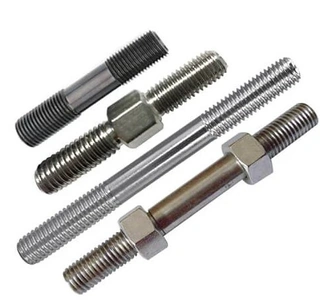
Start with Stud Bolt Material Quality
The first and most important factor when sourcing stud bolts from China is the quality of raw materials. The mechanical performance of a stud bolt, its tensile strength, yield strength, and fatigue resistance, depends directly on material selection.
Key materials commonly used:
- Carbon steel for general industrial applications
- Alloy steel for high-strength and high-temperature environments
- Stainless steel for corrosion resistance
- Specialized alloys for chemical, marine, and energy sectors
What buyers should verify:
- Compliance with standards such as ASTM A193, ASTM A540, ISO 898-1, and DIN 976
- Availability of Mill Test Reports (MTRs) with chemical composition and mechanical properties
- Batch and heat number traceability for full quality transparency
Trusted manufacturers provide complete documentation and are willing to explain material selection based on application requirements. Buyers should never rely solely on product labels or verbal assurances.
Evaluate Manufacturing Capabilities and Technology
Modern manufacturing capability is a strong indicator of product consistency and reliability. Leading Chinese stud bolt manufacturers invest heavily in advanced production equipment to meet international expectations.
Key capabilities to look for:
- High-precision CNC machining centers
- Automated threading and cutting systems
- Controlled heat treatment furnaces
- In-house surface treatment and coating lines
Factories equipped with automated inspection systems and digital process controls can significantly reduce defect rates—often by up to 40% compared to manual processes. These technologies also enable faster turnaround times and improved repeatability for large-volume orders.
Quality Control Systems and Testing Procedures
Quality control is not a single step but a continuous process throughout manufacturing. Trusted Chinese stud bolt manufacturers implement multi-stage quality assurance systems.
Essential quality elements include:
- Incoming raw material inspection
- In-process dimensional and visual checks
- Final mechanical and dimensional testing
- Third-party laboratory testing when required
Buyers should prioritize manufacturers with certifications such as:
- ISO 9001:2015 for quality management systems
- IATF 16949 for automotive fasteners
- AS9100 for aerospace applications
Additionally, request data on historical performance metrics, such as:
- On-time delivery rate (target: 100%)
- Defect rate below 1.5% across multiple orders
Compliance with International Standards and Regulations
Stud bolts used in international projects must comply with regional and industry-specific regulations. Non-compliance can lead to project delays, safety risks, and financial losses.
Standards commonly required:
- ISO, DIN, ANSI, ASTM, or JIS specifications
- Environmental compliance for coatings and plating
- Workplace safety standards such as OSHA and GB/T 28001
Manufacturers serving global markets should be familiar with documentation, testing protocols, and audit requirements associated with these standards.
Understanding Customization and Engineering Support
Many industrial applications require customized stud bolts tailored to specific loads, joint designs, or environmental conditions. Customization often involves complex manufacturing processes and close collaboration between buyer and supplier.
A reliable manufacturer should offer:
- Engineering support for material and coating selection
- Ability to work from CAD drawings and technical specifications
- Seamless integration of forging, machining, heat treatment, and finishing
- Cost-effective manufacturing recommendations without compromising performance
Strong technical expertise allows suppliers to optimize designs, reduce waste, and improve overall cost efficiency.
Analyze Total Cost of Ownership (TCO)
Focusing solely on unit price can be misleading. A more accurate approach is to evaluate the total cost of ownership (TCO).
TCO considerations include:
- Product price
- Shipping and logistics costs
- Customs clearance and duties
- Risk of rework or replacement
- Lead time reliability and inventory carrying costs
Larger minimum order quantities (MOQs) often reduce per-unit pricing. Many Chinese suppliers offer volume-based pricing tiers, making them attractive for long-term or high-volume buyers.
Export Experience and Logistics Capability
Export experience is critical for smooth international transactions. Manufacturers with extensive export backgrounds understand the complexities of global trade.
Verify that the supplier:
- Has experience shipping to your target market
- Understands export documentation and customs requirements
- Can offer flexible Incoterms, including DDP (Delivered Duty Paid)
- Uses export-grade packaging to prevent damage during transport
Suppliers capable of handling the entire supply chain, from raw material sourcing to final delivery, significantly reduce buyer workload and risk.
Supplier Reliability, Communication, and Service
Professionalism and responsiveness are key indicators of a trustworthy supplier. Clear communication ensures technical requirements are correctly understood and implemented.
Evaluate:
- Response time and clarity of technical discussions
- Willingness to provide samples and documentation
- After-sales support, warranty handling, and return logistics
- Feedback from existing clients and verified reviews
Avoid suppliers that offer prices far below market averages, provide vague specifications, or refuse to share certifications and test reports.
Industry Experience, Branding, and R&D Investment
Long-term reliability is often linked to experience and commitment to innovation. Established manufacturers tend to have:
- Years of experience in specific fastener categories
- Strong client portfolios across multiple industries
- Registered trademarks demonstrating brand ownership
- Dedicated R&D teams focused on new materials, coatings, and processes
Continuous investment in research and development ensures manufacturers can adapt to evolving standards and customer demands.
Matching Stud Bolts to Real-World Applications
Proper fastener selection begins with a clear understanding of application requirements.
Key questions include:
- Will the stud bolt be exposed to moisture or corrosive chemicals?
- Will it experience tensile, shear, or cyclic loads?
- Does the joint design require special thread engagement or coatings?
Buyers should always request sample testing and trial assemblies before placing large orders to confirm fit, performance, and finish quality.
Final Thoughts: Building Sustainable Supplier Partnerships
China's stud bolt manufacturing industry offers a wide range of opportunities for global buyers seeking cost efficiency, scalability, and customization. However, success depends on thorough evaluation, technical verification, and disciplined sourcing strategies.
By prioritizing material quality, manufacturing capability, certification compliance, and professional service, buyers can build long-term partnerships with trusted Chinese stud bolt manufacturers. These partnerships deliver not only competitive pricing but also consistent quality, reliable delivery, and long-term value across global projects.
Recommended China Stud Bolt Suppliers
China has become a major global sourcing hub for stud bolts, thanks to its strong manufacturing base, mature supply chains, and ability to meet international standards such as ASTM, ASME, DIN, and ISO. For industries like oil & gas, petrochemical, power generation, and pipeline engineering, selecting a reliable Chinese stud bolt supplier is critical to ensuring safety, performance, and long-term service life. Below are some recommended China stud bolt suppliers known for their product quality, standards compliance, and project experience.
1. Landee (Xiamen Landee Industries Co., Ltd.)
Landee is a well-established Chinese industrial manufacturer and global exporter supplying a complete range of piping and hardware products, including pipes, valves, flanges, fittings, gaskets, and fasteners for petrochemical, water treatment, and energy industries. Stud bolts are one of Landee's core fastener products, manufactured in accordance with ANSI/ASME standards in sizes from 1/4″ to 4″ (M8–M48). Common materials include ASTM A193/A194 grades such as B7/2H and B8/B8M, with surface finishes ranging from black and galvanized to nickel, cadmium, and PTFE coatings. Landee also offers OEM/ODM and customized stud bolt solutions to meet specific project and engineering requirements.
2. China Valve Gasket Bolt Nuts Co., Ltd.
Operating through valvegasketboltnuts.com, China Valve Gasket Bolt Nuts Co., Ltd. is a specialized Chinese supplier founded in 2003, serving oil & gas, petroleum, marine, mining, and heavy industrial sectors. The company provides an integrated portfolio of valves, gaskets, flanges, fittings, and fasteners to EPC contractors and international projects. Its stud bolts—available as full-thread or custom-threaded designs—are produced to ANSI/ASME and ASTM standards such as A193 and A453, typically supplied with heavy hex nuts. Certified to API, CE, TUV, and ISO standards, these stud bolts are widely used in high-pressure and harsh pipeline and flange applications.
3. Fastenwell
Fastenwell is a China-based fastener manufacturer and exporter with more than 20 years of experience supplying both standard and customized fastening solutions. Its product range includes hex bolts, nuts, screws, threaded rods, and double-end stud bolts manufactured to DIN, ISO, and ASME/ASTM standards. Stud bolts are available in sizes from M12 to M72 (or 1/2″–3″) and in materials such as carbon steel, alloy steel, and stainless steel, with finishes including black, hot-dip galvanized, and PTFE. Fastenwell stud bolts are commonly used for flange connections in pipelines, valves, heat exchangers, and other critical industrial assemblies, with full certification and customization options available.
Previous: How to Find Globe Control Valve Manufacturers from China
