How to Choose Reliable China Wedge Gate Valve Manufacturers
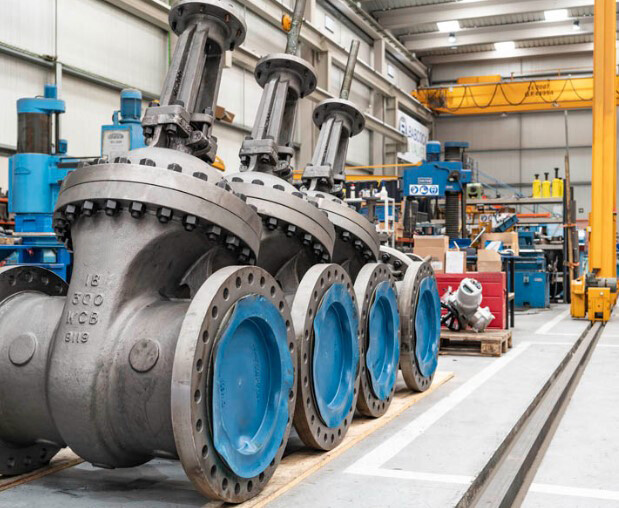
In industrial fluid control systems, wedge gate valves are key components that ensure safe and stable operation. Their wedge-shaped gate design allows tight sealing between valve seats, making them suitable for full shutoff applications with low pressure loss when fully open. They are widely used in industries such as oil and gas, water treatment, and power generation, where reliable isolation and long-term durability are required.
China has become one of the largest global centers for valve manufacturing, accounting for a significant share of worldwide production and offering a wide range of suppliers. This strong manufacturing base provides advantages in cost, scalability, and product variety. However, it also creates challenges, as product quality, technical capability, and service levels can vary greatly between manufacturers. Choosing the wrong supplier may lead to operational risks, increased maintenance costs, and system reliability issues.
This guide is designed to help buyers and engineering professionals evaluate China wedge gate valve manufacturers in a structured and practical way. By focusing on key factors such as quality standards, production capability, testing processes, and long-term service support, you can identify reliable suppliers and build stable partnerships that ensure consistent performance and lifecycle value.
Before initiating manufacturer evaluation, a thorough understanding of wedge gate valve technology enables more informed assessment of supplier capabilities and product suitability. Wedge gate valves operate through linear motion of a wedge-shaped gate perpendicular to flow direction. When fully raised, the gate completely clears the flow path, resulting in minimal pressure drop and unrestricted flow capacity. When lowered, the wedge geometry creates mechanical advantage, forcing the gate against seats to establish a tight seal.
Three primary wedge configurations address different operational requirements:
- Solid Wedge Design: The simplest and most economical configuration, featuring a single-piece wedge suitable for moderate temperature variations and general service applications. This design excels in horizontal installations where seat alignment remains consistent.
- Flexible Wedge Design: Incorporating a circumferential groove or cut around the wedge perimeter, this design accommodates thermal expansion and contraction, maintaining seal integrity across temperature fluctuations. Flexible wedge valves prove essential in steam service and applications experiencing significant thermal cycling.
- Split Wedge (Double Disc) Design: Comprising two independently floating discs with spreading mechanism, this configuration ensures positive seating despite body distortion or seat misalignment. Split wedge designs handle high-temperature applications and challenging services where thermal binding risks exist.
Wedge gate valves demonstrate particular suitability for applications requiring:
- Complete flow isolation with bi-directional sealing capability
- Minimal flow restriction when fully open
- Straight-through flow patterns minimizing turbulence and erosion
Operation in fully open or fully closed positions (not recommended for throttling service due to potential seat damage from flow-induced vibration)
Primary industries relying on wedge gate valves include oil and gas production and transportation, petroleum refining, chemical processing, power generation, water and wastewater treatment, mining, and marine applications. Each industry imposes specific requirements regarding pressure ratings, temperature ranges, corrosion resistance, and regulatory compliance that influence manufacturer selection criteria.

The consequences of sourcing wedge gate valves from substandard manufacturers manifest across multiple dimensions, often with severe financial and operational implications. Understanding these stakes reinforces the importance of rigorous supplier evaluation.
- Safety Implications: Valve failures in high-pressure, high-temperature, or hazardous media applications can result in catastrophic incidents including explosions, fires, toxic releases, and personnel injuries. The Deepwater Horizon disaster, partially attributed to blowout preventer valve failures, exemplifies how component quality directly impacts safety outcomes. Industrial facilities operating with compromised valves face heightened risks of accidents carrying human costs and regulatory penalties.
- Operational Reliability: Premature valve failure necessitates unplanned shutdowns for replacement or repair. In continuous process industries such as petrochemical refining or power generation, unplanned outages cost millions of dollars per day in lost production. A single failed valve can force shutdown of entire process units, affecting downstream operations and contractual deliveries.
- Total Cost of Ownership: While low-quality valves may offer 30-50% purchase price advantages, their lifecycle costs typically exceed premium products by factors of three to five when accounting for frequent maintenance, shortened service life, inventory carrying costs for replacement spares, and operational disruption expenses. Quality valves from reputable manufacturers often deliver 20-30 year service lives versus 3-5 years for inferior alternatives.
- Regulatory Compliance: Industries operating under stringent regulatory oversight—including nuclear power, pharmaceuticals, food processing, and aerospace—face audit failures, license suspensions, and legal liability when using non-compliant components. Regulatory bodies increasingly trace supply chains, making manufacturer certification and documentation quality critical compliance elements.
- Reputational Risk: For engineering contractors and equipment packagers, valve failures damage client relationships and professional standing. Original equipment manufacturers integrating valves into their systems face warranty claims and brand degradation when component quality proves inadequate.
Given these stakes, manufacturer selection transcends simple procurement to become a strategic risk management decision requiring thorough due diligence and systematic evaluation.
Selecting a wedge gate valve manufacturer in China requires a structured evaluation approach. The goal is not only to compare suppliers, but to systematically assess their capability to deliver consistent quality, technical reliability, and long-term service support.
This framework outlines eight critical dimensions that industrial buyers should use when evaluating potential manufacturers.
Certifications are the foundation of quality assurance, but they must be verified and not taken at face value.
Key Certifications to Check
- ISO 9001:2015
- Confirms structured quality management system
- Verify certificate validity through bodies like SGS, TÜV, DNV, or Bureau Veritas
- Ensure certification scope includes valve manufacturing
- Long-term certification history indicates stable quality systems
API Certifications (critical for oil & gas)
- API 6D: Pipeline valves
- API 600: Steel gate valves
- API 602: Compact gate valves
- API Q1: Quality system requirements
Requires factory audits, testing, and continuous surveillance
ASME Compliance
- ASME B16.34 ensures pressure boundary design standards
- “UV” and “UD” stamps confirm authorized inspection systems
Other Important Standards
- ISO 15848 (fugitive emissions)
- API 607/6FA (fire safety)
- SIL certification (functional safety)
- ATEX/IECEx (explosive environments)
- PED (EU pressure equipment compliance)
Verification Requirement: Always verify certificates with issuing authorities. True quality systems require implementation, not just documentation.
Production capability determines consistency, precision, and scalability.
Machining Equipment
CNC machining centers for precision components
Vertical lathes for large valves
Seat grinding systems for sealing accuracy
Coordinate Measuring Machines (CMM) for inspection
Advanced plants may use 5-axis machining and automation systems
Casting and Forging Capability
In-house foundry or qualified external suppliers
Controlled heat treatment processes
Traceable material sourcing
Welding and Surfacing
Stellite or alloy hardfacing for wear resistance
Qualified welding procedures (TIG, MIG, PTA)
Certified welders and process control
Testing Infrastructure
Hydrostatic and pneumatic test benches
High/low temperature testing capability
Torque and operational performance testing
R&D Capability
CAD/CAM design systems
Finite Element Analysis (FEA)
Patents and engineering innovation indicate long-term competitiveness
Material quality directly affects valve safety and service life.
Key Requirements
Certified Material Test Reports (MTRs)
Chemical and mechanical property verification
Positive Material Identification (PMI) testing
Traceability System
Heat number tracking from raw material to finished valve
Serial number-based tracking system
Digital documentation databases
Material Range Capability
Carbon steel (WCB, LCB)
Stainless steel (CF8, CF8M)
Duplex and super duplex steels
Nickel alloys (Inconel, Monel, Hastelloy)
Titanium for highly corrosive media
Strong technical guidance on material selection reflects manufacturer expertise.
A reliable manufacturer applies inspection at every production stage.
Incoming Inspection
Raw material verification
Chemical composition testing
Visual defect inspection
In-Process Inspection
Dimensional checks during machining
Heat treatment verification
Weld inspection (NDE methods)
Final Testing
Shell test: 1.5× design pressure
Seat test: 1.1× pressure (both directions)
Backseat test (where applicable)
Operational and torque testing
Non-Destructive Testing (NDT)
Radiographic testing (RT)
Ultrasonic testing (UT)
Magnetic particle testing (MT)
Dye penetrant testing (PT)
PMI verification
Documentation Package
Test reports
Inspection certificates
Pressure charts
Material records
A strong manufacturer offers both standard products and engineering flexibility.
Standard Range
Pressure ratings: Class 150–2500
Sizes: 2” to 60”+
Designs: rising stem, non-rising stem, pressure seal bonnet
End connections: flanged, butt weld, threaded
Customization Options
Modified dimensions
Special trims for erosion/corrosion
Extended stems for buried service
Coatings (epoxy, PTFE, rubber lining)
Actuation interfaces (ISO mounting standards)
Engineering Support
Valve selection and sizing
Material recommendations
Pressure-temperature validation
Installation guidance
Design Validation
FEA stress analysis
CFD flow simulation
Prototype testing for critical applications
Delivery capability is as important as manufacturing quality.
Capacity Evaluation
Annual output volume
Workforce scale and skill level
Maximum size and pressure capability
Lead Time Control
Stock availability for standard valves
Production scheduling systems
Expedited manufacturing options
Supply Chain Strength
Raw material inventory stability
Dual sourcing strategies
Component availability control
Export Logistics
Seaworthy packaging (crates, moisture protection)
Documentation support (COO, invoices, packing lists)
Freight coordination and customs handling
Packaging Quality
Internal bracing for stability
Corrosion protection measures
Clear lifting and handling instructions
Long-term performance depends on manufacturer support.
Technical Support
Engineering assistance
Fast response time
Remote troubleshooting support
On-site service (if available)
Warranty Terms
Typically 12–24 months
Covers material and manufacturing defects
Clear claim procedures and response timelines
Spare Parts Support
Recommended spare parts lists
Long-term availability guarantees
Clear part identification systems
Emergency delivery options
Maintenance Services
Valve repair and refurbishment
Upgrade services for aging systems
Field service support (where applicable)
Pricing must be evaluated together with risk, not in isolation.
Pricing Transparency
Clear breakdown of valve, testing, and documentation costs
Volume-based discounts
Validity and currency terms
Defined Incoterms (FOB, CIF, DAP)
Payment Security
Letter of credit options
Milestone-based payments
Bank reference verification
Financial stability assessment
Contract Protection
Technical specifications included in contracts
Inspection and witness rights
Delay penalties for late delivery
IP protection for custom designs
Financial Stability
Company history and ownership structure
Insurance coverage (liability and product risks)
Banking and credit reliability
Successfully navigating the China wedge gate valve manufacturing landscape requires disciplined execution across five distinct phases. This section provides granular implementation guidance, specific deliverables, and decision frameworks for each phase to transform evaluation criteria into actionable procurement procedures.
Compile technical specifications (pressure, temperature, media, standards)
Define quantity requirements and delivery schedule
Establish quality and certification requirements
Determine budget parameters and total cost of ownership model
Identify critical versus standard applications requiring different sourcing strategies
Research manufacturers through industry directories, trade shows, and professional networks
Review manufacturer websites and promotional materials
Request preliminary quotations from 10-15 potential suppliers
Conduct initial qualification based on certification possession and product range
Develop long-list of 5-8 candidates meeting basic requirements
Distribute detailed technical questionnaires
Request comprehensive documentation (certifications, quality manuals, reference lists)
Conduct preliminary reference checks with existing customers
Evaluate responses against established criteria
Perform financial and business stability assessment
Short-list 2-3 manufacturers for final evaluation
Conduct comprehensive facility audits
Witness manufacturing processes and testing procedures
Meet engineering, quality, and management personnel
Review quality systems in detail
Negotiate commercial terms and contractual provisions
Select primary and backup suppliers
Place limited trial order for non-critical applications
Implement enhanced inspection and testing
Evaluate delivery performance and documentation quality
Assess field performance and installation feedback
Validate after-sales support responsiveness
Complete supplier qualification for volume procurement
Selecting a reliable China wedge gate valve manufacturer is more than a purchasing decision—it is a strategic part of supply chain management. A structured evaluation helps identify manufacturers capable of delivering consistent quality, but long-term success also depends on continuous cooperation and relationship management.
Regular communication with qualified suppliers is important. Providing performance feedback and sharing operational experience helps improve product quality and service. Manufacturers should be treated as long-term partners rather than simple vendors, as their performance directly affects system reliability and operational stability.
The industrial valve sector is also evolving toward digitalization, predictive maintenance, and stricter environmental standards. Manufacturers investing in smart technologies, monitoring systems, and sustainable production will provide stronger long-term value. Aligning supplier selection with these trends helps build a more future-ready supply chain.
By applying strict evaluation criteria and maintaining strong supplier relationships, companies can fully benefit from China’s manufacturing capabilities while ensuring safety, reliability, and performance. Careful manufacturer selection ultimately delivers long-term returns through reduced maintenance costs and stable valve operation.
