
How to Choose the Right Chinese EV Charging Cable Supplier
Introduction
As the global electric vehicle (EV) market continues its rapid growth, the demand for high-quality EV charging accessories—particularly charging cables—has surged dramatically. These cables serve as the essential link between an EV and the charging point, enabling safe and efficient energy transfer. While many consumers may take charging cables for granted, installers, distributors, fleet operators, and charging-point manufacturers understand that choosing the right supplier is crucial. Reliable cables ensure safety, compatibility, and long-term durability.
China, now the world’s largest EV market and manufacturing hub, is home to hundreds of EV charging cable producers, ranging from large automotive giants to specialist EVSE (Electric Vehicle Supply Equipment) companies. However, quality and capabilities vary significantly. This makes it essential for international buyers—especially those in the UK and Europe—to carefully evaluate suppliers before forming partnerships or placing bulk orders.
This in-depth news article explores what EV charging cables are, the types most commonly used in the UK, what criteria to consider when selecting a Chinese manufacturer, and a detailed look at several leading suppliers in China’s EV charging cable industry.
What Are Electric Vehicle Charging Cables?
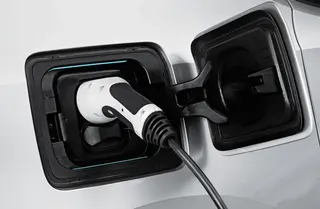
EV charging cables are engineered to safely transfer electrical energy from the grid to the electric vehicle’s onboard battery. They must maintain stable performance under varying voltage loads, harsh weather conditions, mechanical strain, and high-temperature environments. Because different regions and EV models use different charging standards, cable types also vary in connector design, power capacity, and compatibility.
For installers and global buyers, the choice of cable type affects not only charging performance but also compliance with national regulations—especially in markets like the UK, which follows strict IEC standards. Selecting high-quality cables helps reduce service issues, increases customer satisfaction, and maintains the reliability of public and private charging networks.
Common EV Charging Cable Types
EV charging cables fall into several categories, each suited for different markets and power levels. Below are the most common types used in the UK and Europe.
Type 1 EV Charging Cable
Connector type: Single-phase
Typical usage: Older EV models, US/Japanese imports
Power output: Up to 7.4kW
Features: Built-in locking mechanism for secure plug-in
Although Type 1 cables were more common during the early EV era, they are gradually being phased out in Europe, as the region’s infrastructure transitions to Type 2 as the universal standard.
Type 2 EV Charging Cable
Most widely used in the UK and Europe
Works with both single-phase and three-phase charging
Compatible with home chargers and public charging points
Supports AC charging up to 22kW
Type 2 cables dominate the UK market due to their universal compatibility, ease of use, and alignment with government-endorsed infrastructure plans. Nearly all new EVs sold in the UK and EU come with Type 2 ports.
CCS and CHAdeMO (DC Rapid Charging)
CCS (Combined Charging System):
Europe’s most widely adopted rapid charging standard
Supports both AC and DC charging
DC fast charging up to 350kW
Uses two additional DC power pins
CCS is now the preferred standard for rapid and ultra-rapid public charging stations across Europe.
CHAdeMO:
Once popular among Japanese automakers such as Nissan
DC charging up to 50kW
Gradually being phased out in Europe
In the UK, CHAdeMO installations have slowed considerably as industry trends shift toward CCS.
Criteria for Choosing EV Charging Cable Manufacturers in China
Finding a reliable supplier requires more than just comparing prices. Quality, certifications, and technical capability all play an important role. Below are key factors international buyers should consider.
1. Product Range and Technological Capability
Top-tier Chinese EV charging equipment manufacturers typically offer:
AC charging cables
DC charging cables
Portable chargers
Wall-mounted chargers
EV fast-charging stations
A strong product range indicates technological depth and experience with multiple charging protocols. Buyers should look for suppliers with in-house R&D capabilities, smart charging support, and compatibility with international standards such as IEC 62196, Type 2, CCS2, and CHAdeMO.
2. Certifications and Quality Assurance
Quality certifications are essential for importing EV cables into Europe or the UK. Important certifications include:
CE – Required for European markets
UL – Common for North American markets
RoHS – Ensures materials do not contain hazardous substances
ISO 9001 – Quality management system
IATF 16949 – Automotive industry-standard quality certification
TUV & IEC compliance – Confirms adherence to EU charging standards
Suppliers with strong quality management systems reduce the risk of product failures, recalls, or regulatory issues.
3. Manufacturing Experience and Market Presence
Established manufacturers typically have:
Years of experience in EVSE production
An active export record
Projects implemented in Europe, Southeast Asia, the Middle East, and North America
A strong global distribution network
Dedicated after-sales and technical support teams
Manufacturers with proven track records are usually more reliable, consistent, and stable in their production processes.
4. Pricing and Customization Flexibility
China’s EV charging cable prices vary widely depending on:
Cable length
Conductor specification
Connector type
Charging power
Protective materials
Temperature resistance
Smart-chip integration
Most Chinese suppliers support OEM (Original Equipment Manufacturing) and ODM (Original Design Manufacturing) services. This allows importers to customize:
Branding
Cable colors
Connector design
Packaging
Software interface (for smart chargers)
Customization is especially valuable for charging-point operators, EV charger brands, and retail distributors aiming to strengthen brand identity.
Top EV Charging Cable Suppliers in China
Below is a detailed overview of several leading Chinese suppliers that are recognized for quality, innovation, and strong market presence.
1. BYD Auto
Overview
Founded in 2003 and headquartered in Shenzhen, BYD Auto is one of the world’s largest electric vehicle manufacturers. Known for its leadership in EV technology, battery innovation, and sustainable transportation solutions, BYD also manufactures high-quality EV charging equipment, including cables, home chargers, and DC fast-charging systems.
Product Range
BYD offers a comprehensive line of EV charging solutions:
AC slow chargers
AC medium-power chargers
DC fast chargers
Ultra-fast public charging stations
EV charging cables for residential and commercial use
These products are engineered to integrate seamlessly with BYD vehicles but also remain compatible with many EV brands globally.
Unique Selling Points
Industry-leading battery technology
Fully integrated energy ecosystem combining EVs, chargers, and renewable energy
Highly efficient charging solutions designed for long-term durability
Strong emphasis on energy optimization and smart charging features
Customer Feedback
Users praise BYD for:
Exceptional product durability
Advanced energy management systems
Reliable performance under heavy usage
Comprehensive warranty and after-sales support
BYD’s global presence makes it one of the most trusted EV charging equipment suppliers.
2. NIO Inc.
Overview
NIO Inc., founded in 2014 and based in Shanghai, is recognized for its premium EV models and groundbreaking charging innovations. NIO’s focus on high-end EV design, intelligent software, and customer experience has positioned it as a global competitor in the premium EV sector.
Product Range
NIO offers:
Home charging stations
Public charging solutions
Fast-charging pillars
The world-famous NIO Power Swap Stations
These battery-swapping stations allow drivers to exchange a depleted EV battery for a fully charged one in minutes.
Unique Selling Points
Battery swapping technology—a pioneering approach to eliminate charging wait time
Cloud-based smart charging platforms
Remote firmware updates and intelligent diagnostics
Integration across NIO’s digital ecosystem
Customer Feedback
Customers appreciate:
Ultra-fast battery swap convenience
Modern, user-friendly interfaces
Highly reliable charging infrastructure
Strong brand support and customer service
NIO remains a top contender for advanced EV charging solutions.
3. Shanghai LiChengBei Technology Co., Ltd (LiCB Charge)
Shanghai LiChengBei Technology Co., Ltd, known as LiCB Charge, has established itself as a leading manufacturer of EV charging equipment in China. The company specializes in both hardware and integrated energy solutions, offering products for residential, commercial, and industrial applications.
Product Portfolio
LiCB Charge produces:
Compact AC chargers
Commercial DC fast-charging stations
Large-screen DC chargers with advertising displays
High-durability EV charging cables
Portable chargers
Battery and energy storage solutions
This diverse range positions LiCB Charge as a full-service provider capable of supporting large-scale charging deployments.
Customization and Manufacturer Support
The company is known for offering extensive ODM and OEM customization services, including:
Branding
Housing design
Charging cable specifications
Software customization
Charging platform integration
Their manufacturing process follows strict quality and safety standards, ensuring international compliance.
Brand Mission and Values
LiCB Charge aims to:
Advance global clean-energy transitions
Deliver innovative, high-quality charging solutions
Support customers in achieving sustainability goals
Promote widespread EV adoption through reliable infrastructure
The company continues to invest in R&D to stay at the forefront of EV charging technology.
4. Topper EV Charger
Topper is another respected Chinese manufacturer known for delivering high-performance EV charging equipment to global customers. With more than five years of experience, Topper has gained recognition for quality, innovation, and competitive pricing.
Product Line
Topper provides:
High-performance AC EV chargers
DC fast-charging stations
Portable EV chargers
EV charging cables
Portable power stations
Their products are designed to meet strict international standards and offer long-term durability even under demanding conditions.
Technological Strength and Quality Control
Topper implements:
Strict manufacturing procedures
Comprehensive acceptance criteria
Advanced production management
A complete quality assurance system
This ensures that every product meets the highest performance and safety standards.
Business Philosophy and Development Strategy
Topper focuses on three core pillars:
Deep Cooperation
Close partnerships with listed companies and automotive manufacturers.
Comprehensive Solutions
Integrated EVSE product ecosystems for residential, commercial, and industrial sectors.
Quality Assurance
A commitment to continuous improvement and international-level reliability.
Conclusion
As EV adoption grows rapidly across Europe and the UK, demand for high-quality charging cables and reliable suppliers is stronger than ever. China remains a global powerhouse in EV charging manufacturing, offering cutting-edge technology, competitive pricing, and vast production capacity.
When selecting a Chinese EV charging cable supplier, buyers should consider:
Product range and technical compatibility
International certifications and quality control
Market presence and customer feedback
Customization capability and pricing
After-sales support and long-term reliability
Whether partnering with global leaders like BYD and NIO or working with specialized manufacturers such as LiCB Charge and Topper, choosing the right supplier ensures safer charging experiences, greater durability, and long-term value.
Previous: How to Find a Reliable Fastener Manufacturer in China?
