
China’s Leading Circular Knitting Machine Suppliers You Should Know
Introduction
The textile industry is evolving rapidly, driven by advancements in machinery and automation. Among the essential equipment in modern textile production are circular knitting machines, which play a pivotal role in producing high-quality fabrics efficiently. Circular knitting machines are widely used in making garments, home textiles, and technical fabrics, thanks to their speed, versatility, and precision.
For businesses aiming to invest in reliable and high-performing knitting machines, understanding the types, capabilities, and leading manufacturers is crucial. This article explores the different types of circular knitting machines, their applications, and highlights prominent suppliers, including leading Chinese manufacturers.
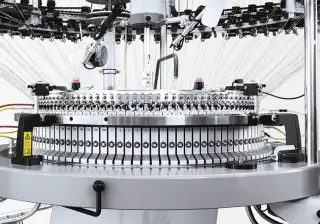
Types of Circular Knitting Machines
Circular knitting machines are designed to produce fabrics in a continuous loop, making them highly efficient for creating seamless textiles. Before selecting a knitting machine, it is essential to understand the two main categories of machines and their capabilities: warp knitting machines and weft knitting machines.
1. Warp Knitting Machines
Warp knitting machines work by knitting yarn in a vertical orientation. Unlike weft knitting, where loops are created horizontally, warp knitting ensures that the yarn runs lengthwise in the fabric. This method provides strong, durable textiles that are resistant to runs or laddering, making it ideal for garments and industrial applications that demand high quality and longevity.
Warp knitting machines can produce several types of fabric structures:
Milanese Knit: This technique uses multiple yarn sets, creating a ribbed effect that adds texture and elasticity to fabrics. Milanese fabrics are often used in fashion and premium garments because of their decorative appearance and stretch characteristics.
Raschel Knit: Raschel knitting is commonly used for lace patterns, mesh fabrics, and other intricate designs. The stitch density can make the fabric coarser, but it allows for complex, decorative patterns. Raschel fabrics are popular in lingerie, lace curtains, and sportswear applications.
Tricot Knit: Tricot knitting produces a tight, smooth fabric, often with a mesh-like structure. Tricot fabrics are widely used in activewear, lingerie, and innerwear, as they offer comfort, breathability, and durability.
Warp knitting machines are appreciated for their speed, consistency, and ability to produce high-quality fabrics for both fashion and technical uses.
2. Weft Knitting Machines
Weft knitting machines, also known as circular knitting machines, create fabrics in a continuous circular loop, resulting in horizontal patterns. The fabric is seamless, making it ideal for garments like T-shirts, sweaters, and socks. However, weft knitting has a potential drawback: if a yarn breaks, the fabric can unravel quickly, making quality control and monitoring critical.
Weft knitting machines can produce three main types of fabric:
Straight Knit: Straight knitting produces uniform, linear patterns that are simple yet versatile. Beginners often start with straight knitting due to its simplicity and ability to produce consistent results. Both single-needle and double-needle configurations are commonly used.
Flat Knit: Flat knitting works back and forth across the fabric, making it suitable for sweaters, fashion garments, and detailed patterns. Flat-knitted fabrics often have a premium look and feel, thanks to their texture and design flexibility.
Circular Knit: Circular knitting is the specialty of modern circular knitting machines. This technique loops the yarn continuously, producing seamless fabrics without breaks or joins. Circular knitted fabrics are widely used for T-shirts, sportswear, home textiles, and technical fabrics.
Circular knitting machines are a preferred choice in modern garment production because of their ability to produce high-quality, seamless fabrics at scale.
Leading Circular Knitting Machine Supplier: Xiamen YUANDA Knitting Technology Co., Ltd
Among the top manufacturers in China, Xiamen YUANDA Knitting Technology Co., Ltd stands out for its advanced technology, precision engineering, and long-standing industry experience. Located in Xiamen, a strategic port city with excellent infrastructure, YUANDA has been at the forefront of circular knitting technology since 2000.
Company Overview
Experience: The CEO of YUANDA brings over 20 years of industry experience, ensuring that the company has strong expertise in designing and manufacturing circular knitting machines.
Technology & Materials: YUANDA utilizes high-quality materials from Japan, Taiwan, and Germany, combined with advanced processing techniques, to deliver machines with precision and reliability.
Product Range: Their product lineup includes single jersey, double jersey, and computer jacquard circular knitting machines. Customers can choose machines with different cylinder sizes and open-width configurations to suit specific production needs.
Commitment to Quality
YUANDA is committed to providing high-quality, cost-effective circular knitting machines for a competitive market. The company has invested in research, precise engineering, and quality control to ensure consistent machine performance. Customized services, coupled with professional management, allow YUANDA to meet client requirements efficiently, resulting in a win-win situation for both parties.
Global Reach
YUANDA’s machines are not only popular in China but have also found markets abroad, including Bangladesh, India, Indonesia, and Egypt. The company has earned praise for its high-quality machinery, precise craftsmanship, and reliable after-sales service. YUANDA continues to expand its global presence, welcoming customers worldwide to collaborate and benefit from their advanced knitting solutions.
Other Notable Knitting Machine Manufacturers
While YUANDA is a leading supplier from China, several other manufacturers are noteworthy for their contributions to the knitting industry.
1. Pailung (Taiwan)
Established in 1977, Pailung Machinery Mill Co., Ltd has been a significant player in the textile machinery industry. Pailung serves brands, designers, textile manufacturers, and contractors in fashion, home textiles, healthcare, and environmental textile sectors.
Product Offerings:
Circular knitting machines
Flatbed machines
Shupper-knit machines for shoe manufacturing
New types of weave-knit machines
Pailung is known for its innovative solutions and high-quality machines, catering to a diverse range of industrial applications.
2. Jiunn Long (Taiwan)
Founded in 1989, JIUNN LONG MACHINE CO., LTD is a leading knitting machine manufacturer in Taiwan. The company focuses on producing machines that combine speed, productivity, and advanced technology.
Capabilities & Offerings:
Production yard of 1,000 CBM, capable of manufacturing 80 knitting machines simultaneously
Products include single jersey, double jersey, fleece, terry pile, jacquard machines, and spare parts
Operational centers in Northern Africa and Eastern Europe
Jiunn Long is recognized for its commitment to professional design, high productivity, and customer-centric approach.
3. Sintelli Circular Knitting Machine Company
Sintelli is a dedicated manufacturer of advanced circular knitting machines, offering a wide portfolio that ranges from small-diameter models for medical and industrial use to larger standard-diameter machines for mainstream textile production. With more than 40 years of industry expertise, Sintelli focuses on strict quality control and continuous innovation. Their product lineup includes high-speed systems and seamless jacquard knitting machines designed to meet the evolving performance and design requirements of today’s knitting industry.
Applications of Circular Knitting Machines
Circular knitting machines have broad applications across the textile industry. Some key uses include:
Garment Production: Circular knitting machines are widely used to produce seamless T-shirts, sweaters, hosiery, and activewear. The machines allow manufacturers to create garments efficiently while maintaining high-quality standards.
Home Textiles: Fabrics produced by circular knitting machines are commonly used for bedding, towels, upholstery, and decorative textiles.
Technical Fabrics: These machines can produce specialized fabrics for medical, industrial, and environmental applications, including filtration materials, sports textiles, and protective clothing.
The versatility of circular knitting machines makes them indispensable in modern textile manufacturing.
Advantages of Choosing Chinese Circular Knitting Machines
China has emerged as a major hub for textile machinery manufacturing. Investing in Chinese circular knitting machines offers several advantages:
Cost-Effectiveness: Chinese manufacturers provide high-quality machines at competitive prices without compromising on performance.
Advanced Technology: Leading suppliers like YUANDA, Hanma, and others use precision engineering, high-quality components, and modern design practices.
Customization: Many Chinese manufacturers offer tailored solutions, allowing buyers to choose cylinder sizes, knitting types, and automation levels.
Global Support: Established manufacturers provide reliable after-sales support, spare parts, and technical guidance to international clients.
These advantages have helped Chinese circular knitting machines gain a strong reputation in global markets.
Future Trends in Circular Knitting
As technology advances, circular knitting machines are evolving to meet the demands of modern textile production. Key trends include:
Automation & Computerization
Advanced computer jacquard machines allow for complex designs with minimal human intervention. Automation improves efficiency, reduces errors, and enables consistent fabric quality.
Sustainability
Energy-efficient machines and eco-friendly materials are becoming standard to reduce environmental impact. Manufacturers are focusing on producing machines that consume less power and optimize material usage.
Versatility & Multi-Functionality
Modern machines can switch between different knitting types, producing single jersey, double jersey, and jacquard fabrics on the same platform.
Global Connectivity
Internet-connected machines provide real-time monitoring, predictive maintenance, and remote troubleshooting, improving productivity and reducing downtime.
Manufacturers that adopt these trends are poised to lead the next phase of growth in the textile machinery industry.
Conclusion
Circular knitting machines are at the heart of modern textile manufacturing, providing speed, precision, and versatility. Understanding the differences between warp and weft knitting machines helps buyers select the right equipment for their production needs.
Xiamen YUANDA Knitting Technology Co., Ltd exemplifies excellence in this field, offering high-quality machines, customized solutions, and strong global support. Alongside other notable manufacturers such as Pailung, Jiunn Long, and Hanma Group, these companies are shaping the future of textile machinery.
With a focus on innovation, sustainability, and advanced technology, circular knitting machines from China and Taiwan continue to meet the evolving needs of the global textile industry, helping manufacturers produce high-quality fabrics efficiently and cost-effectively.
For businesses looking to invest in reliable, durable, and technologically advanced circular knitting machines, partnering with these suppliers offers an opportunity to improve production efficiency, product quality, and market competitiveness.
Next: How to Find a Reliable Fastener Manufacturer in China?
Previous: How to Choose a Reliable Pump Manufacturer in China?
