How to Find Good China Welded Steel Pipe Manufacturer
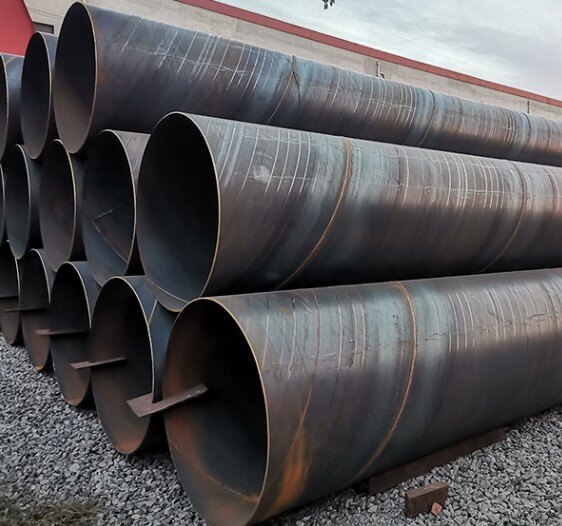
Finding a reliable welded steel pipe manufacturer in China is an important task for buyers in construction, oil and gas, water supply systems, mechanical engineering, and infrastructure development. Welded steel pipes are widely used because they provide a good balance of strength, cost efficiency, and wide application flexibility. However, the Chinese market is very large and highly fragmented, with manufacturers ranging from highly advanced factories to small workshops with limited quality control capability.
Because of this variation, selecting the right supplier is not a simple price comparison task. It directly affects product quality, system safety, delivery reliability, and long-term maintenance cost. A structured sourcing approach is necessary to reduce risk and ensure stable supply.
This guide explains step by step how to find a suitable welded steel pipe manufacturer in China in a practical and systematic way.
Before starting the supplier search process, it is essential to clearly define your technical and commercial requirements. Many sourcing problems happen at the beginning stage because buyers contact suppliers without a complete understanding of specifications. This often leads to inaccurate quotations, unsuitable recommendations, or delays in communication.
A clear requirement foundation helps ensure that all later steps, including supplier selection and quotation comparison, are efficient and meaningful.

To begin with, buyers need to clearly define the welded steel pipe specifications. Welded steel pipes vary widely in structure, material, and application, so precise definition is essential for correct manufacturing.
The first step is selecting the appropriate pipe type based on application requirements. Common types include:
ERW (Electric Resistance Welded) pipe
LSAW (Longitudinal Submerged Arc Welded) pipe
SSAW (Spiral Submerged Arc Welded) pipe
Each type is produced using a different forming and welding process. ERW pipes are widely used in low and medium pressure systems such as water supply and structural applications. LSAW pipes are more suitable for high-pressure pipelines such as oil and gas transmission. SSAW pipes are commonly used for large-diameter applications like water transportation and piling projects.
Understanding these differences is important because choosing the wrong pipe type may lead to performance issues or unnecessary cost increases.
After selecting pipe type, material grade must be clearly defined. This directly affects mechanical strength, corrosion resistance, and working pressure capacity.
Common material grades include:
ASTM A53 for general structural use
API 5L Grade B / X42 / X52 / X60 for pipeline systems
ASTM A106 for high-temperature applications
Different grades are designed for different working environments. For example, oil and gas pipelines require higher strength and stricter testing standards compared to structural steel pipes. Therefore, selecting the correct grade ensures long-term system stability and safety.
Dimensional requirements are also a key part of specification definition. Buyers should clearly state:
Outer diameter (OD)
Wall thickness (WT)
Length requirements (fixed or random)
These parameters directly affect pressure resistance and structural strength. Even small deviations can influence installation accuracy and long-term performance. Manufacturers rely on these details to determine production processes and inspection standards.
Once basic specifications are defined, the next step is to clarify usage conditions and technical standards. This helps manufacturers understand the exact application environment and select appropriate production methods.
Buyers should specify:
Application field (water, oil, gas, construction, mechanical systems, etc.)
Required standards (ASTM, API, EN, DIN, ISO, etc.)
Operating pressure and temperature conditions
Surface protection requirements (galvanized, black painting, anti-corrosion coating, etc.)
Different industries require different levels of quality control and testing. For example, oil and gas pipelines require stricter inspection processes compared to general structural use. Clear definition at this stage helps avoid misunderstandings later during production.
After defining technical requirements, it is also important to establish commercial expectations. This helps manufacturers evaluate project scale and provide more accurate quotations.
Buyers should prepare:
Estimated order quantity (tons or meters)
Budget range or target price level
Required delivery timeline
At this stage, manufacturers begin to assess whether the project is suitable for their production capacity. Large-scale factories usually prefer bulk orders, while smaller factories may be more flexible. Clear planning helps improve sourcing efficiency and supplier matching.
After defining requirements, the next step is to identify potential suppliers. Since the market is large and complex, it is recommended to use multiple sourcing channels instead of relying on a single platform. This improves supplier diversity and reduces sourcing risk.
One of the most common starting points for sourcing is online B2B platforms, which provide access to a large number of suppliers across China.
Major platforms include:
Alibaba
Made-in-China
Global Sources
These platforms contain both manufacturers and trading companies, offering a wide selection of suppliers for initial screening.
To improve search efficiency, buyers should use specific technical keywords such as:
“ERW steel pipe manufacturer China”
“API 5L welded steel pipe supplier”
“SSAW steel pipe factory China”
After generating results, it is important to filter suppliers based on:
Verified supplier status
Export experience
Certifications such as ISO or API
Production capacity and factory scale
This filtering process helps narrow down suppliers to more reliable candidates.
Online platforms are useful but have both strengths and weaknesses.
Advantages:
Large number of suppliers available
Fast communication and quotation response
Easy comparison between different suppliers
Limitations:
Some suppliers are trading companies instead of factories
Product quality cannot be verified directly
Information may be promotional rather than technical
Because of these limitations, online platforms should be used as an initial screening tool rather than the final decision source.
After using B2B platforms, buyers often move to search engines to find more independent and direct manufacturers. This helps reduce dependence on platform-based listings and provides access to more detailed technical information.
Search engines allow buyers to find official manufacturer websites by using keywords such as:
China welded steel pipe manufacturer
API steel pipe factory China
LSAW pipe supplier China
This method is useful for identifying factories that may not be active on large B2B platforms but still have strong production capability.
When visiting manufacturer websites, buyers should focus on:
Company background and development history
Factory equipment and production lines
Product specifications and technical data
Quality control and testing systems
Export experience and project references
A real manufacturer usually provides detailed production and testing information rather than only marketing content.
While online research provides initial supplier information, many buyers also rely on industry exhibitions to gain more direct and reliable insights into manufacturers. This step is often used after preliminary screening to verify supplier capability.
Key exhibitions include:
Canton Fair
Tube China Exhibition
International oil and gas equipment exhibitions
These events gather many manufacturers, exporters, and engineering companies in one place.
Exhibitions provide several advantages that cannot be achieved through online sourcing:
Direct face-to-face communication with suppliers
Physical inspection of samples and materials
Better evaluation of production capability and professionalism
Ability to compare multiple suppliers in a short time
Because of these advantages, exhibitions are often used to confirm supplier strength and build initial trust.
In addition to online and exhibition-based sourcing, referrals from industry professionals are another highly reliable method. This approach is often used in long-term procurement relationships.
Buyers can consult:
Engineers and technical consultants
Construction and engineering companies
Import agents and procurement specialists
Referrals are based on real project experience, which makes them more practical and trustworthy compared to general online information.
Once potential suppliers are identified, evaluation becomes the most critical step. At this stage, buyers need to go beyond surface-level information and carefully assess production capability, quality systems, and reliability.
A qualified manufacturer should have complete production systems, including:
ERW, LSAW, and SSAW production lines
Hydrostatic testing equipment
Ultrasonic and non-destructive testing systems
Modern equipment ensures stable welding quality and consistent dimensional accuracy.
Buyers should also evaluate:
Monthly output capacity
Maximum diameter and thickness capability
Experience in large-scale export projects
This determines whether the manufacturer can meet delivery schedules and order volume requirements.
Certifications are an important indicator of international compliance. Common certifications include:
ISO 9001 quality management system
API 5L certification for pipeline applications
CE certification for European markets
These documents should always be requested and verified when necessary to ensure authenticity.
A strong quality control system ensures consistent product performance across all batches.
It typically includes:
Raw material inspection
In-process production monitoring
Final product inspection
Common testing methods include:
Hydrostatic pressure testing
Ultrasonic weld inspection
X-ray internal defect detection
Mechanical property testing
In some cases, third-party inspection agencies are also used to provide independent quality verification before shipment.
Export experience is another important factor because it reflects how well a manufacturer understands international standards and logistics requirements.
Key points include:
Export regions and countries
Long-term international clients
Experience with shipping and customs documentation
Manufacturers with strong export experience usually provide smoother communication and fewer operational issues.
Price evaluation should always be combined with quality and service considerations.
Buyers should compare:
Unit price per ton or meter
Payment terms (T/T, L/C, etc.)
Delivery time and logistics conditions
Packaging and export terms
Unusually low prices should be carefully evaluated, as they may indicate compromises in material quality or production control.
After selecting suppliers, proper communication is essential to ensure accurate production and smooth order execution.
A complete inquiry should include:
Detailed specifications
Quantity requirements
Applicable standards
Delivery destination
Target pricing expectations
Clear communication improves quotation accuracy and reduces misunderstandings.
Before mass production, buyers should request:
Product samples
Mill test certificates (MTC)
Third-party inspection reports
This helps verify quality before large-scale orders are placed.
Contracts should clearly define:
Product specifications
Delivery schedule
Payment terms
Quality standards
Inspection requirements
A well-structured contract reduces the risk of disputes during production and delivery.
For large or critical orders, third-party inspection is highly recommended. Common inspection agencies include:
SGS
Bureau Veritas (BV)
Intertek
They provide independent verification of product quality before shipment.
During the sourcing process, buyers should avoid several common mistakes that may affect product quality and project success.
- Only Focus on Price: Low price may lead to unstable quality and higher long-term maintenance costs.
- Not Checking Factory Reality: Some suppliers are trading companies rather than real manufacturers.
- Ignoring Standards: Unclear standards can result in unsuitable products for specific applications.
- No Inspection Before Shipment: Without inspection, defective products may enter the project system.
Finding a reliable China welded steel pipe manufacturer requires a structured and systematic sourcing process. Buyers must first define detailed requirements, then search through multiple channels, and carefully evaluate suppliers based on production capability, certifications, quality control systems, and export experience.
Finally, clear communication, contract confirmation, and third-party inspection are essential before placing orders. By following this approach, buyers can reduce procurement risks, ensure stable product quality, and build long-term cooperation with reliable manufacturers in China.
